TCMA Advocates for Rapid Transition to Green Energy in the Industrial Sector, Urges Government to Unlock and Collaborate
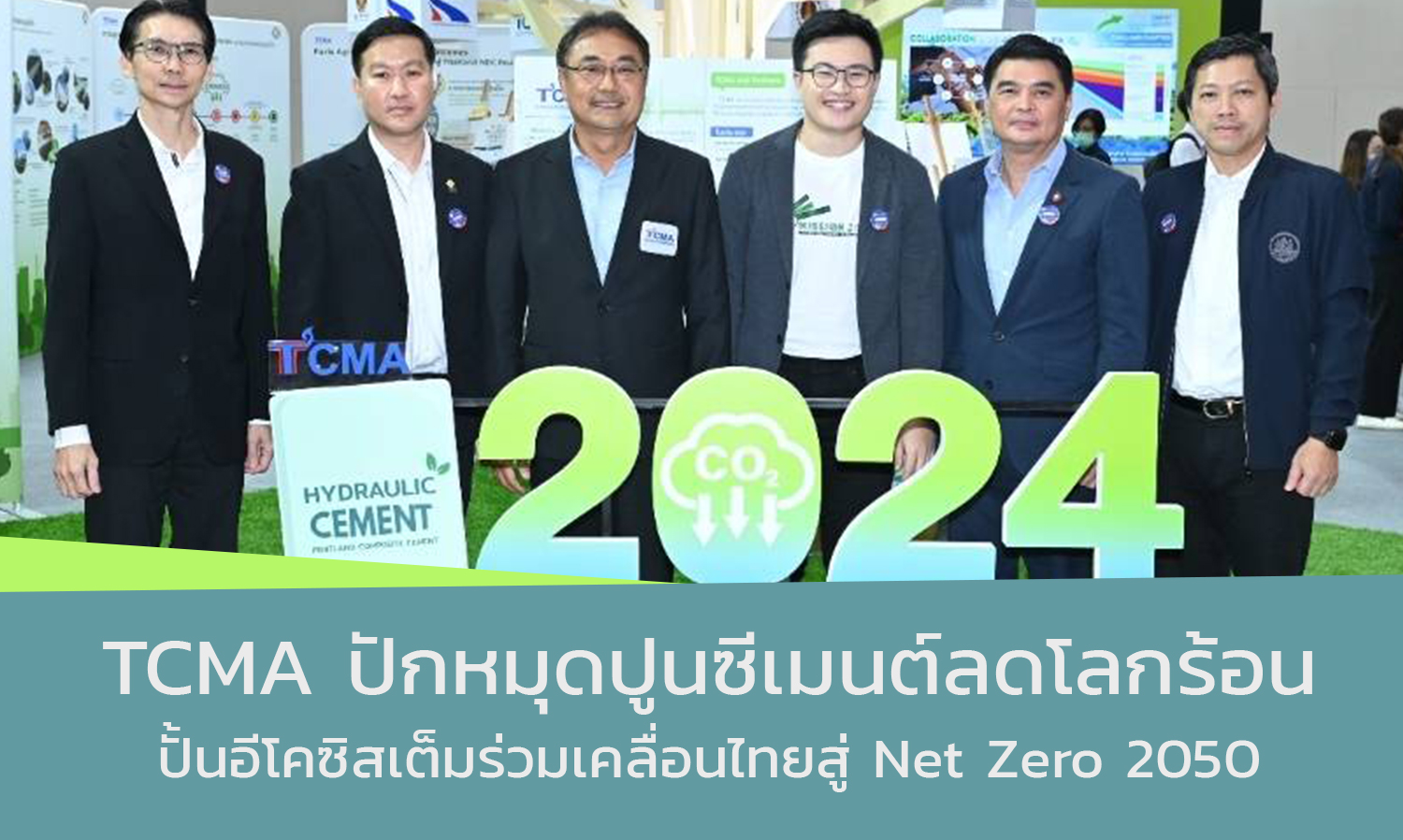
The Thai Cement Manufacturers Association (TCMA) <\/span><\/strong><\/span> emphasizes the urgent need to unlock regulations to drive green energy investments, highlighting the industrial sector's swift transition to green energy through the collaborative concept of 3C (<\/span><\/strong>Collaborative Mindset- Collaborative Action-Collaborative Value) <\/strong><\/span>and advancing the low-carbon city model “Saraburi Sandbox” . <\/span><\/strong><\/span> This global collaboration supports the strengthening of the Thai industry and enhances long-term competitiveness on the world stage.<\/span><\/strong><\/span>
 <\/p>
<\/p>
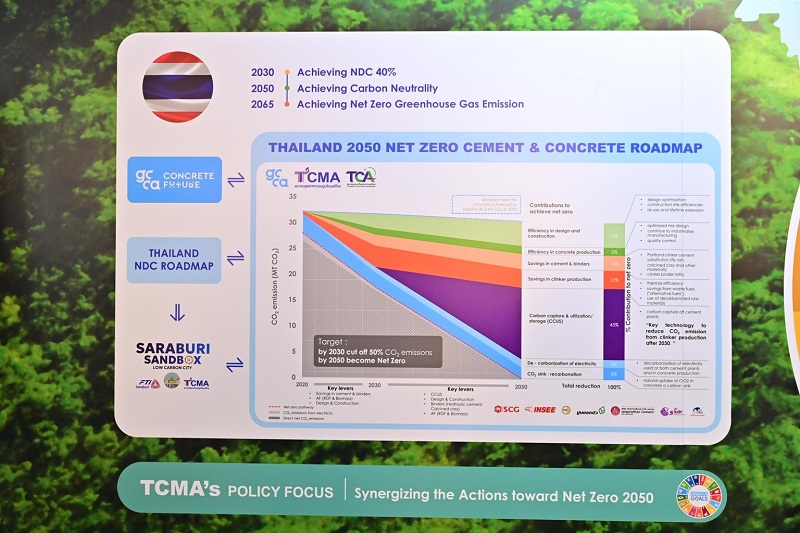
Dr. Chana Poomi, President of the Thai Cement Manufacturers Association (<\/span><\/strong>TCMA) <\/strong><\/span><\/span><\/span>, revealed at the annual academic seminar Energy Symposium 2024 organized by <\/strong>the Energy Institute for Industry, Thailand's Industrial Council, on the topic “The Adaptation of the Industrial Sector to Align with the New Energy Plan Towards <\/strong>Carbon Neutrality” <\/strong>that the cement industry in Thailand has seven cement producers continuously working to reduce carbon emissions according to the Thailand 2050 Net Zero Cement and Concrete Roadmap endorsed by the Global Cement and Concrete Association (GCCA). The energy transition is ongoing, including the advancement of the low-carbon city model “Saraburi Sandbox” SARABURI SANDBOX LOW CARBON CITY, which has made significant progress. At the same time, there are still various issues to address in order to reduce limitations and push everything forward according to the planned agenda.<\/span><\/span><\/span><\/p>
Promoting Green Energy<\/strong><\/span><\/p>
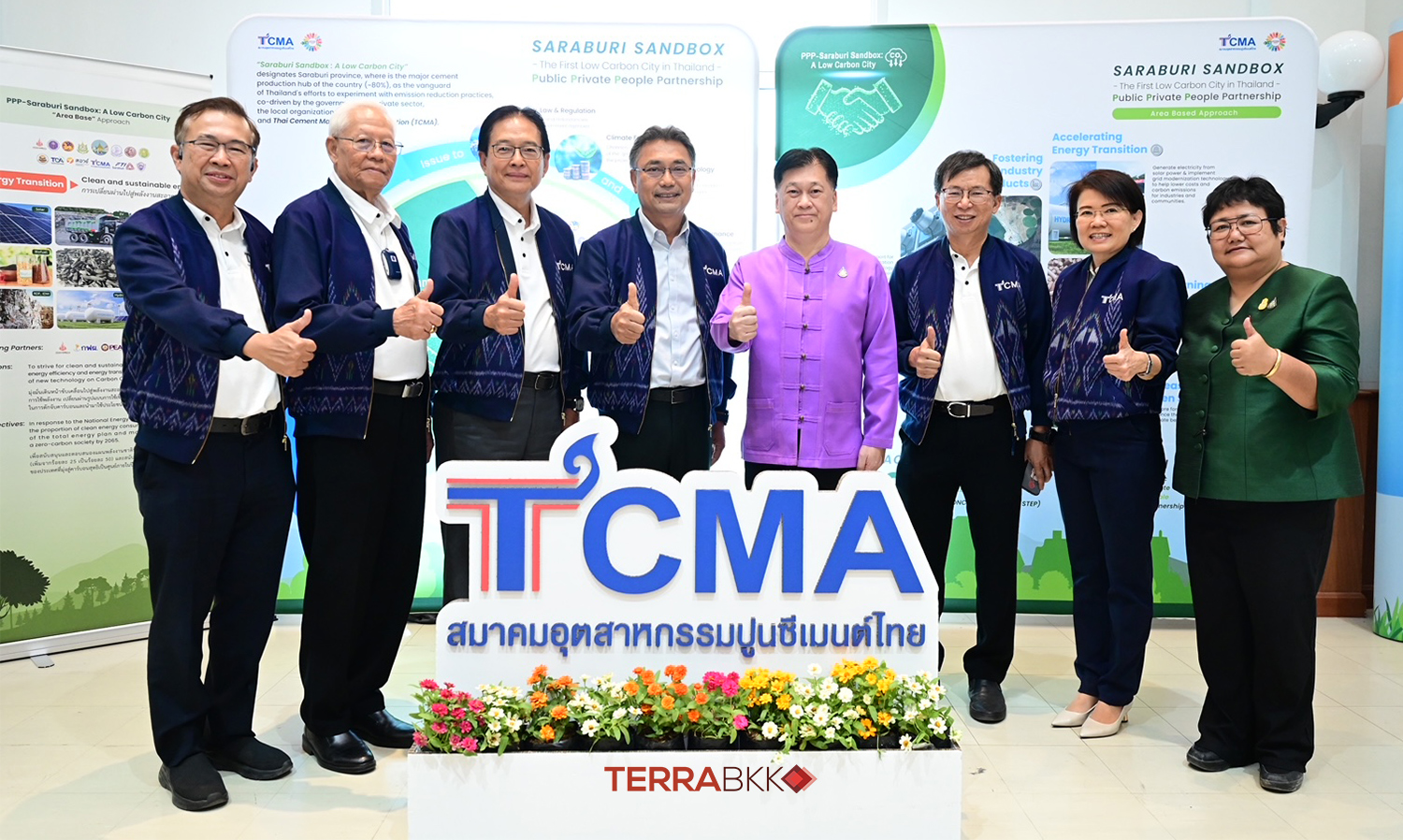
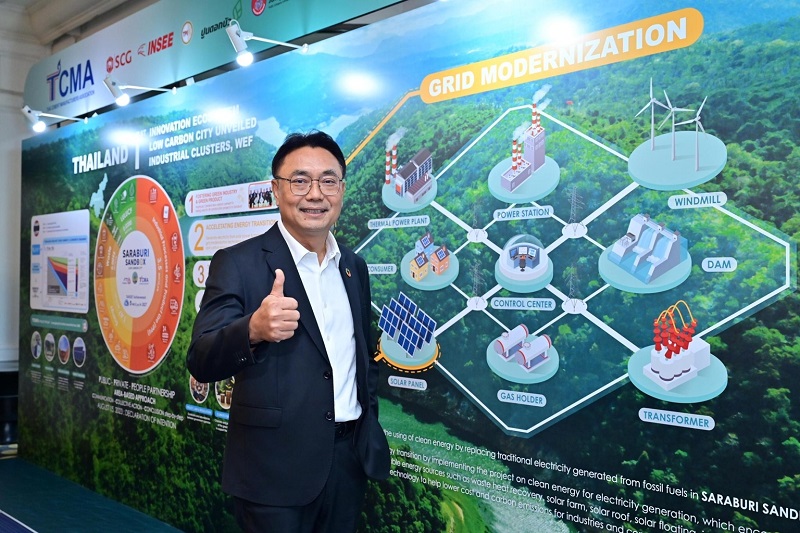
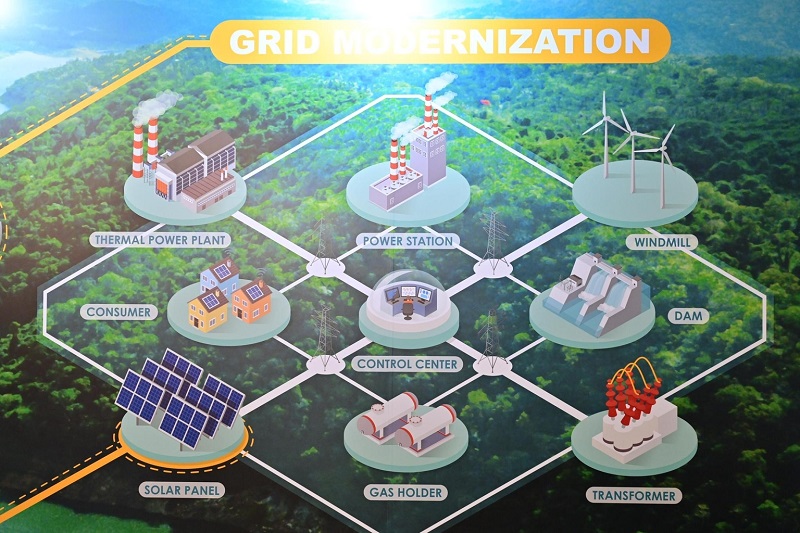
Dr. Chana stated that the “Saraburi Sandbox” <\/span>has integrated cooperation among the government, private sector, and civil society (Public-Private-People Partnership: PPP) to address climate change in Saraburi province by utilizing the main mechanisms of the government to drive the private sector's support for operations, benefiting the public. For example, Grid Modernization is a concept for developing modern transmission and distribution systems to support electricity generation from renewable energy and the transition to low-carbon electricity. This has begun with the installation of solar panels on the roofs of parking buildings (Solar Carport) at the Saraburi provincial hall, funded by the Provincial Electricity Authority, using the Thai Energy Service Company (ESCO) business model for this pilot project.<\/span><\/p>
The transition to clean energy in the cement industry also involves the use of alternative fuels (Alternative Fuels: AF) from biomass, solar energy (Solar Farm), and refuse-derived fuel (RDF), among others. Additionally, there is a promotion for the use of hydraulic cement or low-carbon cement in all construction projects nationwide, replacing traditional high-carbon cement, with plans to cease production of traditional cement by 2025.<\/span><\/span><\/span><\/p>
Unlocking Legal Limitations<\/strong><\/span><\/p>
Previously, Princeton University, a leading private Ivy League institution in the United States, <\/span>studied the potential of the area and energy use, finding that Saraburi province has an energy demand of about 30,000 megawatts, but the area has the potential to produce up to 100,000 megawatts.<\/span><\/p>
“Today, the cement industry is transitioning to clean energy, with TCMA members, all Thai cement producers, utilizing renewable energy from biomass, RDF waste, industrial waste, and even purchasing Napier grass as alternative energy, totaling about 30%. The goal is to increase this further, but we still need support from the government to unlock relevant laws that allow direct electricity trading between producers and users. Other regulations will accelerate the transition to green energy. In the future, it is possible that Saraburi province will not need to manage waste because waste can be converted into alternative energy for local use, helping to reduce energy costs,” Dr. Chana stated.<\/span><\/p>
This aligns with the statement of Mr. Peeraphan Salirathavibhaga, Deputy Prime Minister and Minister of Energy, who said that the Ministry of Energy is in the process of implementing the plan to “restructure, reduce, unlock, and create” to address current obstacles to the transition and improve regulations in collaboration with relevant agencies, including the Ministry of Industry, the Electricity Generating Authority of Thailand, the Provincial Electricity Authority, and the Metropolitan Electricity Authority, among others, to modernize, unlock unnecessary regulations, reduce procedures for operators, and facilitate the industrial sector's adaptation to become clean electricity producers to reduce business costs and enhance their energy security.<\/strong><\/p>
<\/p>
Driving Collaborative Action and Global Connectivity<\/strong><\/span><\/p>
The work in the Saraburi Sandbox, in the form of Public-Private-People Partnership (PPP), has led to continuous progress in various pilot projects since the initial declaration of intent to drive area-based initiatives on August 15, 2023, led by the Governor of Saraburi province, with the Saraburi Provincial Industry Council coordinating local efforts, and TCMA supporting connections to the national and global levels.<\/span><\/p>
<\/p>
“The Saraburi Sandbox is a collaboration from multiple agencies, and the area-based working concept and model have been recognized by all sectors, leading to studies and adoption as a model for operations. However, the next steps for the Saraburi Sandbox will focus on cooperation that develops interesting and feasible projects to promote collaborative action or Collaborative Working, including Collaborative Mindset, Collaborative Action, and Collaborative Value, to pave the way for practical development in the future,” Dr. Chana stated.<\/span><\/p>
<\/p>
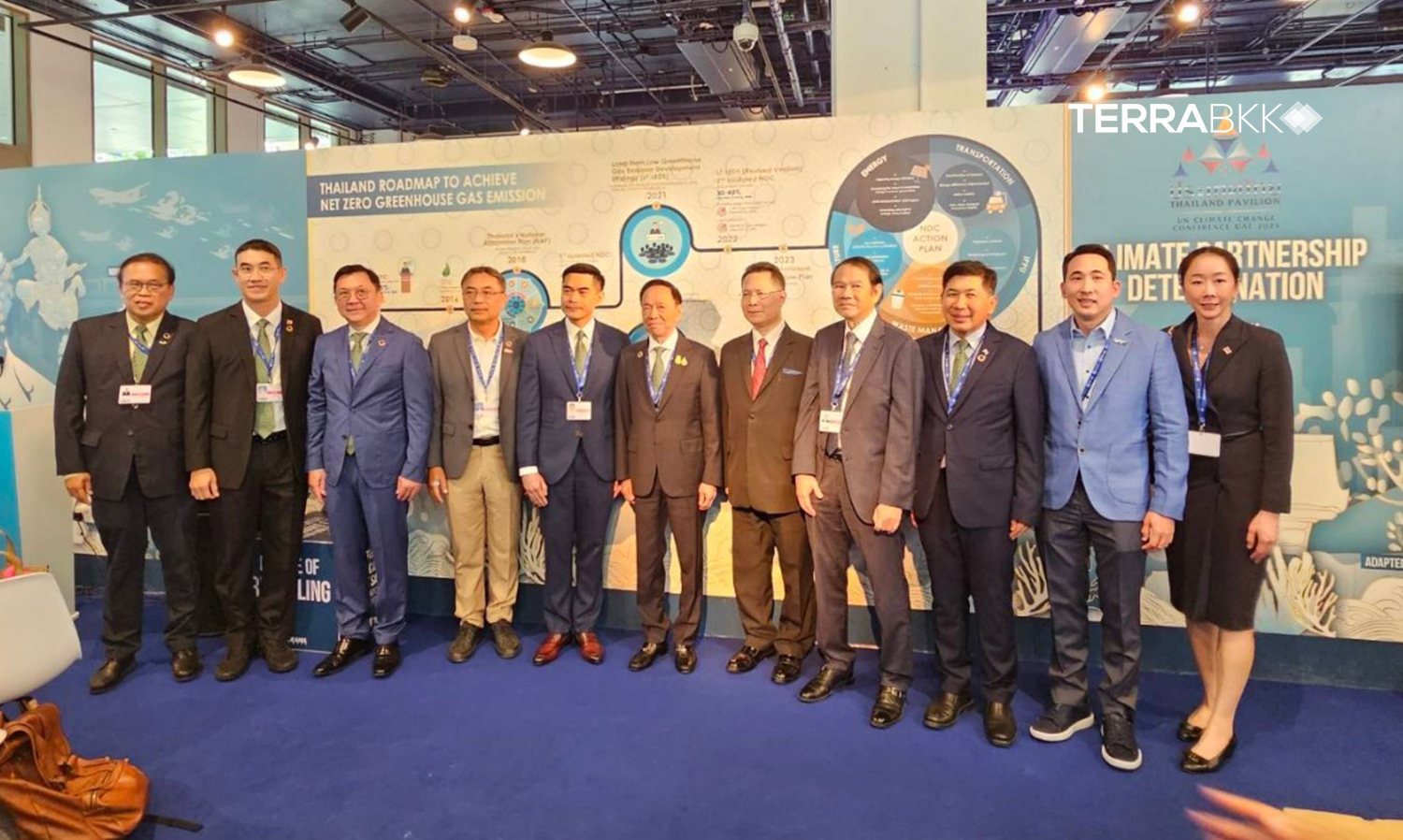
Additionally, TCMA is preparing to expand the “Saraburi Sandbox” to foster more international collaboration after being recognized as a model for operations by the Thai cement industry, which integrates cooperation with the government, private sector, and civil society (Public-Private-People Partnership: PPP) at the upcoming GCCA CEO Gathering and Leader Conference 2024 in Thailand and the global climate change conference in New York, Climate Week New York City 2024. Recently, the “Saraburi Sandbox” has been accepted to participate in the Transitioning Industrial Clusters Initiative by the World Economic Forum, marking it as the first industrial cluster of Thailand, the third in ASEAN, and the 21st in the world. Collaborating with <\/strong>the Global Cement and Concrete Association (GCCA) and continuously presenting progress at COP meetings since the 27th, strengthens the collaborative action initiative.<\/span> “TCMA has a positive outlook on collaborating with other sectors, both domestically and internationally. Having the Thailand 2050 Net Zero Cement and Concrete Roadmap provides TCMA with clarity in operations regarding policy, technology, and funding support to accelerate the energy transition, supporting the cement industry towards Net Zero 2050 <\/span>and enhancing the competitiveness of the industry,” Dr. Chana concluded.<\/span><\/span><\/p> 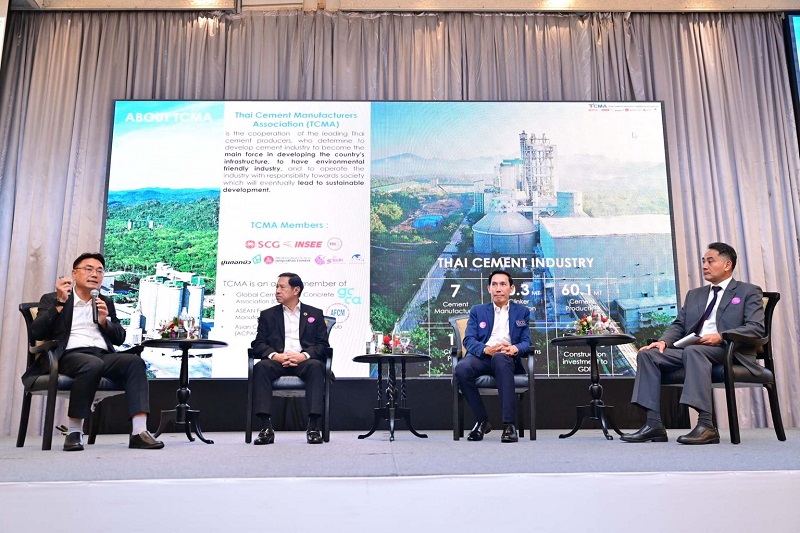 <\/p>
<\/p>
 <\/p>
<\/p>
 <\/p>
<\/p>