Sansiri: A Model Zero-Waste Organization Driving ESG Policies into Action with Measurable Results
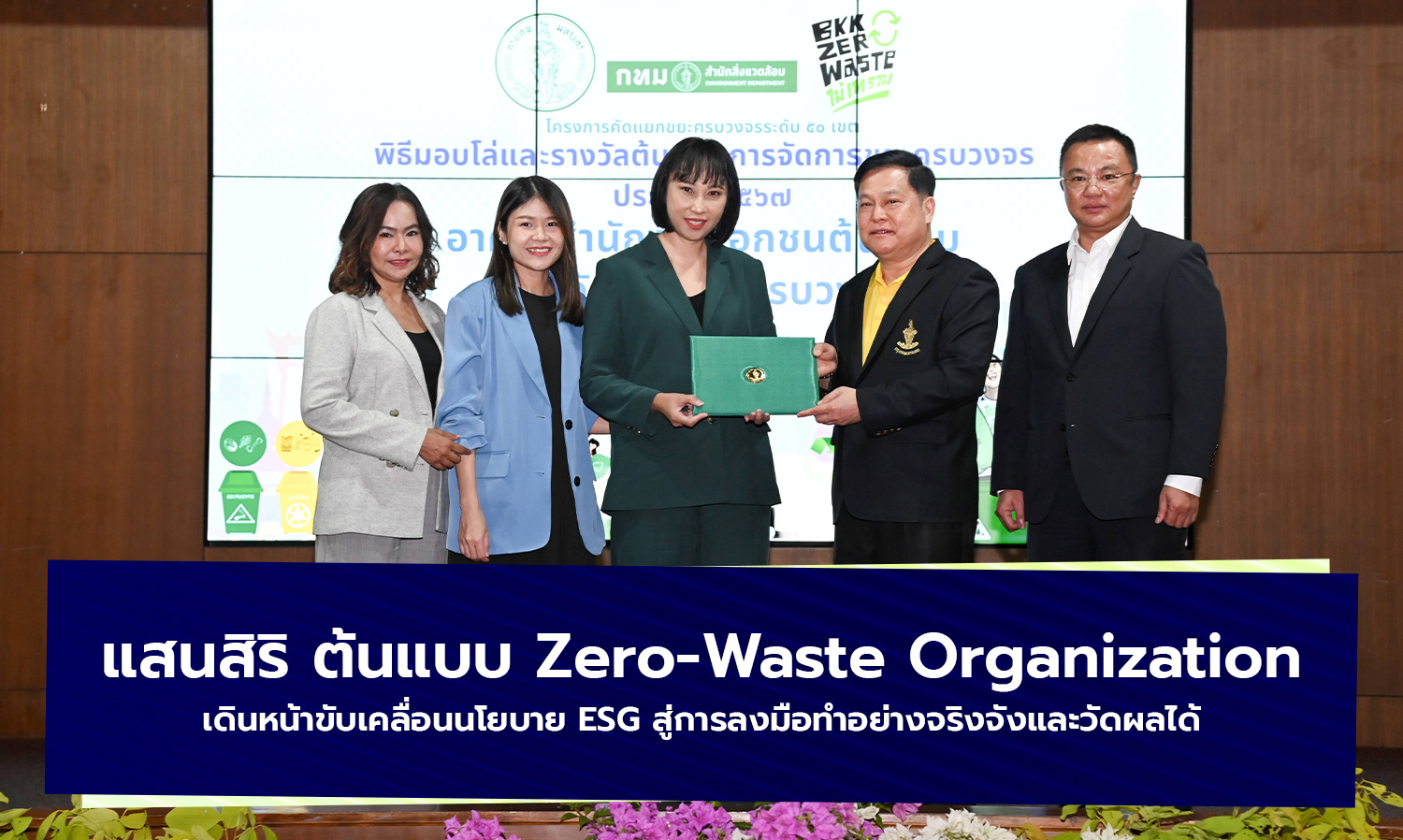
Sansiri, the first real estate leader in Thailand, aims to achieve net-zero greenhouse gas emissions by 2050. The company’s headquarters, “Siri Campus,” has won the first prize for “Comprehensive Waste Management Model at Source” in the “Private Office Building” category in Watthana District. This award was presented at the Comprehensive Waste Management Model Contest for 50 districts organized by the Bangkok Environmental Office. Ms. Patrawiporn Kanthaprachan, Senior Director of Human Resources and Office Management, accepted the award from Mr. Somboon Hormnan, Deputy Permanent Secretary of Bangkok. This recognition underscores the serious and measurable commitment to driving ESG policies through the dedication of all employees in effectively managing waste from the source for true benefits and efficiency.
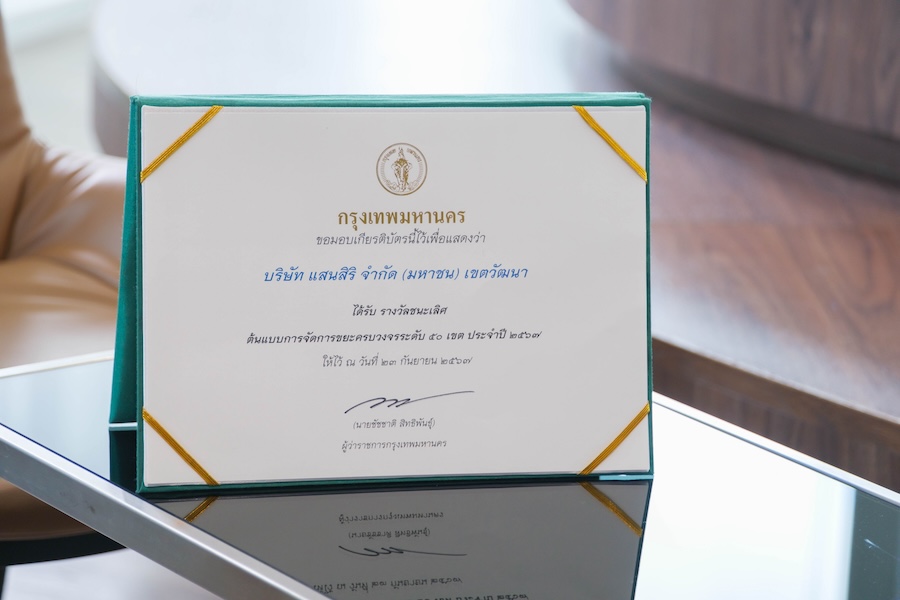
From Sansiri's mission to a collective effort by all employees, there is a strong commitment to creating sustainable environmental change through the campaign “Waste Management: Separating Waste for Benefits.” This reflects the serious and systematic approach to waste management within the office, as well as the effective waste management practices of Plus Property (a subsidiary), which includes waste separation, reducing waste volume, and recycling waste for reuse. This continues the company’s policy to achieve the “Net-Zero” goal by 2050, which is key to sustainable business operations in the future.
The Comprehensive Waste Management Model Contest was organized by the Bangkok Environmental Office and is the first year of the event, aimed at promoting cooperation in effective waste separation at the source and creating a model for comprehensive waste management across all 50 districts of Bangkok. The contest was judged by a panel of experts from both public and private sectors known for their excellent waste management practices, based on criteria for evaluating waste management according to the “Zero-Waste Organization” approach. The focus is on establishing a waste management system at the source, reducing the amount of waste sent for disposal, and fostering a culture of waste reduction and separation in communities and organizations sustainably.