In-Depth Look at the Booming Real Estate Trend: Sustainability, Lifestyle, and Low Carbon - Opportunities & Survival for the Future
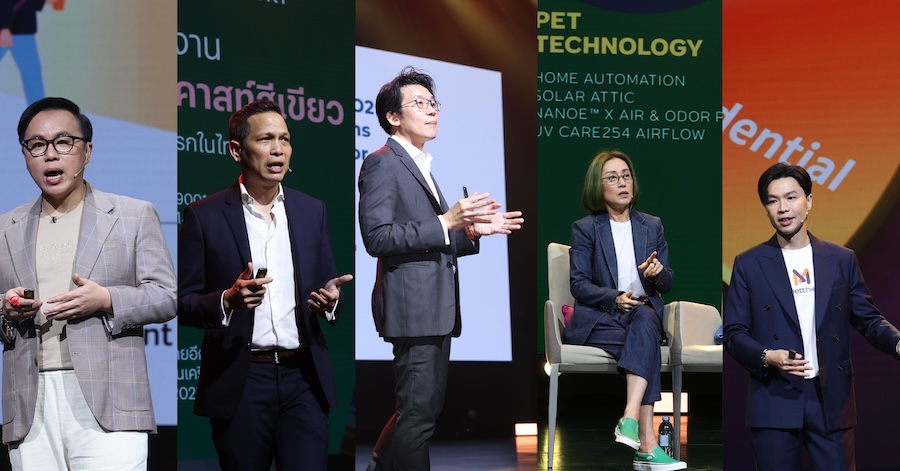
Amid concerns about "bad debt" and the "stock of unsold houses and condos" amounting to trillions of baht still awaiting resolution, the Thai real estate business reveals that there are still many "opportunities" ahead. The "New Real Estate Trends" forum gathered insights from "industry leaders" in Thailand's top real estate sector to share perspectives, business strategies, and the must-watch trends that are gaining momentum. This was one of the highlights of the Prop2Talk event at the Bangkok Quadrant Forum 2567, titled "Property Meets Debt: 10 Years of Thai Real Estate Will Never Be the Same" on September 19, 2567 at Siam Square One, KBank Siam Pikanet Theater.
‘Super Young Generation’ Buying Luxury Homes from ‘SC Asset’
With the demographic of homebuyers aged 40+ being significant, the spotlight is now shifting to the Under 30 group, which is rapidly gaining traction. This younger demographic, aged between 26, 27, 28, 30, 32, 33, 37, and 38, is achieving success through online businesses, has a unique lifestyle, and is ready to purchase luxury homes priced between 80-150 million baht. “80% of buyers are under 40 years old, and among them, 50% are under 30 years old.”
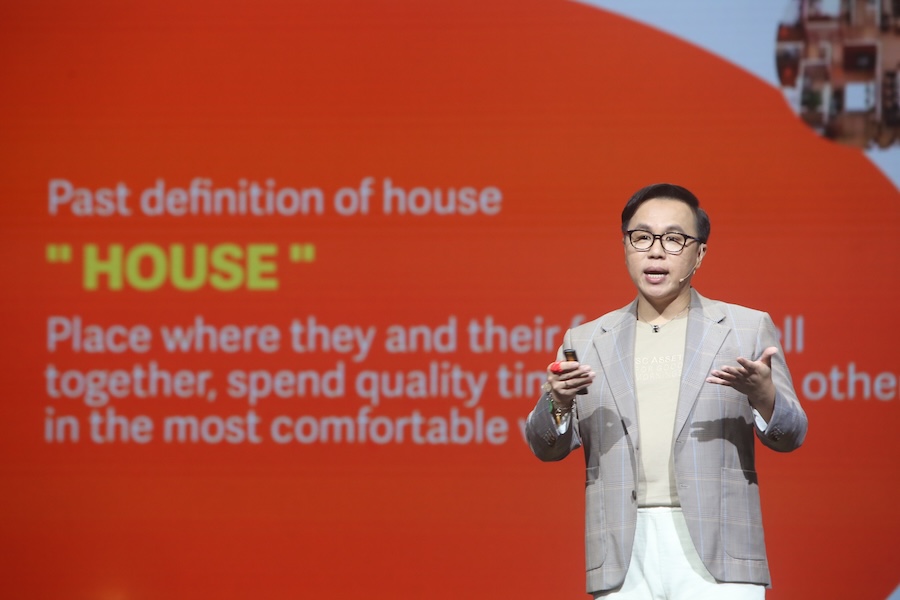
Nattakit Sirirat, Head of Marketing at SC Asset Corporation Public Company Limited, stated that SC has conducted research for two years, revealing that the homes being developed today and the factors influencing buyers' decisions have changed. With the rise of social media and evolving lifestyles, traditional values such as location confidence must adapt to each company's strategy. Meanwhile, "New values" will be integrated for the new generation of customers, focusing on MLW principles: Mind, Lifestyle, and Health and Well-being.
“Mind” - After work, customers seek elements that recharge their energy. The offerings include my space, my joy, catering to individuals, couples, or multi-generational families, all desiring personal space for activities like drawing.
Additionally, essential features include “Connected layout” to foster family relationships and “Small oasis,” which incorporates green spaces for relaxation.
“Lifestyle” - In this era, people are accumulating more possessions. Having a Passion Room for designer toys, cars, bags, and shoes, along with mood lighting and a Lifestyle kitchen for baking and cooking, is becoming essential.
“Health and Well-being” - With smaller families, the demand for spaces that accommodate favorite activities is increasing. Homes must also include dust protection systems, bathrooms with grab bars for the elderly, wheelchair accessibility, and elevators for each floor.
“SC is not just building homes; we are creating projects that cater to specific lifestyles, such as homes for singles, gamers, and recently launched homes for introverts and extroverts, featuring functions that are unique and unavailable elsewhere,” Nattakit added.
‘Sustainability’ - The Answer in Every Step by ‘Sansiri’
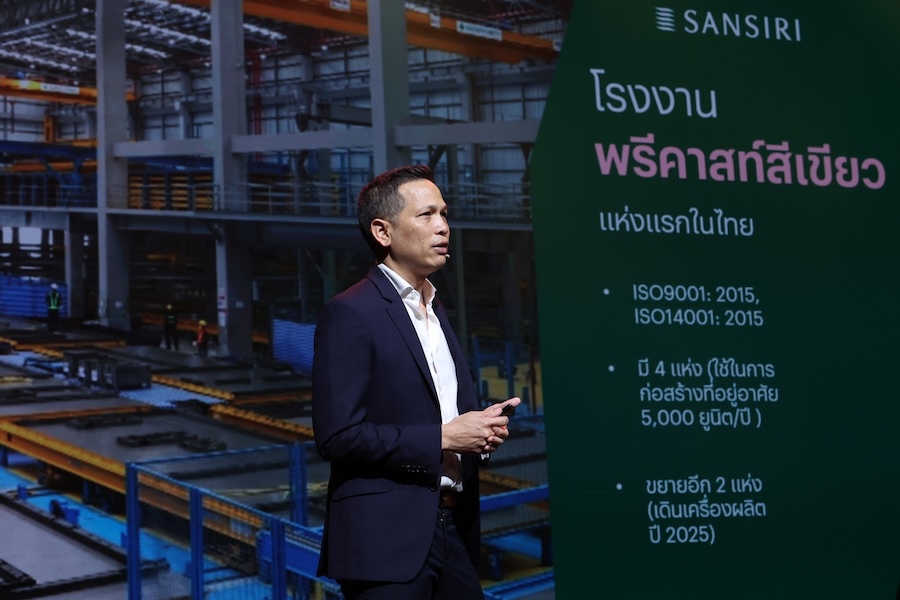
“Sustainability is a personal matter, but taking action is not easy. It requires genuine commitment, not just to the environment but also to social dimensions,” said Phumipak Julmanichot, CEO of Sansiri Public Company Limited, reflecting on the company's approach to balancing business growth with sustainability. Sansiri's strategy focuses on three main areas:
Firstly, moving towards a low-carbon organization by effectively managing waste.
Secondly, increasing the procurement of natural energy sources in collaboration with partners and suppliers, adjusting work methods together, such as clear contracts regarding materials that do not harm the environment, and installing solar panels, which Sansiri plans to gradually install for 3,200 homes this year.
Thirdly, environmentally friendly construction. Sansiri has four green precast factories in Thailand that manage waste and recycle it. They have also partnered with TPI to use eco-friendly green cement in residential construction.
All these efforts aim to lead the organization towards its goals in 2023 of creating energy-efficient homes (Low energy home) that can reduce greenhouse gas emissions by 20% by 2030, low carbon homes (Low carbon home) that can reduce emissions by 50%, and net zero homes by 2050 that will achieve zero greenhouse gas emissions. Beyond environmental aspects, sustainability must also address social dimensions. Sansiri is involved in educational projects for children in Thailand, Zero Dropout in Ratchaburi, Life Equality supporting equality for the sixth year, and Sansiri Academy, continuing for the 18th year.
Designing for Sustainable Cities
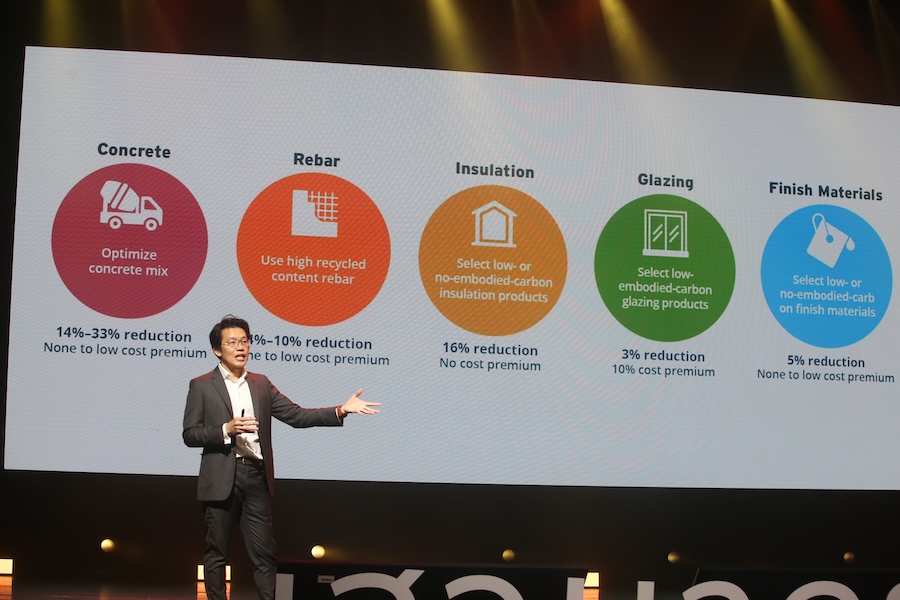
Over a decade of work, Phaitaya Banchakittikun from ATOM DESIGN spoke about collaborating with real estate developers to ensure product quality benefits cities and people. Each project aims to increase green spaces beyond what is mandated by the EIA (Environmental Impact Assessment), such as creating green parks in the Ashton Chula-Silom project by Ananda Development. Another example is the luxury home project Tri Vananda in Bang Tao, Phuket, covering 584 rai, where the project owner intends to preserve half of the green space.
The design features a modern style with a focus on passive design, with each unit equipped with a pool villa. The design concept emphasizes “Carbon neutrality”, calculating the amount of CO2 emissions equal to the carbon absorbed from trees planted in the preserved forest area, which constitutes half of the entire project area.
Regarding the homes, there is a focus on reducing the use of glass, installing solar panels, and selecting materials that help reduce carbon emissions, including using locally sourced products to minimize transportation and constructing with low-carbon concrete, which can reduce carbon emissions by 20-25%.
Pet Family - A Growing Trend
The generation of people in society is changing, and life goals are evolving. SINKs (Single Income No Kid) are singles or married individuals who do not wish to have children, while DINKs (Double Income No Kid) are married couples who decide against having kids. Additionally, the LGBTQ community is increasingly looking for pets to care for and treat as family members.
The lifestyle of modern individuals is not just about being “owners” and “pets” but forming a close-knit family. This trend is booming, growing at an average of 10% per year and generating a market value of over 70,000 million baht, including pet hospitals, pet food, grooming services, and pet-friendly condominiums, which have seen a market unit growth of up to 4,000%.
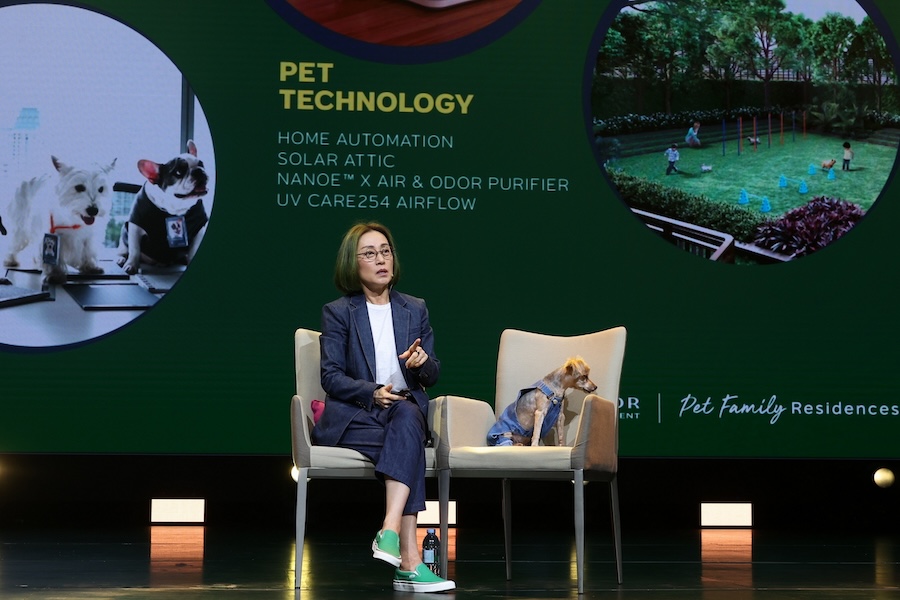
With 25 years of experience, Petchlada Phuworalak, CEO of Major Development Public Company Limited, pioneered the pet-friendly condominium market with the Hampton Thonglor project in 2001. The positive response from pet owners led Major to continuously adjust its strategy to align with the growing trend, starting with allowing pets, evolving to pet-friendly, and now developing into Pet Family.
For Major, Pet Family comes fully equipped for beloved pets, including guides for registration, breed identification, weight, insurance, and free health checks, as well as design pet functions within the project, such as double-layer walls to reduce noise, air purification systems, and pet facilities like play areas. They have partnered with hotels and hospitals to provide Pet Family Privileges for residents, creating communities with pet-friendly restaurants and offering free grooming services for residents' pets.
“We now call ourselves a Life scape developer, creating landscapes of living where pets are part of the family, ensuring equal happiness in a way we call Happetness,” Petchlada stated.
‘Transforming’ Real Estate into Smart Living with Technology
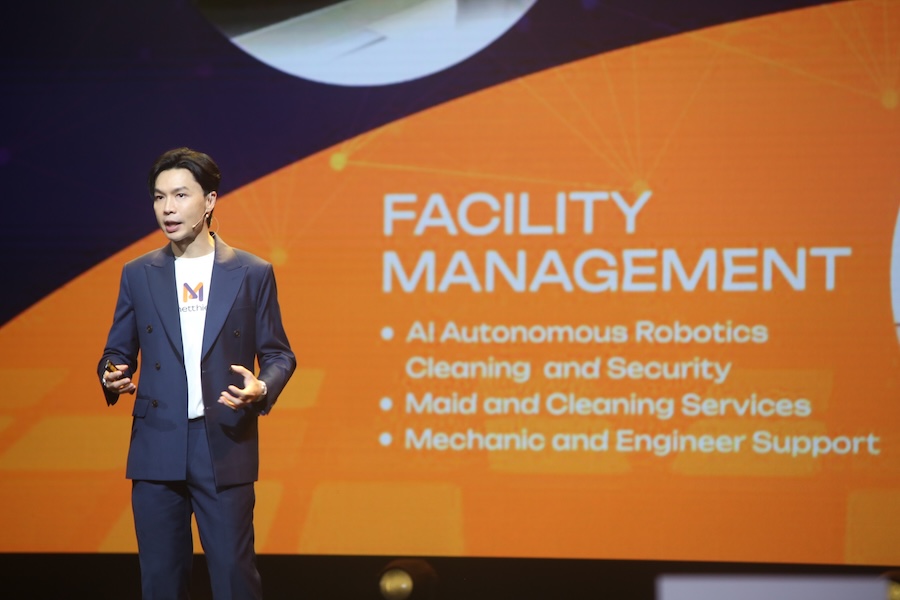
Technology in managing and caring for real estate projects presents challenges, but if executed well, it can lead to cost-effective management and efficiency. Khayol Tantichatiwat, CEO of Metthier Co., Ltd., a provider of comprehensive smart facility management, stated that managing real estate projects, shopping malls, factories, and hospitals can reduce costs by integrating technology to enable collaboration between people (labor) and technology.
In the case of smart buildings, each building is equipped with AI CCTV that collects data and counts the number of people entering and exiting using facial recognition technology. Today, entering and exiting buildings no longer requires card exchanges; simply inputting ID card information into the system and scanning the face suffices. AI CCTV can also serve as a security guard during nighttime.
Visitor management services help track who enters and exits the building, correlating the number of people with energy usage, such as air conditioning, which works in conjunction with energy consumption management. Data is collected and analyzed to adjust energy usage based on the number of employees present, ensuring efficient energy cost management.
Additionally, the system reduces the workload in facility management by integrating cleaning robots, allowing large projects that previously required 300 cleaners to reduce that number to 200.
Security as a service is another 24-hour security solution that combines human security with technology, already implemented in SC Asset's “Bangkok Boulevard” across all 10 projects. The system operates through the RuJai application, with AI CCTV installed in critical monitoring areas, and this year, plans to expand services to a broader target market, including hospitals.
Regardless of how much the overall real estate market and homebuyer demographics change, new opportunities will always arise from today's and future trends of “Sustainability - Lifestyle - Low Carbon.”