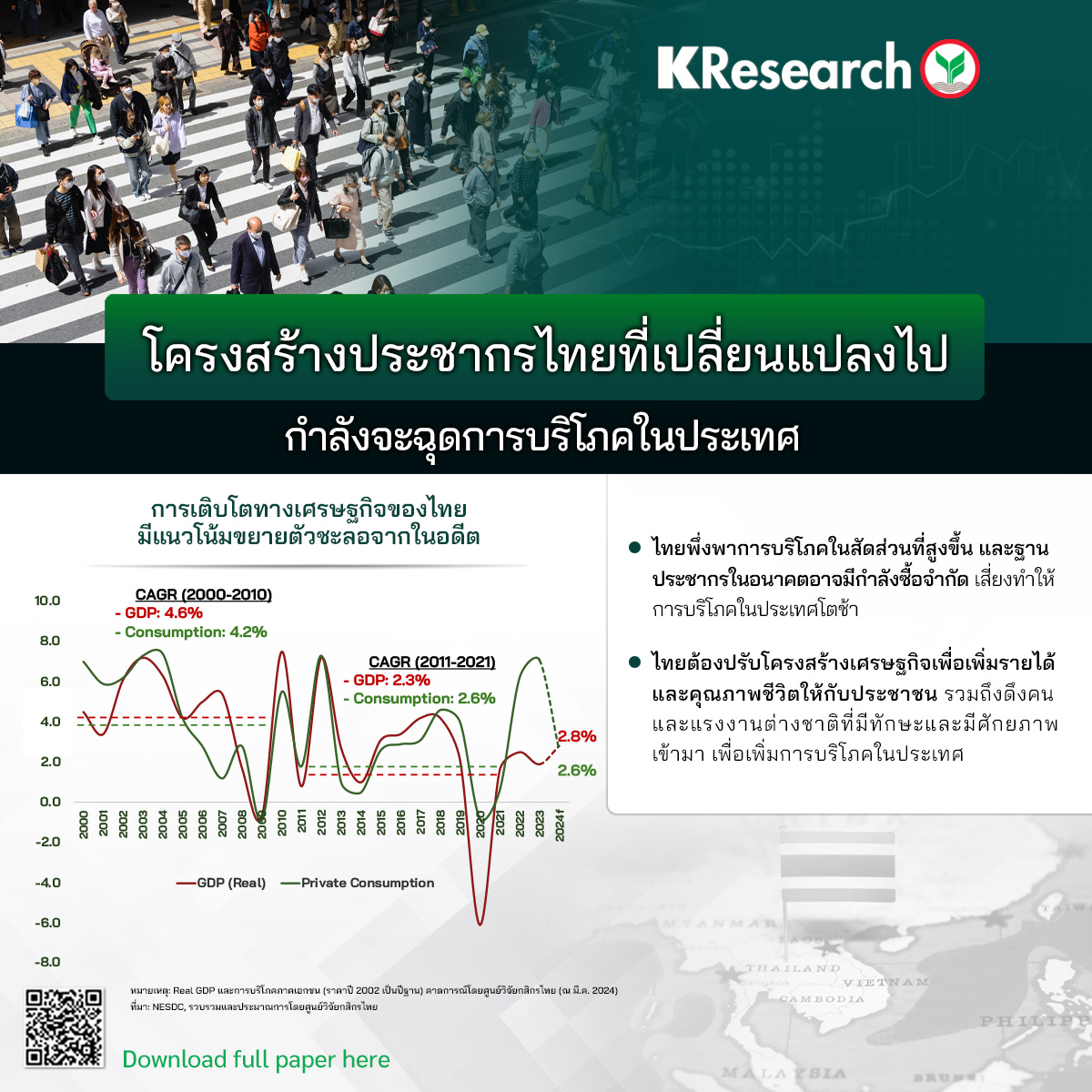
Changing Demographics in Thailand May Hinder Domestic Consumption, Says Kasikorn Research Center
- Thailand is increasingly reliant on domestic consumption, but the future population may have limited purchasing power, risking slow growth in domestic consumption.
- Thailand needs to restructure its economy to increase income and quality of life for its citizens, including attracting skilled foreign workers to boost domestic consumption.
The demographic structure in Thailand is changing, with a declining population and a transition to a super-aged society, (Super-aged society)[1], which impacts the Thai economy in three main areas: 1) Increasing labor shortages, 2) Slower growth in domestic consumption, 3) Rising fiscal burdens. The Kasikorn Research Center has previously assessed the impact of demographic changes on labor shortages[2] This research focuses on evaluating the impact and recommendations regarding the changing demographic structure in Thailand and its effect on the slowdown of domestic consumption.
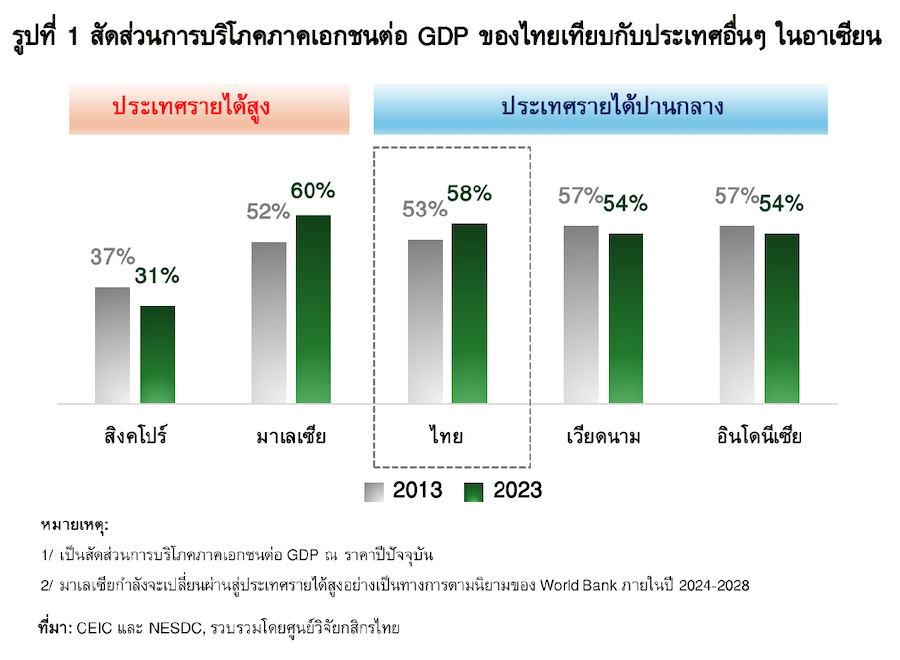
Thailand is increasingly dependent on domestic consumption, which accounted for 58% of GDP in 2023, up from 53% a decade ago. However, growth is slowing due to economic factors and purchasing power constraints. In contrast, countries like Singapore, which is also transitioning to a super-aged society, are seeing a decrease in domestic consumption reliance from 37% to 31%. Even Vietnam and Indonesia, approaching a super-aged society, are witnessing a decline in domestic consumption reliance (Figure 1), indicating that these countries have other economic drivers.
|
|
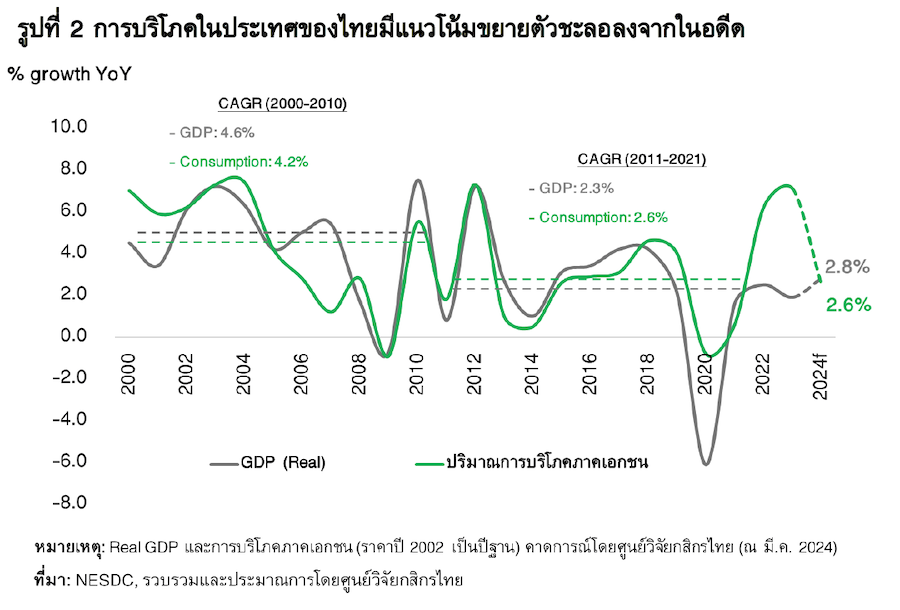
However, domestic consumption in Thailand has been slowing due to various factors, including economic conditions affecting purchasing power, rising living costs from increased prices of goods and services, and high household debt levels (Figure 2). Therefore, if the Thai population continues to decline significantly, it will further hinder the growth of domestic consumption.
|
|
The changing demographic structure in Thailand is becoming increasingly evident, while income levels remain uncertain due to economic conditions. A potential decline in consumption from both the elderly, who tend to spend less, and a decreasing population will negatively impact domestic consumption, especially when the future population has limited purchasing power. Thus,
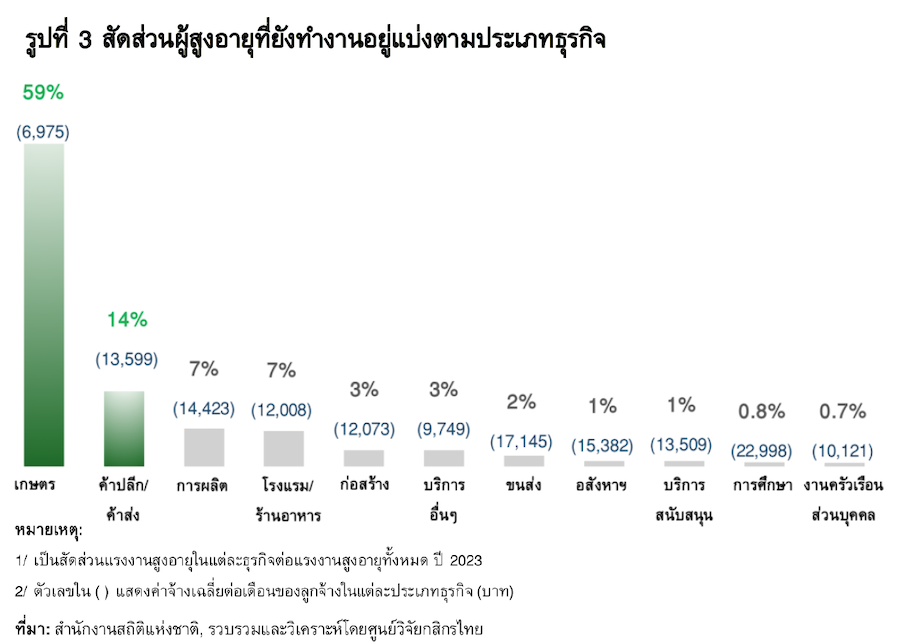
1) The elderly population in Thailand, which is becoming a significant demographic group, has low income. It is noted that over 34% of Thai seniors have an average monthly income below the poverty line (Poverty Line)[3] , and among the 5.1 million seniors still working, 3.7 million are employed in agriculture (59%) and trade (14%), which have lower average wages than other professions (Figure 3). This pressure limits the consumption capacity of Thai seniors.
|
|
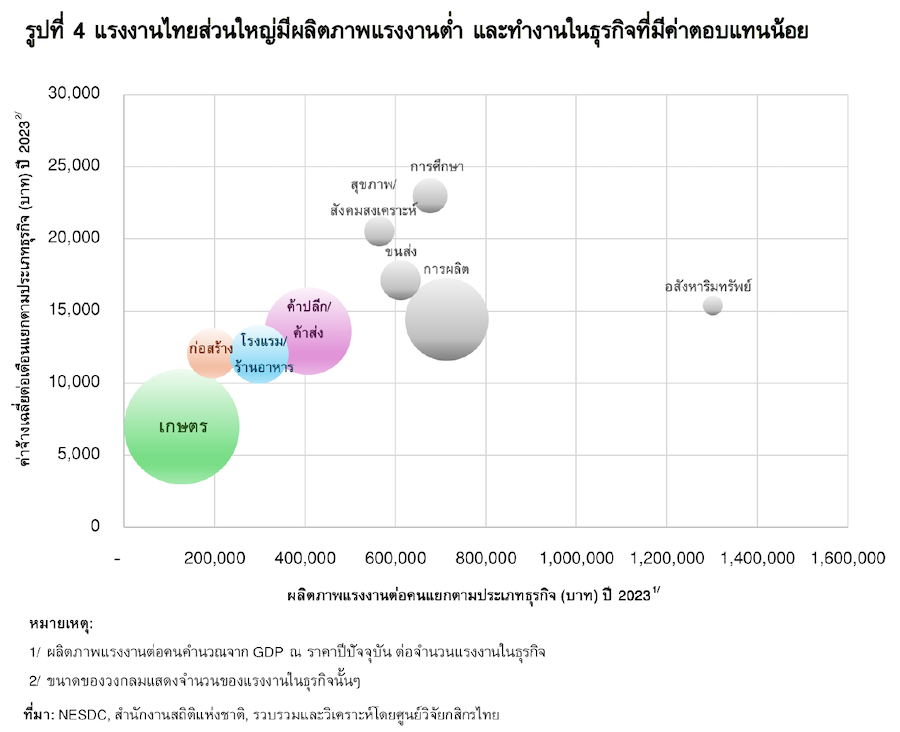
2) Thai labor has low productivity and most work in low-paying sectors. Labor productivity in Thailand has grown at an average annual rate of about 1.5% (CAGR 2014-2022)[4] and most are employed in low-paying sectors, particularly agriculture, which has the lowest productivity compared to other sectors. However, around 30% of the workforce is in this industry, while agricultural workers earn an average of only 6,975 baht per month (Figure 4), limiting their consumption capacity.
|
|
The Kasikorn Research Center views the changing demographic structure as an urgent challenge that Thailand must address by restructuring its economy to increase income and quality of life for its citizens, which will help mitigate the risk of slowing domestic consumption. The proposed actions may have different timelines, summarized as follows:
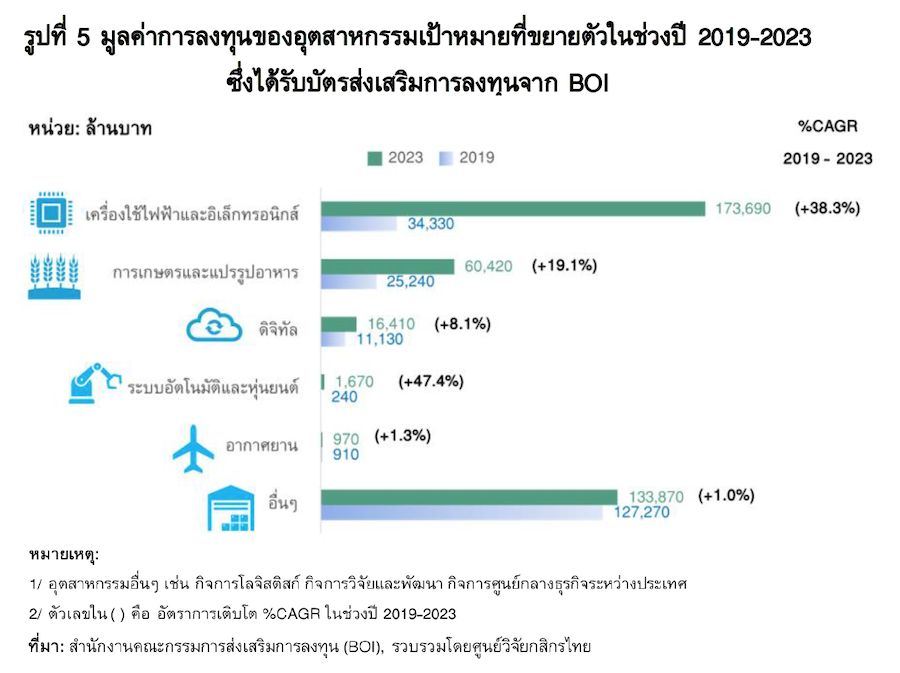
- Increase citizens' income in line with rising living costs by restructuring production alongside developing workforce skills to support future industries. Although in the past 2-3 years, investment in new target industries that utilize advanced technology and high-value services, such as automation and robotics, electrical and electronics (e.g., smart appliances, PCB/PCBA), and digital industries, is expected to grow (Figure 5), most investments are still concentrated among large operators or investors, while many medium and small enterprises (SMEs) still await support or acceleration from the government.
|
|
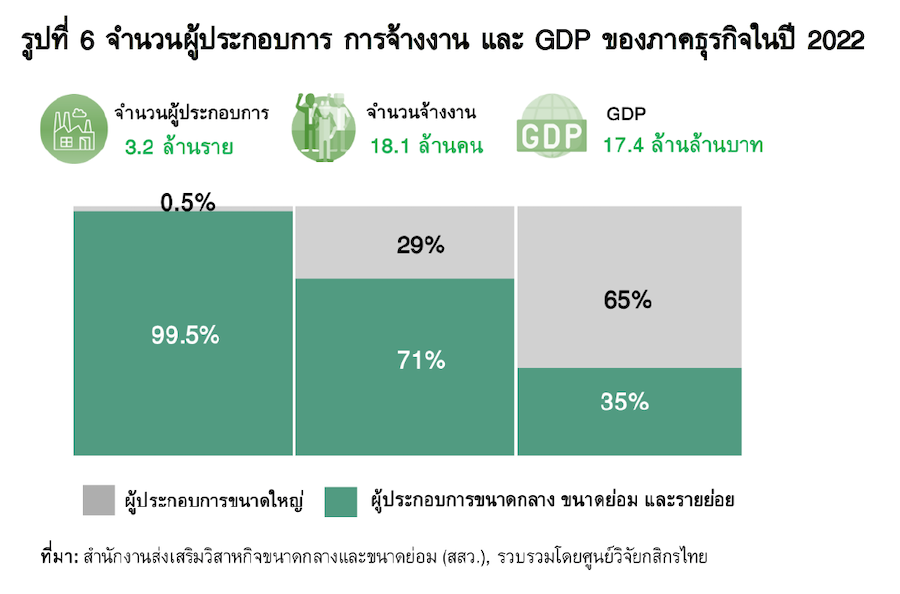
Considering the economic structure of the country, there are 3.18 million SMEs, accounting for 99.5% of all businesses (3.2 million), employing 71% of the workforce but contributing only 35% to GDP (Figure 6), with a trend of declining income generation due to increased competition from larger market players.
|
|
Thus, a key challenge is to help SMEs adapt to the changing economic environment so that their workforce can earn higher incomes aligned with skill development, such as:
- Implementing measures for SMEs to become part of the value chain of larger operators to facilitate knowledge and expertise transfer.
- Supporting the development of local businesses (Local Contents, Local Services).
2) Allocate government budgets and plan infrastructure to enhance the potential and quality of life of the population. Each measure may have different timelines for implementation and results, such as:
Short-term measures:
- Improve public service systems, such as transportation, to accommodate the lifestyles of all groups, especially the elderly, including enforcing laws requiring buildings to have facilities like elevators and ramps for easy and safe access.
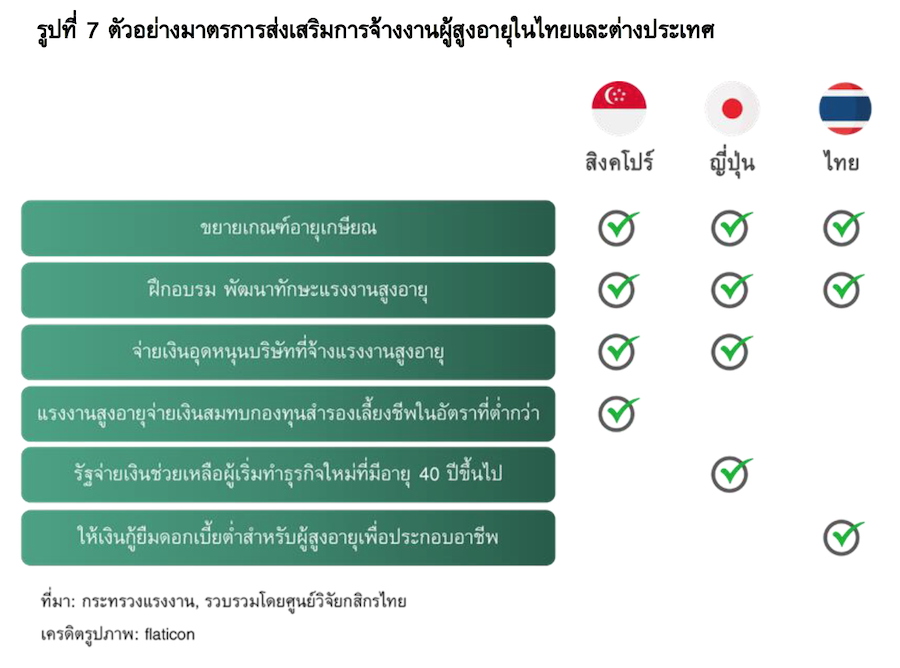
- Promote the employment of seniors in government agencies and incentivize the private sector to hire seniors, alongside developing skills for seniors to continue working. Thailand and many countries have measures to promote senior employment, such as wage subsidies for businesses hiring seniors and loans or assistance for self-employment (Figure 7).
|
|
Medium to long-term measures:
- Distribute quality public health service centers evenly, plan to increase medical personnel and caregivers for the elderly to meet rising demand, and incorporate medical technology services, such as telemedicine, which aligns with global trends predicting that the global Health Tech market will grow at 14.5% (CAGR) from 2020-2027, with Asia-Pacific expected to grow above the global average at 17.6% (CAGR).
3) Attract foreign nationals with purchasing power or skilled foreign labor to generate income for the country while maintaining standards for goods and services and accessibility for locals. Foreign spending is another important source of income for the country, with foreign nationals accounting for 5% of GDP in 2023, gradually recovering to pre-COVID levels of around 11%[5] (Figure 8).
|
|
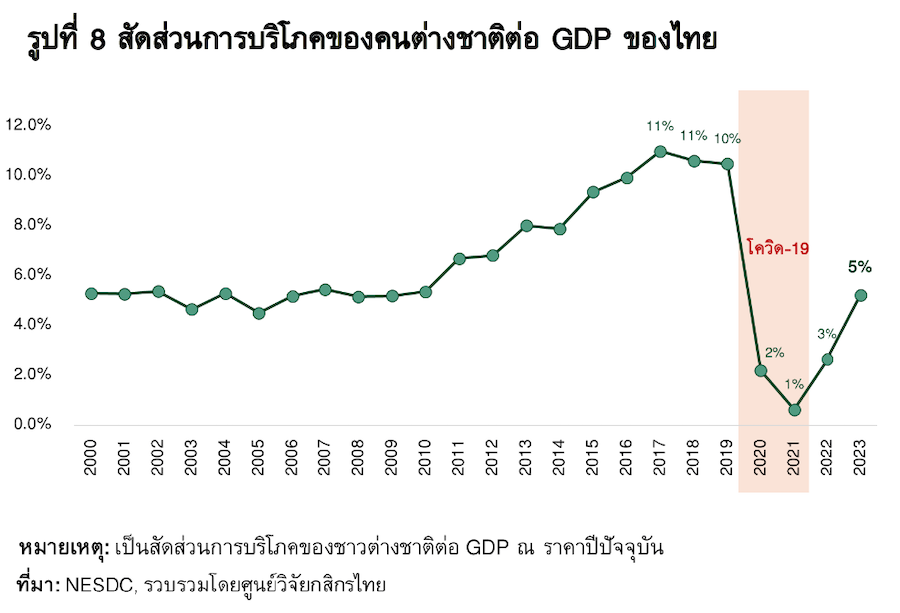
Therefore, attracting more foreign nationals to spend in the country should help generate income, increase employment, and boost domestic consumption, leveraging Thailand's strengths in sectors such as health tourism to attract new potential groups beyond short-term tourists, such as long-stay retirees and digital nomads, as well as high-skilled migrant workers.
However, under measures to attract foreign spending, the government should promote domestic operators to maintain the quality of goods and services to create a positive image and experience for foreigners while ensuring that locals can still afford to purchase goods and services without price and accessibility barriers. For instance, if the government implements measures to attract foreigners for medical treatment in Thailand, it must maintain a balance to ensure sufficient medical personnel for local access to healthcare.
Ultimately, it will depend on policy design to minimize the impact on locals while Thailand benefits from increased foreign investment or spending.
|
This research report was prepared by Kasikorn Research Center Co., Ltd. (KResearch) for general dissemination, based on publicly available information or information deemed reliable at the time of preparation, which may change over time. KResearch does not guarantee the accuracy, reliability, suitability, completeness, or timeliness of such information and does not intend to solicit, recommend, or persuade any decisions to take any actions. Therefore, you should carefully study the information and exercise caution and discretion before making any decisions. KResearch will not be liable for any damages arising from the use of such information. Any information contained in this research report is the property of KResearch and/or third parties (as applicable). The use of such information (in whole or in part) must acknowledge the ownership rights of KResearch and/or third parties (as applicable) or the source of that information. You may not reproduce, modify, adapt, alter, forward, publish, or otherwise use it for commercial purposes without prior written permission from KResearch and/or third parties (as applicable). |
[1] According to UN projections (2022), Thailand will enter a super-aged society (with a population aged 65 and over exceeding 20% of the total population) by 2029, the second fastest in ASEAN, only behind Singapore.
[3] Referring to the proportion of individuals with annual incomes below 30,000 baht (about 2,500 baht/month) from the 2021 National Statistical Office survey of the elderly population in Thailand, using the poverty line level for that year, which was about 2,803 baht/month.
[4] Referencing the Labor Situation Index report 2023 from the Ministry of Labor.
[5] Including foreign tourists, expatriates working in Thailand, and long-stay foreigners in Thailand.