Sansiri Partners with TPIPL to Promote Innovative Eco-Friendly Cement, Implementing it in All Horizontal and Condo Projects, Shaking Up the Real Estate Industry
- Sansiri advances as a leader in sustainable real estate by partnering with TPIPL to research and develop a new "Green Cement" formula that reduces global warming.
- Commits to using it in all horizontal and condo projects, expecting to reduce greenhouse gas emissions by over 3,800 tons of CO2 equivalent by 2025, equivalent to planting 400,000 trees, aiming for a Net-Zero target by 2050.
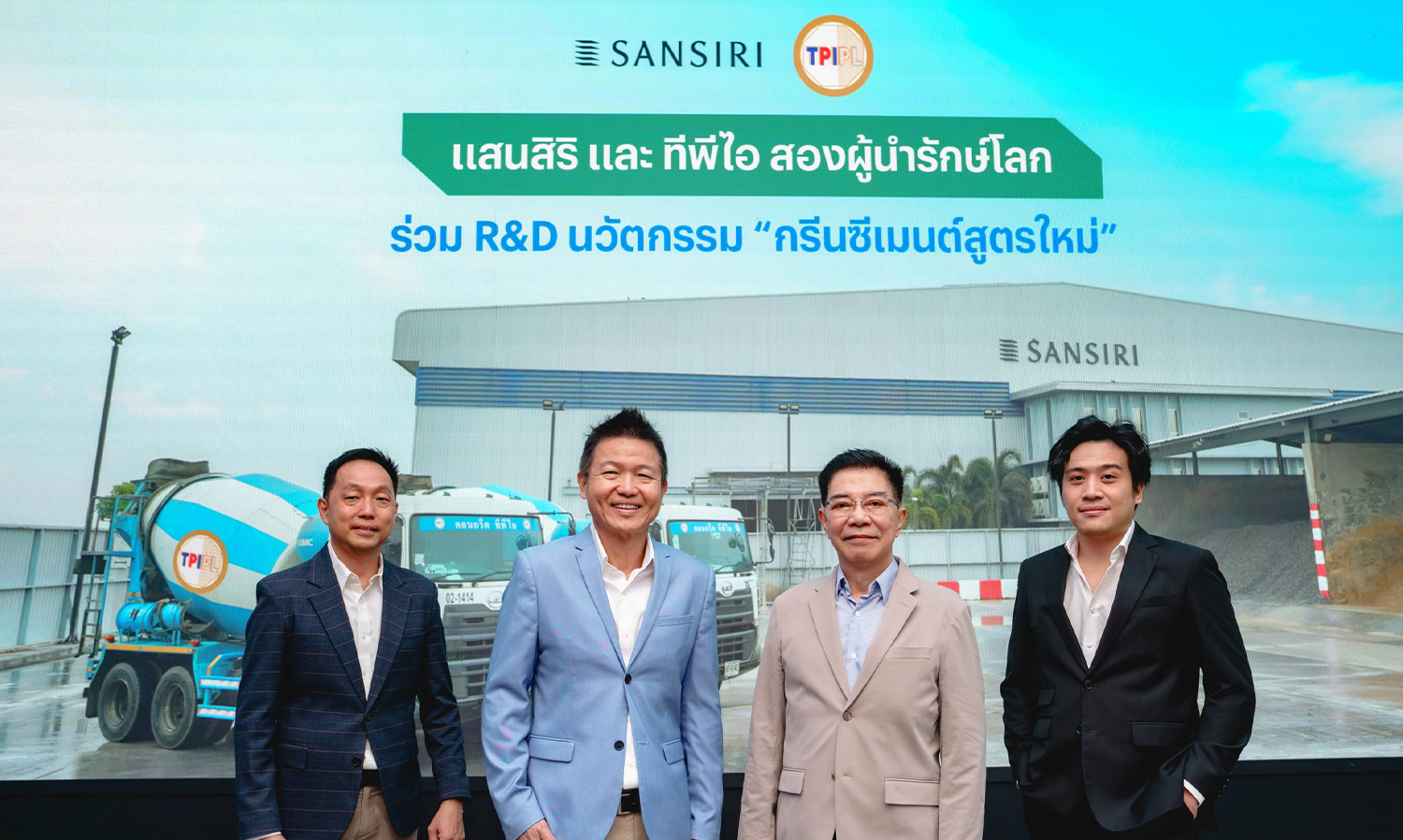
From left to right: Sansiri Public Company Limited, represented by Mr. Anut Kittikulmethee, Senior Vice President of Horizontal Project Development, and TPIPL Concrete Company Limited, represented by Mr. Panya Taengsingthong, Managing Director, join forces to continue the mission of two environmentally conscious leaders to research and develop a new eco-friendly cement formula that reduces global warming, which will be used in all of Sansiri's projects, both horizontal and condominium.
Mr. Anut Kittikulmethee, Senior Vice President of Horizontal Project Development at Sansiri Public Company Limited (SIRI), revealed that Sansiri is moving forward to become a leader in sustainable real estate, continuously contributing to the reduction of global warming. It is the first Thai real estate developer to set a goal of achieving net-zero greenhouse gas emissions by 2050, supporting the growth of new projects in the future while being responsible for the environment, as part of strengthening the Thai economy.
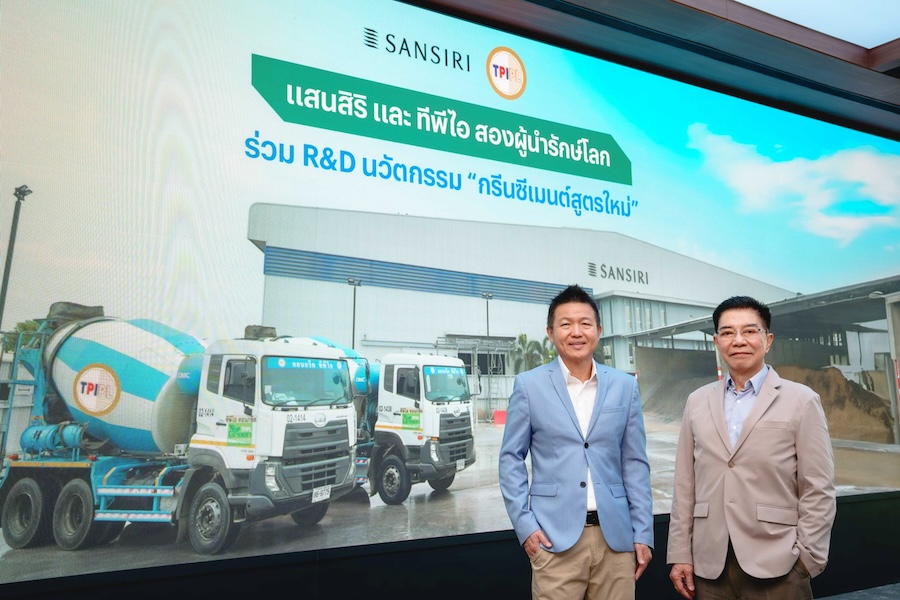
Recently, Sansiri has partnered with TPIPL to research and develop a new eco-friendly cement (Green Cement) formula that reduces global warming, which will be used in all of Sansiri's projects, both horizontal and condominium. This will be an essential component in the production of precast concrete in Sansiri's precast factory, which is a green factory, starting from May 1, 2024. It is expected to reduce greenhouse gas emissions by 5-10%, or about 50 kilograms of CO2 equivalent per ton, compared to Portland cement. Additionally, in 2024-2025, Sansiri estimates it will be able to reduce greenhouse gas emissions from switching to green cement by over 3,800,000 kilograms of CO2 equivalent, equivalent to planting 400,000 trees.
“All of Sansiri's projects will use green cement, with horizontal projects utilizing it through precast entirely, while condominiums will incorporate it in proportions suitable for each project. It cannot be denied that constructing houses or condominiums generates a massive amount of carbon dioxide, with cement being a primary component that leads to CO2 emissions. Therefore, we recognize the importance of this, which will be a significant step for Sansiri towards achieving Net Zero,” Mr. Anut stated.
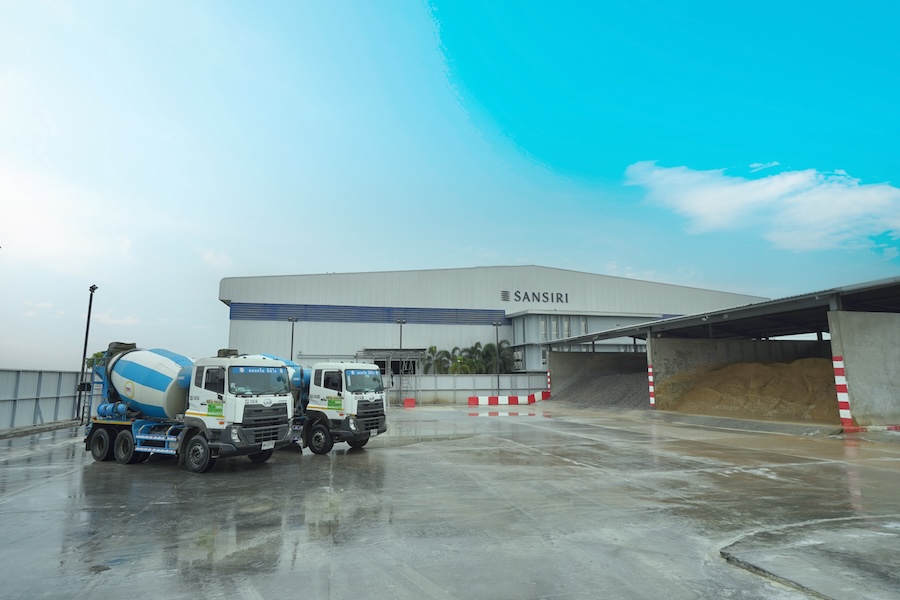
The collaboration in researching and developing green cement leverages the strengths and expertise in “innovation and technology” of both organizations, under the concept of selecting environmentally friendly materials by using high-quality raw materials, combined with modern production technology, while maintaining quality and performance equivalent to or higher than Portland cement type 1, especially in terms of compressive strength at all ages, produced using high-efficiency machinery, with quality control through automated computer systems, resulting in consistently high-quality products that meet international industrial product standards and international environmental management systems.
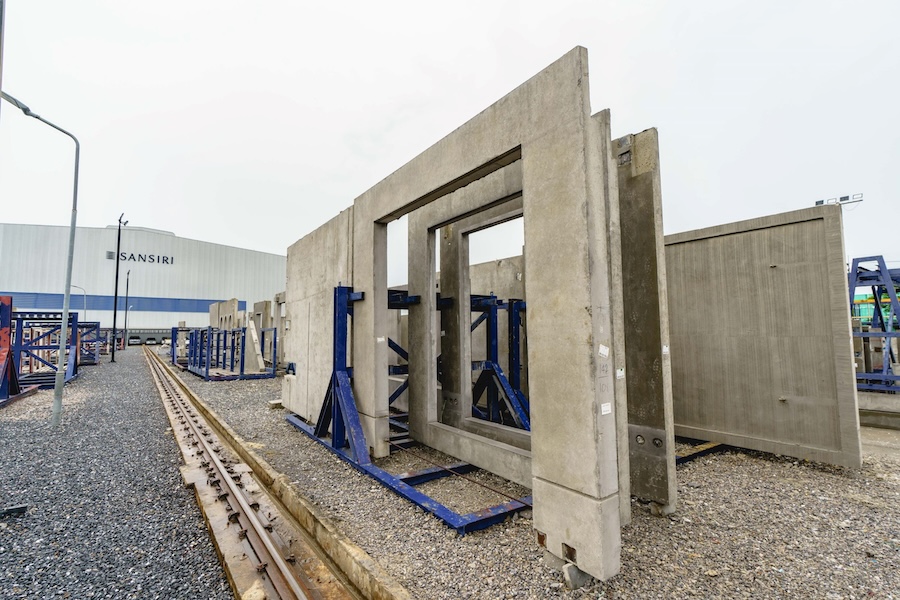
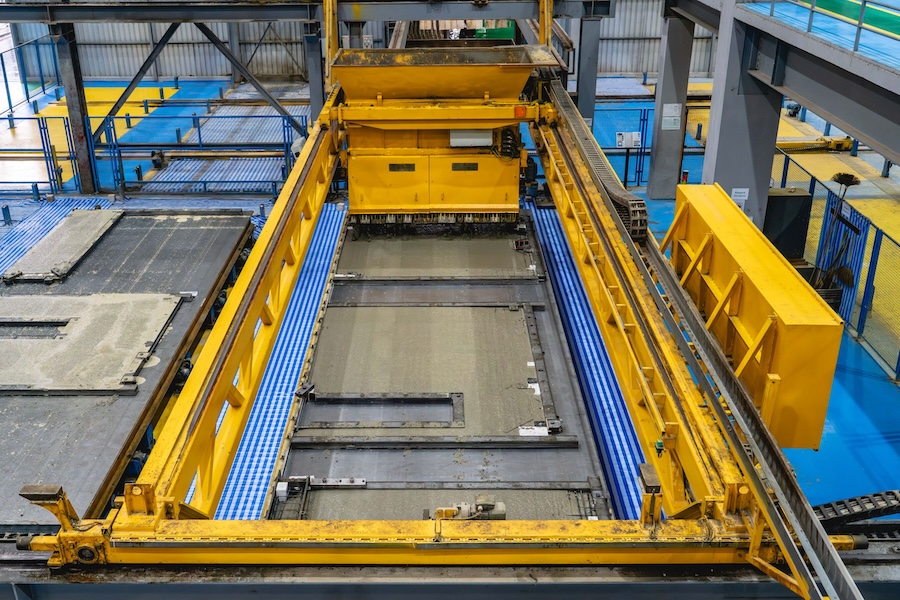
Meanwhile, Sansiri's precast factories, of which there are four, have a production capacity of 3,700 houses per year and are the first green precast factory in Thailand. This is part of the organization's mission to promote sustainability, with solar panels installed to harness solar energy for electricity production within the factory, waste management policies in place, and highly efficient waste management (with up to 99% of waste from precast concrete work being reused). This has resulted in certifications for ISO9001 & ISO14001 and accreditation from the NAC, as well as receiving a green label certification from the Ministry of Industry.