Branchless Commercial Banks (Virtual Banks) in Thailand Will Lead to New Business Plans and Financial Products
- Branchless Commercial Banks (Virtual Banks) will transform the competitive landscape of the Thai banking and financial sector, leading to new financial products with more features aimed at targeting specific customer segments.
- Competition in the market will intensify, but the customer segments targeted will depend on the framework for accessing financial services (Financial Inclusion), while existing commercial banks can also introduce new products.
In the near future (around mid-2026), it is expected that branchless commercial banks (Virtual Banks) will begin operations in Thailand, marking a significant change in the competitive landscape of the financial sector. Key points to watch in the coming period include:
- Increased competition will lead to a wider variety of financial products that cater more to the lifestyles of the new generation, serving as a crucial driver for market players' success. For example:
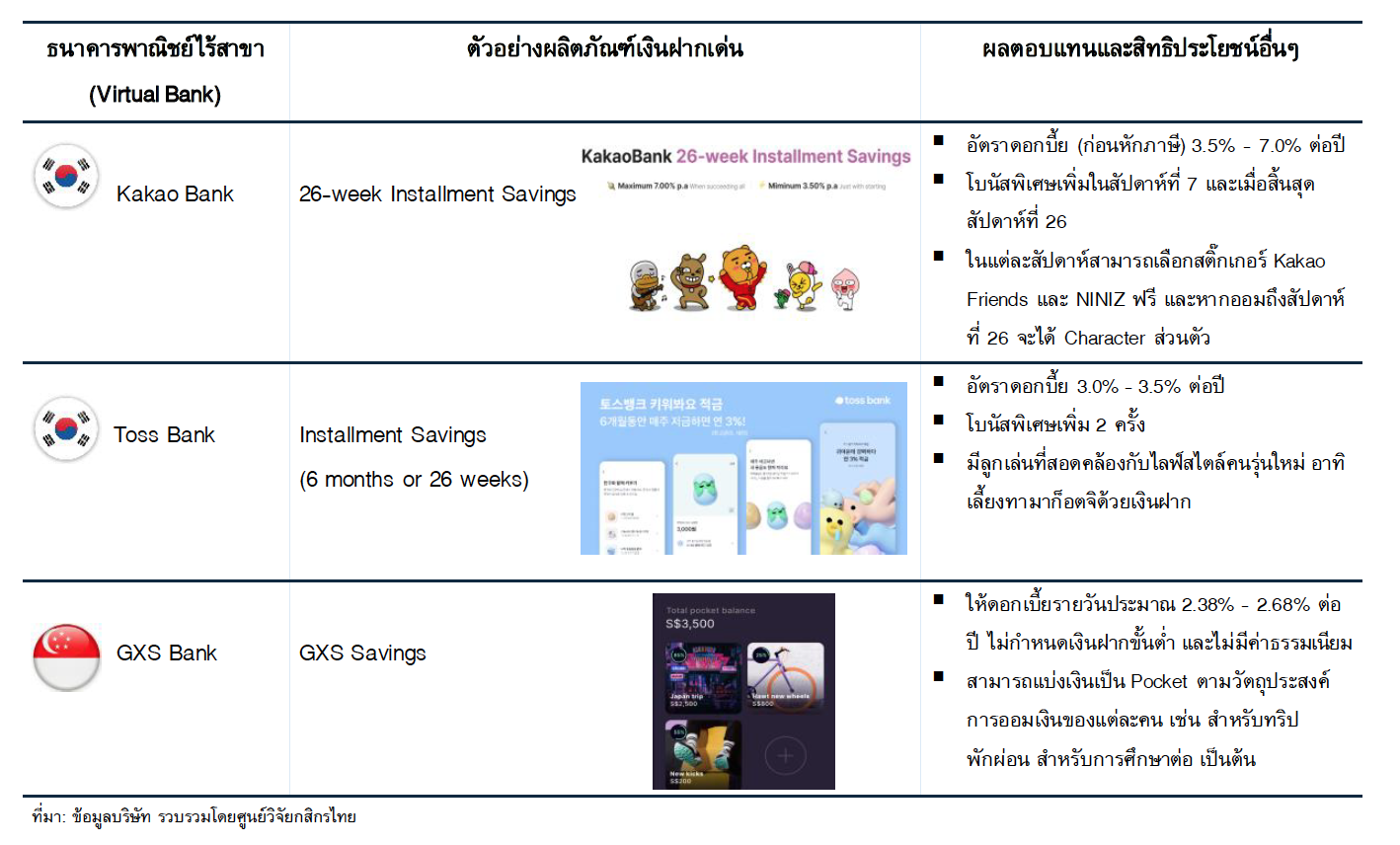
- Deposit Products that offer higher interest rates, shorter fixed deposit terms, and daily interest calculations, along with marketing gimmicks or additional special benefits to attract savings. Examples include deposit products from international players, such as offering bonuses when customers reach halfway through their deposit term, dividing savings into pockets based on objectives, distributing unique or limited digital stickers or characters, feeding digital pets with deposits, or depositing money to support artists or idol group members auditioning, primarily targeting the new generation.
- Loan Products that will be more flexible and offer better terms, such as lower interest rates, faster loan approval processes, and reduced borrower qualification criteria, such as age or income, to compete for customers, especially those underserved by financial services. This target group overlaps with the current commercial banks' clientele. For instance, WeBank and MYBank in China have succeeded by focusing on providing services to micro SMEs, leveraging their strength in approving loans in just minutes, while Kakao Bank in South Korea has successfully marketed refinancing loans to working-age individuals with better offers.
- However, in Thailand, existing commercial banks can also compete with the features of the aforementioned deposit and loan products. For example, deposit products offering monthly interest rates, separating Cloud Pockets for savings based on specified objectives, and allowing customization of the background image on transfer slips. In terms of loans, there are also digital loan services for small amounts with approval times in hours.
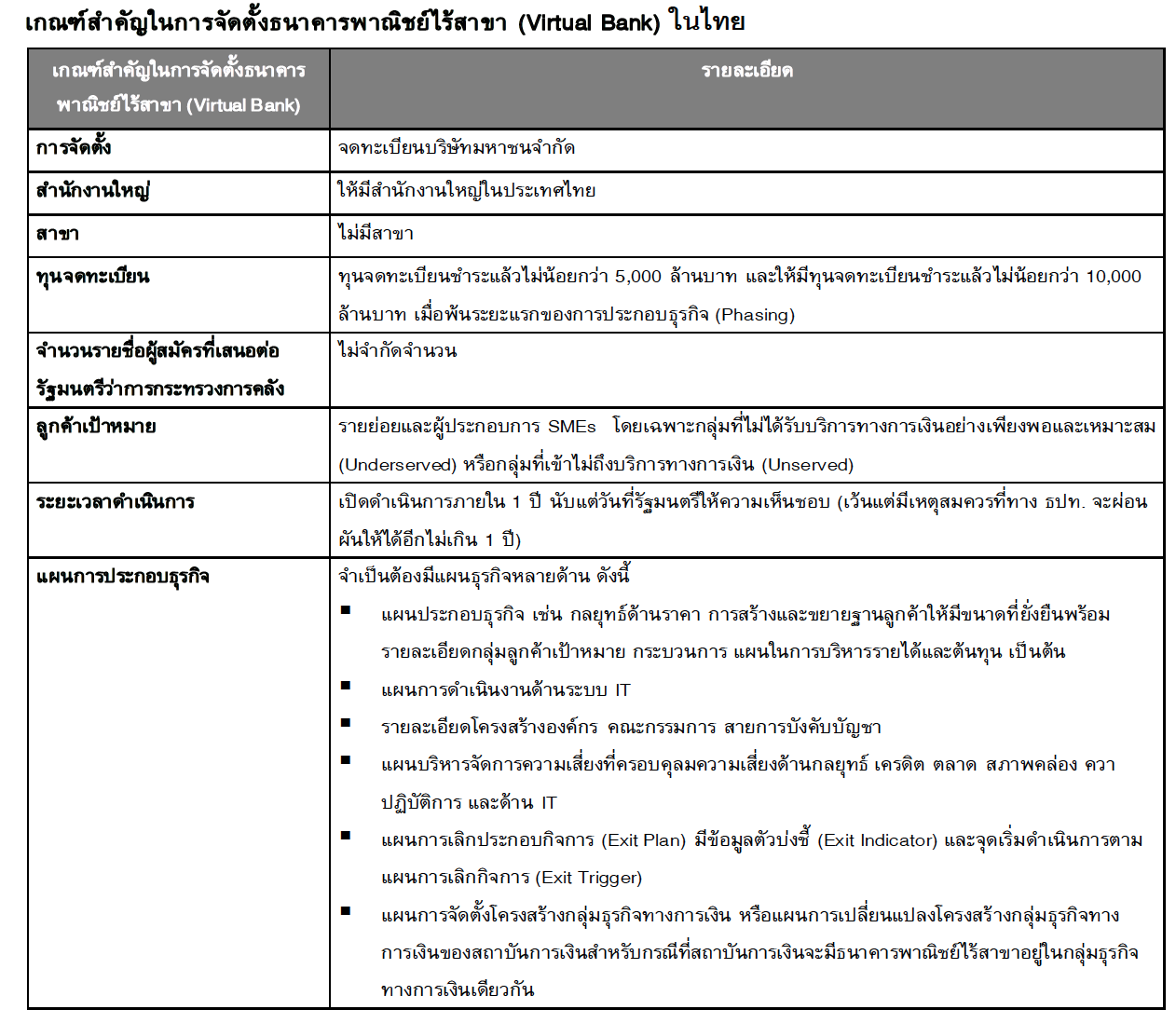
- Key issues to watch will be the regulatory framework for branchless commercial banking in Thailand, which mandates serving underserved or unserved groups, differing from South Korea or Singapore, which focus on granting branchless bank licenses to enhance market competition rather than increasing financial service accessibility for these populations.
Nevertheless, the minimum capital requirement for applying for a branchless commercial bank license in Thailand is set at no less than 5 billion baht, increasing to at least 10 billion baht after the initial business phase. Compared to the current paid-up capital of large Thai commercial banks, which ranges around 19 billion to over 90 billion baht, and medium to small banks ranging from 5.8 billion to 25 billion baht, this reflects a desire to see relatively large branchless commercial banks. This implies that if there is flexibility in interpreting branchless banking, it could lead to intensified competition among overlapping current customer segments, such as first-jobbers with potential and the refinancing loan market that helps customers secure better loan terms.
- Given the financial context of Thai households, which are largely in debt while savings remain low, as reflected in a Bank of Thailand survey showing only 15.7% of Thais have retirement plans and can save according to their goals, this will pose significant challenges for branchless commercial bank players. Therefore, initial capital stability, expertise in financial business operations, the ability to leverage data and big data analytics, the use of digital technology, and building an ecosystem with targeted business partners will be crucial to enhance customer and business risk management, control costs appropriately, and find opportunities for profit by keeping customers within the created ecosystem.
Ultimately, the goal is for branchless banks to design business models that can offer products and services with features distinct from current commercial banks, effectively addressing the target groups that the authorities aim for, which will positively impact the overall development of the country's economy and financial system.