Metthier Unveils Gen 3 Cleaning Robots Utilizing Full IoT Integration, Urges Government to Prepare Legal Framework for Technology
When discussing smart property management in today's era, the image of professional cleaning robots has become increasingly familiar in various buildings across Thailand, reflecting rapid development and adaptation to meet the rising market demand, especially over the past 3-4 years. Data from ResearchAndMarkets.com predicts that the global market value in this sector will grow at an annual rate of approximately 20% between 2023 and 2030, potentially reaching $20.97 billion by 2030, with the Asia-Pacific region, including Thailand, holding about 30% market share. The main factors driving the demand for cleaning robots include labor shortages, an aging global population, and the need to enhance efficiency while reducing costs.
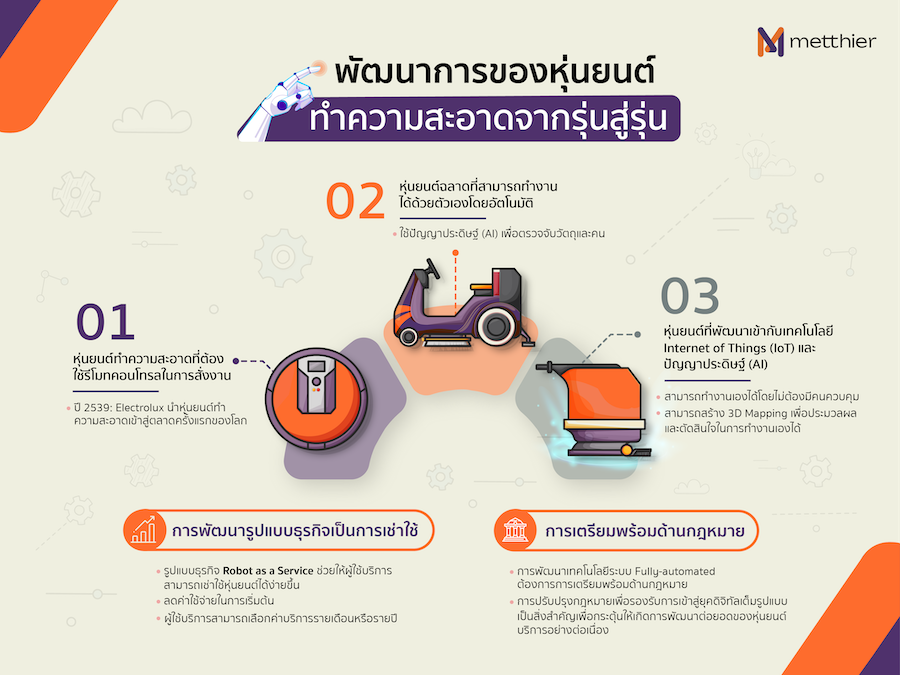
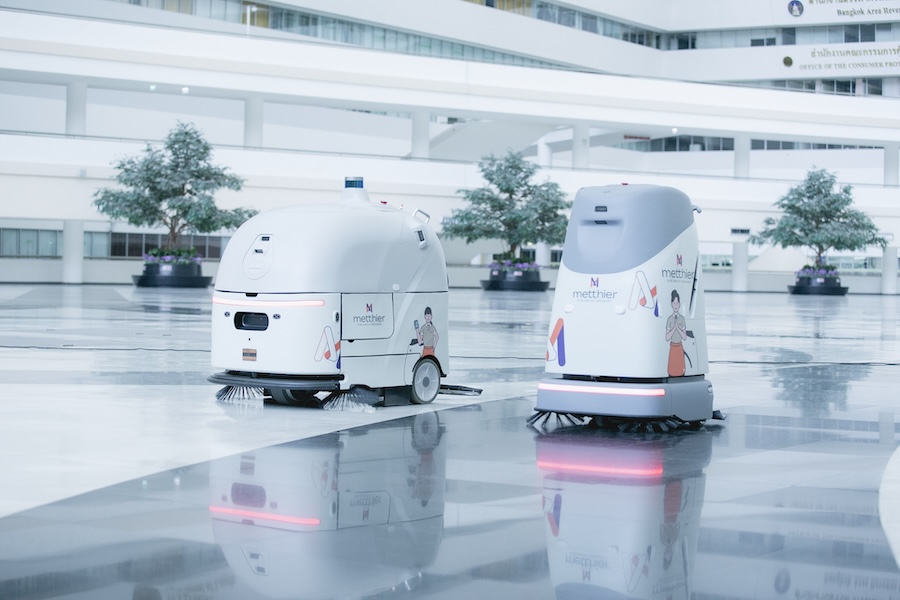
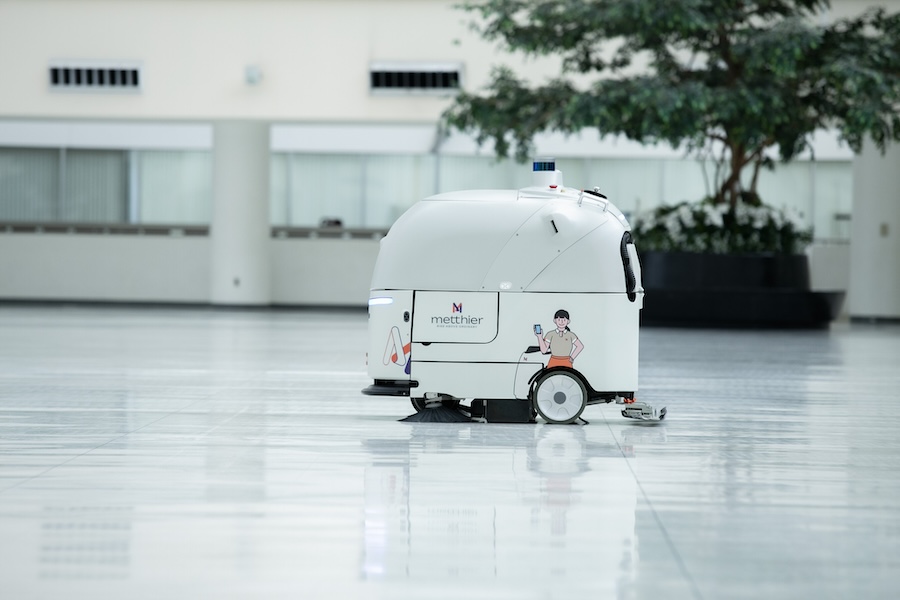
Metthier , a provider of comprehensive smart facility management services, has shared intriguing insights into the evolution and transformation of the cleaning robot industry through this article, covering various aspects such as the development of robots that still need to work alongside humans towards Generation 3 (Gen3), which is evolving into the Internet of Things, allowing them to operate autonomously without human control. This ties into the evolution of business models adapting to better meet user needs, such as Robot as a Service (RaaS), along with recommendations for legal improvements to support a fully digital future.
- The Evolution of Cleaning Robots from Generation to Generation
The development of cleaning robots can be broadly categorized into three eras. The first era was characterized by robots following commands input by humans, with Electrolux introducing the world's first cleaning robot in 1996, which still required a remote control for operation. During this era, the cleaning efficiency of robots was relatively low, and their prices were quite high, leading to limited success. The second era (the current era) features robots that are much smarter, capable of operating autonomously with features to detect objects and people. Robots in this era have been developed with artificial intelligence (AI) integrated; however, despite their ability to clean independently, they still face several limitations, such as not being able to assess surface types to choose the appropriate cleaning method. Thus, robots in this era still need to work alongside humans. The third era, which is expected to arrive soon, will see robots developed with Internet of Things (IoT) technology, along with AI and deep learning, enabling them to create 3D mapping and make decisions in their operations that closely resemble human capabilities. For instance, when a robot detects litter or spilled liquid, it can autonomously clean it up or adjust its cleaning mode to suit different surfaces. If achieved, this will undoubtedly transform the cleaning robot industry.
- The Development of a Rental Business Model to Enhance Accessibility for Users
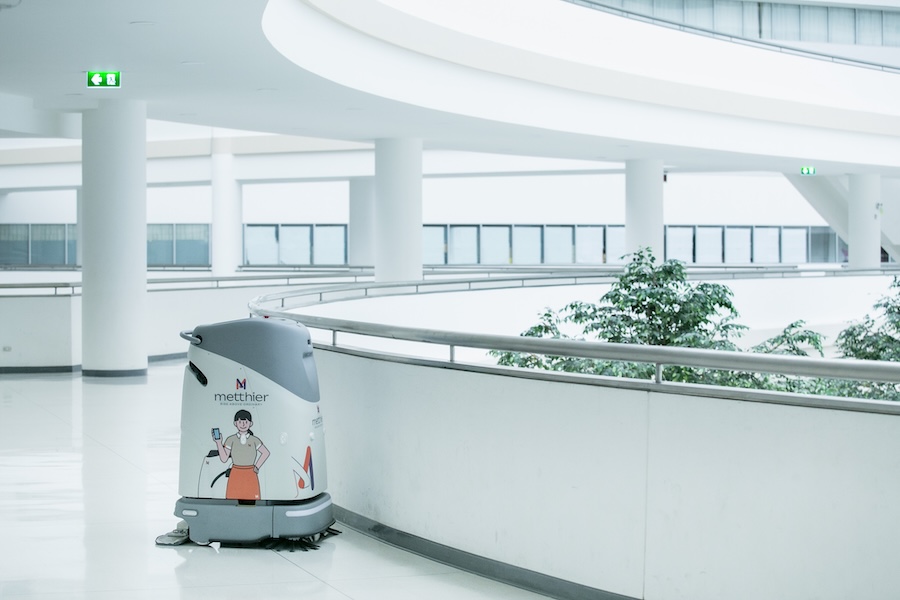
Due to the high costs associated with researching and developing robots, the selling price of cleaning robots is also high, which has hindered market growth. This has led to the emergence of the Robot as a Service (RaaS) business model, making it easier for target groups to decide to use cleaning robots. This model allows users to rent robots worth millions at a monthly or annual subscription fee. Since the introduction of this service, the demand for cleaning robots has surged dramatically over the past 1-2 years. Not only do cleaning robots enhance the modern image of buildings, but in terms of operational efficiency, one employee can clean a maximum area of only 1,500-2,000 square meters per day, walking approximately 10 kilometers. In contrast, using cleaning robots in the same area can reduce the working time to just 1-2 hours. Additionally, cleaning robot technology has advanced to the point where it can recycle wastewater for multiple cleaning uses, reducing water waste and benefiting the environment in the long run.
- Preparing Legal Frameworks to Support the Arrival of Fully-Automated Technology
The legal aspects surrounding this issue are being debated globally, such as the consideration of amending laws related to autonomous vehicles. However, the development of IoT technology is not limited to the automotive industry. Currently, there are companies in China utilizing autonomous vehicle technology for cleaning robots, which have been authorized by the government to operate on roads and public areas. Therefore, this is not a distant issue; the government should plan to revise laws to accommodate what is undoubtedly coming in the future. If we prepare legal frameworks that facilitate the development of commercial robots, it will stimulate continuous advancements in service robots and attract significant foreign investment. Conversely, if laws become outdated to the point where operators cannot leverage technology for commercial purposes, it may impact the country's long-term competitiveness.
#Metthier #เมทเธียร์ #RiseAboveOrdinary #ที่เมทเธียร์เราเหนือกว่า #SmartFacilityManagement #บริหารจัดการอสังหาริมทรัพย์อัจฉริยะ
Metthier Co., Ltd. is the first provider of comprehensive smart facility management services in Thailand, utilizing future technology, and is part of Sky ICT Public Company Limited (Sky Group).