CBRE Thailand Promotes Sustainability by Transforming Old Buildings with the Latest Trends
CBRE Thailand has revealed that many office buildings have become outdated due to their structures and designs that have been in place for many years. As these buildings age, their efficiency inevitably declines, leading to increased resource consumption, higher maintenance costs, deteriorating air quality, and significant environmental impacts.
Improving the efficiency of old buildings can directly reduce environmental impacts, yielding positive effects on the overall environment. Additionally, project owners can benefit from cost savings in operations and an increase in tenants.
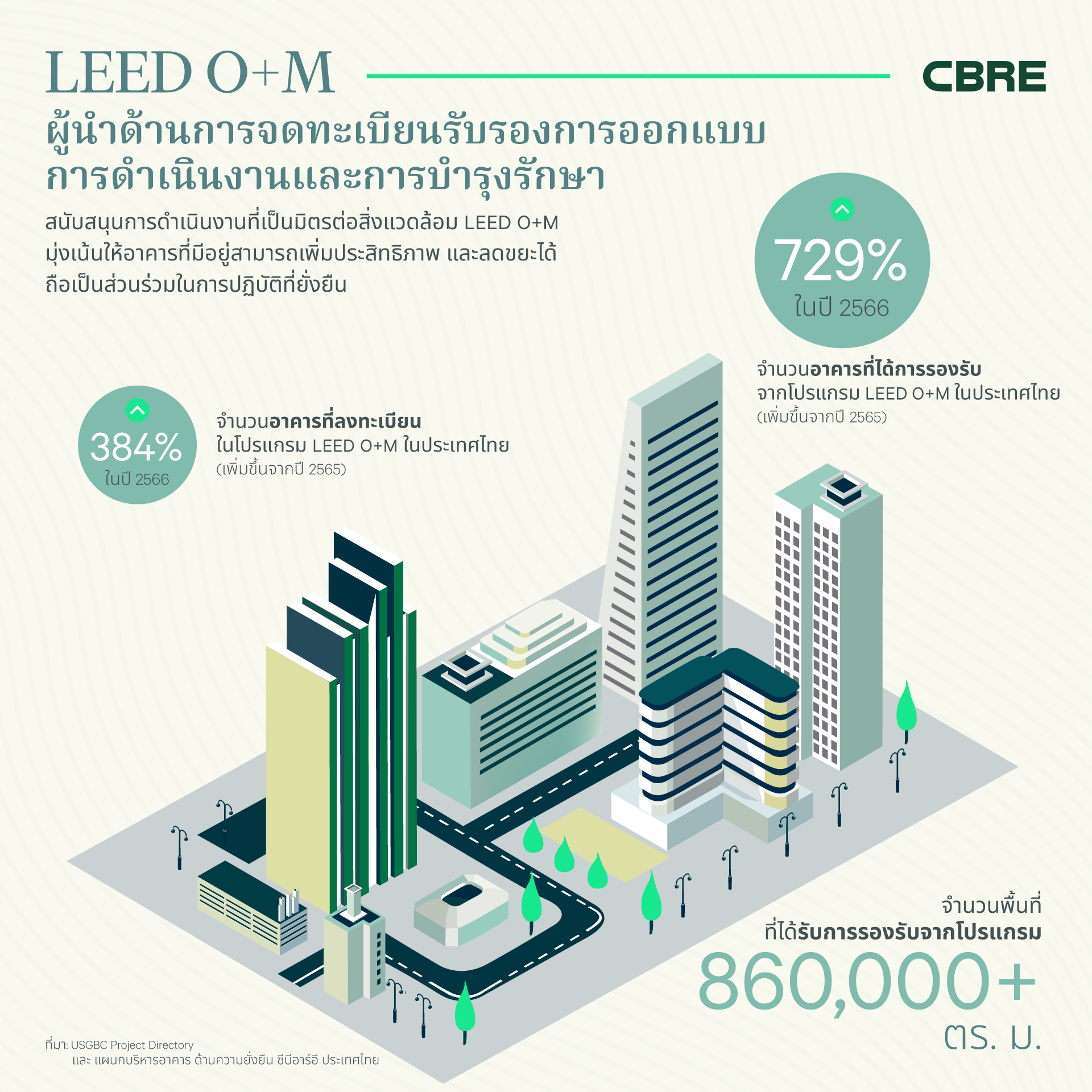
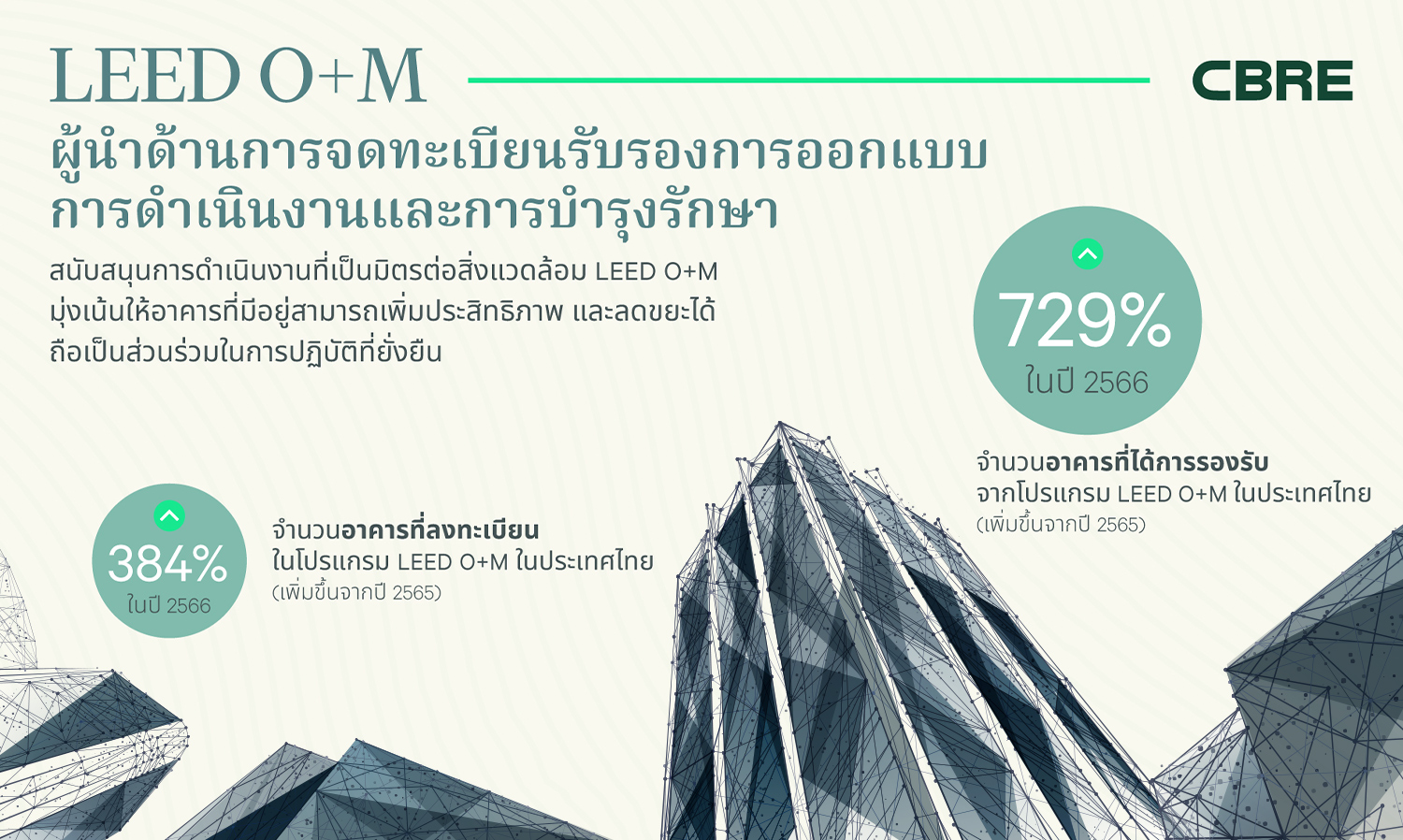
In recent years, there has been a significant increase in the application of sustainable practices in old buildings. LEED O+M (LEED Operation and Maintenance), a leader in green building certification, supports environmentally friendly operations, focusing on enhancing the efficiency of existing buildings and reducing waste. This practical engagement in sustainability through green building certification has shown a continuous increase in the number of registered and certified buildings in Thailand. In 2023, the registered and certified areas under LEED O+M increased by 384% and 729%, respectively, compared to 2022. Currently, the total area certified under LEED O+M is approximately 860,000 square meters.
This recent trend indicates a growing number of tenants adopting ESG principles (Environmental, Social, Governance) and a rising demand for certified buildings. These demands significantly impact tenants' office selection, prompting building owners to consider renovations to maintain competitiveness.
LEED, or Leadership in Energy and Environmental Design, is the most prominent green building certification system in Thailand, setting standards for buildings that utilize effective strategies to improve indoor environmental quality, save costs, and be environmentally friendly to achieve ESG operational goals. This standard can be applied to both new constructions and existing buildings, ranging from single structures to community levels.
“CBRE Thailand has begun to recognize the increasing demand for this trend through consulting on green buildings for several projects. We have found that most projects show improved energy efficiency due to sufficient resource allocation for enhancing energy-saving performance, including water management, waste management, and indoor air quality management,” Mr. Lalit Thitipaisarn, Deputy Director of Sustainability at CBRE Thailand, stated.
For buildings managed by CBRE, we employ a method of assessing energy status and the performance of various equipment in the buildings, followed by implementing no-cost and low-cost strategies. Initial tests revealed that total energy consumption for all buildings decreased by up to 13% per year, equivalent to 16 million kilowatt-hours annually, resulting in a reduction of carbon emissions by approximately 7,100 metric tons, which is comparable to the absorption capacity of 2,600 acres of mangrove forest.
The company expects to see an increase in building certification standards for sustainability in the future. Progress in improving new buildings for sustainability will lead to broader environmental enhancements. CBRE is committed to driving this forward to create impacts that extend beyond the buildings themselves, leading to greater goals of building sustainable cities.