Exploring the Thai Economy in 2024 and Managing Portfolio Risks with REITs: An Alternative Amidst Market Volatility
Article by Ms. Aranong Chaitong, Chief Executive Officer of Prospect REIT Management Co., Ltd., the manager of the Prospect Logistics and Industrial Property Fund (PROSPECT).
- In a volatile market era, various global situations are unfolding, including geopolitical conflicts and rising interest rates. Despite the volatility, opportunities always exist. In 2024, the Bank of Thailand (BOT) assesses that the overall Thai economy is on a recovery path, primarily driven by the revival of the tourism sector, which supports employment, improved labor income, and domestic demand. The export sector is recovering but at a slower pace than expected, affected by the economic recovery of trading partner countries that is not yet complete.
- Financial instruments and investment tools for managing portfolio risks amidst volatility, such as REITs, present an interesting option. Despite numerous impacting factors, they continue to provide good and consistent returns in the form of dividends.
- Investment portfolio management varies for each individual based on various factors, such as the level of acceptable "risk". It is essential to understand which financial instruments and investment types are suitable for one’s portfolio.
In this volatile market era, numerous global situations are emerging, including increased geopolitical conflicts and rising interest rates, making 2023 a particularly challenging year. The outlook for 2024 is influenced by several factors that began to show signs of recovery from late 2023. The BOT assesses that the overall Thai economy is on a recovery path, primarily driven by the revival of the tourism sector, supported by government policies promoting tourism, such as the visa-free policy. According to Krungsri Research Center, the number of foreign tourists in 2024 is estimated to be around 35.6 million, up from approximately 27.7 million in 2023. These factors support job creation, improve labor income, and stimulate domestic demand, along with an anticipated increase in both public and private sector investments, driven by the growing industrial trends in Thailand. However, the export sector is recovering but slower than expected due to the incomplete recovery of trading partner economies.
Investment experts recommend holding more cash to look for opportunities to invest in quality assets. In the long term, the Fed's interest rate stability and the anticipated rate cuts in 2024 could provide opportunities for economic growth.
Given the uncertain economic landscape, which is constantly changing, risk management is crucial for investors to make informed investment decisions within their personal constraints. Understanding the risks associated with each financial instrument and investment is essential.
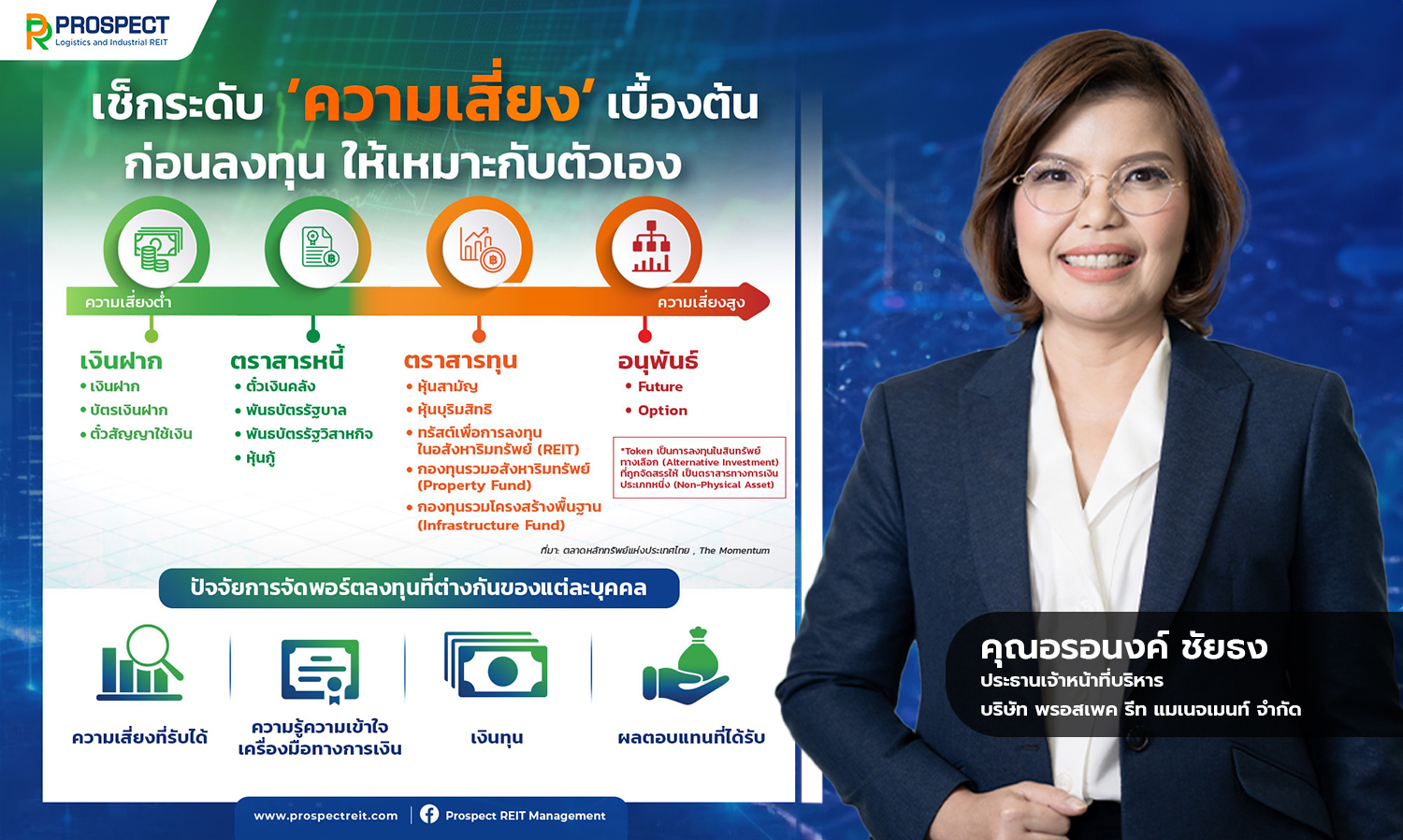
There are various financial and investment tools available, ranging from low to high-risk levels, with the risk level correlating with the expected returns.
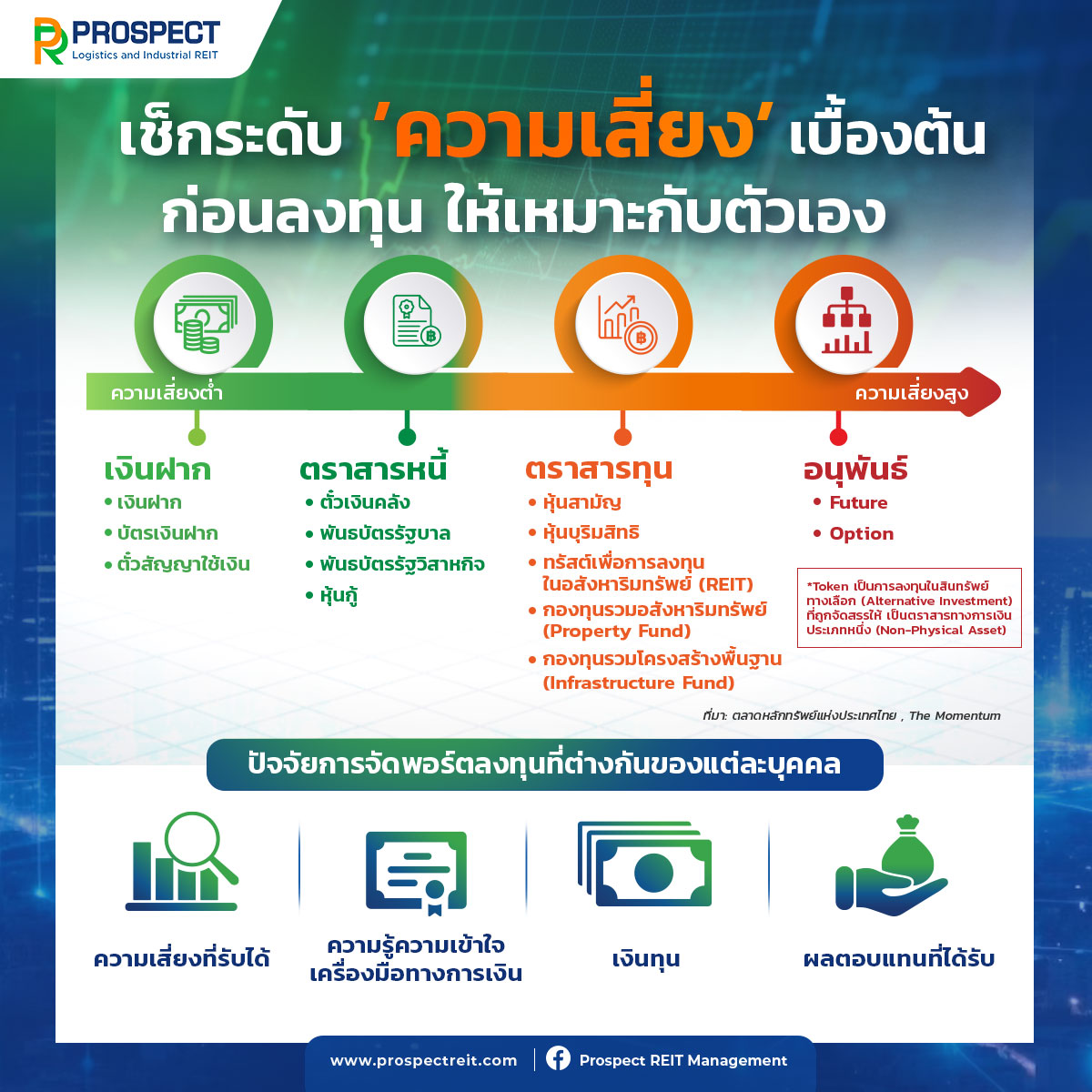
Low Risk
- Suitable for investors who dislike volatility and fear losing principal.
- Desire relatively certain returns.
- Low risk typically yields low returns.
Moderate to High Risk
- Suitable for investors who can take on more risk and are willing to take chances.
- Can tolerate market price fluctuations and returns.
- Higher risk can lead to higher potential returns.
In reality, investment portfolio management varies for each individual based on various factors, such as the level of acceptable risk. It is essential to know which investment style suits oneself. You can easily check your "acceptable risk level" and set up a basic investment portfolio using the Stock Exchange of Thailand's website: https://www.set.or.th/project/caltools/risk.html. Additionally, it is crucial to have knowledge and understanding of the financial instruments and investments you are interested in, including capital, expected returns, and other details that should be studied and understood before making investment decisions, aligning with your suitability and objectives.
One type of financial instrument we recommend always having in your investment portfolio is investment in Real Estate Investment Trusts (REITs). This involves investing in various types of real estate, both directly and indirectly, generating income from rental and service fees from those properties, which provides consistent income and distributes profits in the form of dividends to investors at least twice a year. Most REITs pay dividends quarterly, allowing investors to receive consistent returns. Historically, REITs have played a role as financial and investment tools that help manage risks and remain an attractive option. Despite various impacting factors, they continue to provide good and consistent returns, and investors can further manage risks by selecting from the diverse types of REITs available that are suitable for the economic conditions at any given time, including factories, warehouses, hotels, office buildings, shopping centers, exhibition and conference centers, and airports. The returns from each type vary based on the circumstances affecting them and the income characteristics of the properties in which the REIT invests, making REITs popular in investors' portfolios today.
"Investing involves risks. Investors should study information before making investment decisions." This message remains relevant and applicable at all times.