How Changes in Policy Interest Rates Affect Investment in REITs
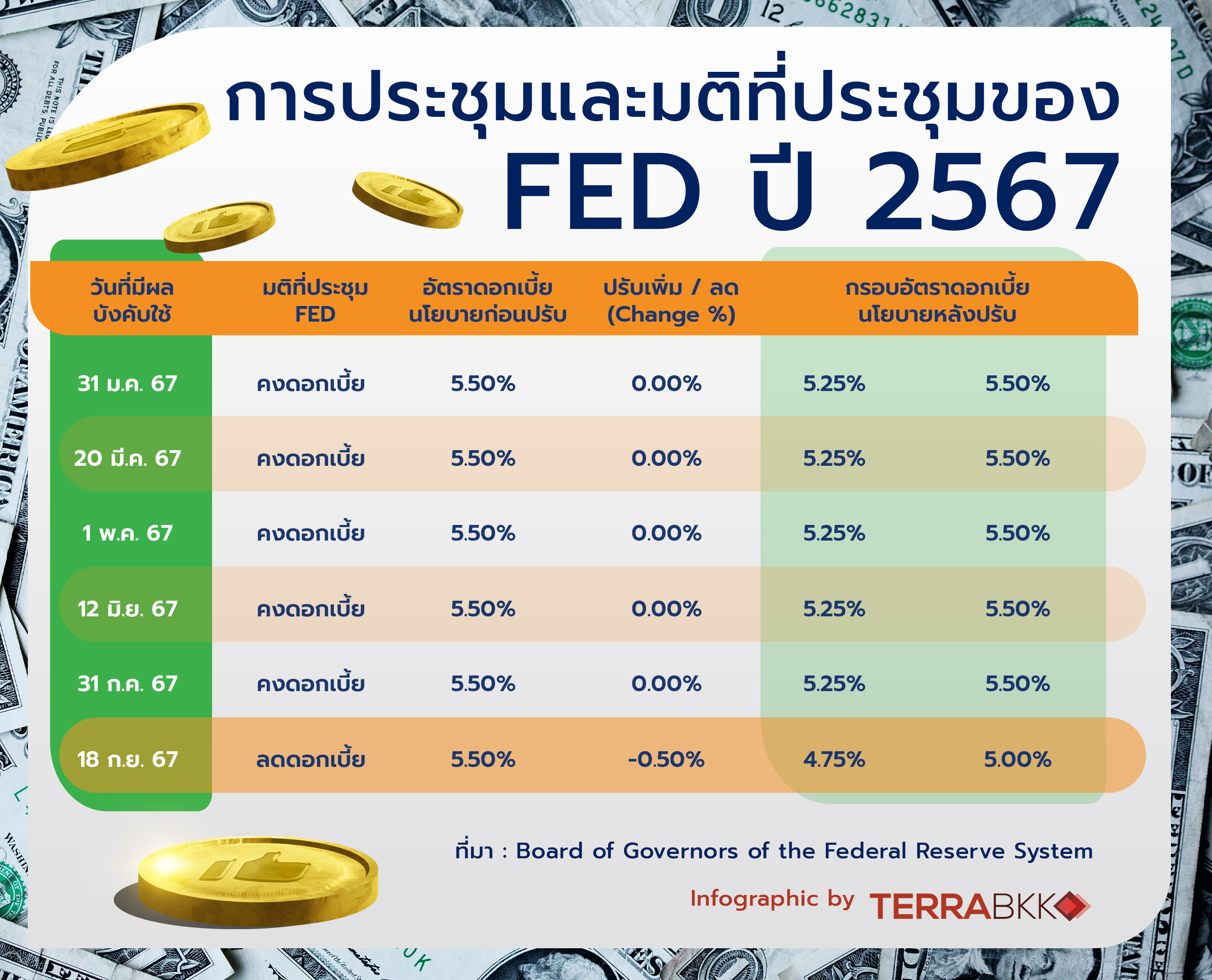
Since the first quarter of 2024, there have been predictions regarding the Federal Reserve's policy interest rate cuts, which will influence the adjustments of policy interest rates in various countries worldwide. The policy interest rate range was initially set at 5.25% - 5.50%, and most recently, on September 17-18, 2024, it was reduced by 0.50% to a new range of 4.75% - 5.00%. This marks the first reduction in four years, following the last rate cut during the COVID-19 pandemic aimed at stimulating the economy, which has also impacted the overall economic outlook for Thailand.
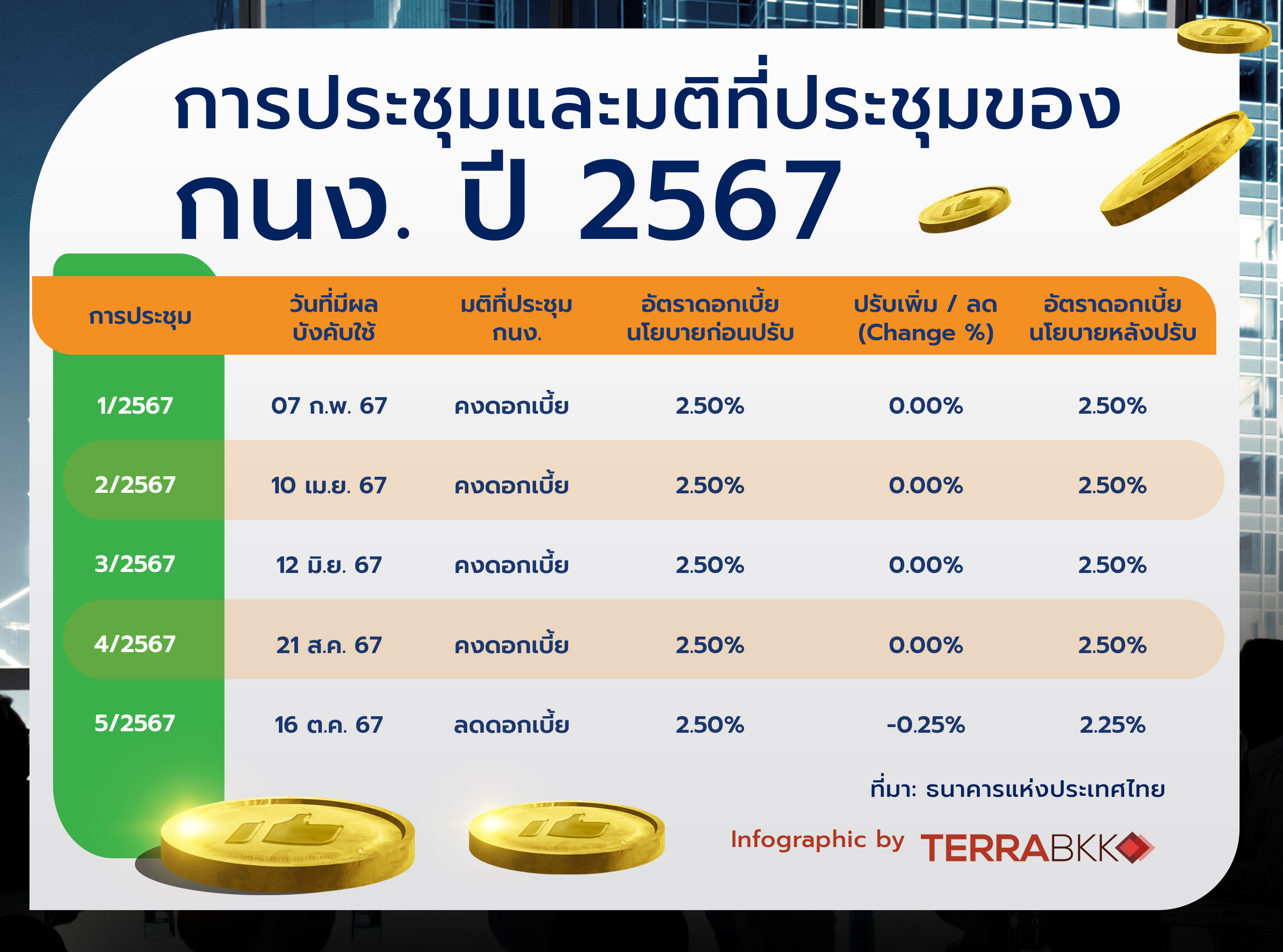
On October 16, 2024, the Bank of Thailand's Monetary Policy Committee announced a decision with a vote of 5 to 2 to lower the policy interest rate by 0.25% per year, from 2.50% to 2.25%, effective immediately.
This reduction has an overall impact on Thailand's economy, which is expected to expand as projected. It is anticipated that future driving forces will become more balanced, particularly regarding inflation, which is expected to return to the target range by the end of 2024 at 0.5%, and in 2025 at 1.2%. Additionally, the overall financial situation is expected to improve slightly, with a slowdown in overall lending and a decline in credit quality. The majority of the committee believes that this interest rate cut will help alleviate debt burdens without hindering the process of reducing household debt-to-income ratios, given that lending is expected to slow down and the lower interest rates remain neutral and aligned with economic potential.
In terms of Real Estate Investment Trusts (REITs), the impact of interest rate adjustments is reflected in the changes in financial costs, which may increase or decrease. The primary investment structure of REITs involves raising funds from investors and borrowing from financial institutions, with stipulations that borrowing cannot exceed 35% of the total asset value. If a credit rating of investment grade is achieved, borrowing can increase to 60% of the total asset value. This means that the primary financial cost for REITs is the interest rates on loans from various banks, which also affects REIT performance. Data from Krungsri Securities indicates that when interest rates are lowered, there is an expectation of increased returns, calculated based on market price, interest rates received, borrowing ratios, interest rate cuts, and the number of trust units, resulting in an increase in return rates as shown in the table below.
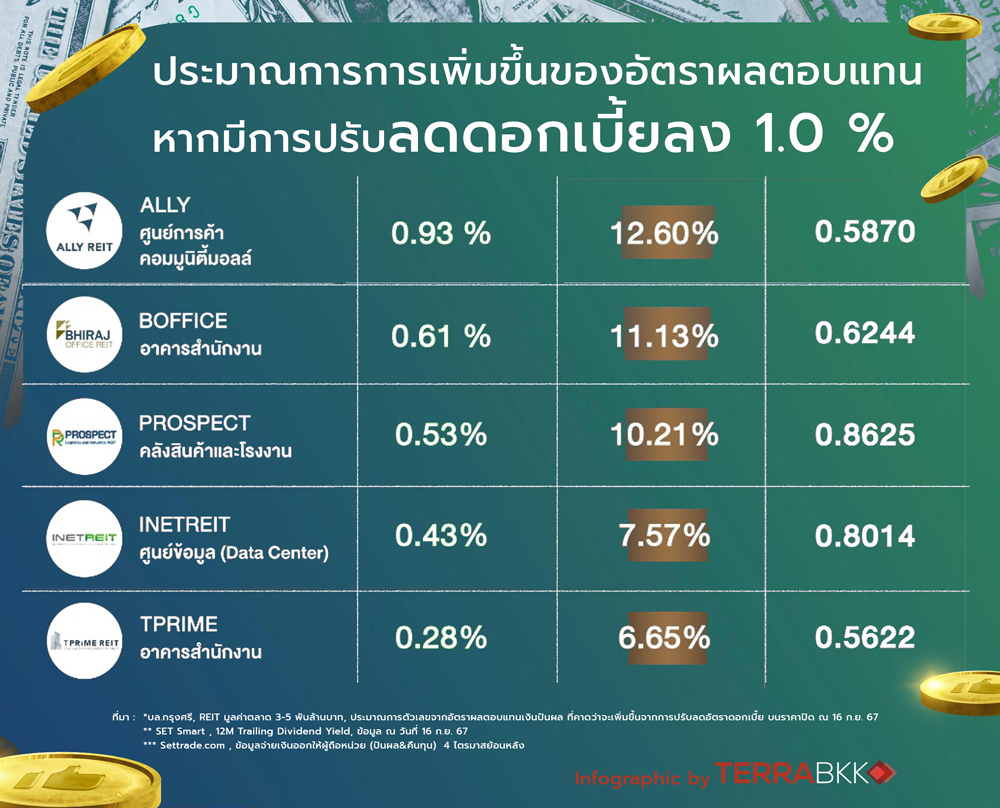
It can be observed that the reduction in interest rates improves the expected returns, including the market price of the REIT itself. Any increase or decrease in policy interest rates significantly impacts investors. According to Krungsri Securities, the price of REIT units increased by as much as 8.40% in the first half of September and rose by 15.80% since July, reflecting a clear upward trend following the anticipated return to normal interest rate levels.
However, in terms of the operational performance of most REITs, it still primarily stems from the business of leasing properties. The main importance lies in actual performance, management, and oversight by experts, including experienced REIT managers who select quality assets for the REIT in terms of both the properties and tenants, as well as future operational planning that aligns with economic policies and allows for flexible adjustments. They also ensure that accurate and comprehensive information is conveyed to investors, along with property managers who are on-site, have direct experience, and professionalism in managing spaces, tenants, and providing services that create satisfaction and comfort for tenants. All these factors are crucial in generating actual performance that translates into consistent dividend returns for investors.
Source: Krungsri Securities https://www.settrade.com/th/research/analyst-research/62952