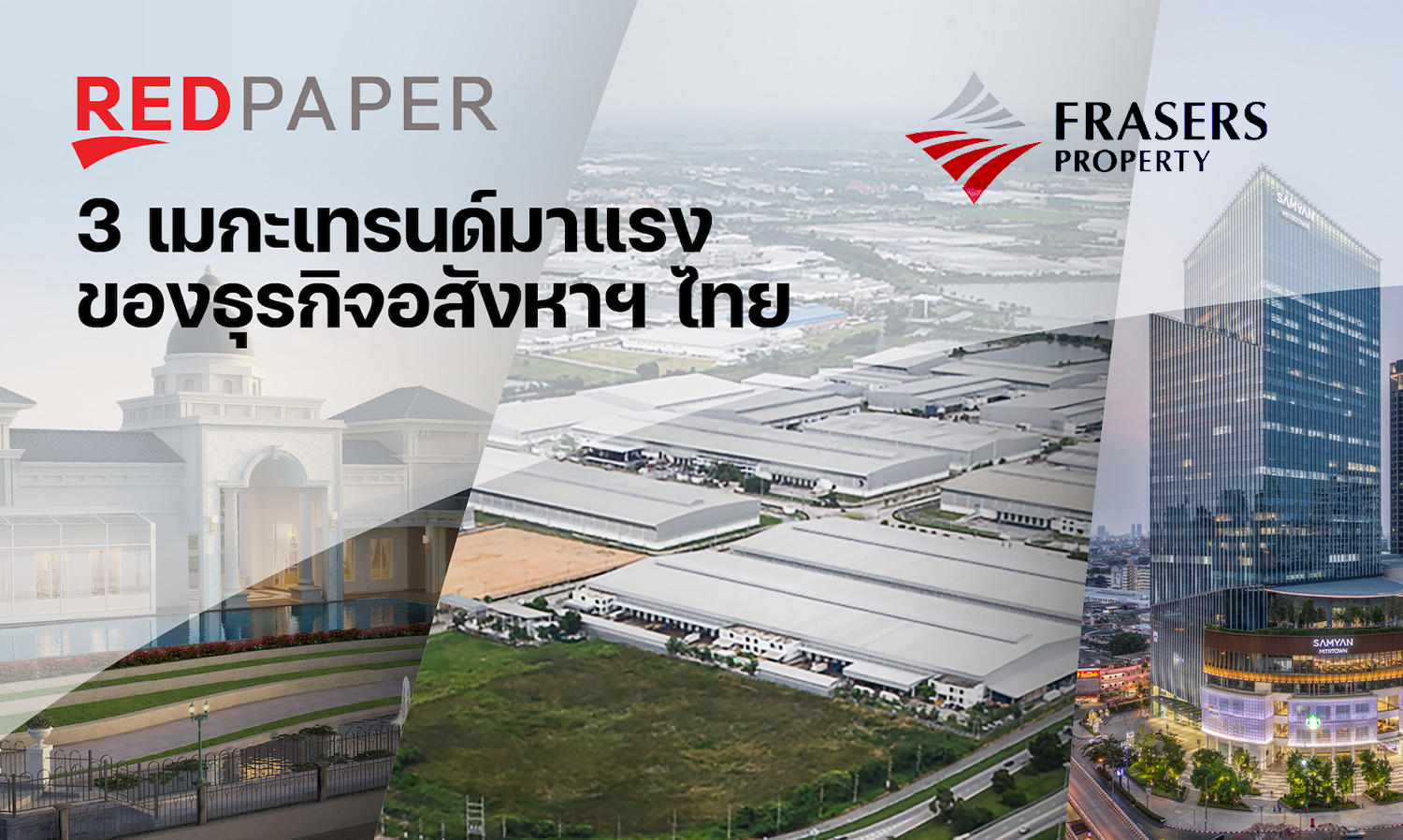
REDPAPER Reveals 3 Major Trends in Thai Real Estate Business: Enhancing Product and Service Value, Focusing on Human Centricity, and Emphasizing ESG Throughout the Business Chain
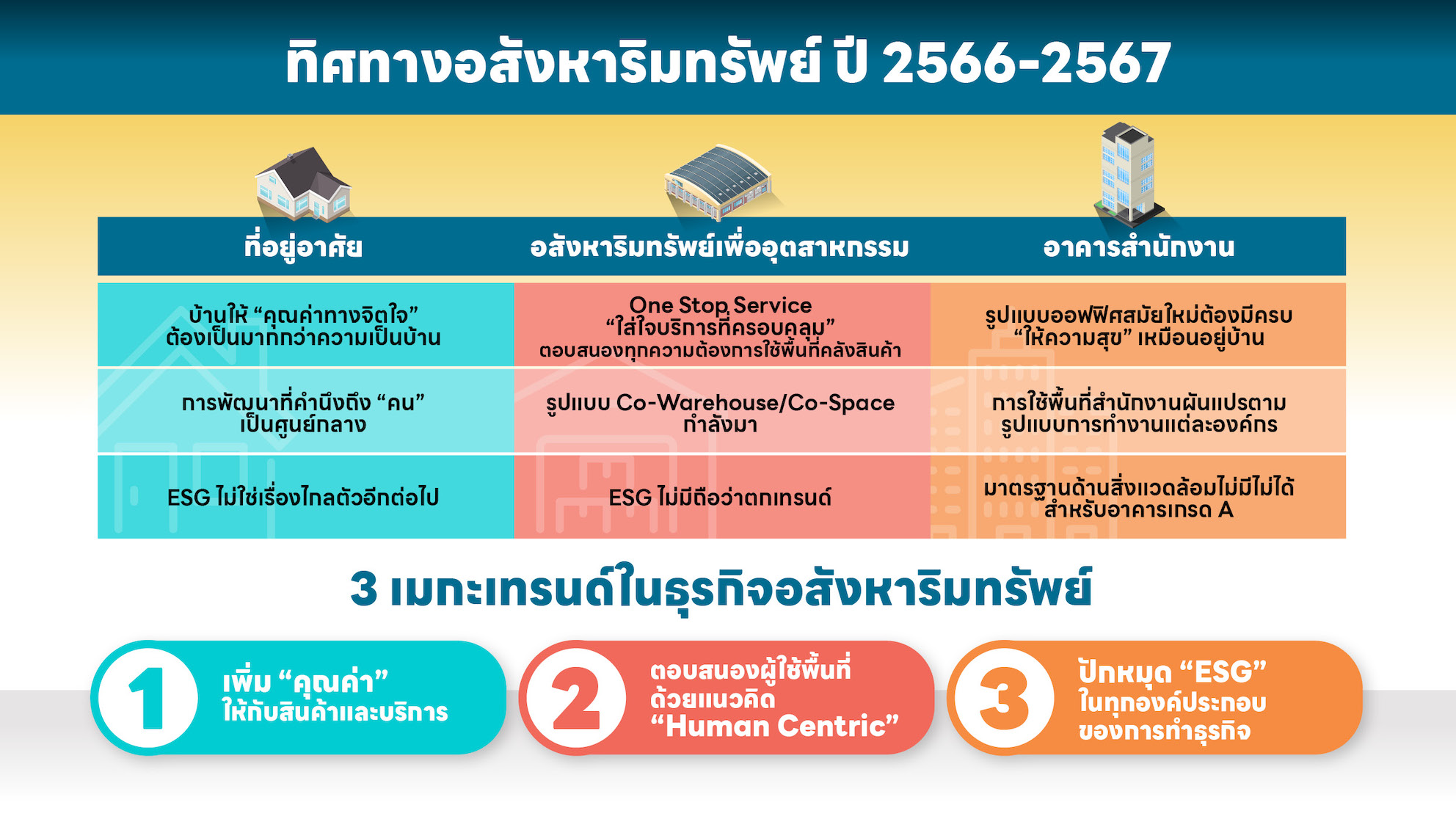
REDPAPER has unveiled three major trends in the real estate sector for residential, industrial, and office buildings. It highlights that real estate developers should elevate their products and services by adding new value that aligns with diverse lifestyles and needs, while adhering to a Human Centric approach that develops spaces with an understanding of the varying behaviors of users. This should be coupled with the integration of ESG principles into business operations to mitigate social and environmental impacts, fostering strong and sustainable business growth.
The fourth edition of the REDPAPER report, titled "Keeping Up with the 3 Major Trends in Thai Real Estate," was produced by Frasers Property (Thailand) Public Company Limited (FPT), the first comprehensive real estate developer in Thailand, in collaboration with Numbers 10 Research Co., Ltd. The report studies the movements and trends in the real estate business for residential, industrial, and office spaces, summarizing three major trends that will shape the real estate landscape in the next 1-2 years, impacting future real estate business operations.
Trend #1: Focus on Enhancing Product and Service Value
Surveys across the three segments of the real estate business indicate that prioritizing and enhancing the value of products and services is crucial for developers. In the residential sector, it was found that consumer demand for single-family homes increased to 44% in 2022, up from 33% in 2021. This is because single-family homes can provide value in an era where people spend more time at home, offering spacious living areas that can be flexibly utilized, along with attention to furniture and materials that reflect the identity and tastes of the residents. In the factory and warehouse rental business, tenants seek developers who provide comprehensive services to maximize operational efficiency, along with a focus on management consulting.
For office building design, it is essential to have complete functions and amenities, with diverse spaces available for various purposes, creating an office atmosphere that makes employees feel at home. Survey results from office workers revealed that 49% want green spaces in the office, 33% desire views to inspire their work, and 30% prefer flexible working arrangements.
Trend #2: Responding to Users with a Human Centric Approach
The Human Centric concept, which emphasizes user-centered design and features, is increasingly being applied in real estate development. This is evident in the development of homes that understand the true needs of customers, designing houses suitable for residents of all ages and adapting to changing lifestyles. Similarly, office building designs are evolving from traditional layouts to incorporate both Fixed Space and Co-Working Space, accommodating businesses with varying employee numbers to enhance flexibility and effectively manage business costs.
In the industrial real estate sector, it is crucial to delve into the usage behaviors and needs of all customer groups. In addition to providing factory and warehouse spaces for large clients, both Ready-Built and Built-to-Suit, there must also be options for small and medium-sized clients who may have budget constraints. This presents an opportunity to expand the market by offering Co-Warehouse or Co-Space services, creating shared warehouse spaces for small and medium-sized clients.
Trend #3: Integrating ESG into Every Aspect of Business Operations
The ESG (Environment, Social, Governance) issue is increasingly considered by organizations in their business operations. Today, consumers prioritize purchasing products and services from companies with responsible social and environmental policies. Facing disasters and climate change has led consumers to take ESG matters more seriously.
Surveys indicate that construction material manufacturers are increasingly using natural raw materials that have less environmental impact and are adjusting production formulas to use resources efficiently. This aligns with construction contractors who note that developers are placing greater emphasis on environmental issues, opting for eco-friendly products and materials despite higher construction costs, recognizing their long-term usability and alignment with sustainability goals. This trend extends to the construction of factories and warehouses that utilize clean and renewable energy while ensuring the quality of life for users. Multinational companies are focusing on Carbon Footprint and Net Zero Emission, while office building developers are also constructing buildings according to LEED and WELL Building Standards.
REDPAPER finds that these three major trends are critical challenges for real estate developers who must keep pace with these trends and align their businesses accordingly to meet the evolving demands of customers, service users, business partners, and society. This will help create a competitive edge for developers who can adapt quickly and drive sustainable business growth.
For the complete report, please visit www.frasersproperty.co.th/th/downloads/redpaper.