PROSPECT REIT Reveals 5 Key Factors Driving Industrial Trust Growth Against the Trend
PROSPECT REIT reveals 5 key factors driving industrial trust growth against the trend
Amid economic volatility and inflation, coupled with geopolitical tensions causing cost impacts and production disruptions, challenges for business operators are inevitable. However, there are still opportunities that reflect a positive outlook for Thailand's supply chain and industrial sector.
Especially during the recent COVID-19 period, many investors have seen that Industrial REITs have managed to grow robustly through the pandemic, benefiting from the ongoing E-Commerce business, continuing into early 2023. As the economy remains volatile and uncertain, how can Industrial REITs continue to grow? PROSPECT REIT has revealed 5 key factors driving industrial trust growth against the trend.
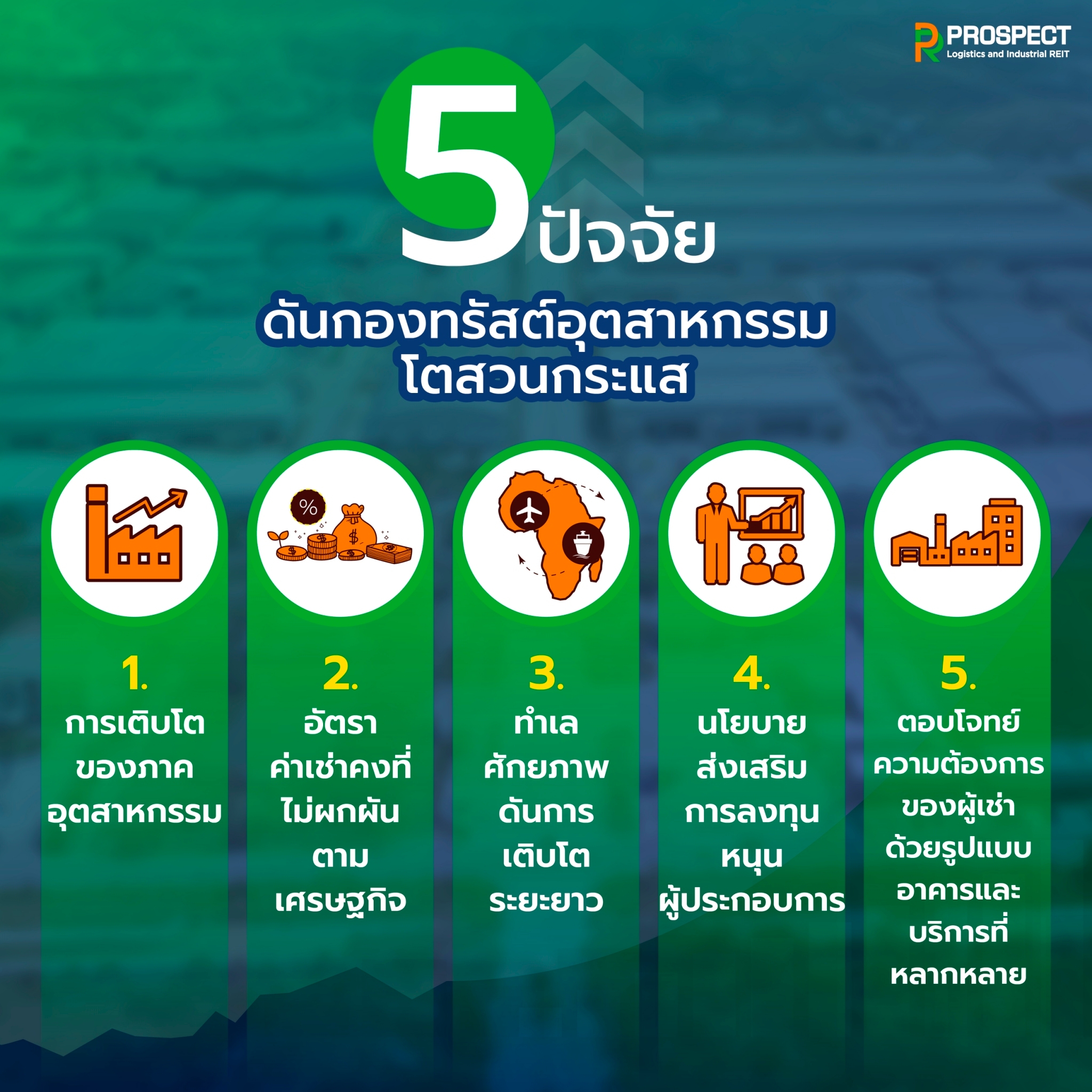
1. Growth of the Industrial Sector
According to the Office of Industrial Economics (OIE), the Industrial Production Index (MPI) is projected to grow continuously in 2023, estimated at 2.5-3.5%, benefiting from the recovery of domestic economic activities and tourism. This results in strong growth in the food and beverage industries, prompting operators to seek additional warehouses and factories to enhance production capacity to support business growth. The model of leasing warehouses and factories allows operators to expand their businesses more rapidly.
2. Rental Rates Remain Stable Despite Economic Volatility
The warehouse and factory rental business primarily generates income from regular monthly rents, meaning rental rates do not significantly change with economic fluctuations. Consequently, the overall Industrial REIT sector has not been heavily impacted by the COVID-19 period and can still provide consistent and attractive returns, with an average dividend yield of about 6-8% per year. Currently, each trust has been continuously incorporating high-potential assets to expand asset value and foster growth.
3. Strategic Locations Drive Long-Term Growth
Investing in high-potential properties located in strategic logistics and industrial areas is another key factor in establishing the growth foundation of Industrial REITs. Major industrial strategic areas in Thailand are mostly located in regions connected to transportation and distribution, both domestically and internationally, such as Samut Prakan, Ayutthaya, and the EEC area.
4. Investment Promotion Policies Support Operators Setting Up Production Bases in Thailand
The reopening of the country after the COVID-19 situation has begun to ease is an opportunity for foreign investors to gradually explore areas and warehouses. In addition to good locations, investment promotion policies and free trade agreements enhance the attractiveness for foreign investors to establish production bases in Thailand. According to the Board of Investment (BOI), the value of investment promotion applications in 2022 reached over 660 billion baht, the highest since the pandemic began, in key industries such as electronics, automotive, agriculture, petrochemicals, and digital industries. The electric vehicle and digital industries have chosen Thailand as a key production base in the region, while foreign direct investment (FDI) applications grew by 36%, with China leading, followed by Japan and the USA. This has allowed property developers in the industrial sector, who support investments in various forms, such as Free Zones with tax benefits, to attract more operators reliant on imports and exports.
5. Upgrading the Warehouse and Factory Rental Market with Diverse Building Designs and Services to Meet Tenant Needs
Due to increasing demand and competition, property developers in the industrial sector are rapidly transforming buildings to offer diverse solutions for tenants, including built-to-suit buildings, ready-built structures, specialized buildings like cold storage, tank farms, or even utilizing modern technology for smart warehouses. Additionally, the flexibility in building sizes and increased services for tenants meet various needs, enhancing opportunities to attract foreign investors, which is beneficial for trusts in the long term.
Regarding the overall market for real estate investment trusts (REITs), Ms. Oranong Chaitong, CEO of Prospect REIT Management Co., Ltd., as the manager of PROSPECT REIT, commented, "2023 is a year of both opportunities and challenges. Data on rental rates from several trusts indicate a clear recovery and increase, including retail trusts, hotel trusts, airport trusts, and exhibition center trusts, which have benefited from the full reopening of the country and the return of international tourists as many countries begin to ease COVID-19 measures, resulting in increased economic activities."
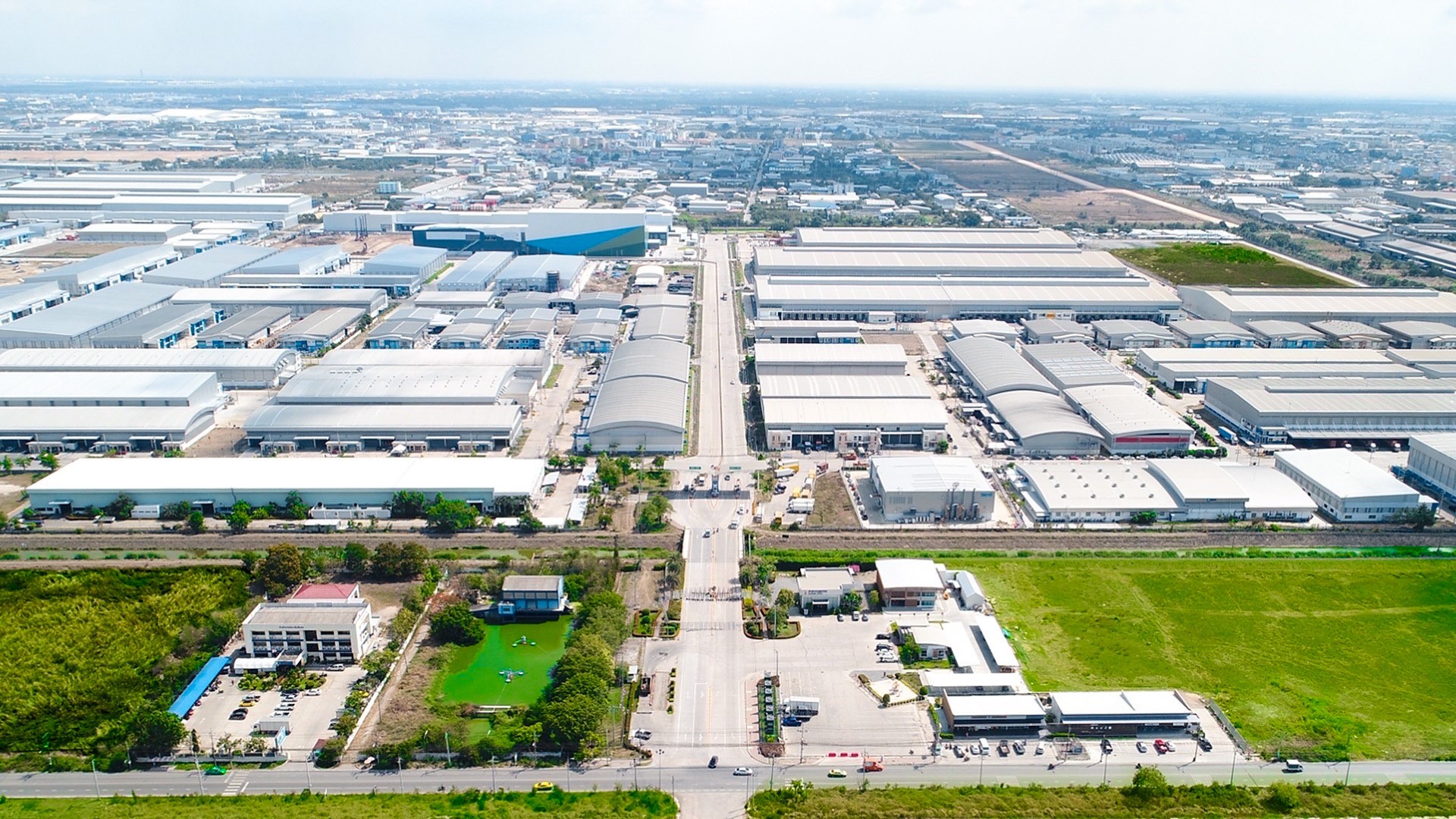
For industrial trusts investing in warehouses and factories, there is a continued growth trend this year due to the recovering economy, particularly the export sector, which remains a key driver for the country. The demand for warehouse and factory rentals will grow in line with the export sector in the food processing, automotive components, and packaging industries, which are currently booming.
The growth trajectory of industrial trusts is also reflected in the first capital increase plan of PROSPECT REIT, which the SEC approved for filing last November to invest further in two high-potential projects in Thailand's strategic logistics areas on Theparak Road and Bangna-Trad Road, covering a total rental area of over 70,129 square meters in general industrial zones and Free Zones, with a total investment value not exceeding 1.8 billion baht. It is expected that the trust units for the capital increase will be offered within the first quarter of 2023.