SENA Launches ZEH Model to Develop Zero Energy Homes, Aiming for Self-Sufficiency and Cost Reduction in Line with Global Sustainability Trends
SENA, the first comprehensive solar village developer in Thailand, is elevating residential development by adapting a Japanese model to establish Zero Energy Housing (ZEH), gradually reducing energy consumption to 100% for long-term residential use. This initiative addresses cost reduction and self-sufficiency while transitioning to sustainable clean energy.

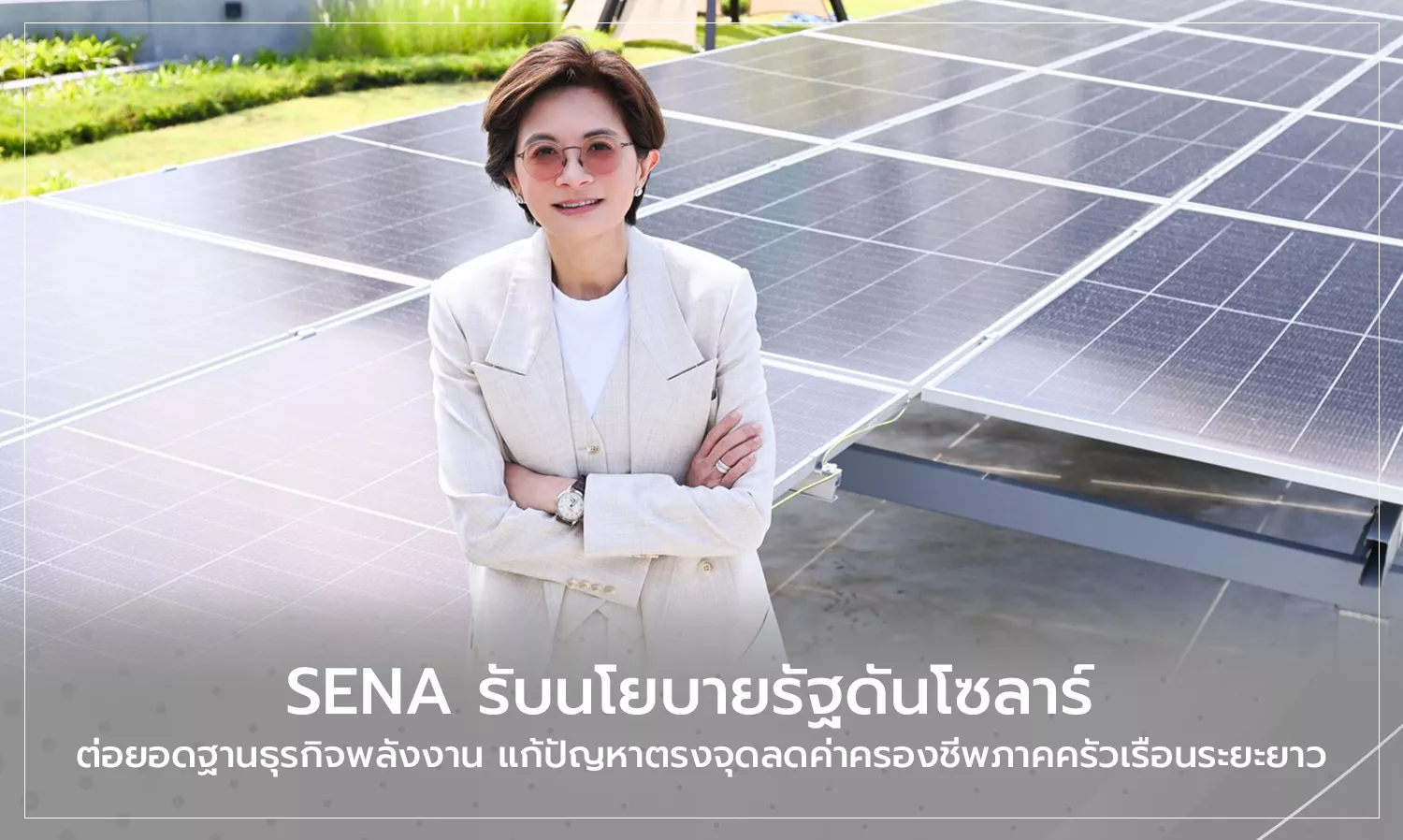
Associate Professor Dr. Kesara Thanyalakphak, Managing Director of Sena Development Public Company Limited, revealed that the company has been successfully installing rooftop solar power systems for all residential units, receiving positive feedback from all resident groups. This initiative has also expanded to include factory operators and various businesses, as it not only saves electricity costs but also aligns with the growing global trend towards clean energy, reflecting consumer behavior that increasingly values environmental sustainability to combat global warming. To further enhance development, Sena is preparing to implement the Zero Energy Housing (ZEH) model in its projects.
“In the past, we have installed rooftop solar systems on every home for our customers, along with after-sales service, starting about 7-8 years ago. This has made Sena the first real estate developer in Thailand with a comprehensive solar village project. Our next step is to focus on integrating clean energy in line with global trends, collaborating with Hankyu Hanshin Properties Corp, our Japanese partner, to develop homes and condominiums using the Zero Energy Housing (ZEH) model, which aims to reduce energy consumption to zero,” Dr. Kesara stated.
Two main criteria have been established for energy-efficient homes:
1. To reduce energy consumption in residences.
2. To install clean energy production sources.
The goal is to achieve energy savings starting from 20% up to 100%, which may take time. In Japan, this has been feasible due to government support, providing up to 1 million yen per home (depending on the house price) to encourage developers to create ZEH residences.
Meanwhile, many private sectors in Thailand are beginning to adapt and seek government support to stimulate a complete Eco System to accommodate the changing society. The government may need to establish clear policies along these lines, similar to the Japanese government, to facilitate these developments rather than relying solely on market mechanisms.
For the future direction of Zero Energy Housing (ZEH), Sena aims to develop residential projects that minimize energy consumption as much as possible. We are meticulous and attentive to every step, from design to the selection of construction materials and sanitary ware, including the installation of rooftop solar systems for homes and condos to produce clean energy for self-use, striving towards the Net Zero Carbon goal. This is a significant step for Sena to remain within the new Eco System, genuinely pursuing sustainability through environmentally friendly residential development.
However, Sena and Hankyu Hanshin have been business partners for over 7 years, collaborating on both horizontal and vertical residential projects totaling 35 projects worth 59 billion baht. This time, they are incorporating the ZEH system into the development of homes and condos, with Sena already implementing rooftop solar systems in every project. When calculating the return on investment for residences equipped with rooftop solar systems, the investment becomes more worthwhile, especially given the current electricity price exceeding 4.72 baht per unit, while the government purchases electricity from solar production at 2.20 baht per unit, resulting in reduced energy costs for residences. Additionally, the investment in solar panel installation is also trending towards lower prices.