Summary of the Seminar on Real Estate Asset Tokenization: Opportunity for Investment on May 7, 2022
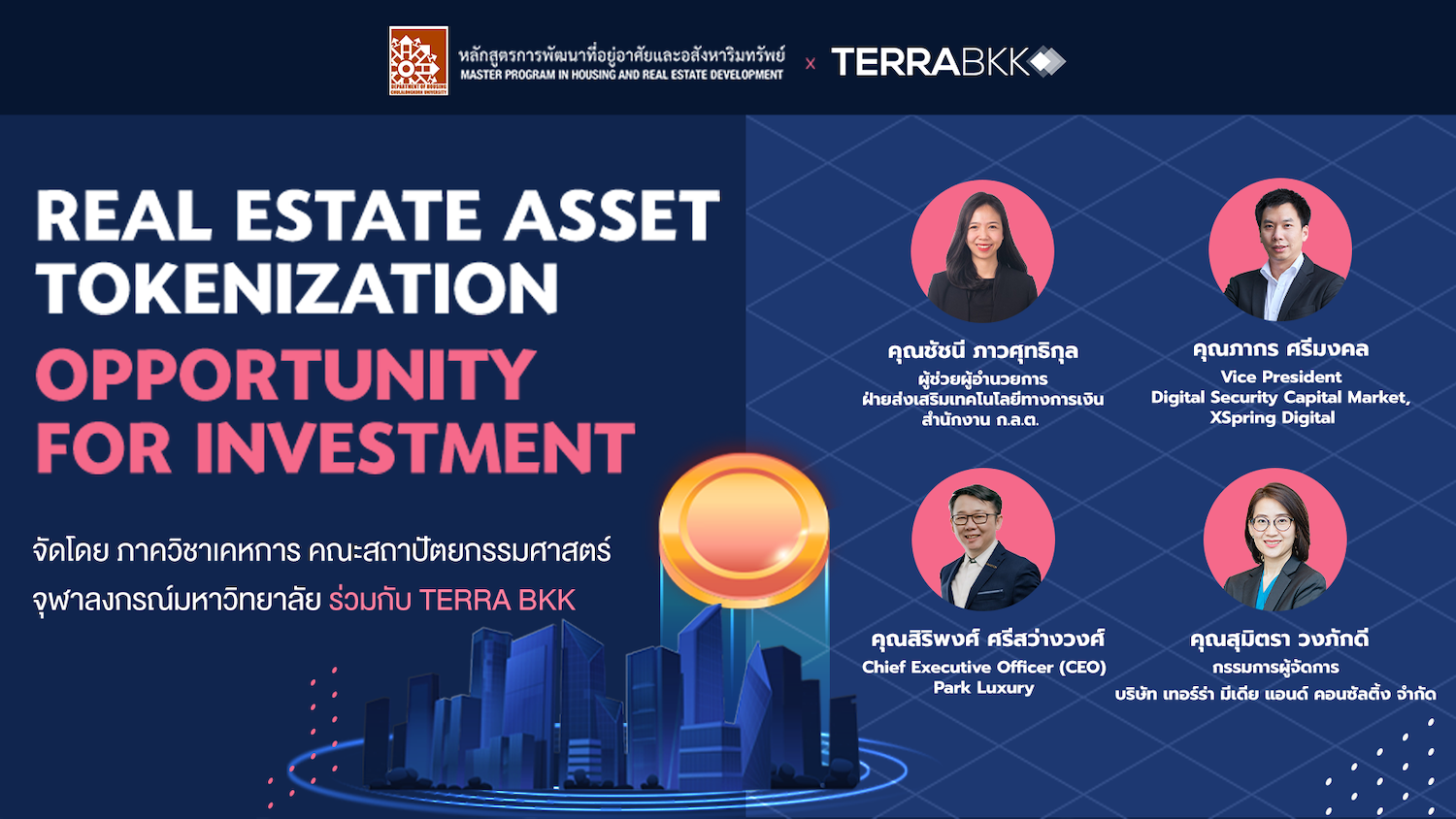
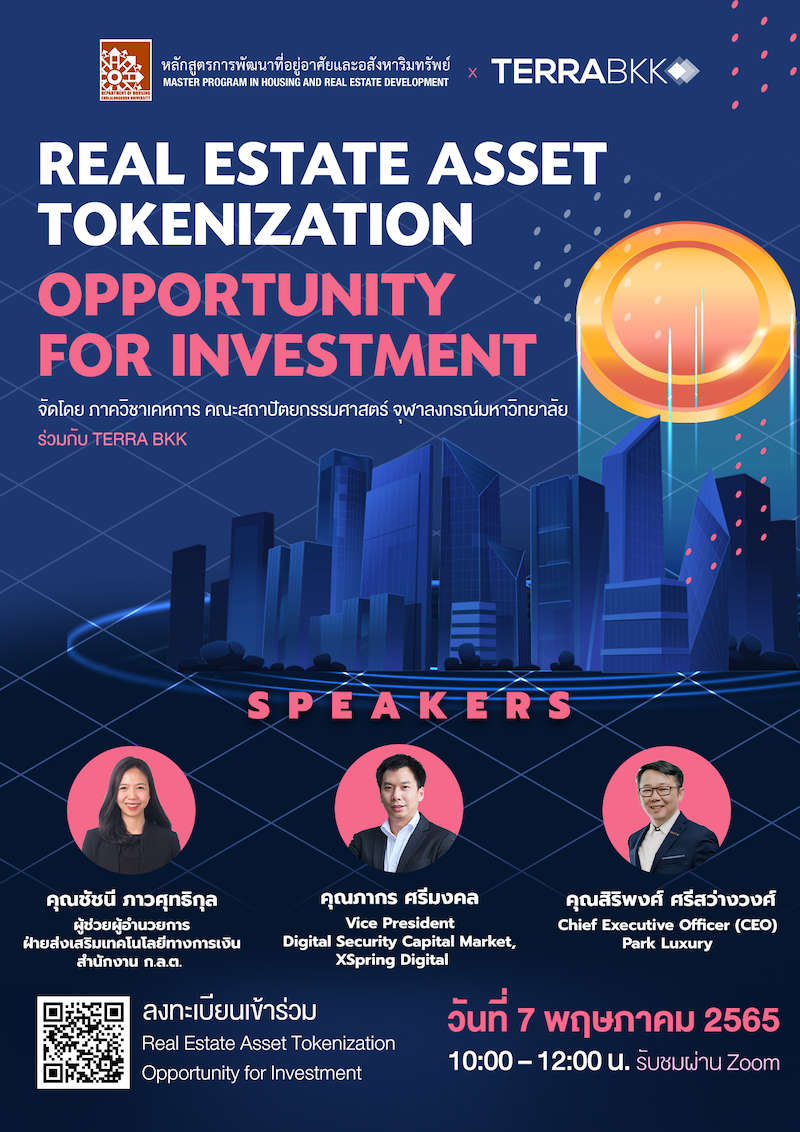
The seminar Real Estate Asset Tokenization: Opportunity for Investment concluded successfully on Saturday, May 7, 2022, from 10:00 AM to 12:00 PM via Zoom. This event was organized by the Department of Housing, Faculty of Architecture, Chulalongkorn University, in collaboration with TerraBKK, an investment website that provides updates on interesting news related to all types of housing. The main topic of discussion was Tokenization in the real estate business, which is a technology closer to us than we think and is playing a significant role in transforming the world.
Panelists included:
- Mr. Chatchanee Pawasutthikul, Assistant Director of the Financial Technology Promotion Division, Securities and Exchange Commission (SEC)
- Mr. Phakorn Srimongkol, Director of Digital Asset Design and Offering Division, Xspring Digital Co., Ltd.
- Mr. Siripong Srisawangwong, CEO of Park Luxury Co., Ltd., a subsidiary of Origin
Moderator of the discussion:
- Ms. Sumitra Wongphakdee, Managing Director of Terra Media and Consulting Co., Ltd.
Key points from Mr. Chatchanee Pawasutthikul:
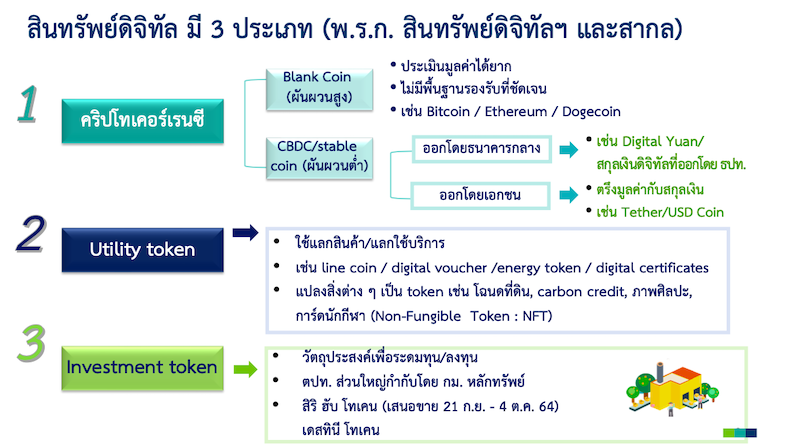
Digital assets (Digital Asset Act and International Standards) consist of three main types:
1) Cryptocurrency
2) Utility token
3) Investment token
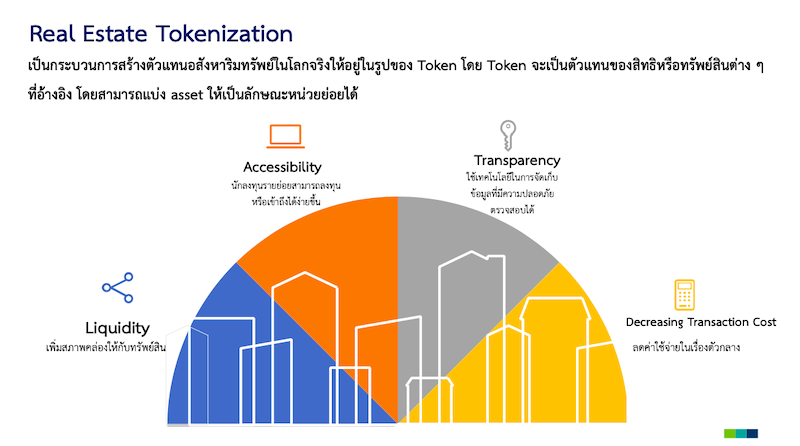
Real Estate Tokenization is one process of creating digital assets in the form of tokens, which represent rights or properties that can be divided into smaller units. The benefits include increased liquidity for assets, easier access for small investors, straightforward verification of origins, enhanced security, and reduced intermediary costs.
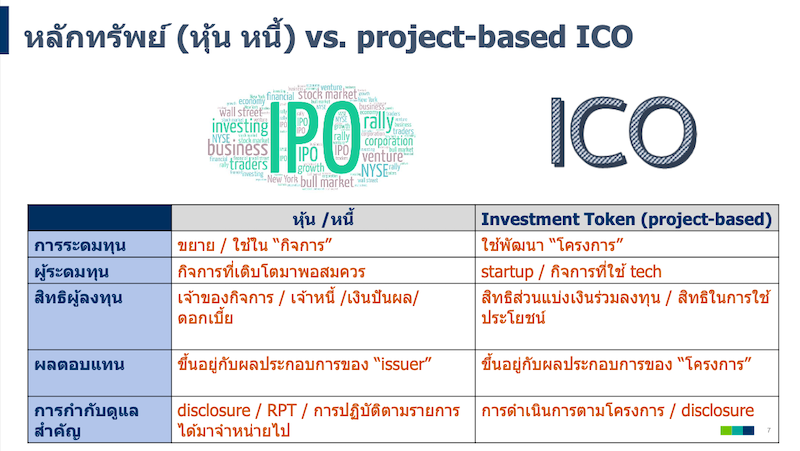
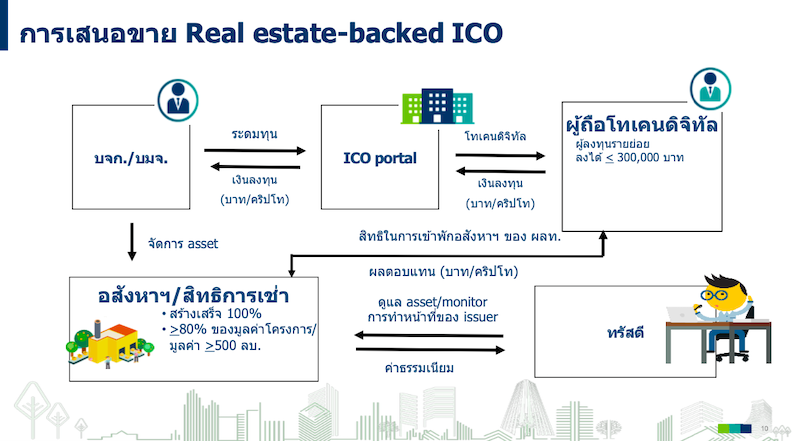
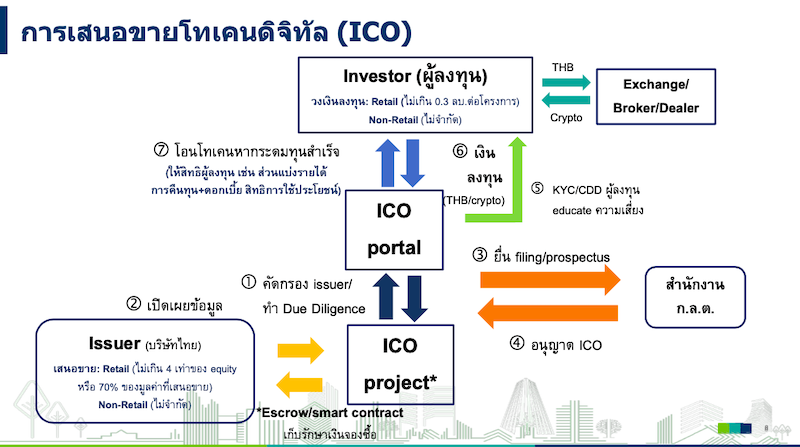
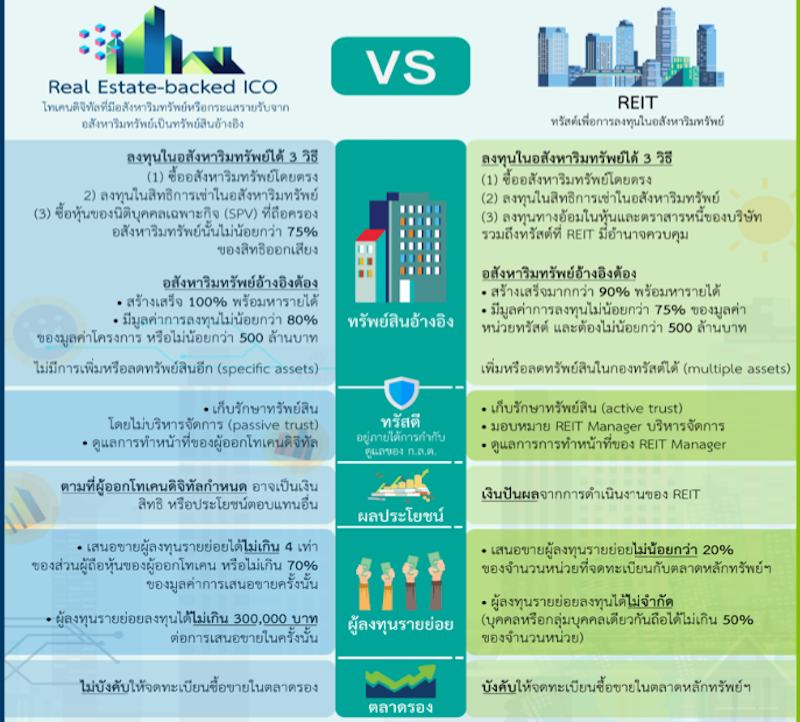
This process can be referred to as ICO, which differs from IPO in that the investment returns depend on the project's performance rather than the company's operations, as is the case with IPO. ICO fundraising is for project development, while IPO fundraising is for business expansion, such as machinery or land, requiring prior company growth. ICO offerings are not conducted directly by real estate companies but must go through intermediaries known as ICO Portals. After purchasing tokens, investors can trade them, but token holders do not own the rights; ownership remains with the registered titleholder. Real estate companies must hire trustees to manage assets and monitor company operations.
The differences between ICO and REIT lie in the fact that ICO can raise funds through tokens, allowing small investors to participate, while also reducing the company's accounting burden. It provides clear tracking of token origins and offers higher security than investing through REIT.
Key points from Mr. Phakorn Srimongkol:
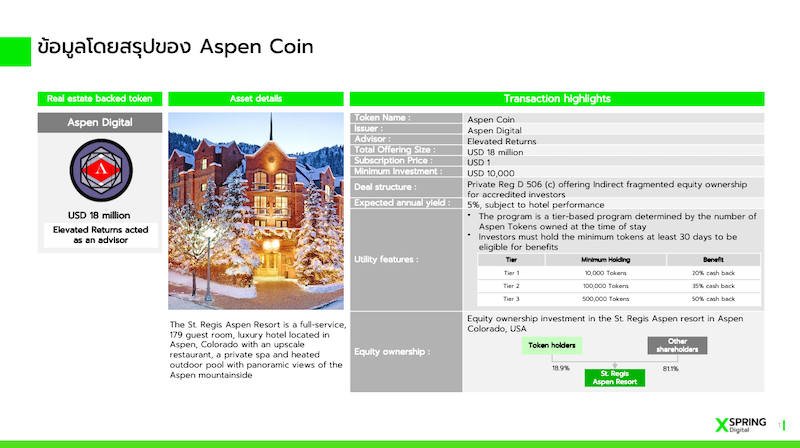
- Case Study: Aspen Coin, the world's first hotel that has tokenized its shares by breaking down ownership rights into investment units, which cannot yet be done in Thailand.
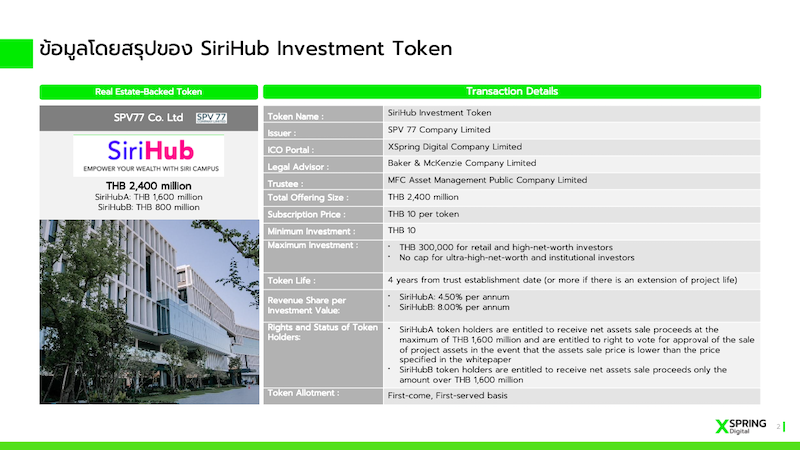
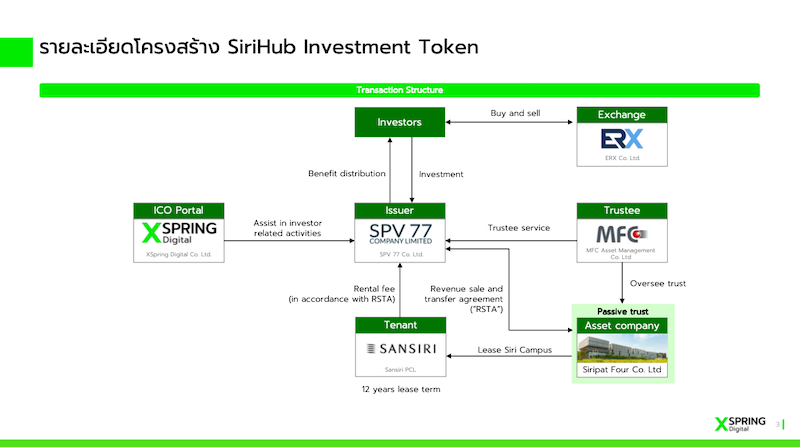
- Case Study: SiriHub Investment Token, the first real estate token in Thailand available for general investors, launched in late 2021. This investment is through leasing; SPV77 purchased the Siri Campus building and leased it back to Sansiri for use as its headquarters. Rental income will be returned to investors in token form, divided into two buildings: SiriHub A and SiriHub B, offering different returns. Upon project completion, if the project sells for over 1.6 billion baht, the excess will be additional returns for investors in SiriHub B, which carries higher risk.
Key points from Mr. Siripong Srisawangwong:
He views the current emergence of Token as a new development trend for investment, benefiting real estate companies by providing a new fundraising method. Investors also gain advantages in Real Estate, as it is an asset type that cannot yet be sold to retail investors in Thailand. However, as this technology becomes more widely used, it will enable fundraising from both domestic and international small investors, reducing investment risks by allowing smaller amounts to be invested rather than large sums for property purchases.
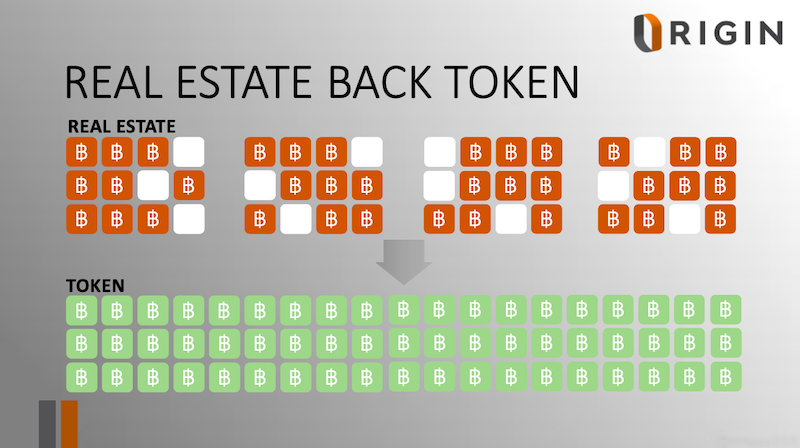
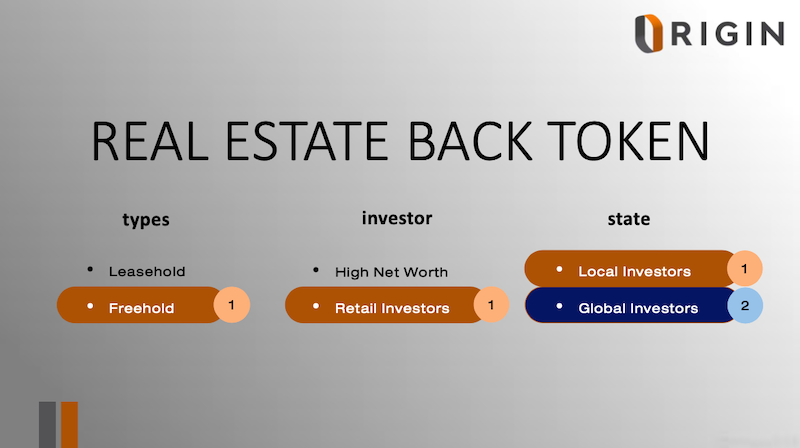
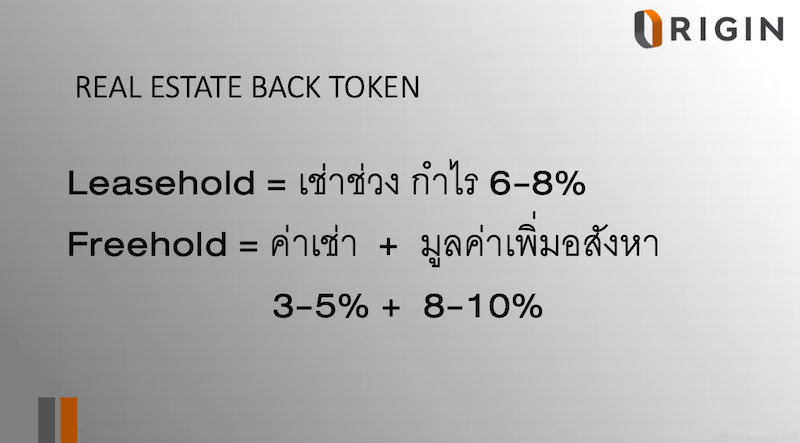
In summary, Real Estate Tokenization is the process of buying and selling Digital Tokens for investment, aimed at raising funds for project development but cannot be sold directly; it must go through intermediaries known as ICO Portals. The advantages include the creation of clear assets, allowing investors to better analyze risks, enabling small investors to participate with lower capital, creating new fundraising capabilities, reducing the company's accounting burden, and providing easier tracking and verification of token origins, along with increased investment security.
Implementation in Thailand: Currently, the SEC has adjusted the ICO fundraising criteria for token offerings to allow for real estate-backed ICOs, requiring that referenced properties be completed and income-generating projects, with more than 80% of the total project investment, and not just for small units. Additionally, a trustee must be appointed to protect the interests of token holders. In Thailand, such tokens have already been created, such as the SiriHub Investment Token by Sansiri, allowing small investors to participate. In the future, more investments of this nature are expected to emerge, as it is a trending topic attracting significant interest from both investors and real estate companies.
Thus, investing in Token in Thailand is still a new concept but is becoming a trend, as evidenced by the high interest in the SiriHub Investment Token, which is the first Real Estate Asset Tokenization in Thailand allowing small investors to participate.
Thank you for the summary of the seminar Real Estate Asset Tokenization: Opportunity for Investment from students of the Department of Housing, Faculty of Architecture, Chulalongkorn University.
Watch the seminar recording here: >>> https://youtu.be/93K5ypm7VpM
Download the presentation materials here: >>> https://drive.google.com/drive/folders/1bS7VGHY7r-nyd_wmj768RXF54Al06saT?usp=sharing
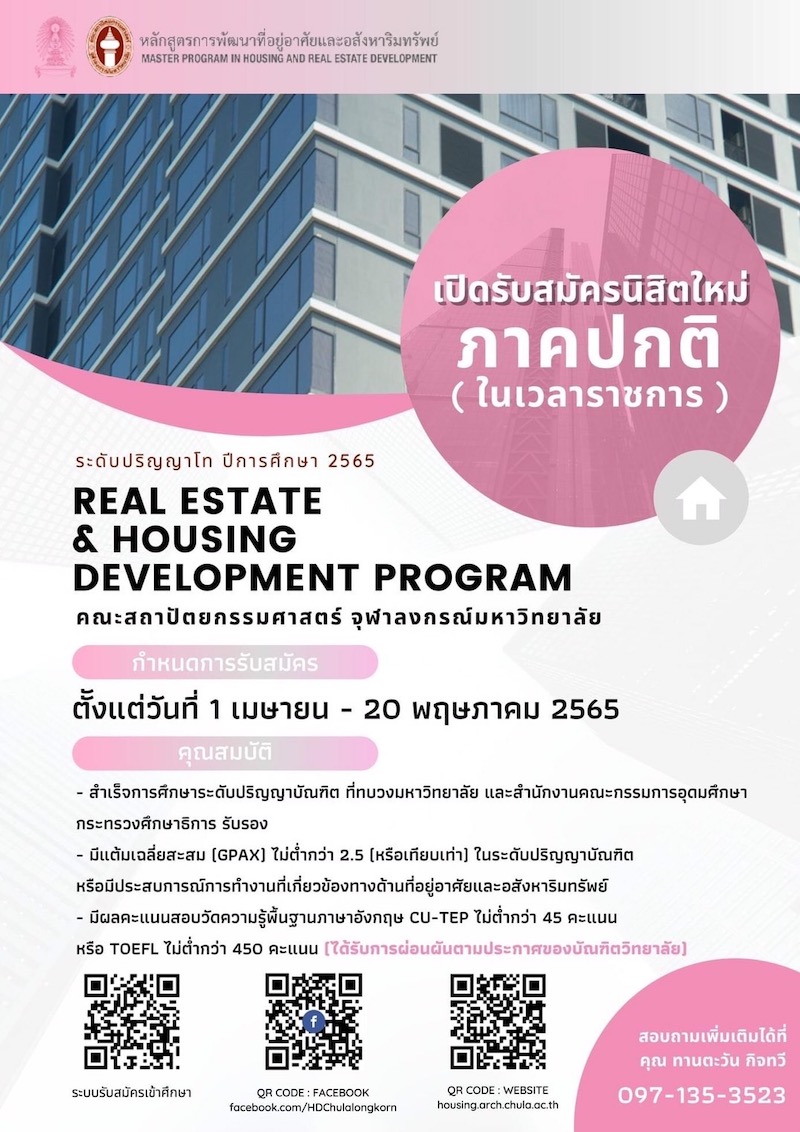
Additionally, the Master's Degree Program in Housing and Real Estate Development for the 2022 Academic Year at the Department of Housing, Faculty of Architecture, Chulalongkorn University
is open for applications from April 1 to May 20, 2022.