
Countdown to Ethereum: The Merge and the Biggest Structural Changes in Demand/Supply (and Price)
In the previous article Read the article here discussing the impact of the merge of Ethereum's Proof-of-Work and Proof-of-Stake systems, which will reduce the new supply of ETH by about 90% and increase demand due to higher staking yields.
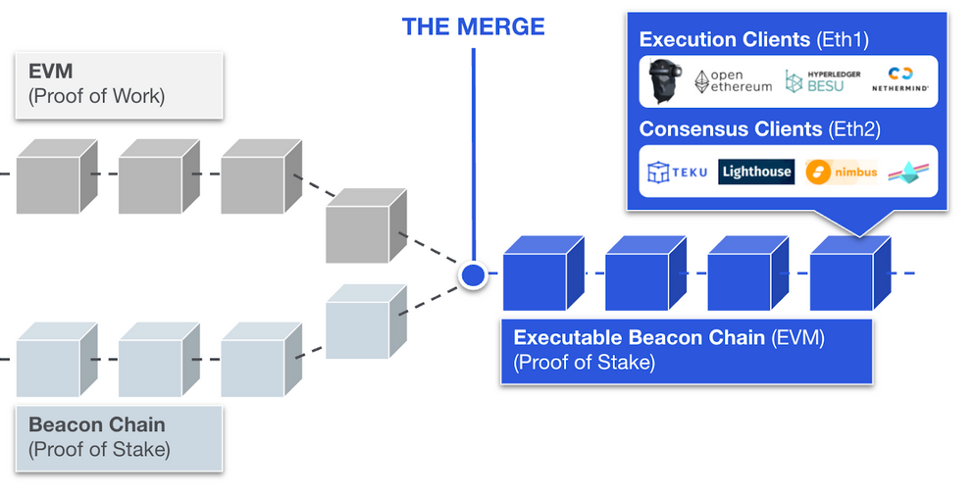
Source: Consensys
In this article, we will follow the latest developments.
1. When will The Merge happen and what is the current progress?
The unofficial schedule indicates that it will occur between June and July of this year (2022). As of writing this article, there are about 3-4 months left. The reason for this prediction is:
- Difficulty Bomb: In the previous fork (code modification) in December 2021, a “timer” was set for the mining difficulty of ETH (Difficulty) using the Proof-of-Work algorithm to spike (and remain high) in June, to force miners to stop mining Proof-of-Work. If The Merge is to be delayed, the Difficulty Bomb must also be postponed. Currently, no Ethereum core developer has indicated that there will be a delay.
Read more about the Difficulty Bomb (https://www.cybavo.com/blog/ethereum-2022-merge-difficulty-bomb/)
- Kiln Testnet is expected to be the final test with real specs and is progressing well. If no difficult bugs are encountered, it should move to the next stage, which is the launch on the mainnet.
Read more about Kiln Testnet (https://cointelegraph.com/news/ethereum-merge-edging-closer-with-final-kiln-testnet-launch)
2. What will happen after Ethereum: The Merge?
Currently, there are about 10 million ETH staked in the Beacon Chain (which will become the main Proof-of-Stake chain of Ethereum after The Merge) and it yields approximately 4.9% in ETH.
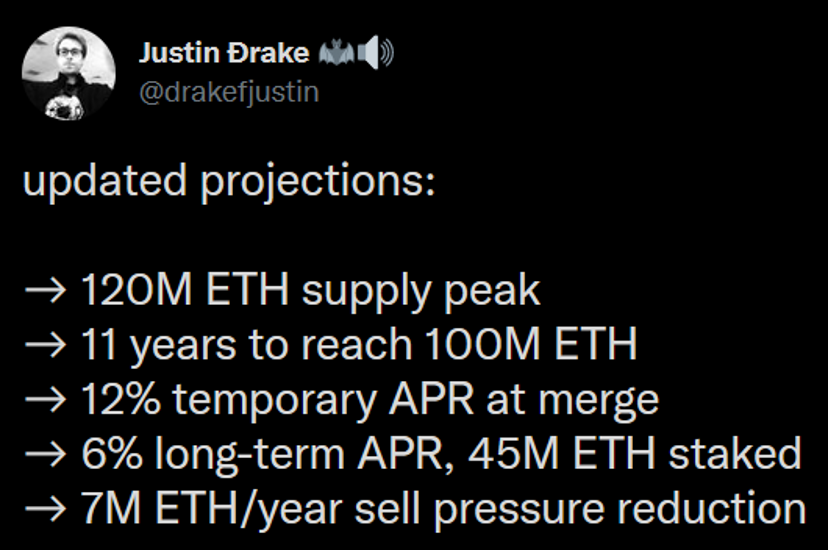
- Yield will temporarily rise to 12%
After The Merge, the staking yield will increase to about 12% because some rewards from fees that were previously given to Proof-of-Work miners will be redistributed to those staking ETH in the Beacon Chain (Proof-of-Stake).
This phenomenon may attract more investors to stake ETH until the yield decreases to a balanced level of about 4-5% again, which is expected to see several million more ETH staked.
According to Justin Drake (researcher, Ethereum Foundation)
https://twitter.com/drakefjustin/status/1424039388548321283?s=12
- New ETH issuance will decrease by 90% and selling pressure will significantly reduce
Currently, Proof-of-Work miners receive about 4.9 million ETH/year or about 13,000 ETH per day. Additionally, since Proof-of-Work miners need to use electricity to operate and incur costs for mining equipment and various operational expenses, they must sell some of the mined ETH to cover these costs. Currently, there is selling pressure from this segment, which will disappear after The Merge.
In contrast, stakers in Proof-of-Stake will receive about 450,000 ETH per year or approximately 1,300 ETH per day, and they will not need to sell ETH since there are minimal operational costs. The yield in this segment may increase to about 3,000 ETH per day after The Merge.
In summary, the new supply will decrease from about 14,300 ETH per day to 3,000 ETH per day, while the demand for ETH will increase significantly due to the rising need to stake ETH.
3. Comparing to past events when new supply of Bitcoin decreased after Halving
Bitcoin reduces its new supply issuance by 50% approximately every 4 years, an event known as Bitcoin Halving. In the last 3 cycles, the price of Bitcoin surged dramatically after each halving event.
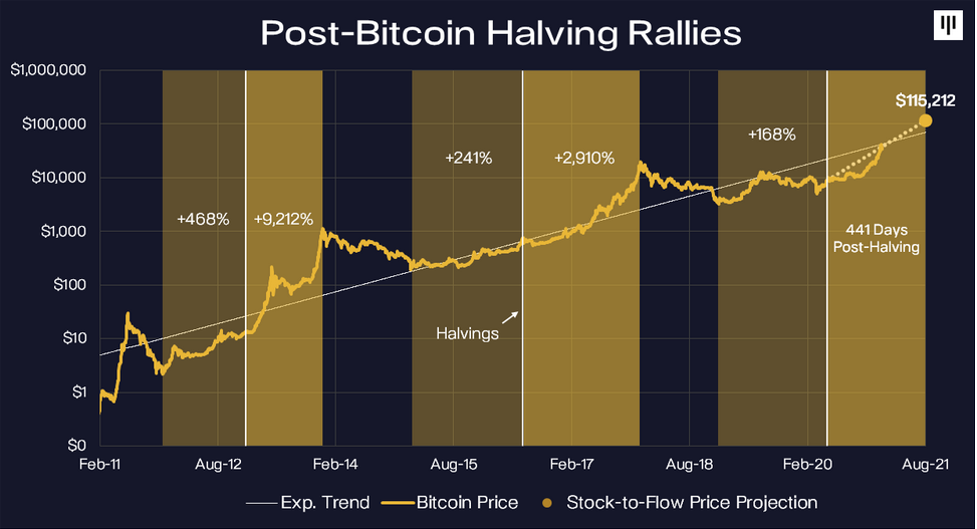
The decrease in ETH issuance rate after The Merge, if considered as a supply reduction of 80-90%, would be equivalent to about 3 Bitcoin halvings (the first from 100 to 50, the second from 50 to 25, and the third from 25 to 12.5, or a reduction of about 87.5% from 100).
Ultimately, it is difficult to predict where the price of ETH will stabilize after The Merge. We only know that the new supply from issuance will decrease by 80-90% and the selling pressure from Proof-of-Work miners will vanish, while the demand from staking is likely to increase significantly due to yields rising from 4-5% to around 12% (before adjusting down to a new equilibrium as more investors stake).
However, it is certain that this will be one of the most significant and interesting times in Ethereum's history, and we will soon witness its impact.