Rising Interest Rates and REIT Investments
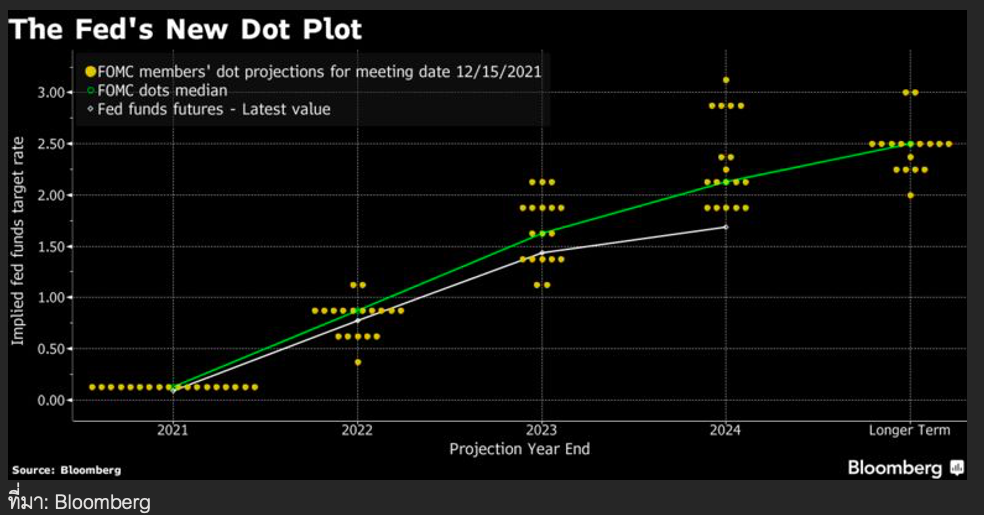
In 2022, one key factor to watch is the interest rate, as the U.S. Federal Reserve (Fed) has signaled an intention to raise rates. This year, the committee anticipates approximately three rate hikes, with the policy rate expected to reach around 2% in the next two years to control high inflation. Changes in global interest rates may affect capital flows and impact interest rate trends in Thailand as well.
Estimates of the U.S. Federal Reserve's interest rate adjustments (dot plot) from the meeting on December 15, 2021.
In times of rising interest rates, REITs may face negative impacts due to:
- REITs will incur higher borrowing costs (Leverage), which may affect their dividends due to increased interest expenses.
- REITs may attract less interest from investors seeking consistent returns, as they may shift their focus to lower-risk bonds that offer higher interest rates in a rising rate environment.
- The required return on investment in REITs may increase, as the risk-free rate rises, putting downward pressure on the buying and selling prices of REIT units.
While it is clear that rising interest rates are a negative factor for REITs, if the rate hikes occur during a period of economic growth and rising inflation, the overall impact may not be negative for REITs because:
- During periods of economic growth, demand for real estate increases, leading to higher rental rates and occupancy rates, as well as improved profit margins, which can result in growing profits and dividends for REITs.
- In times of rising inflation, rental rates are likely to be adjusted upward, potentially exceeding the rate of inflation.
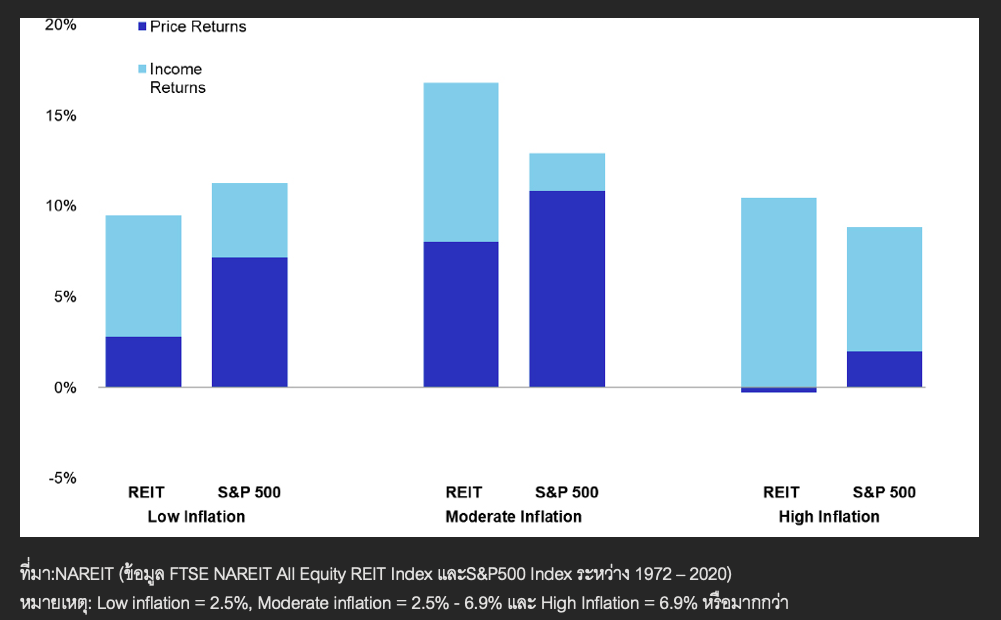
From the information above, it is evident that U.S. REITs have historically outperformed the S&P 500 index during periods of moderate to high inflation, as REITs generate income returns effectively from rental income during such times.
REIT Returns Compared to S&P 500 Returns Across Different Inflation Periods
However, it is important to remember that the ability to adjust rental rates and the trend of occupancy rates for each REIT can vary based on supply and demand factors within each property sector and location, which are not uniform.