Is Work-Life Balance Still a Reality? : Adobe Reveals the Impact of the Pandemic on Work and Personal Life
Is Work-Life Balance Still a Reality? : Adobe Reveals Study Results on the Impact of the Pandemic on Work and Personal Life – Gen Z desires to design their life schedules freely, and employees expect organizations to provide technological support for better work performance.
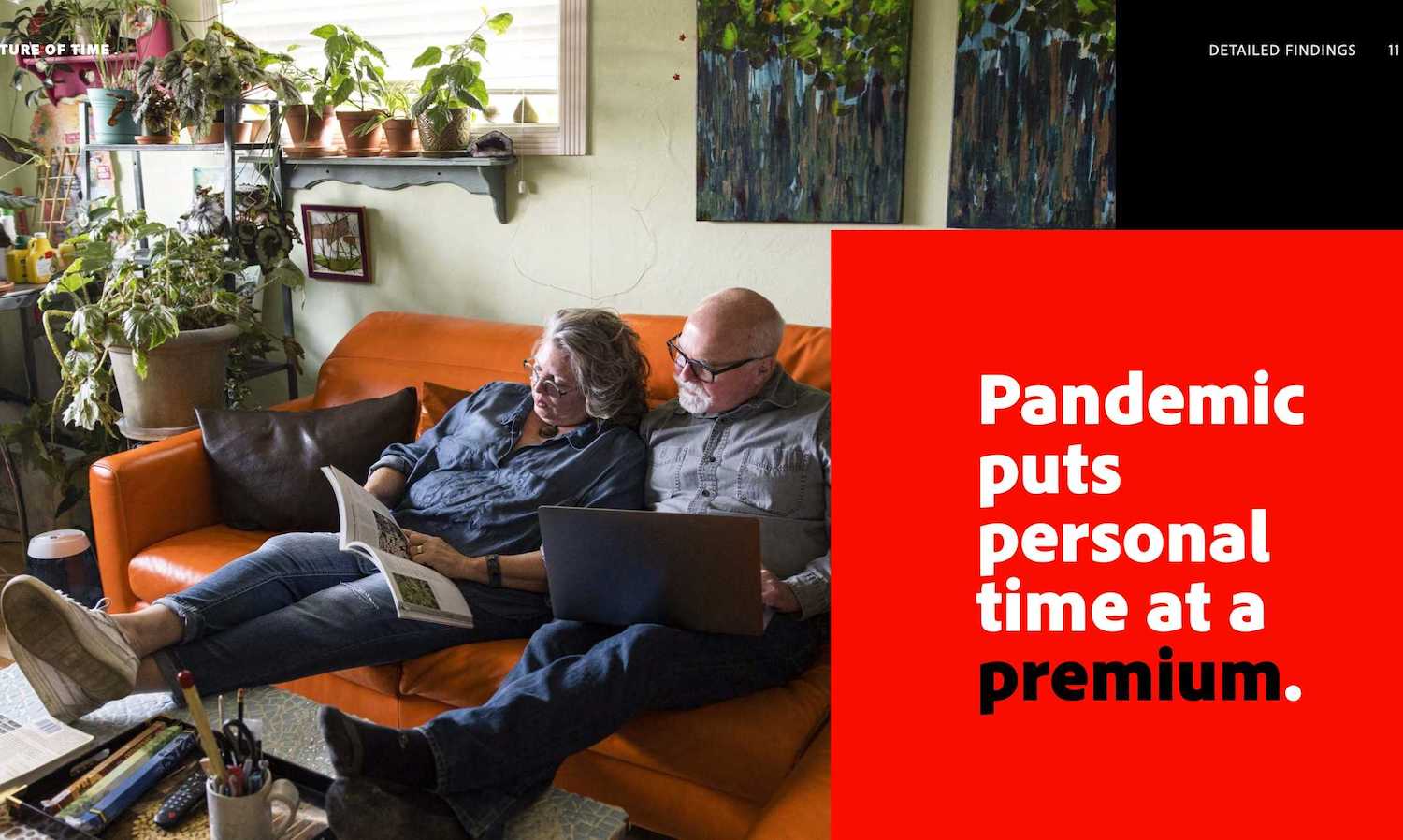
The situation over the past year has forced us to rethink and adjust our priorities, with many people expressing a desire for “more time.”
Today, people around the world feel increasingly pressured, stressed, and exhausted. While working from home has provided more flexibility in workdays, organizations have raised expectations that employees should always be available. For many, the line between work life and personal life has blurred into one.
As we move into a future of hybrid work, Adobe surveyed a sample of 5,500 individuals, including corporate employees and SME entrepreneurs across seven regions worldwide. The survey asked about the times they feel most pressured and how it affects their work and personal lives, revealing significant changes in the concept of time.
Working from Home Turns “Personal Time into Work Time”
One of the most interesting questions about working from home is, “Previously, we spent about two hours a day commuting to and from work. Now that we work from home, how do we spend that time?” The answer is that many people use the extra time to work more hours.
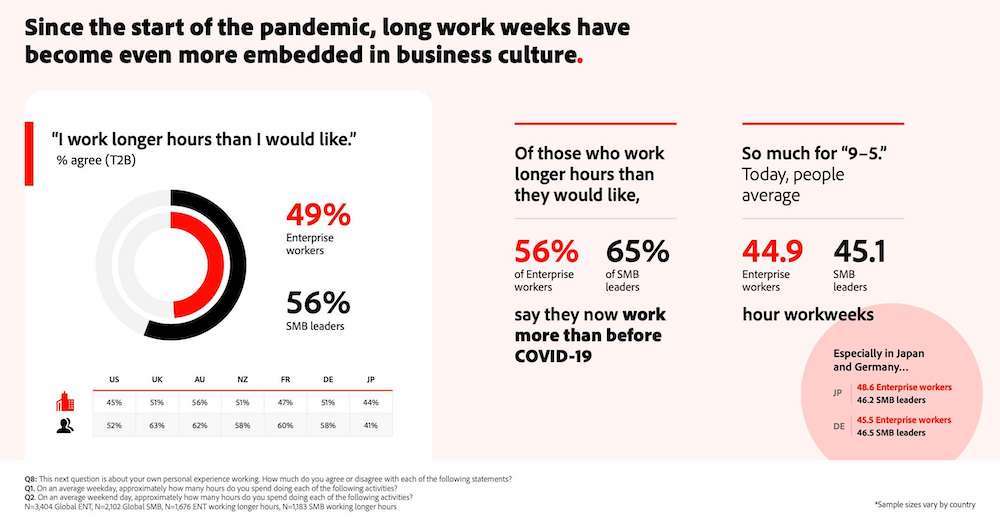
According to Adobe's survey, 49% of corporate employees and 56% of SME entrepreneurs reported that they now work longer hours than before. Corporate employees average 44.9 hours per week, while SME entrepreneurs average 45.1 hours per week, exceeding normal working hours.
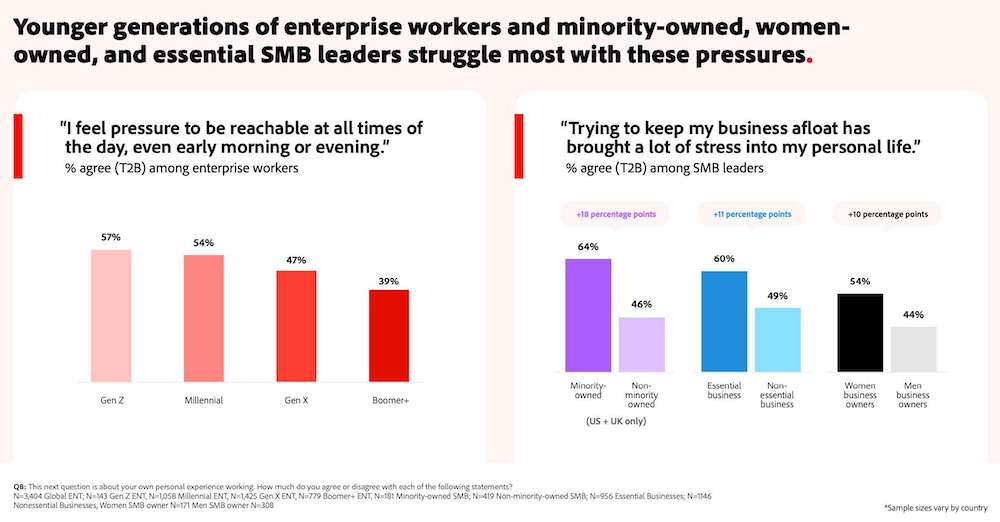
Increased hours mean increased pressure for employees or entrepreneurs to be “always reachable,” even after work hours. Nearly half of corporate employees and three in five SME entrepreneurs feel pressured to respond to emails and resolve customer issues after hours.
Burnout – A Major Issue for Entrepreneurs, Especially Women and Minority-Owned Businesses
Burnout has become a prevalent issue over the past year, with one in three SME entrepreneurs experiencing employee fatigue and burnout due to work stress during the pandemic.
However, burnout does not affect all groups equally. Minority entrepreneurs (67%), women entrepreneurs (49%), and small business owners essential to people's livelihoods (67%) report higher stress regarding work time compared to non-minority entrepreneurs (52%), male entrepreneurs (38%), and certain types of small business owners (49%).
This stress also impacts personal life, with minority entrepreneurs (64%), women entrepreneurs (54%), and small business owners essential to people's livelihoods (60%) experiencing increased personal stress from the need to keep their businesses afloat simultaneously.
“As a mother and business owner, I have to juggle many tasks throughout the day, including in the evenings after work and on weekends,” said one SME entrepreneur.
The survey found that minority entrepreneurs (55%) and small business owners essential to people's livelihoods (51%) reported feeling burned out in their work and business. Additionally, nearly half of essential small business owners indicated they would be willing to sell their business tomorrow if possible.
Gen Z is the Main Driver of the “Great Resignation”
It is not surprising that more employees are resigning, with over 4 million workers in the U.S. quitting their jobs in April alone, according to the U.S. Department of Labor.
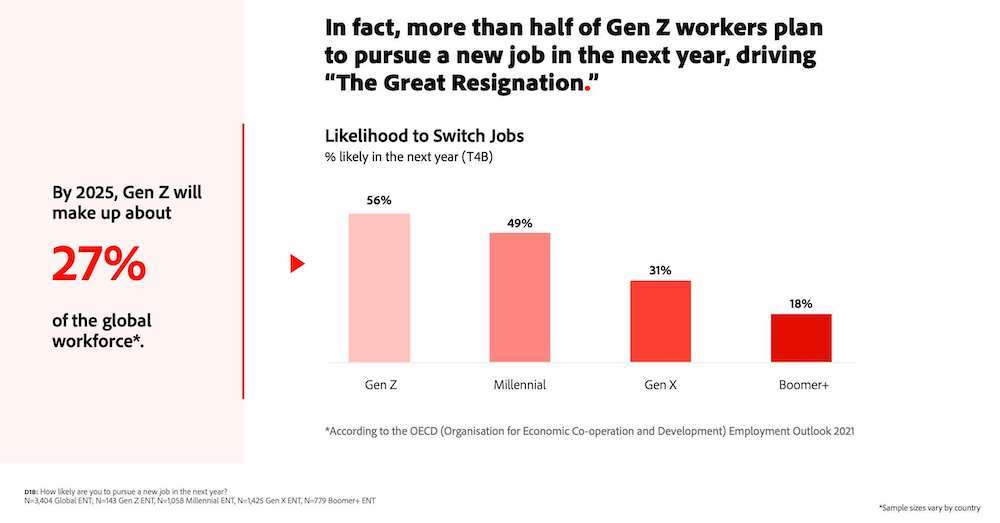
This trend is expected to continue. For instance, 35% of corporate employees indicated they plan to change jobs in the coming year, with 61% citing the desire to “design their life schedules more freely.”
This figure is even higher among those just starting their careers. Although Gen Z has only recently entered the job market, over half plan to seek new employment in the next year. Furthermore, this group reports the lowest satisfaction with work-life balance (56%) and overall career satisfaction (59%), feeling the most pressure to work during “normal working hours” (62%), with one in four stating they perform best outside the traditional 9-to-5 schedule. Nearly half of Gen Z respondents reported often working from bed.
Employees Want “Technology” to Enhance Work Efficiency
While the driving forces behind these trends are complex, one clear takeaway from the survey is that employees have higher expectations for technology that enables them to work faster and more efficiently.
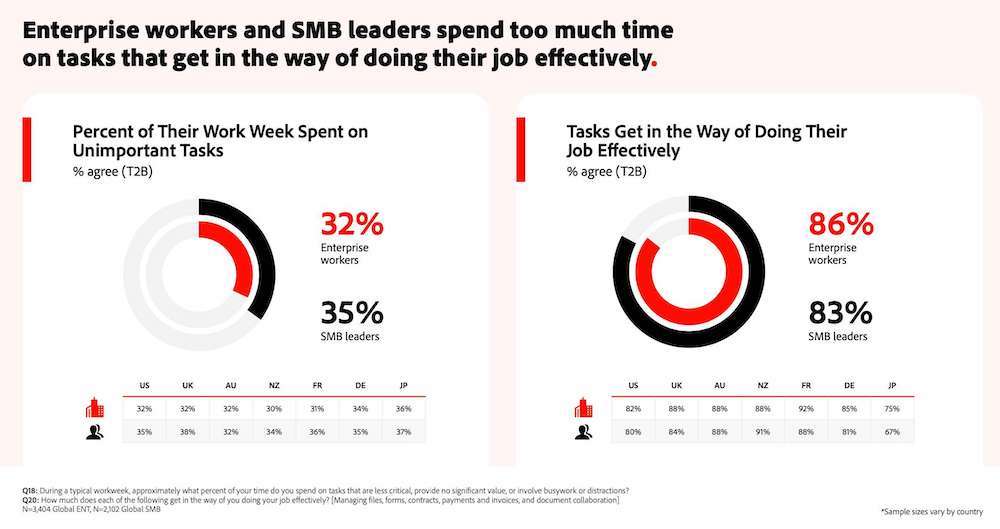
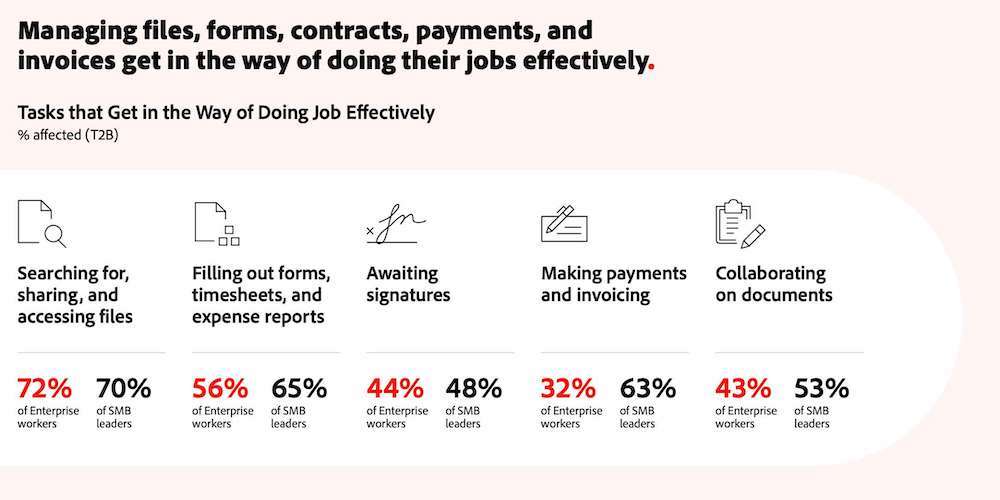
Especially for simple tasks like file management, forms, contracts, payments, and invoices, employees spend about one-third of their working hours on repetitive administrative tasks. 86% of corporate employees and 83% of SME entrepreneurs identified these minor tasks as obstacles to their work efficiency. 91% of respondents expressed interest in tools that could enhance their work processes, such as Adobe Acrobat and Adobe Sign.
In the future, employees will need to collaborate with both in-office and remote workers. Therefore, there is a need for user-friendly technological tools, including AI and automation, to retain and attract skilled personnel to work with organizations long-term. Adobe's study indicates that about half of corporate employees are willing to change jobs if their new workplace offers better tools that enhance their efficiency.
So, if employees have more free time due to more effective tools, how will they spend that extra time? It turns out that about half of the respondents plan to use their free time for other interests, including skill development for future growth.
For more information, you can download the full Adobe Future of Time report from the website >>> Click
*Minority entrepreneurs* refer to respondents in the U.S. and the UK only.
*Small businesses essential to people's livelihoods* refer to businesses providing necessary goods or services to consumers, such as grocery stores, healthcare services, and emergency services during the pandemic.