Commerce Ministry Reports 121% Growth in 7-Month Exports, Highlights 'Russia-CIS' as a Promising New Market
"The Ministry of Commerce" has revealed new export figures for July, showing a growth of 20.27%. This has resulted in a fourfold increase in exports over the first seven months, exceeding targets. The COVID lockdown has impacted export plans for the second half of the year, necessitating contingency plans. However, the focus remains on promoting exports both domestically and internationally, with Thailand as the central hub for at least 130 activities.
.jpg)
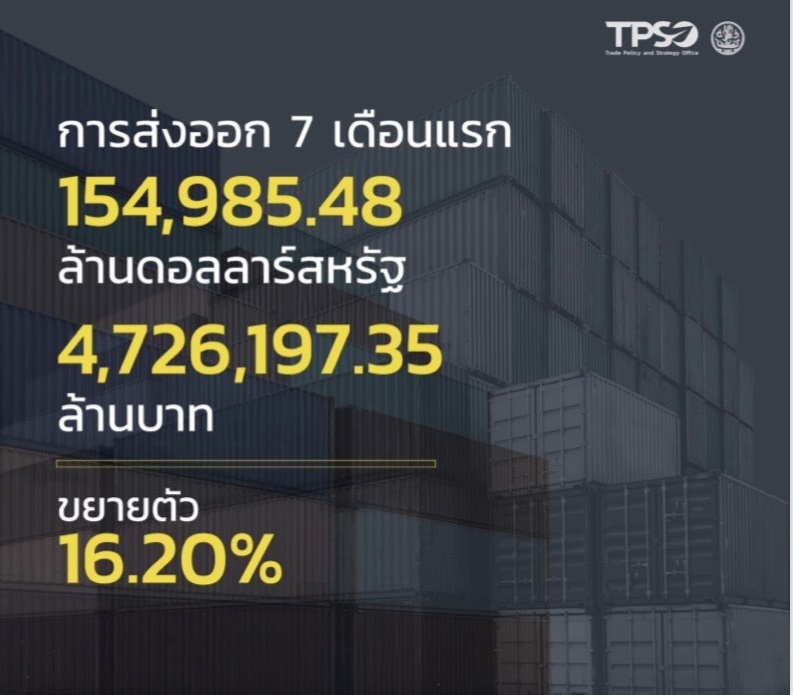
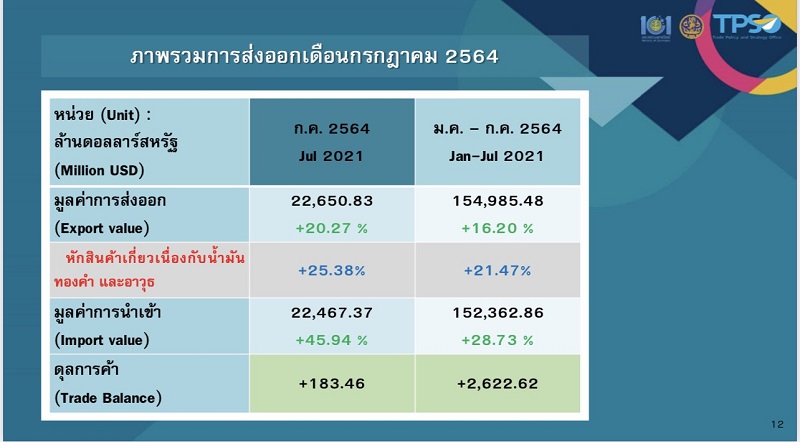
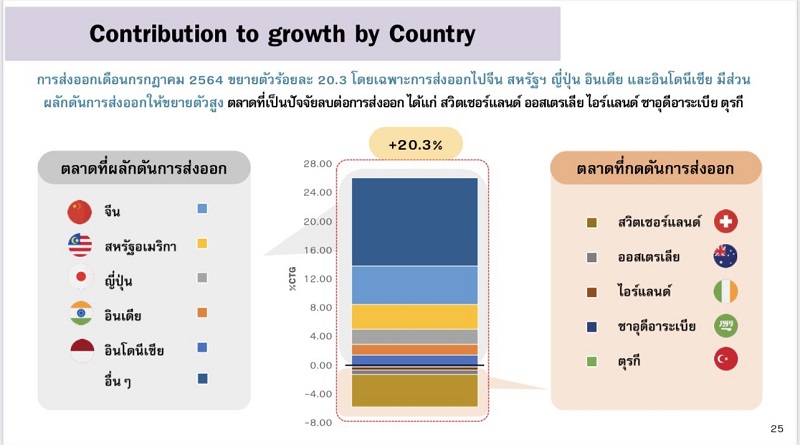
Minister Jurin Laksanawisit stated that exports in July expanded by 20.27% (including gold and oil, the growth would be 25.38%), with a total trade value of 708,651.66 million baht. The total exports over the first seven months grew by 16.20%, amounting to 4,726,197.35 million baht.
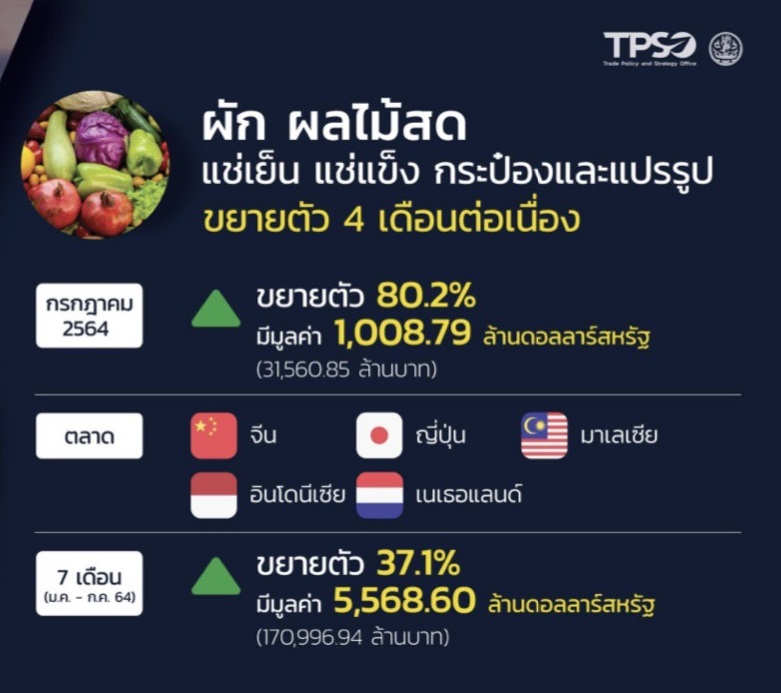
Overall, there has been continuous growth in agricultural products and agro-industrial goods, with fresh, chilled, frozen, canned, and processed fruits and vegetables growing by 80.2%, rubber by 121.2%, cassava products by 62%, pet food by 17.3%, and fats and oils from plants and animals by 51.7%. Wheat products and other ready-to-eat foods grew by 8.4%.
For industrial products overall, there was an 18% growth over five months, generating a revenue of 561,879.61 million baht. The sectors that performed well include automobiles and automotive parts at 39.2%, valued at 70,773.38 million baht, rubber products at 16%, plastic pellets, petroleum, and chemicals at 59%, and jewelry and accessories (excluding gold) at 43.8%. Computers and equipment grew by 19.3%, with all product groups showing good growth in almost all major markets such as the USA, China, Japan, Europe, ASEAN, and CLMV, except for the Australian market where jewelry and air conditioning-washing machines remain in the negative. The Russian and CIS markets are emerging as new markets with positive signals, showing continuous growth for four months, particularly in automobiles and components, plastic pellets, rubber, air conditioning, and canned-processed fruits.
For exports in the second half of the year, the Ministry of Commerce will adjust plans according to the domestic lockdown situation and the ongoing COVID issues in several partner countries. However, the focus will remain on the six-month plan, promoting exports both domestically and internationally, with Thailand as the central hub for at least 130 activities.
The Department of International Trade Promotion will continue to drive both existing and new markets that are showing improvement. The export target for this year is +4%, but currently, it stands at +16.2%, which is considered exceeding expectations. In terms of container volumes, the numbers are balancing out, with import containers still exceeding export containers by about 120,000 BTUs. However, there may be occasional shortages due to imbalances in entry and exit. A major issue is the high shipping costs, which have made some Thai products less competitive in the global market. Nevertheless, the situation is improving. Although shipping costs remain high, various SMEs are collaborating to rent ships or share shipping space to reduce costs. Additionally, I am requesting the Rice Exporters Association to coordinate with the Department of Foreign Trade to consolidate shipping space needs and charter ships. The depreciation of the baht also enhances our competitiveness, leading to an optimistic outlook for Thai exports.