Thai Baht Continues to Weaken as Thai Stocks Face Pressure from COVID Situation
Summary of Thai Baht Movements
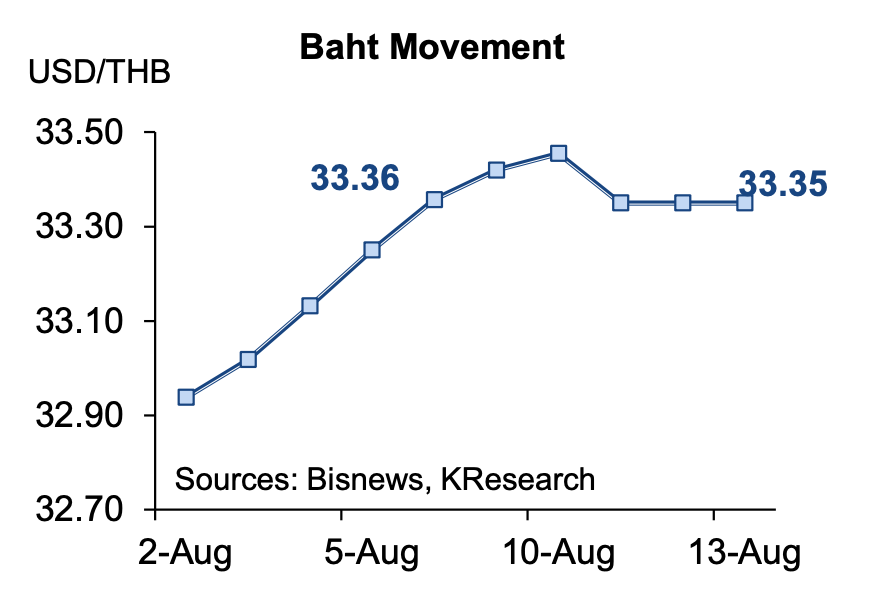
- The Thai Baht continues to weaken, having reached a three-year low of 33.49 Baht per Dollar during the week. The Baht depreciated at the beginning of the week amid concerns over the domestic COVID outbreak, coupled with support for the Dollar from statements by Fed officials indicating the possibility of gradually reducing monthly QE limits within this year. However, the Baht briefly recovered mid-week due to Dollar selling for profit-taking, before weakening again towards the end of the week as COVID risks remained high, while the Dollar received further support from US labor market data reflecting ongoing recovery.
- On Friday (August 13), the Baht was at 33.35 Baht per Dollar compared to 33.36 Baht per Dollar the previous Friday (August 6).
For the upcoming week (August 16-20), Kasikorn Bank forecasts the Baht to move within a range of 33.00-33.50 Baht per Dollar. Meanwhile, the Kasikorn Research Center assesses key factors to monitor, including Thailand's Q2/64 GDP figures, the domestic COVID situation, and the minutes from the BOT MPC meeting on August 4. Important US economic data includes retail sales, industrial production, July housing starts, the New York Fed manufacturing survey, the Philadelphia Fed business outlook survey, and the August housing market index, along with the FOMC minutes from July 27-28. Additionally, the market is also awaiting Japan and Eurozone's Q2/64 GDP figures, as well as China's LPR interest rate and July economic data such as retail sales and industrial production.
Summary of Thai Stock Market Movements
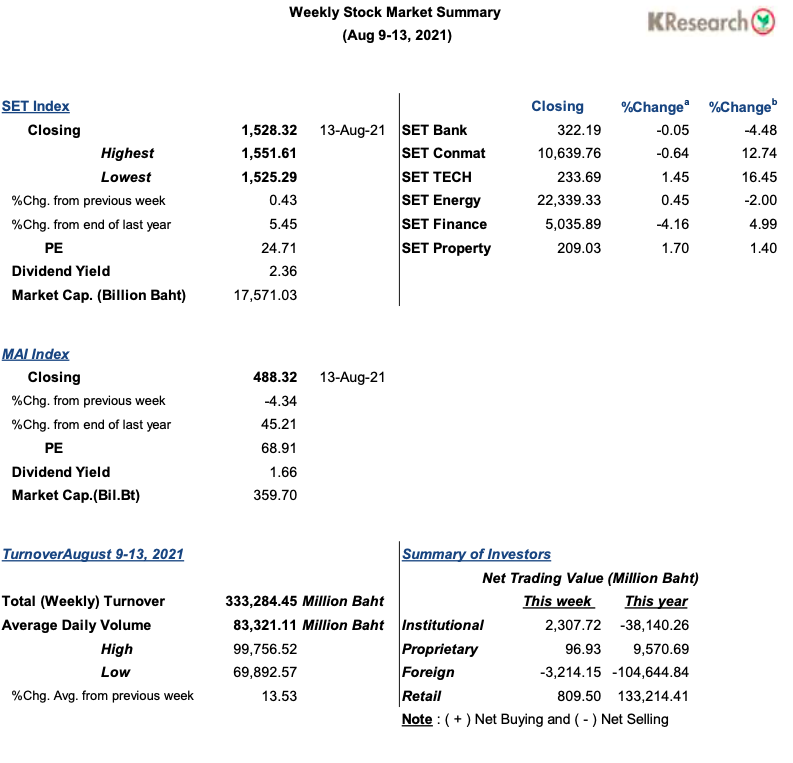
- The Thai stock market reduced its gains towards the end of the week, with the SET index closing at 1,528.32 points, up 0.43% from the previous week, while the average daily trading value was 83,321.11 million Baht, an increase of 13.53% from the prior week. The mai index fell by 4.34%, closing at 488.32 points.
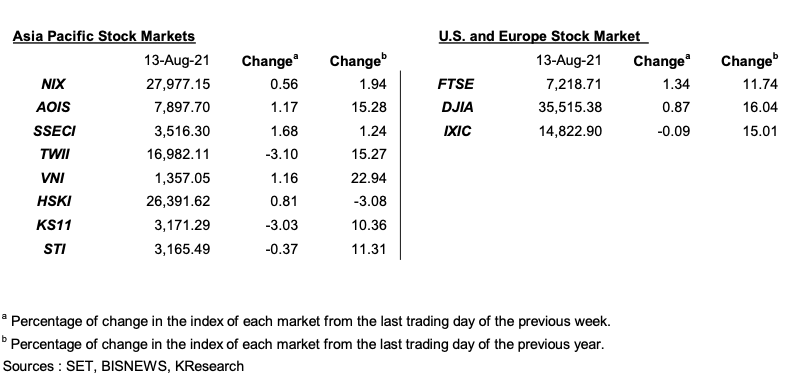
- The Thai stocks rose in the early to mid-week, following the trend of regional markets amid expectations for potential monetary policy easing by the Chinese central bank, supported by buying from institutional investors, particularly in the banking, energy, and technology sectors. However, Thai stocks later declined amid concerns over the ongoing severe domestic COVID situation and prolonged political factors.
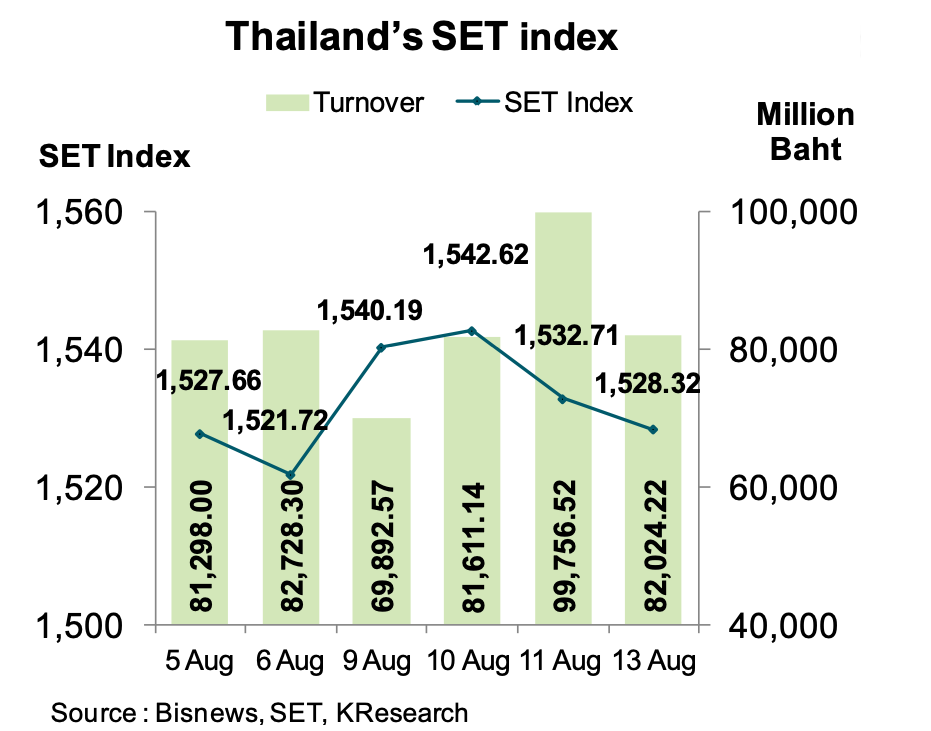
For the upcoming week (August 16-20), Kasikorn Securities Co., Ltd. anticipates that the Thai stock index will have support at 1,513 and 1,500 points, while resistance is at 1,540 and 1,555 points, respectively. The Kasikorn Research Center assesses key factors to monitor, including Thailand's Q2/64 GDP figures, the COVID situation both domestically and internationally, and domestic political issues. Important US economic data includes retail sales, industrial production, and new housing starts for July, along with the Fed meeting minutes. Other foreign factors include Japan and Eurozone's Q2/64 GDP figures, Japan's June industrial production, Eurozone's July consumer price index, the LPR interest rate setting for August, and China's July economic data.
Thank you for the information from Kasikorn Research Center.