How to Invest for Peaceful Living
Ms. Oranong Chaitong
CEO, Prospect REIT Management Co., Ltd.
Manager of the Prospect Logistics and Industrial Property Fund (PROSPECT)
Investing can be tailored to our own style, using simple investment techniques based on the principle of "Nature" which makes investing enjoyable and stress-free in our own way.
……………….
COVID-19 has been with us for over a year now, and personally, I still find it hard to adapt. Perhaps it's because there is an abundance of information available from various perspectives that is both engaging and concerning. The third wave of the outbreak in Thailand seems particularly severe, with a rapid increase in infections and heightened anxiety surrounding the situation.
For investors like us, staying informed about events affecting the financial markets and the sensitive stock market is crucial. The fluctuations in stock prices can make our hearts race during these times.
In preparing for the ups and downs of the market, we often hear that many so-called "experts" are turning towards nature more than ever. They practice meditation to cultivate mindfulness, allowing them to observe the market's fluctuations without regret for past decisions or unrealistic expectations for the future. Gaining wisdom in investing involves understanding the nature of various elements at play, which is particularly relevant in the current situation.
When it comes to the relationship between nature and investing, it used to seem like two opposing concepts. People often interpreted nature as letting go, not wanting to possess or strive for anything. This understanding is not incorrect, as it represents the highest level of spiritual practice. However, for ordinary individuals like us who still need to earn a living, we may not reach that level. Applying the principles of nature in our daily lives can help alleviate some of the suffering that comes with living and guide us towards a more harmonious existence. To me, nature means "reality". In any activity, including investing, we must start from seeing things as they truly are, according to their nature. This applies to understanding the nature of each market, which naturally fluctuates based on news and events, as well as understanding the nature of the money we invest—whether it is long-term investment capital or money needed for immediate expenses. We should consider the type of investment that suits our risk tolerance, whether high or low risk, and evaluate the potential returns. Finally, we must understand our own temperament regarding risk—how much we can handle without causing distress to ourselves or those around us, and how to avoid sleepless nights.
For example, a friend of mine has savings set aside for his young son's education but doesn't want to leave it in the bank. He wants to invest it to earn more than the interest from a savings account, but with minimal risk and steady returns. I suggested he explore investments that align with his risk tolerance and the nature of his funds. Real Estate Investment Trusts (REITs) can be a financial tool that offers consistent returns and can help diversify his investment portfolio. My previous article, "Principles for Choosing Investments in REITs," might also assist in his decision-making.
Understanding the nature of each market we invest in, the nature of the money we use for investing, and the nature of our own temperament regarding risk is essential. After making investment decisions, maintaining a mindful attitude and accepting the outcomes is crucial. Accepting losses or gains that fluctuate rapidly, sometimes even hourly, is also necessary. As mentioned earlier, if we understand the nature of the money we invest and our own risk tolerance, we can better manage our emotions regarding the ups and downs of our investments.
We often see many experts using meditation to cultivate mindfulness, which enhances their ability to identify quality stocks or investment opportunities without being swayed by unreliable news. If they experience significant losses within a few days, they accept their decisions, knowing when to sell or hold on carefully. Once a decision is made, they must accept the consequences without blaming external factors, allowing them to remain calm and not overly distressed. Mindfulness is fundamental to perceiving everything as it truly is and understanding the nature of all things wisely. This understanding helps ordinary individuals like us, who may still have greed and desires, find happiness in a highly volatile market.

1. Nature of each market: Markets fluctuate naturally based on news and events.
2. Nature of money: Money that can be invested long-term or money needed for immediate expenses.
3. Nature of our own temperament: How much risk can we tolerate?
When deciding to invest
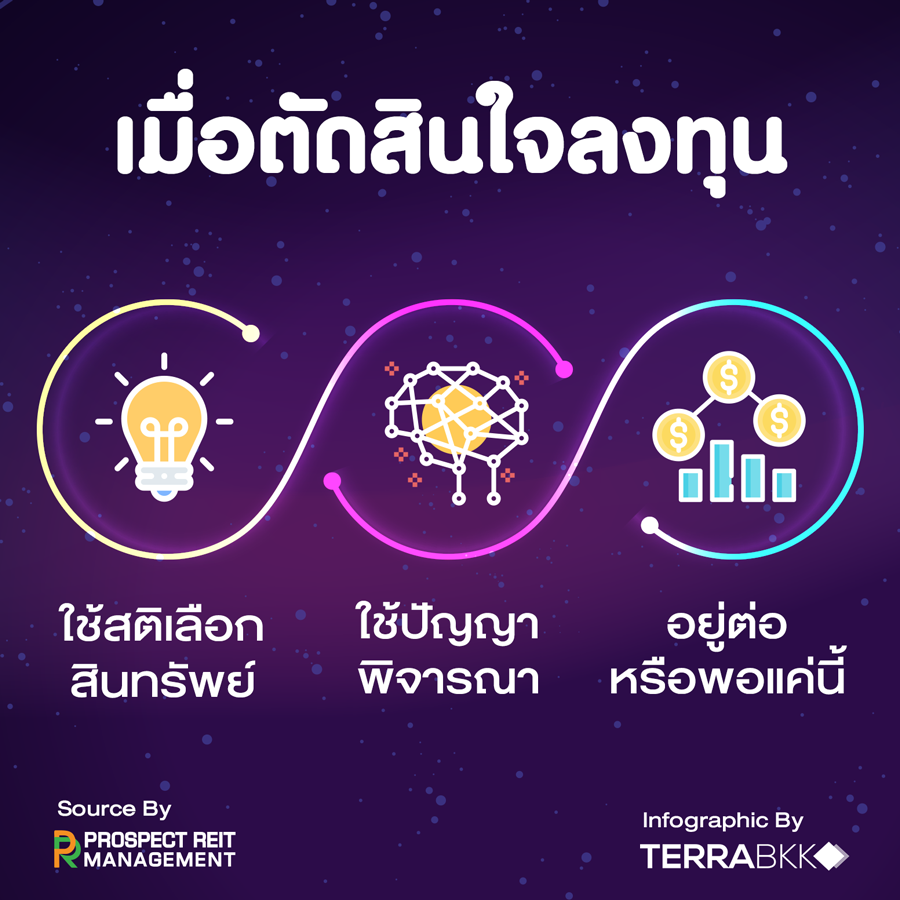
1. Use mindfulness to select assets carefully, avoiding blind trust in news without understanding the asset itself.
2. Use wisdom to assess whether the investment aligns with the aforementioned nature.
3. When volatility occurs, use mindfulness and wisdom to decide whether to stay invested or exit.
Finally, we must accept the outcomes of our decisions.