Decoding Economic Directions – Real Estate from the "Property Focus 2021" Event
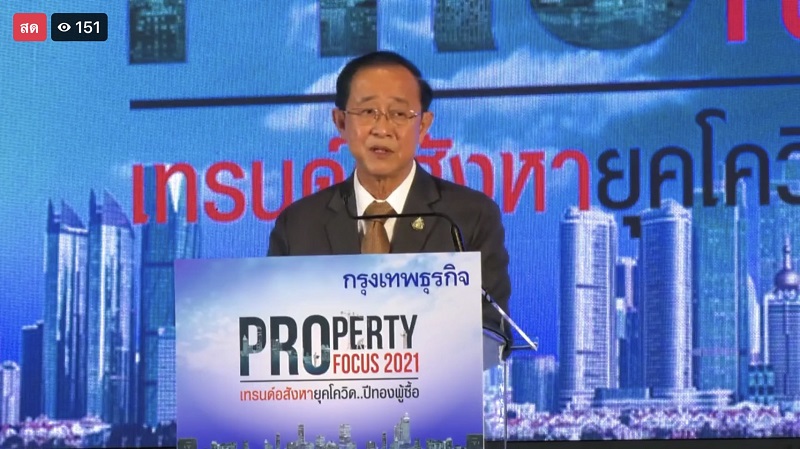
Mr. Akom Termpithayapaisith, Minister of Finance delivered a keynote speech on the topic "Government Measures: Driving Real Estate to Revive the Thai Economy" at the Property Focus 2021 seminar, focusing on real estate trends during the COVID era, which is a golden year for buyers. He stated that the government has prioritized addressing the impacts of the COVID-19 pandemic since 2020 and continues to do so. This year, the government will ease measures to welcome tourists and help domestic businesses recover. It is expected that by the fourth quarter of 2021, tourism will rebound significantly, continuing into 2022 when it can fully accommodate tourists.
This year, the economic growth rate (GDP) is projected to be between 2.5-3.5%, which is still lower than other ASEAN countries. Therefore, we need to accelerate GDP growth by an additional 2% to reach the target of 4.5-5.5%. Continuous effective growth is necessary, utilizing technology for adjustments, which is preferable to leapfrog growth.
The business sector will also be a driving force for the economy, with Thailand's recovery expected to be gradual, improving in 2023-2024. The main engines to push GDP growth to 4% will come from government investment, domestic consumption, private sector investment, and tourism.
Currently, the government is injecting funds into the system through various measures to stimulate consumption among the lower-income population, which is a large group affected by COVID-19. The government has not halted public investment operations, and for private investment, it will issue bonds worth over 100 billion baht to enhance liquidity for businesses and foreign investors. The tourism sector is expected to recover in the second half of the year, while exports need to reassess the economic structure to avoid reliance on existing products and explore new products to increase trade opportunities.
“In 2021, the Thai economy is still in a recovery phase, and from 2021-2022, it will be a slow recovery,” Mr. Akom stated.
Another policy is enhancing competitiveness, especially in connecting transportation networks within ASEAN, as Thailand is still a middle-income country. If we continue to rely on traditional infrastructure, we will not succeed. Therefore, we need to improve roads and transportation systems to enhance quality of life, which is one of the government’s policies for 2021.
Creating residential zoning to ensure transportation access for every home
In terms of real estate, we may need to look at urban planning and residential zoning, such as creating clusters. If achieved, this will help reduce the state's infrastructure investment costs and allow infrastructure development to reach citizens more effectively. In 2021-2022, it is expected that investments will increasingly utilize digital technology.
“Technology – Environment – Aging Society are three key factors for development”
Today, I am pleased that the real estate sector is beginning to adapt. Utilizing technology does not only pertain to marketing but also includes facilitating various forms of housing design. Additionally, designs must consider the aging society, which is an adjustment we need to make in real estate. Thus, design and aesthetics significantly impact this business.
Furthermore, we must prioritize environmental issues due to global warming and greenhouse effects, which are increasingly impacting the environment. Therefore, environmental businesses will help drive future growth. Infrastructure must contribute to energy savings and reduce global warming, especially in residential homes. If we design without considering these factors, one day we will need to invest heavily to create exemplary environmentally friendly communities. However, if we invest from the start, costs will be manageable, and pricing will be integrated into payment plans, avoiding issues related to separating costs.
Additionally, healthcare and public health are other businesses related to the aging society, including the disabled. While single-story homes may not be significantly affected, we need to consider whether the design of 20-30 story condominiums is suitable for individuals aged 70-80 and what amenities will be provided to accommodate them.
Moreover, government measures include reducing land and building taxes, but this has encroached on local revenues, as we have cut local funding by up to 90%. I would like to emphasize that while we have received this support, the real estate sector must also contribute to the economy in some way. Once the economy recovers, we will need to provide some returns. The measures to reduce transfer fees will continue.
Government Housing Bank (GHB) to Propose Cabinet to Extend One Million Houses Phase 2, Priced Not Exceeding 1.2 Million Baht
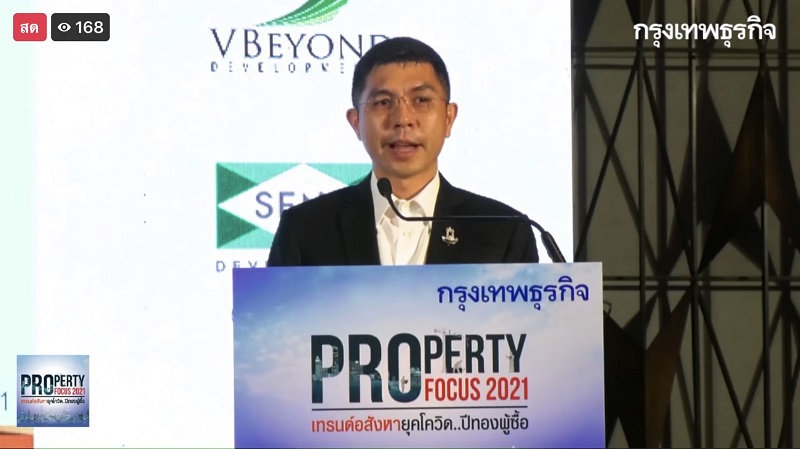
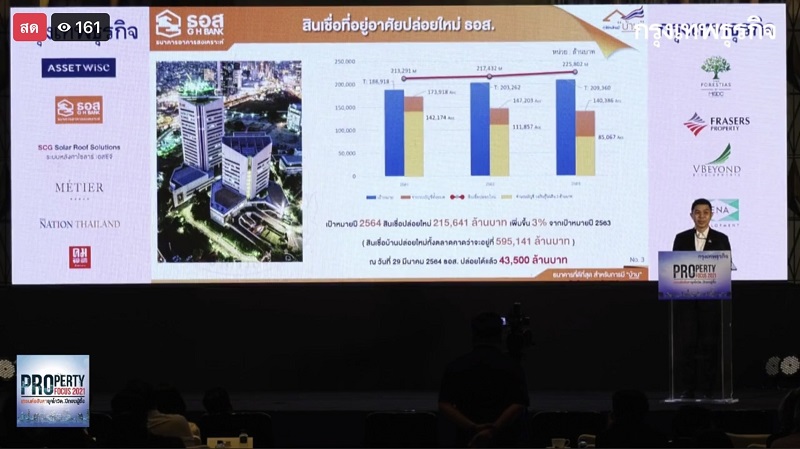
Mr. Chatchai Sirilai, Managing Director of the Government Housing Bank (GHB) stated that the purchasing power of low-income and middle-income earners in 2021 is showing positive trends due to various factors facilitating home purchases, especially the interest rates, which are at their lowest in a decade and are expected to remain low for another 2-3 years. Additionally, housing prices are still affordable, as seen from real estate developers competing to lower prices to attract buyers.
At the same time, the government is helping to alleviate burdens by reducing transfer and mortgage taxes. Regarding debt repayment capacity, trends are improving. Even though incomes have decreased, interest rates have also fallen. Importantly, this year, the positive factor is the COVID vaccine, which has boosted Thai people's confidence to spend more.
There are plans to propose the One Million Houses Phase 2 project with a budget of 30,000 - 50,000 million baht to the GHB board for approval and subsequently to the Cabinet. This project aims to provide low-income and middle-income earners with their own homes, with prices not exceeding 1.2 million baht per house (up from the previous limit of 1 million baht), with an interest rate of around 2%, which is lower than the first phase. The monthly payment is approximately 4,000 baht fixed for 10 years, which is cheaper than renting a house or apartment.
For the first phase of the One Million Houses project, loans of 35,000 million baht have already been disbursed, primarily for houses priced at 1 million baht. It is believed that houses priced between 1-1.2 million baht will see high growth rates and potential for expansion, as many real estate developers have adjusted their investment plans to build residences priced not exceeding 1.2 million baht to meet consumer demand for affordable housing.
“GHB is not competing with commercial banks because it provides home loans priced not exceeding 1.2 million baht. However, if someone wants a house priced over 3-10 million baht, they can apply for loans from commercial banks,”
Mr. Chatchai stated.
Private Sector Feedback: Proposing the Government to Revise Urban Planning
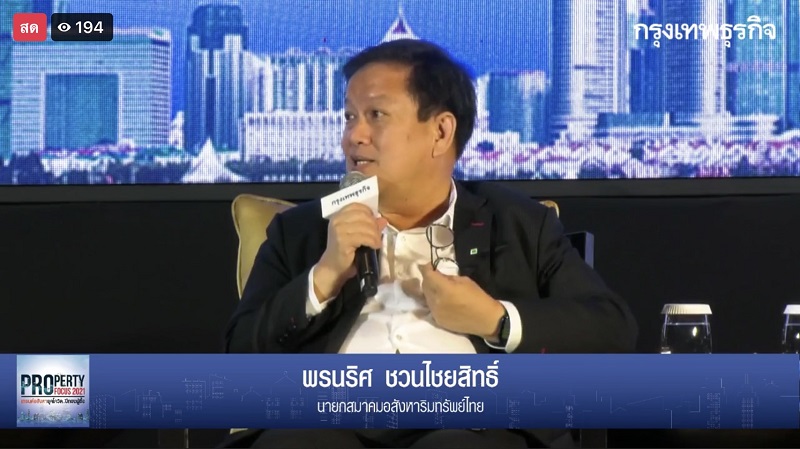
Mr. Pornnaris Chuanchaisit, President of the Thai Real Estate Association stated that in 2020, the overall real estate business slowed down. Although housing prices have decreased, it is in line with promotional mechanisms to stimulate purchasing power, which is not significantly impactful.
Overall, stimulating the real estate business must be viewed holistically, especially under the ongoing COVID situation. There are still many Thais without homes, while land prices continue to rise, affecting the prices of houses and condominiums. Although the government has implemented measures to ease payments of around 4,000 baht per month, the impact of COVID on income and purchasing power means that this low payment rate may not meet the needs of a large segment of the population and may not significantly increase home purchases at this time.
Therefore, the adaptation of the real estate business must involve a new approach to urban planning, particularly in Bangkok, which is considered the "heart" of living and working, leading to urban congestion. Although the new Bangkok urban plan has not yet been officially announced, it is essential to consider the overall picture, especially the utilization of land according to different zoning colors, such as green zones in many countries where housing construction is prohibited, and yellow, red, and orange zones to prepare for proper infrastructure planning.
The government can play a crucial role in stimulating the real estate sector and the economy by developing regional urban plans that encourage people to move to rural areas or distribute more evenly across regions rather than being concentrated in urban areas or Bangkok. The government must develop urban plans to maximize land utilization for housing, investment by entrepreneurs, and equitable distribution of prosperity.
However, I would like to emphasize that the government currently has measures that sufficiently support the real estate business. Therefore, for the business to recover, it is essential to collaboratively foster development. Additionally, strict measures that significantly impact the business, such as LTV, should be relaxed by the Bank of Thailand, applying this criterion selectively to suitable areas, as this measure adversely affects condominiums in rural areas.