LPN Wisdom Identifies 3 Trends in Residential Design for 2021
LPN Wisdom Identifies 3 Trends in Residential Design for 2021
LPN Wisdom highlights the trends of increasing multifunctional living spaces, prioritizing hygiene in living environments, and integrating technology into residential design as key trends that address the living needs of people of all ages in 2021.

Mr. Prabhanasak Raksaiyawan, Managing Director of LPN Wisdom and Solutions Co., Ltd. (Public) (LPN Wisdom), a research and product development company under L.P.N. Development Public Company Limited, stated that the design of residential spaces in 2021 has been influenced by the COVID-19 pandemic that began in 2019 and continued into 2021, alongside Thailand's transition into an aging society. This has led to changes in consumer behavior, particularly among home buyers who are increasingly interested in purchasing residential properties. According to a survey by LPN Wisdom, in 2020, 44,001 residential units were launched in the Bangkok metropolitan area, accounting for 63% of the total 70,126 units available for sale, reflecting a growing demand for houses over condominiums in recent times.
In light of these trends, the Product Design Center team at LPN Wisdom conducted research on the trends and directions of residential design for 2021. They identified three key trends in residential development that meet current buyer demands: the design of multifunctional living spaces, a focus on hygiene in living environments, and the use of technology to enhance comfort in living.
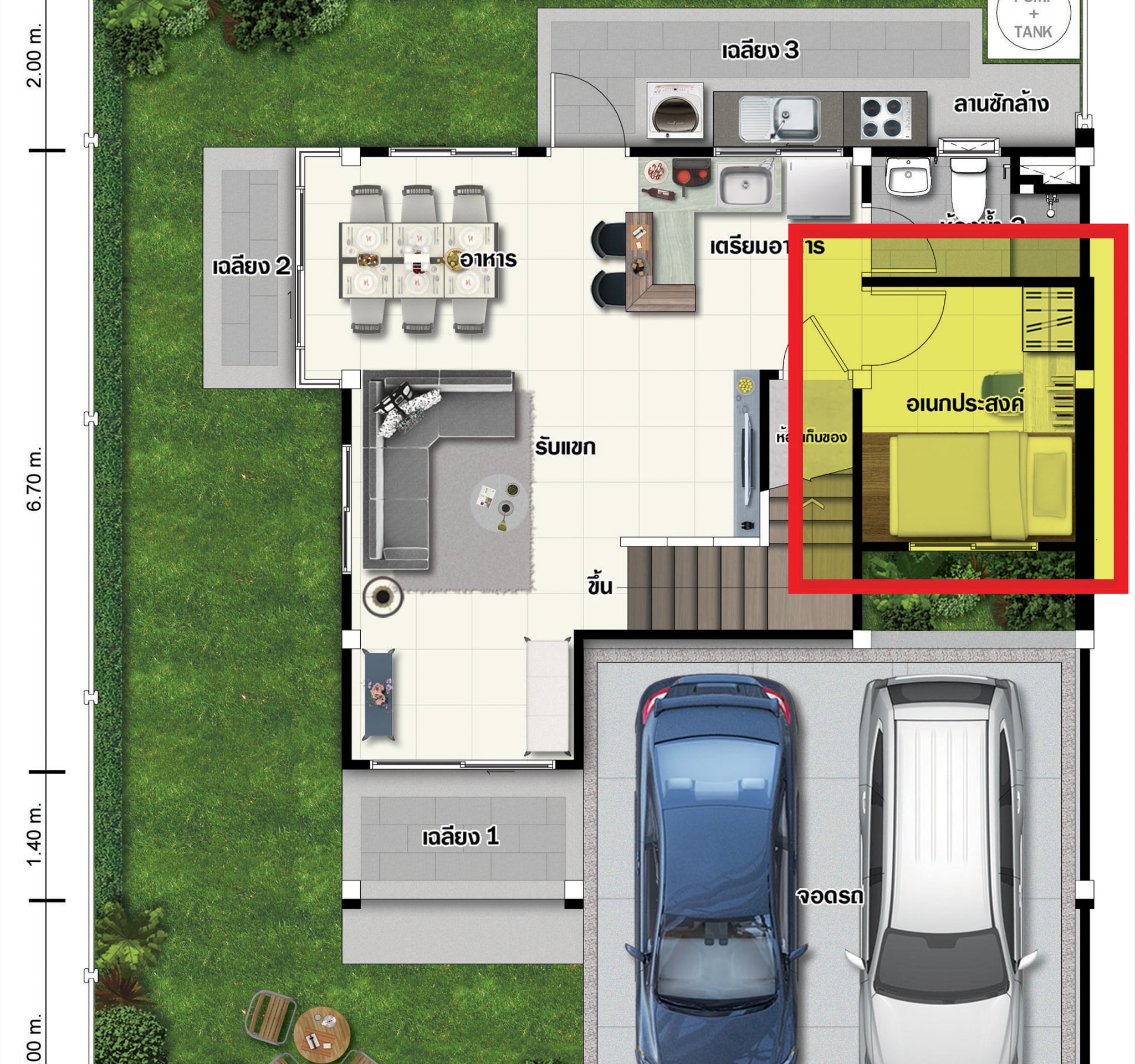
Regarding the design of multifunctional spaces and materials (Function & Material), Mr. Prabhanasak noted that a survey of home buyers in 2020 revealed that over 62% of condominium residents had shifted their work habits from working in offices to working from home (Work From Home). This necessitates that both condominium and house designs cater to these changing lifestyles. Condominiums must include multifunctional areas that can serve as workspaces, exercise areas, and hobby spaces. Additionally, delivery areas have become essential in condominiums due to the increase in online shopping, similar to how residential homes must prioritize multifunctional spaces to accommodate various activities.
Moreover, the design of both residential homes and condominiums must cater to people of all ages (Universal Design) to address the demographic shift towards an aging society. According to the National Statistical Office, Thailand will fully enter an aging society by 2022, with the elderly population projected to reach 26.9% by 2030. For instance, designs must include larger bedrooms for the elderly to accommodate wheelchairs, sliding doors instead of hinged doors in bedrooms and bathrooms, and homes designed without level changes. Additionally, materials and equipment must be chosen to prevent or reduce accidents and promote good health, such as shock-absorbing rubber flooring, automatic lighting systems, and grab bars in bathrooms.
On the aspect of design prioritizing hygiene (Health), Mr. Prabhanasak stated that the COVID-19 pandemic and air pollution issues, such as PM2.5 dust, have made it essential for both residential homes and condominiums to consider air circulation systems. This includes innovative designs that facilitate air circulation or Fresh Air Intake systems that bring fresh air into buildings while expelling lower-quality air to improve indoor air quality. Additionally, environmentally friendly materials that do not emit toxic pollutants must be selected for residential spaces.
In terms of technology for living (Smart Living Technology), it is increasingly playing a role in residential design, particularly in enhancing comfort. This involves integrating digital technology and artificial intelligence (AI) into home management under the concept of Smart Homes, which incorporates technology to manage the basic utilities of residences. For example, AI Sensor Technology can be installed to detect anomalies in electrical and plumbing systems for easier maintenance. Designs that utilize touchless technology, such as automatic sliding doors instead of manual handles, or facial recognition systems instead of fingerprint scanners, are also becoming prevalent, along with designs that accommodate electric vehicle systems, which are current and future automotive technologies.
“The COVID-19 pandemic has accelerated many trends that we anticipated would emerge in the future, leading to the development of residential spaces in 2021 that are forward-looking. Real estate developers must design homes that meet the evolving needs of living in the future, focusing on functionality, hygiene, and technology,” Mr. Prabhanasak stated.