LPN Wisdom Predicts Real Estate Market in 2021 May Decline by 3% to Grow by Approximately 10% Depending on the Ability to Control the New COVID-19 Outbreak
LPN Wisdom Predicts Real Estate Market in 2021 May Decline by 3% to Grow by Approximately 10%
LPN Wisdom forecasts that the real estate market in 2021 may experience a decline of 3% or grow by approximately 10%, depending on the government's ability to control the new outbreak of the COVID-19 virus.
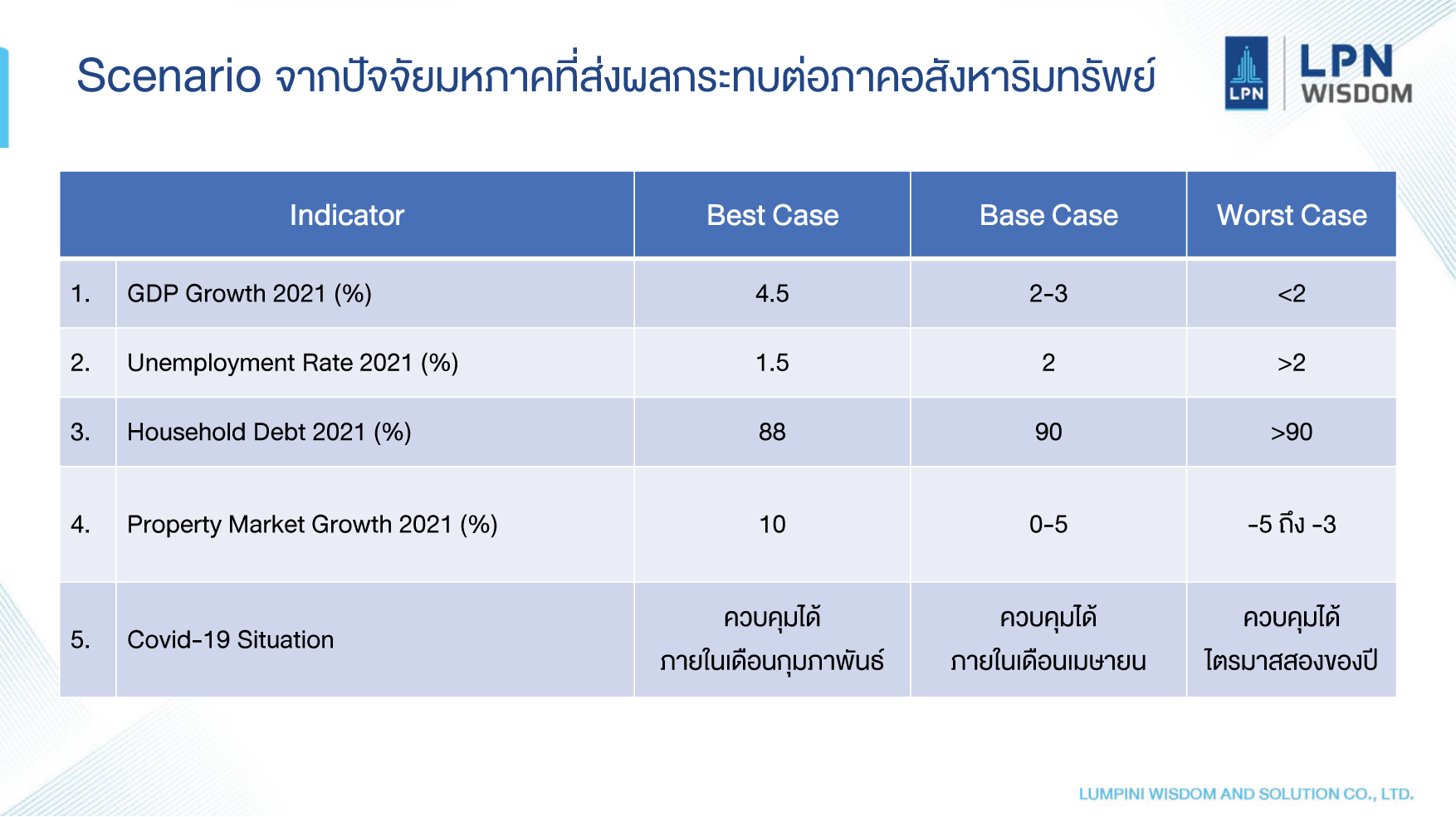
Mr. Prabhan Sak Raksaiwan, Managing Director of LPN Wisdom and Solutions Co., Ltd. (LPN Wisdom: LWS), a research and consulting firm in real estate development under the LP.N. Development Public Company Limited (LPN), discussed the direction of the real estate market in 2021. He stated that the new COVID-19 outbreak directly impacts the country's economic drive, which subsequently affects the real estate business in 2021. LPN Wisdom has adjusted its market forecast for the real estate sector in 2021 after previously predicting that the real estate situation would remain stable or grow by approximately 3-5%. The launch of new projects was expected to increase by no less than 10% compared to 2020. However, this forecast was made before the new COVID-19 outbreak, which appears to be more severe than the first wave, prompting the company to revise its real estate market forecast for 2021 into three scenarios. It is anticipated that the real estate market may decline by 3% to grow by 10%, depending on the government's ability to control the COVID-19 outbreak.

- Scenario One (Best Case Scenario): The government can control the situation quickly by the end of February, and vaccines can reach 50% of the Thai population within 2021. In this case, it is expected that the economy will grow by approximately 4-5%, leading to a new project launch value in real estate of about 13-15%. The number of new real estate units launched is expected to increase by approximately 9-10% as many real estate operators have successfully cleared a significant amount of inventory in 2020 and will begin launching new projects. Meanwhile, purchasing power is expected to start recovering by the end of the first quarter of 2021, with an estimated absorption rate of real estate at 6,500 units per month, representing a growth of about 10% compared to the same period in 2020.
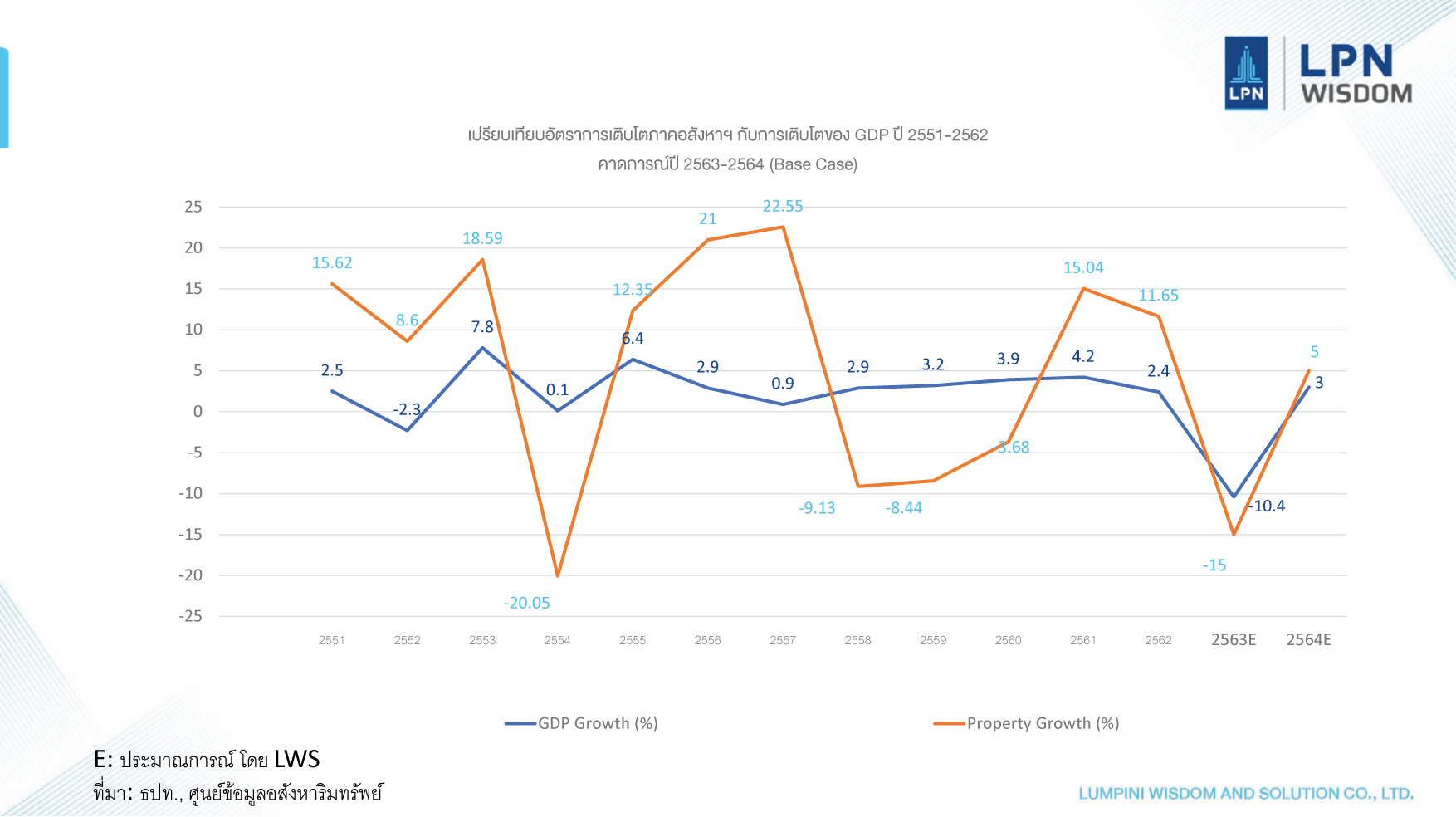
- Scenario Two (Base Case Scenario): The government can control the COVID-19 situation by April. In this case, the economy is expected to grow by approximately 2-3%. The real estate market is expected to see new property values increase by about 5-6%, and the number of new real estate units launched is expected to rise by approximately 7-9%. Purchasing power is expected to start recovering by mid-2021, with an estimated absorption rate of real estate at 6,000-6,300 units per month, representing a growth of about 0-5%.
- Scenario Three (Worst Case Scenario): This scenario occurs if the government fails to control the situation or only manages to do so after the second quarter of 2021. This would directly impact the recovery of the economy, leading to stagnant growth or growth below 2%. This would adversely affect the expansion of the real estate market, both in terms of new project launches and purchasing power. It is expected that the value of new real estate launches may decline continuously from 2020, with an anticipated decline of about 15-18%. The number of new real estate units launched is expected to decrease by about 8-12%. Due to decreased confidence among operators regarding demand, the absorption rate of real estate is expected to drop by 3-5% to an average of 5,700-5,800 units per month.

The Market in 2020 Contracted by 37%
In 2020, the overall real estate market in Bangkok and its vicinity saw a decrease in new project launches by approximately 37% compared to 2019, dropping from 111,000 units valued at 448 billion baht to 70,000 units valued at 276 billion baht. This decline was due to the COVID-19 outbreak, which caused operators to delay launching properties in the second quarter, focusing instead on residential houses and postponing condominium launches.
In 2020, many real estate operators adjusted their plans to launch new projects from condominiums to more residential houses, resulting in 63% of new project launches being residential houses, up from 42% in 2019, with a total of 44,001 residential units launched in 2020, valued at 205.578 billion baht, a decrease of only 4% from 2019.
In contrast, the number of condominium units launched in 2020 saw a significant decrease of 60%, with the value of launches dropping by 70% from a total of 64,639 units to 26,125 units in 2020. This was due to the COVID-19 situation, which led operators to focus on clearing existing condominium inventory, which stood at 94,000 units at the end of 2019, while delaying new condominium launches.
Mr. Prabhan Sak Raksaiwan stated that while purchasing power in 2020 had an absorption rate of 6,000 units per month, a decrease of 25% from 2019, the main reason for the relatively small decline in purchasing power compared to the significant drop in new project launches was due to operators accelerating the clearance of stock using pricing strategies (Price War).
“Forecasting the real estate market in 2021 remains challenging due to the new COVID-19 outbreak, which creates uncertainty regarding consumers' future income. This suggests that the real estate market in the first quarter of 2021 is likely to stabilize, prompting some real estate operators to implement ongoing marketing measures to stimulate purchasing power. However, the government's decision not to declare a lockdown, as seen during the second quarter of 2020, allows businesses to continue operating and maintain some employment levels. Additionally, the government's policy to stimulate the real estate market by reducing transfer and mortgage fees to 0.01% and cutting land and building tax rates by 90%, along with persistently low-interest rates, should help stimulate purchasing power once the COVID-19 situation eases,” Mr. Prabhan Sak concluded.