The number of global 'COVID-19' infections continues to rise! This is a major negative factor for the 'tourism industry' as tourist travel is 'restricted' because many countries are trying to stop the spread of the new coronavirus strain, 2019. Therefore, one of the businesses that has been negatively affected is the 'hotel industry!'
If we look at companies listed on the Stock Exchange of Thailand (SET) in the hotel business category, one must include the '5 well-known hotel stocks': Asset World Corp Plc (AWC) owned by 'Charoen Sirivadhanabhakdi,' Central Plaza Hotel Plc (CENTEL) owned by the 'Chirathivat family,' The Erawan Group Plc (ERW) owned by the 'Wattanavekin family,' Minor International Plc (MINT) owned by 'William Ellwood Heinecke,' and Dusit Thani Plc (DTC) owned by the 'Tonawanit family.'
Various problems are plaguing the tourism and hotel industry, leading to negative sentiment for these stocks, as reflected in the Q2 2020 performance of the 5 hotel stocks, which showed 'increased losses' compared to Q1 2020. 'AWC stock' reported a net loss of -876.84 million baht, 'CENTEL stock' -465.49 million baht, 'ERW stock' -625.11 million baht, 'MINT stock' -8,447.64 million baht, and 'DTC' -453.25 million baht, which is an increase in net loss from Q1 2020 where they reported net profits of 108.22 million baht, -45.12 million baht, -102 million baht, -1,773.52 million baht, and -82.76 million baht respectively.
'Chaiyapat Paitoon', Chief Strategic Development Officer of Minor International Plc (MINT), shared that the hotel business has already passed through its 'lowest point' in the last quarter after the government eased lockdown measures, and we will start to see improved revenue growth, but a return to normalcy may have to wait until 2021.
'The hotel business is likely to return to normal next year, as this year still has negative factors to monitor, including the COVID-19 situation, the reopening of airspace, whether there will be another lockdown, and whether the government will introduce measures to stimulate tourism recovery.'
For the performance outlook in the second half of 2020, it is expected to be better than the first half, as the 'hotel business' has reopened approximately 76%, with a full reopening expected by the end of the year, especially in Europe, which has seen recovery from domestic tourists, with the occupancy rate in July rising to 40%.
In terms of the 'food business', it has reopened 95% in Thailand and is seeing growth in dine-in restaurants, although delivery has started to decline. However, it is believed that same-store sales growth (SSSG) will start to recover from Q3/63 onwards. Meanwhile, the 'lifestyle business' continues to grow, especially through online sales, as the company has produced disinfectant products that have helped sustain sales.
Currently, the company is also focused on cost reduction, aiming to cut expenses by 40% from last year to reach breakeven as quickly as possible. The breakeven point for the hotel business is at 50-60% occupancy, but it is expected to reach breakeven sooner at 30-40% after July.
Before COVID-19, the breakeven point for the food business was at 80% of sales, but now, after reducing costs, the company can reach breakeven sooner at 69% currently.
As for liquidity, the company currently has cash flow of approximately 36 billion baht and credit lines from financial institutions of about 26 billion baht, resulting in high liquidity of up to 60 billion baht, sufficient for investment and business operations during this period. The investment will focus only on previously invested businesses, having reduced this year's investment budget by 7-10 billion baht, with no new investments expected at this time to preserve liquidity.
'Ronachit Mahattana Pruewit', Senior Vice President of Finance and Management at Central Plaza Hotel Plc (CENTEL), stated that the performance in the second half is expected to be better than the first half, as the occupancy rate has improved to 30-40% currently, especially during the recent long holiday, leading to an expected occupancy rate of 30-35% by the end of the year, excluding Centara Grand Beach Resort Samui and Cozy Pattaya Wongamat Beach, which just opened at the end of 2019.
'After the lockdown was eased, people are going out more, especially to places accessible by car, such as Pattaya and Hua Hin. We see the occupancy rate in Pattaya rising to 40-45%, so we believe we can break even, as we estimate that the hotel business will reach breakeven at an average occupancy rate of about 30-35% per property.'
Meanwhile, the average revenue per room (RevPar) is expected to decline by 60% this year, down from a previous estimate of 40-50%, excluding Centara Grand Beach Resort Samui and Cozy Pattaya Wongamat Beach, which also just opened. Currently, the company has 16,984 rooms, with 7,647 rooms in operation, including 4,457 owned rooms and 3,190 managed rooms, and is in the process of constructing another 9,337 rooms.
For the food business, sales across all branches (TSS) are expected to decline by 12% from last year, and the 'same-store sales growth' (SSS) is expected to decline by 16-18% from last year. Although delivery services are showing good growth, dine-in services continue to decline due to the COVID-19 pandemic, resulting in overall sales still being negative. However, the company is still expanding 50-70 branches, especially for the KFC and Mister Donut brands.
Nevertheless, the company has reduced its 5-year investment budget (2019-2023) to 17.3 billion baht from the original 18 billion baht, with 13.2 billion baht allocated for hotel investments and 4.1 billion baht for restaurant investments. Additionally, it has reduced new investment spending to 4.4 billion baht from the previously planned 8 billion baht to align with the slowing economic conditions.
Regarding 'Phet Krainukul', the CEO of The Erawan Group Plc (ERW), he mentioned that the performance outlook for the second half is expected to recover compared to the first half, as the company has reopened all hotels at 100% since August 1. The occupancy rate at Hop Inn hotels has been continuously increasing, rising to 67% in July 2020 from 58% in June 2020. The company is also continuing to invest in 5 projects, with 3 in Thailand and 2 in the Philippines, focusing on developing and investing in projects that have shown good recovery compared to others, especially the Hop Inn hotels, which have received good responses from domestic tourists.
The company currently has cash flow of 1.5 billion baht and credit lines from financial institutions of 5.9 billion baht, believing that the available cash flow will be sufficient to support the abnormal situation for several months. Financial institutions have also provided assistance through interest rate reductions, increased credit limits, and deferred payment schedules.
'Q2 should be our lowest point. Now we must continue to reduce costs, aiming for a 40-50% reduction this year to sustain the business in the long term. Additionally, we hope the government will introduce further stimulus measures, especially for the tourism sector, which has been severely affected by COVID-19, as most hotels rely on income from foreign tourists, with about 70% of our income coming from tourists and 30% from Thai customers.' Brokerages see recovery in the second half!
KGI Securities (Thailand) stated in their analysis that the hotel sector has received slight positive effects from the improvement of the 'We Travel Together' project, expanding accommodation rights to 10 nights per person (from 5 nights) and increasing the maximum flight ticket subsidy to 2,000 baht (from 1,000 baht).
There is a slightly positive outlook on these improvements, which may create incentives for participation in the program and increase spending per person. They maintain the view that the tourism industry will gradually recover in the remaining months of the year.
This reflects the performance trends of stocks in the 'hotel-tourism sector' such as AWC, ERW, MINT, and CENTEL, which have already passed their lowest point in Q2, stimulating price recovery and helping to cushion and limit market downside.
However, the tourism and hotel businesses still face 'risks' stemming from two main issues: the potential for a second wave of COVID-19 that could be more severe and the delayed development of vaccines beyond one year.
SOURCE: www.bangkokbiznews.com
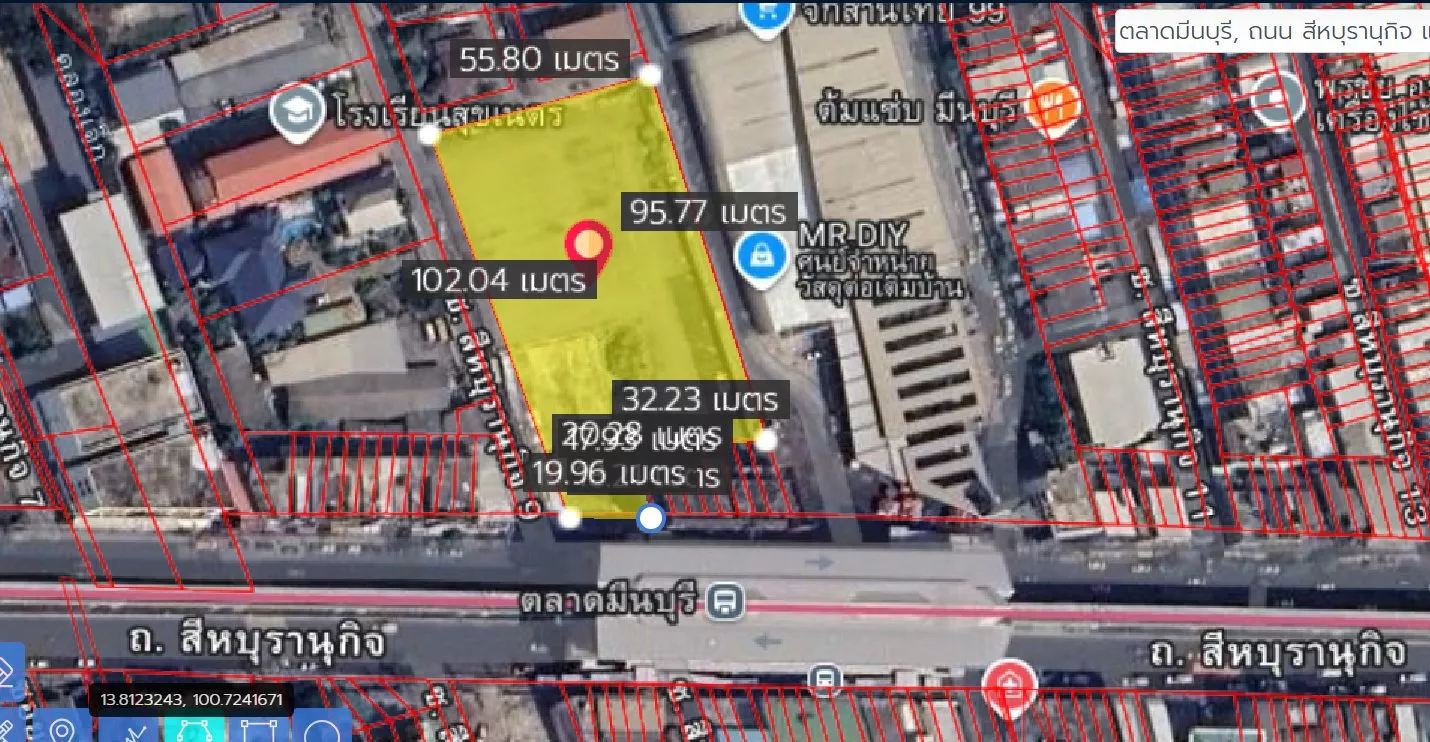
Rent: 350,000/month
Min Buri Min Buri BANGKOK
1,447 sqw