Bangkok Quadrant 2020: Real Estate Navigating Economic Waves, How Long Will This Crisis Last?
Prop2Morrow Co., Ltd. organized a seminar titled Bangkok Quadrant: Real Estate Navigating Economic Waves, How Long Will This Crisis Last? with speakers from the Thai Real Estate Association, National Credit Bureau Co., Ltd., CBRE (Thailand) Co., Ltd., L.P.N. Development Public Company Limited, or LPN, and AP (Thailand) Public Company Limited, or AP. The event saw participation from operators and investors who attended the seminar.

Mr. Pornarits Chuanchaisit, President of the Thai Real Estate Association, revealed the direction of the real estate market in 2020, stating that he usually views the market positively, but this time it is difficult to say. Operators who have experienced the 1997 financial crisis know how severe it was. However, the situation in 2020, due to the COVID-19 outbreak, resembles a cancer that gradually shows symptoms. The overall impact of COVID-19 is not limited to Thailand; it is a global concern.
Meanwhile, land prices continue to trend upwards, even though the Land and Building Tax of 2019 is now enforced. The rising land prices are a concern for operators as they will affect the costs of project development. However, this year, the government has relaxed tax collection to 90%, but it is uncertain whether this measure will continue in 2021. Additionally, unsold residential projects that remain unsold for more than three years may face increased tax burdens.
"In a situation where the real estate market is slowing down and sales are difficult, increasing prices like in a booming market is challenging. We saw land prices increase by about 15% in the second quarter of 2018, leading to a 5% increase in condominium prices due to rising costs. Land prices slowed down and then rose again in the fourth quarter of 2019, and townhouse prices also increased. This means that low-income and middle-class groups may find it difficult to find housing as their income does not match the opportunities for homeownership. Therefore, the government should consider promoting rental markets. However, due to the impact of COVID-19, the index of new housing prices for condominiums, townhouses, and single houses has decreased," Mr. Pornarits stated.
The number of new residential projects launched in the first half of 2020, according to data from the Government Housing Bank (GHB), indicates that companies listed on the Stock Exchange of Thailand will dominate the market share. In the first half of the year, a total of 126 projects were launched, with over 57.1% coming from listed real estate companies, accounting for 63.5% of the total units launched, amounting to 26,301 units, with a total project value of 159,470 million baht, representing approximately 35.8% of the listed companies' share.
Demand for Houses and Condos Priced 2-3 Million Baht Grows, but Banks Tighten Lending
For the locations of new housing projects launched in the first half of the year, popular areas include Bang Yai, Bang Bua Thong, Bang Kruai, and Sai Noi, with 2,552 new units launched, valued at 8,520 million baht, with the highest selling price range of 2.01-3 million baht. The most common type sold was one-bedroom condos, with 2,386 new units launched in Lat Phrao, Wang Thonglang, and Bang Kapi, valued at 6,050 million baht, also within the 2.01-3 million baht price range. It is observed that the top price range is between 2-3 million baht, which has a significant demand, but obtaining loan approvals is quite challenging.
In the first quarter of 2020, the issuance of land allocation permits for residential purposes in regional provinces reached approximately 10,182 units, an increase of about 60.7%, but still below the five-year average of 10,700 units. In the eastern region, particularly in the Eastern Economic Corridor (EEC) development area, there were 50 project applications, with townhouses accounting for the highest number of allocations at 3,455 units, followed by 18 projects in the northern region, totaling 22 projects.
Meanwhile, the number of transferred residential units in regional provinces in the first quarter of this year, although still growing by about 10.9%, shows a continuous decline compared to the fourth quarter of 2019, which had a growth of 19.9%. The value of property transfers was 80,888 million baht, growing by 25%, but down from the previous quarter's value of 95,572 million baht, which had grown by 28.6%. Similarly, new housing loans for individuals nationwide in the first quarter of this year amounted to 138,238 million baht, a decrease of 13%, and it is expected that in 2020, new housing loans will decrease by 10.8%, valued at 571,196 million baht.
Foreign Wealthy Individuals Interested in Relocating to Thailand
From the perspective of foreigners, Thailand is seen as a country with potential, offering good climate, quality of life, safety, low cost of living, and diverse food options. In discussions with the Prime Minister, the association proposed investment project guidelines to meet the needs of foreigners, including promoting retirement groups, encouraging foreigners to buy homes and residences (under certain restrictions), and establishing a financial and technology hub for Cambodia, Laos, Myanmar, and Vietnam (CLMV) to attract wealthy individuals from CLMV and other countries to live in Thailand.
"We urge the government not to impose strict regulations as it would exacerbate the situation. Instead, the government should establish a special task force in the form of a One Stop Service, allowing provincial governors to communicate with private sectors across all businesses and report directly to the Economic Situation Management Center regarding the impacts of the COVID-19 outbreak to reduce redundant processes. Additionally, regarding housing for low-income individuals, the government should open up blue zones reserved for state agencies to allow for rental opportunities for the public to address land encroachment issues. If commercial opportunities can be created, it would generate added value," Mr. Pornarits stated.
Credit Bureau Warns of Household Debt Reaching 90% of GDP
Mr. Phadet Jaroensiwakorn, Deputy Managing Director of the National Credit Bureau Co., Ltd., stated that the real estate sector has faced issues with financial institutions, not with the credit bureau. The credit bureau's role is to provide information to the Bank of Thailand (BOT). Currently, the debt burden of Thai people is high, with household debt starting to rise since 2018, growing by over 25% in the last decade.
What needs to be observed is the debt accumulation among individuals aged 23-40. The National Credit Bureau estimates that even after retirement, this group still carries debt. In 2018, over 3 million people, or about 16%, were in debt default, and it is expected that this number will increase this year due to economic conditions. Currently, there are signs that household debt may reach 90% of GDP in the fourth quarter of this year due to problems in exports and tourism, which were previously expected to be at 81.5%. Specifically, housing loans amount to approximately 5.08 trillion baht, while personal and consumption loans account for about 3.30 trillion baht, both of which are significantly high. Last year, Thailand's household debt reached 13.47 trillion baht, representing 79.8% of the country's GDP, higher than neighboring countries. The COVID-19 situation has prompted banks to take care of debtors, and some groups have entered repayment programs to keep their accounts normal. However, there are concerns about the trend after government measures end, as good debtors may struggle if there is no support to continue. The tightening of lending by financial institutions is to manage the quality of loans.
However, during COVID-19, home sales have certainly decreased. Consumers are now focusing on location, especially properties priced under 3 million baht. It is believed that lending remains good, unlike the luxury housing market, which may see a decline. The real estate sector must adapt to online platforms, as location may not be as important as the size of the residence and the desire for private space. Therefore, the real estate sector will have to endure and wait for policies from the BOT first.
CBRE Reveals Condo Market Needs to Lower Prices to Attract Buyers
Ms. Aliwasa Patthanathabutr, Managing Director of CBRE (Thailand) Co., Ltd., discussed the direction of the real estate market in 2020-2021. The real estate market in the past 12 years has never faced a situation like the current one. The COVID-19 outbreak has caused a slowdown in supply across all sectors, which is a positive aspect that will help the market return to a balanced supply situation. The number of buyers has decreased to only domestic purchasing power, primarily from self-users, while investors are delaying their decisions.
If we break it down by market, the residential market is the fastest to recover, selling to individuals and clearing out remaining stock. New project developments are slowing down, with prices stabilizing or decreasing. For condos in the city center, the upper market price per square meter has remained relatively unchanged, from 270,567 baht per square meter in 2020 to 271,907 baht per square meter. In contrast, the price of properties in the outskirts of the city has decreased from 99,635 baht per square meter last year to 98,082 baht per square meter this year.
The office market is still sluggish as companies are in the process of adjusting their space usage, with uncertainty about continuing remote work. The retail market is undergoing significant changes due to the expansion of e-commerce and the impact of COVID-19, making it a highly challenging business sector. In contrast, the warehouse market is experiencing high growth.
"It must be acknowledged that the condo market is overpriced, leading to significant differences in sales. For example, completed condos can reduce prices by 5-40%, while those under construction do not see price reductions. If we target investors, this group requests substantial price cuts. From the 29 projects that CBRE is involved with, generating sales of approximately 27,000 million baht, we found that in July, customer inquiries peaked since the lockdown was lifted, but in August and September, the market gradually adjusted back to levels similar to the beginning of the year," Ms. Aliwasa stated.
However, it is believed that the demand for home purchases still exists. Each year, there are groups of people seeking housing, but prices must be adjusted to align with consumer purchasing power. The current market should focus on domestic sales, especially since international travel has not yet reopened, leaving domestic customers as the primary market. Additionally, certain segments and locations still show demand. Furthermore, the real estate sector remains a good investment option amid the economic crisis.
High-end vacation homes near Bangkok, such as Hua Hin and Pattaya (especially if sold to Chinese buyers), are likely to sell well. However, selling to Thai customers has seen very few new condo projects in Pattaya, with only one project launched, indicating a very low supply. Projects near schools and universities that are newly launched in non-saturated markets and are priced lower than before the COVID-19 crisis may find success. The Wellness/Senior Living market may need to adapt in collaboration with leading hospitals to create strengths, as this market is challenging due to the mixed preferences of Thai customers who want to live with fellow Thais and those who do not want to live with foreigners. However, it has been found that this customer group desires caregivers, which could lead to a condo model with added services, training personnel, or collaborating with hospitals. Foreign real estate funds are also interested in investing.
It is estimated that post-COVID-19, short-term and long-term investors from various countries, such as China, Hong Kong, Singapore, Taiwan, and others, will increase, but this will depend on a clear reduction or eradication of the COVID-19 outbreak.
LPN Aims to Develop Rental Market for Investors
Mr. Opas Sripak, CEO and Managing Director of L.P.N. Development Public Company Limited, acknowledged that the current situation (COVID-19) is different from the 1997 financial crisis, where the economy was declining, especially in Asian countries, while many countries worldwide were still experiencing good economic conditions, allowing for a rapid recovery. This time, however, it is a public health crisis that has spread globally, and many countries have not yet improved. The lockdowns are still in place, making economic recovery more challenging because it is unclear who will help whom; each country must help itself. In Thailand, the situation is easing, but caution is still needed for a second wave of outbreaks. Although exports can resume, not all sectors are recovering, as global purchasing power is also slowing down. Currently, only China is recovering, while many other countries still face challenges. Therefore, self-reliance is essential, and management is crucial. From the company's marketing efforts over the past eight months, over 70% of customers purchasing projects are investors looking to buy for rental purposes, as people currently have savings in financial institutions with returns lower than 1.5%, leading to customers wanting to manage their savings to achieve higher returns. Thus, investing in real estate is an attractive option.
From past experiences during various crises, real estate prices tend to decrease during crises but eventually rise again, making it an asset that does not depreciate. Although the returns may not be as high as stock investments, real estate investments can yield returns higher than deposit interest rates.
“In this situation, many people cannot afford to buy homes, so they must rent. This presents an opportunity for investors to purchase residences for rental purposes. In the first half of 2020, we found that despite the severe COVID-19 outbreak, when real estate operators employed marketing strategies such as discounts and promotions to conserve cash, we observed that the value of residential transfers in Bangkok and its vicinity in the second quarter of 2020 reached 141,049 million baht, an increase of 7.5% from the first quarter of 2020, contrary to our initial expectations,” Mr. Opas stated.
The phenomenon indicates that purchasing power still exists in the market when prices are offered within reach of buyers, which includes both genuine homebuyers and investors looking to generate rental income. Customers with savings currently receive low interest rates, while investing in stocks carries higher risks. Real estate investments, with guaranteed returns of 5-8%, present an alternative form of savings.
Given this trend, LPN has launched the Staff Get Member campaign, allowing company employees to act as Living Advisors to provide guidance to customers investing in the Lumpini Township Rangsit-Klong 1 project. The company offers a campaign titled “Let Your Money Work,” guaranteeing returns for investors purchasing the Lumpini Township Rangsit-Klong 1 studio units of 21.5 square meters at a special price of 859,000 baht and 26 square meters at 1,059,000 baht through LPN employees at rates of 5% for 5 years with 23 free gifts and 8% for 3 years with 24 free gifts, recognizing the investment opportunities in the company's projects.
AP Sees Flexibility as Key to Organizational Survival
Mr. Witak Chanthawimon, Deputy Managing Director of Corporate Strategy and Innovation at AP (Thailand) Public Company Limited, stated that we must view crises as opportunities and maintain a positive outlook. It is time to prepare and adapt quickly, using this business vacuum to observe changes in consumer behavior and adjust accordingly. Continuous marketing efforts have been made to study how consumer behavior has changed, particularly regarding social distancing and the use of space in townhouses and single houses. Small research projects have yielded unembellished feedback, providing valuable insights. This crisis is different from that of 1997.
“This year, the condo market is struggling. High risk, high return. We must manage our business by focusing on horizontal markets. Condos should pause and shift towards low-rise developments, as construction can be halted at any time. The most important aspect is attracting foreign investors. This is not the right time to buy, but it is an excellent opportunity to build Thailand's credit. We must ensure that sales contracts facilitate ownership transfers, generating substantial income. Based on AP's 29 years of experience, we have been flexible in our marketing approach, leveraging our portfolio management experience. Past lessons have enabled us to pivot quickly. Everything depends on planning, and horizontal markets will generate income for AP this year,” Mr. Witak concluded.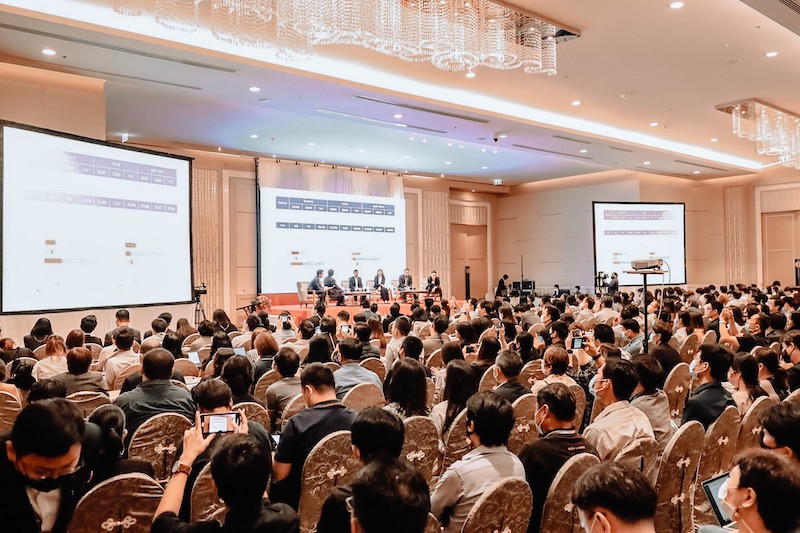
<\/span>
 <\/span>