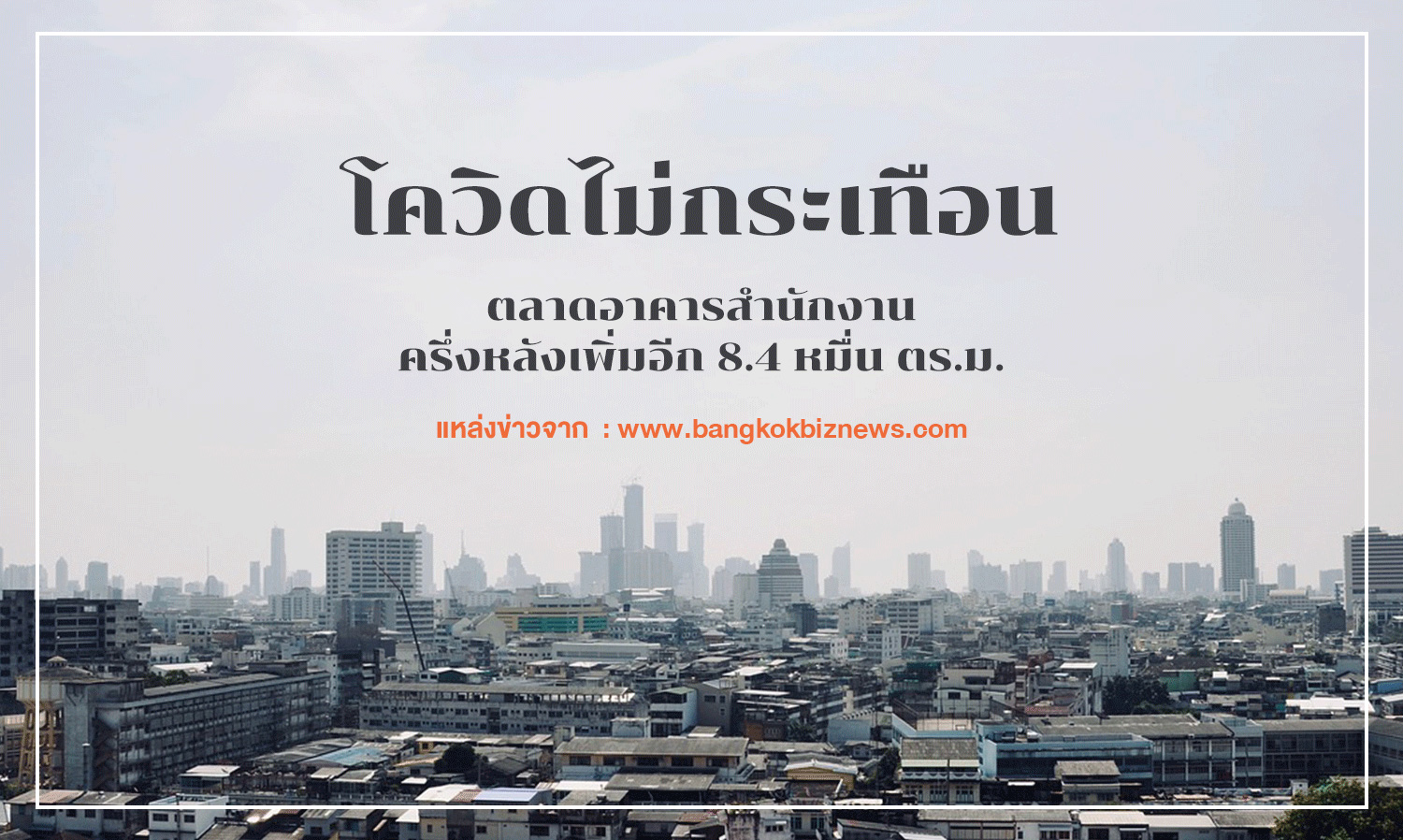
COVID-19 Does Not Affect Office Market, Additional 84,300 Sq. M. Expected in Second Half
Phoenix Reveals COVID-19 Has Not Impacted the Office Market, Thanks to Long-Term Investment Groups, with an Additional 84,300 Sq. M. Expected in the Second Half of the Year
Mr. Surachet Kongcheep, Managing Director of Phoenix Property Development and Consultancy, stated that during the first half of 2020, the COVID-19 outbreak significantly affected the daily lives of people in Bangkok and across the country, particularly in commuting to work. As a result, many companies opted to have employees work from home to reduce the risk of infection.
This led to an impact on the office market, as tenant companies requested to negotiate rent reductions of 20% to 50% for periods ranging from 2 to 6 months. However, agreements between tenants and landlords varied. In the first half of 2020, new office space opened amounted to 171,400 sq. m., primarily in areas outside the Central Business District (CBD), including Sukhumvit, Rama 4, Rama 6, and Narathiwat Ratchanakarin Road.
In the second half of this year, an additional 84,300 sq. m. of office space is expected to open, with approximately 2 million sq. m. currently under construction, scheduled for completion within the next 3 to 4 years.
“The current situation may not yet affect the development of office projects or large mixed-use projects, but developing such projects requires more careful consideration, particularly regarding development costs, especially land costs over the past 1 to 2 years,” he added.
However, he acknowledged that COVID-19 has significantly impacted the confidence of operators and developers in the office market, especially with the trend of working from home, which may lead to a reduction in the size of organizations in the future.
Meanwhile, many office buildings currently under construction in the business district are being built on long-term leased land, with leases from government agencies, the Crown Property Bureau, and private entities.
Additionally, several office buildings are joint ventures between landowners and project developers, involving long-term investment groups, which is a trend expected to increase in the future as it reduces land cost expenses. Developing projects on long-term leased land is necessary due to the relatively low returns from office developments compared to the longer payback periods associated with condominium projects.