Responding to Big Pom's Management of Minerals: Public Participation in Economic Recovery
The National Minerals Management Policy Committee (NMMC), chaired by Deputy Prime Minister General Prawit Wongsuwan, has approved the revision of the 20-Year Minerals Management Strategy (2017-2036) to align with the national strategy and the master plan under the national strategy. The committee aims to expedite the implementation of this strategy, focusing on maximizing the benefits and efficiency of mineral resource management while considering environmental conservation and public health under the New Normal, ensuring genuine public participation.
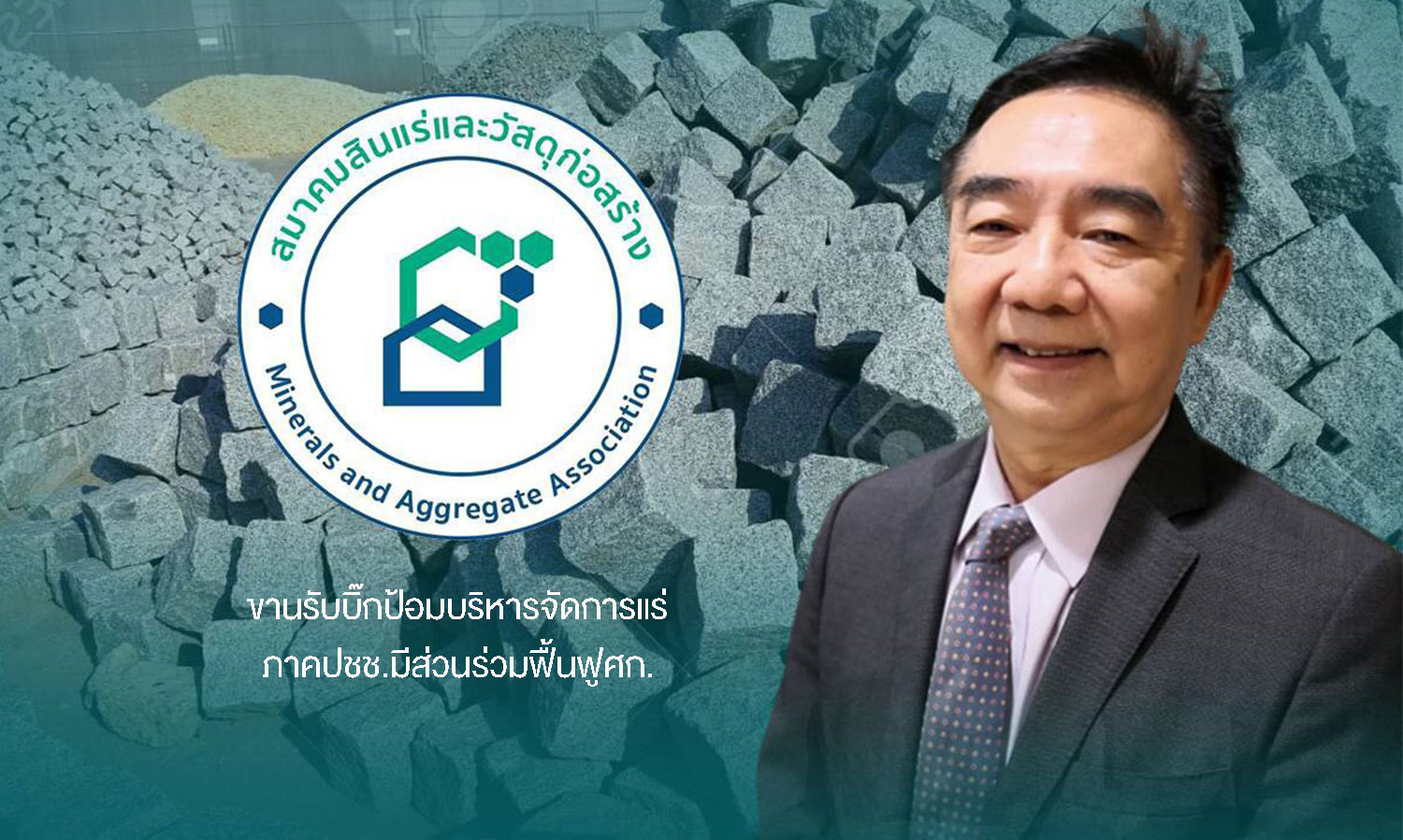
Dr. Wijak Pongpetrada, President of the Mineral and Construction Materials Association (MCA), expressed great satisfaction that the calls and proposals from the association over the past two years have been acknowledged by the government. This reflects that the government, particularly the NMMC, is aware of the hardships faced by mining and construction material operators, which also affects related businesses, employees, and local communities.
The MCA president further stated that since the outbreak of the novel coronavirus (COVID-19), the association has warned of severe economic impacts, urging the government to have a long-term economic response plan. Although Thailand has managed the situation well, the surrounding regions and the world are still experiencing a second wave of outbreaks. The latest reports indicate a global total of 9.7 million infections and nearly 500,000 deaths. Such circumstances affect trade, investment, international tourism, and employment. Even though the Thai government has eased business restrictions, recovery in the short term remains challenging.
“Looking ahead to the economy in the second half of the year is still concerning. The World Trade Organization (WTO) reported that global trade volume in the second quarter of this year contracted by 18.5%, and it may worsen, with projections indicating a contraction of 13-32% for the entire year of 2020. Meanwhile, the International Monetary Fund (IMF) estimates that global GDP will decline by 4.9%, resulting in a total economic loss of approximately $12 trillion, or about 370 trillion baht over two years.
For Thailand, the government’s economic management has recently acknowledged that in the second half of the year, more companies will close down, and the industrial sector will shut down more factories. Many employees, around 2 million, will be laid off due to the inability to produce goods for export. A significant number of workers will return to their hometowns. This is why the Bank of Thailand has recently assessed the economic situation, projecting a GDP decline of 8.1% for 2020, which is more severe than the 1997 financial crisis. Some economists predict a decline of up to 10%,” Dr. Wijak stated.
The MCA president commented that the economic recovery efforts now differ significantly from those in 1997, as the 1997 crisis was primarily a financial and credit issue. In contrast, the current situation requires addressing problems across all sectors of the economy, which is expected to lead to 8.4 million people losing their jobs. However, the 400 billion baht budget that the government plans to use for economic recovery involves many procedures and may not meet the urgent needs of the public. The government should promote and support the private sector in finding solutions to obstacles to open all avenues that can impact business operations to accelerate job creation. When people have jobs and income, the situation will gradually improve.
Regarding proposals from mining and construction material operators to the association, there is a continued emphasis on urging the government to expedite the review and reinterpretation of laws that hinder land use permits in agricultural reform areas due to the NCPO Order No. 31/2017. The association has already presented these issues and solutions to the Office of Agricultural Land Reform and the Ministry of Agriculture and Cooperatives.
“In this matter, Deputy Minister of Agriculture and Cooperatives, General Thammanat Prompao, who oversees the Office of Agricultural Land Reform, is well aware of the issues and understands the challenges faced by operators. We believe he will help resolve these issues so that mining and construction material operators can participate in the national economic recovery from the current crisis,” Dr. Wijak concluded.