Lease Expiration: A Time Bomb for Mutual Funds and Real Estate Trusts
Mutual Funds and Real Estate Trusts primarily generate income from rental fees charged for leasing properties to tenants. Almost all types of leases require a rental agreement to define the terms of the lease, such as rental and service fees, utility charges, security deposits, termination conditions, and the duration of the lease.
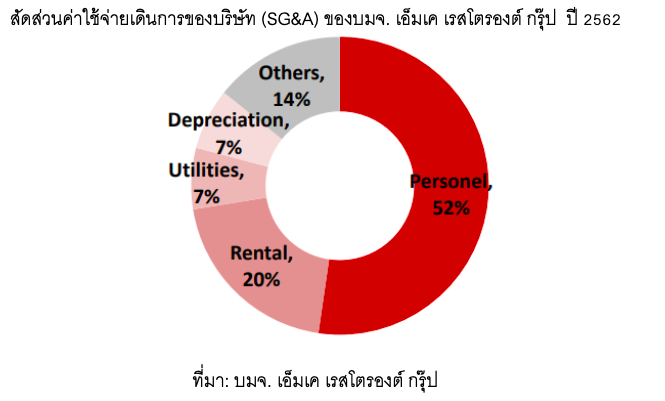
Certainly, during the period when businesses were affected by the COVID-19 pandemic, the income and profits of most tenant companies decreased. These companies had to cut various expenses, such as reducing staff numbers, lowering executive salaries, and cutting employee benefits. Rent is also considered a significant expense in a company's operating costs (SG&A). For example, MK Restaurant Group Public Company Limited has the highest operating costs, with employee expenses accounting for about 52%, followed by rent at approximately 20% of SG&A.
Therefore, if a company is affected, it will naturally want to reduce expenses, including rent. However, since the company has previously signed a lease agreement, immediately reducing the rent may not be possible as it would constitute a breach of contract, which could result in the forfeiture of the security deposit and potential penalties for late rent payments. But if the lease expires, tenants will have options to reduce expenses:
- Continue leasing the space as before.
- Continue leasing but request to reduce the leased area to cut costs. In some cases, this may not be possible because the layout of the room/building is not suitable for division, making it difficult to lease the remaining space to others.
- Not renew the lease. This situation may occur if the tenant cannot afford the rent or has the option to move to another location.
Typically, general lease agreements are set for a maximum of 3 years, except for certain properties, such as Built-to-Suit warehouses and cold storage, which are designed and developed according to the tenant's specifications, allowing for longer lease terms than standard agreements.
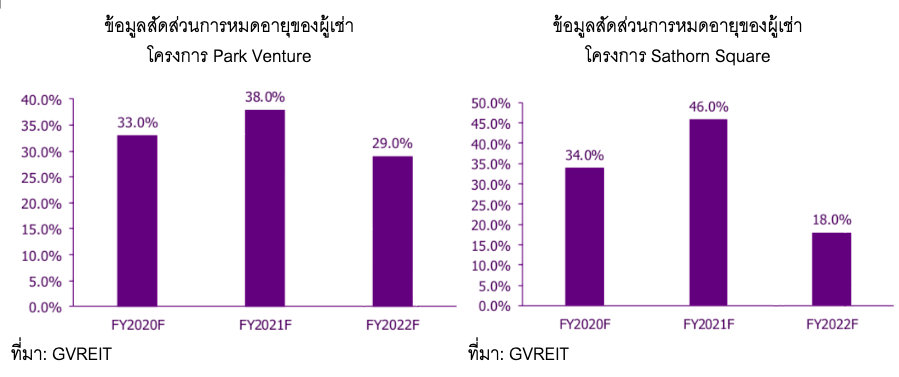
In analyzing the risk that a fund's assets may experience reduced income due to tenants not renewing their leases, investors can consider the proportion of tenants whose leases will expire in the future (Lease Expiry Profile) by obtaining information from annual reports or publications available on the mutual fund and real estate trust's website. If a significant proportion of lease agreements are set to expire, especially during this economically impacted period due to COVID-19, it can lead to a decrease in overall occupancy rates and income for the fund.
The following case study will illustrate the proportion of lease agreements that will expire for the fund's investment properties.
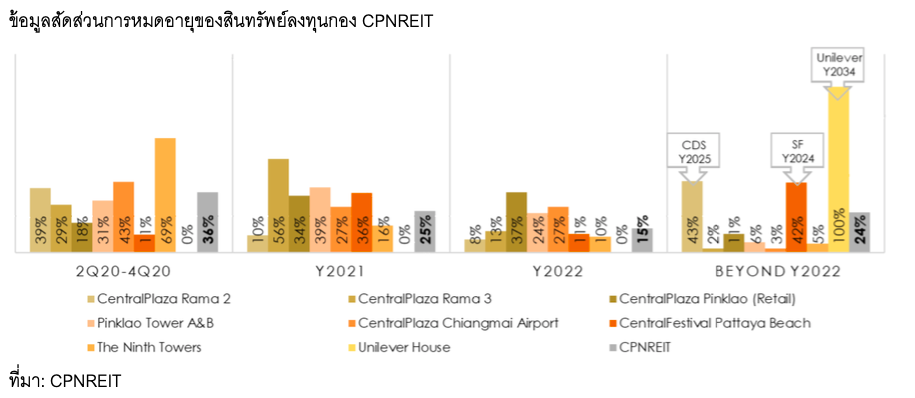
However, analyzing the expiration data of tenants' leases is just one factor that investors should consider when investing in Property Funds and REITs. Investors should conduct further research before making investment decisions.