SENA Navigates the Storm, Reports 44% Profit Growth in Q1/2020, Resets Business for the Next Normal Real Estate Market
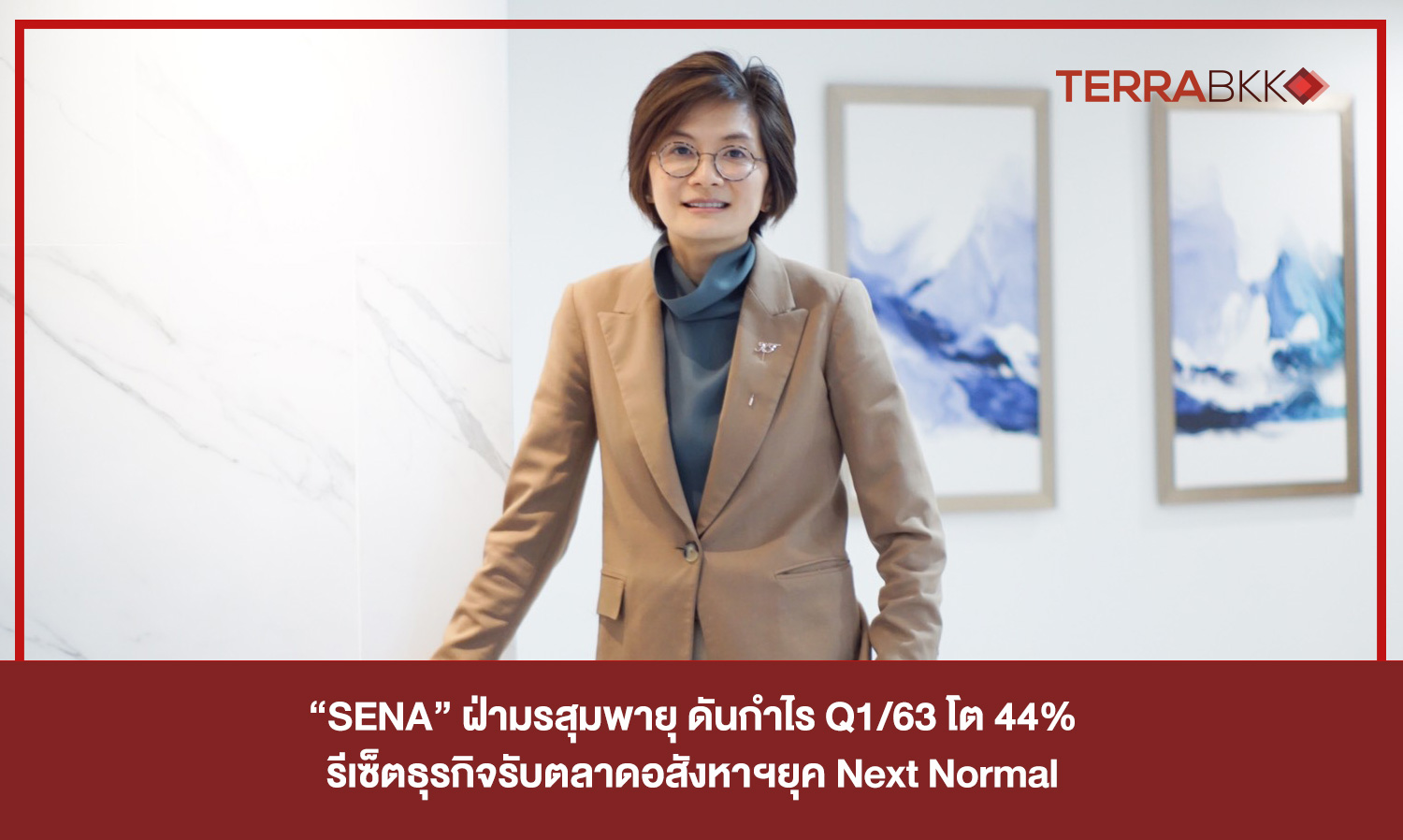
SENA has overcome the COVID crisis by adjusting strategies and reducing costs, leading to a net profit of 230 million baht in Q1/2020, a growth of 44%. The company revealed a backlog of 11,809 million baht and is implementing the "SENA Zero COVID" strategy to handle all stormy situations. They are moving forward with the launch of 7 projects and installing solar systems in townhomes, starting with Sena Ville in Lam Luk Ka, Klong 6, which will open for reservations this June, aiming to adapt to the Next Normal.
Associate Professor Dr. Kesara Thanyalakphak, Deputy CEO of Sena Development Public Company Limited (SENA), the developer of Thailand's first fully solar-powered village project, disclosed the company's Q1/2020 performance. In this quarter, the company generated revenue from real estate business divided into two parts: revenue from SENA's projects at 565 million baht and revenue from joint venture projects at 676 million baht, totaling 1,289 million baht, which is a 29% increase compared to 997 million baht in the same period last year. Additionally, revenue from rental and service businesses amounted to 356.5 million baht, an increase of 173.8 million baht or 95% year-on-year, and revenue from solar (EPC) was 6.7 million baht, up by 2.3 million baht or 52%.
Overall, the company's total revenue reached 1,652 million baht, an increase of 542 million baht or 49% compared to 1,110 million baht in the same period last year. In this quarter, the net profit was 230 million baht, accounting for 25% of total revenue, which is an increase of 70 million baht or 44% compared to 160 million baht in the same period last year (with joint venture project revenue of 676 million baht contributing 34 million baht to the profit share this quarter, resulting from the transfer of ownership of the Niche Mono Sukhumvit - Bearing project, continuing from last year, along with revenue from solar farms).
Currently, the company has a backlog of sold products awaiting transfer valued at 11,809 million baht, expecting to recognize revenue of 6,443 million baht this year, primarily from three joint venture projects worth approximately 5,325 million baht, including Niche Mono Sukhumvit - Bearing, Niche Pride Tao Poon - Interchange, and Niche Mono Charoennakorn, along with an additional 1,118 million baht from SENA's projects. The company also has remaining inventory for sale valued at 25,351 million baht (as of March 31, 2020), with approximately 5,900 million baht of that being condominium projects expected to be sold and transferred this year. In the last quarter, the company launched three new projects with a total value of 1,515 million baht, including The Kith Rangsit-Tiwanon valued at 490 million baht, The Kith Phutthamonthon Sai 7 valued at 192 million baht, and the joint venture Niche Mono Itsaraphap valued at 833 million baht, which has already achieved over 45% sales.
The company has adjusted its new project launch plan for 2020 to align with changing market demands under the "SENA ZERO COVID" initiative, reducing the number of projects from 10 valued at 7,500 million baht to 7 projects valued at 4,500 million baht. Currently, three projects have been launched, with four more to follow: 1. The Kith Plus Phaholyothin - Kukot (Phase 2) 2. Sena Village Rangsit - Tiwanon 3. Sena Vela Theparak - Bang Bo 4. Sena Kith Theparak - Bang Bo. The remaining three projects, including PITI Somdet Chao Phraya, Niche Pride Bang Pho, and Sena Viva Theparak, will be reconsidered based on market conditions. For 2020, the company aims for sales of 11,500 million baht and transfers of 10,600 million baht.
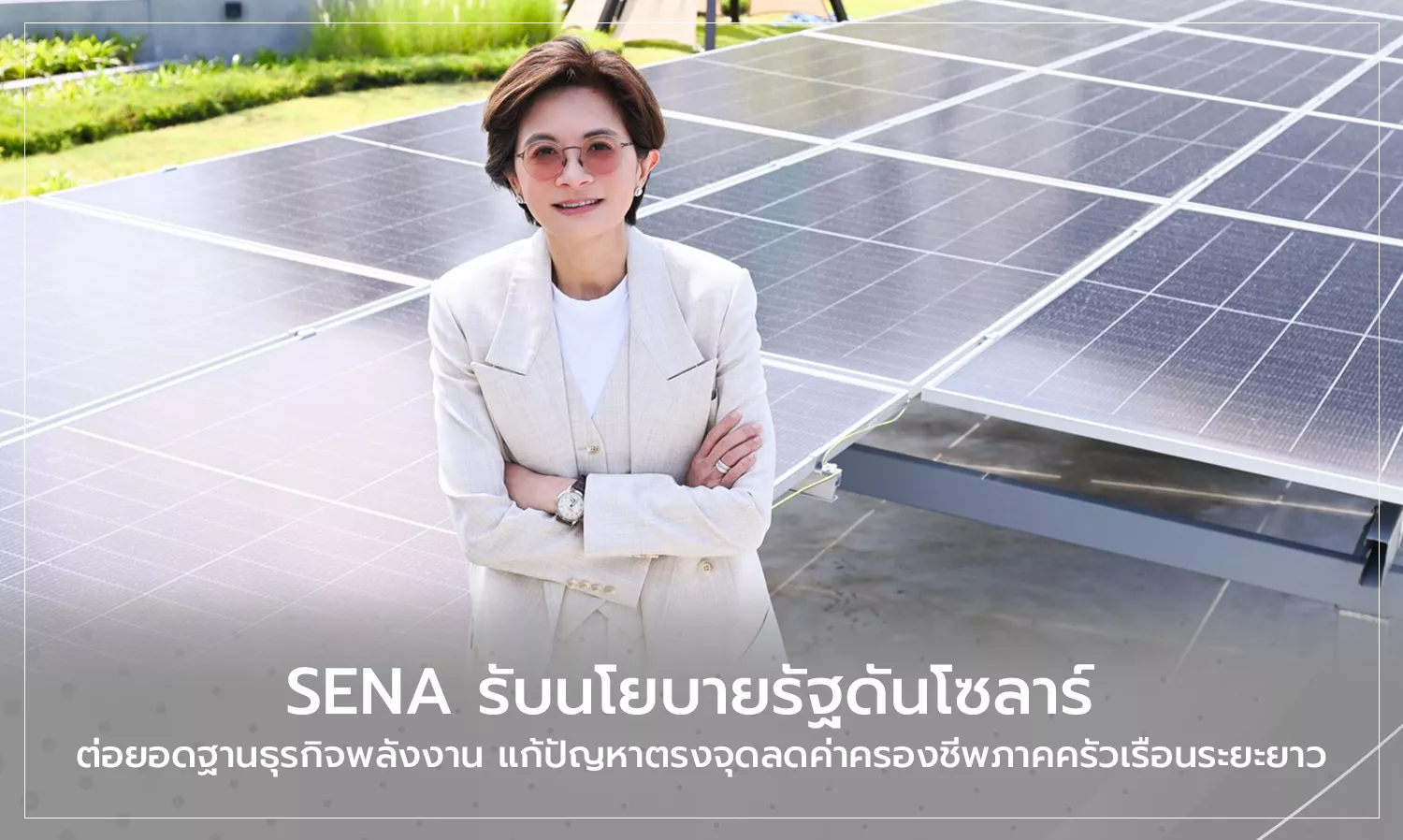
Recently, the company is preparing to launch a new product, "Solar Townhomes," marking the first in the real estate industry targeting middle to lower-income consumers, equipped with a 1.28 kW solar system. The initial two-story townhomes in Lam Luk Ka, Klong 6, will be priced from over 2 million baht, set to open for sale in June 2020. The solar installation aims to meet the changing lifestyle needs of the Next Normal after COVID, as it helps save costs and reduce expenses over a long term of 25 years, making it suitable for those working from home or individuals with limited income, as well as elderly people who need to stay home.