The Tiny Friend: A True Companion of Plants, Humans, and All Living Beings
Dr. Prasert Pin-ngam (Ph.D., TREES-A NC)
B.Sc. Public Health, Mahidol University
I once heard Luang Por Charan Thitthammo from Wat Ampawan recount the story of when he had a car accident that left him ejected from the vehicle, with a broken neck and unable to move. He heard bystanders saying, "This monk is surely dead." While he lay injured and still on the road, a man's voice began to engage him in conversation. Luang Por asked the man who he was and why he wasn't helping him. The man replied, "I am your mindfulness." Ultimately, Luang Por Charan used this experience to teach that mindfulness is like a true friend to all of us. This true friend has been growing with us since birth, similar to the microorganisms that inhabit our bodies, which have been present since our birth and continue to thrive until we die.
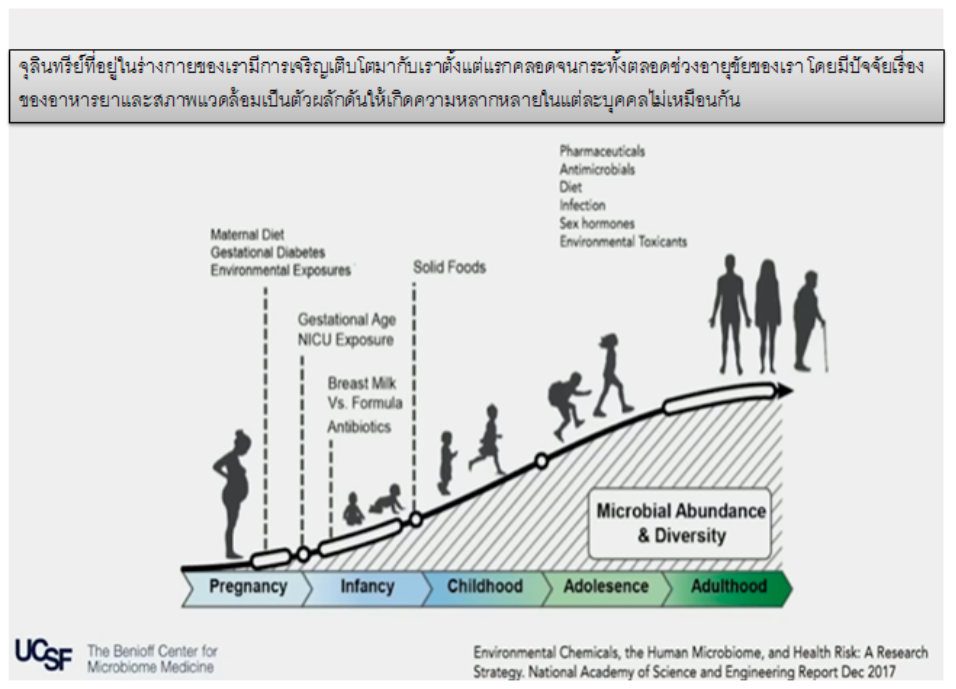
This group of microorganisms varies in type and quantity depending on age, ethnicity, environment, diet, and medication, among other factors. On average, there are about 100 trillion cells and approximately 10 million genes per person, while human cells number around 37 trillion, with 23,000 human genes. However, if we compare their actual weight, the total weight of all microorganisms is likely no more than 1.5 kilograms for a person weighing about 70 kilograms. This information is still evolving, as even though we can identify types of microorganisms, we mostly do not know them well because we have yet to cultivate these discovered microorganisms in the lab to study their behavior and life cycles. Thus, we must wait for further developments.
Microorganisms are like dark matter on Earth waiting to be discovered
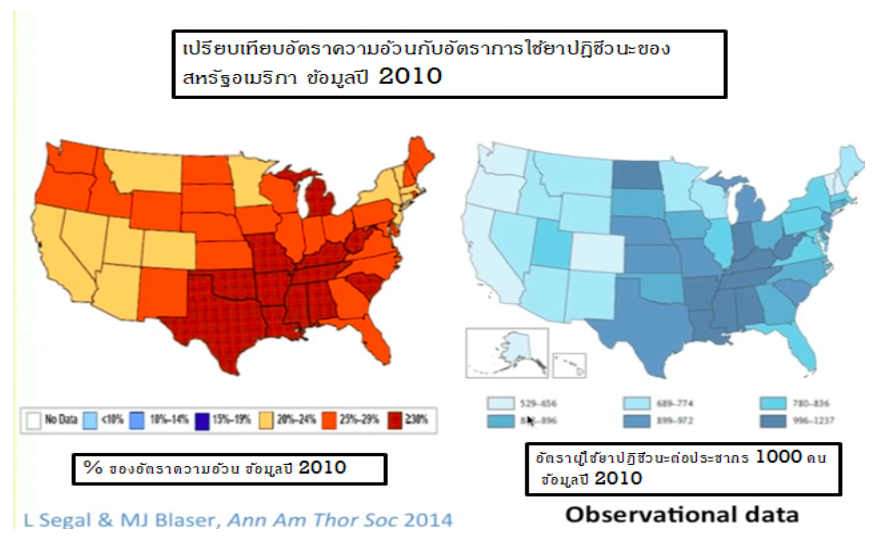
Vartonkian and his team reported in 2010 that only 1% of the microorganisms on Earth can be cultivated in the lab. The rest are known only as a type of microorganism, but we do not understand their true life cycles. The current research approach is to monitor changes that affect their biodiversity, with a clear hypothesis that greater diversity leads to stronger immunity for the host. Therefore, any action that reduces microbial biodiversity will also decrease disease resistance. For instance, studies on antibiotic usage directly correlate with obesity rates in the United States. Data collected regionally show that varying antibiotic usage across states significantly aligns with obesity rates in those states. This information could have policy implications for Thailand, where the Thai Health Promotion Foundation (ThaiHealth) is actively campaigning to reduce antibiotic use in disease treatment.
Currently, research on human microorganisms has advanced significantly compared to those in plants, animals, soil, water, and other environments. It is believed that we still understand no more than 5% of the microbial world. Thus, finding ways to coexist with the remaining 95% is crucial for our survival. We now know that maintaining microbial biodiversity is one immediate action we can take. If any process contradicts this, we must revisit the entire process from the beginning to preserve a rich microbial biodiversity that enhances disease resistance.
Who are the true friends of plants?
Since the Green Revolution over 70 years ago, which marked the beginning of industrial agricultural chemicals, practices such as monoculture, invasive crop cultivation for trade, and the use of chemicals instead of labor have overlooked the fundamental aspects of soil life. A clear example is the decline in earthworm populations due to chemical and pesticide use. Robert J. Blakemore reported in 2018 on the significant decrease in earthworm numbers, comparing data from over 130 years.
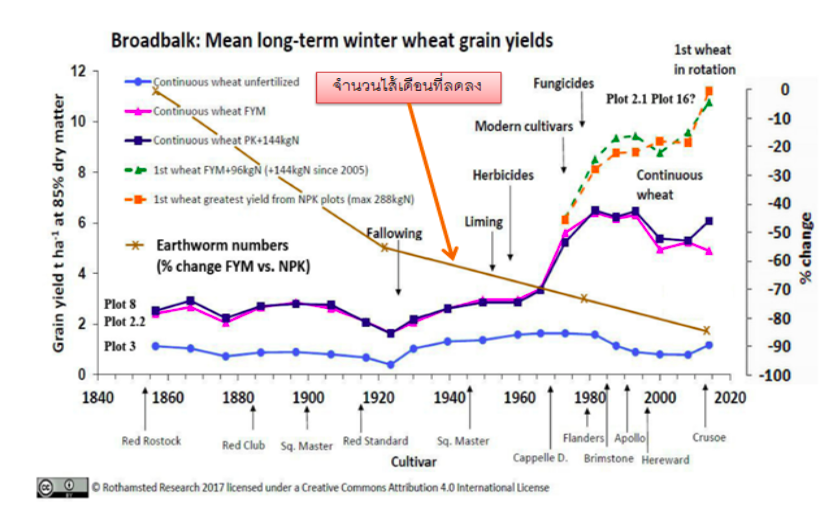
This decline is nearly 90%, and it directly correlates with organic matter levels in the soil or humus. The issue of earthworms is just one example of soil life. Dr. Elaine Ingham, who has studied soil organisms in depth, has detailed the soil food web and its widespread application globally. However, the types of animals at each level of the food chain may vary by region. Overall, the total number of organisms underground is a true indicator of soil vitality.
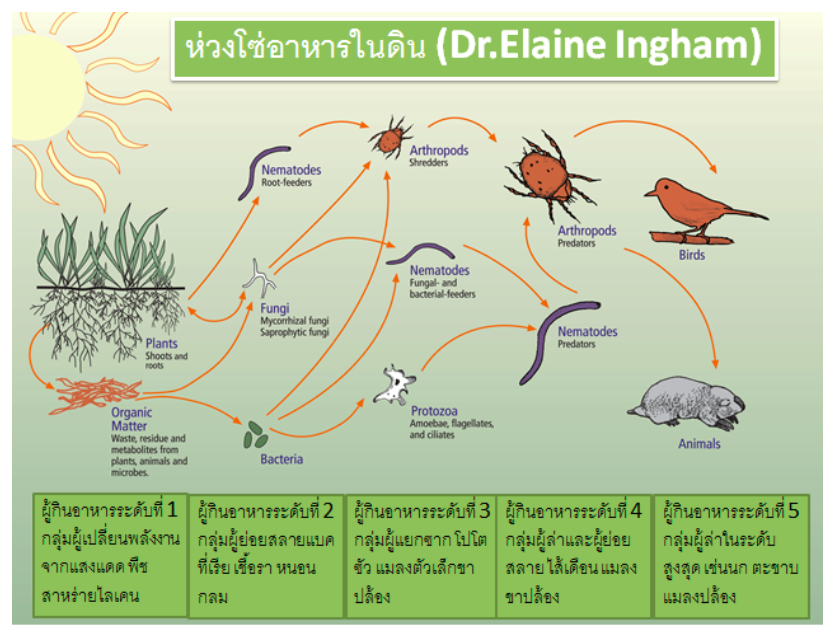
Dr. Elaine Ingham categorizes consumers into five levels, starting with level 1, which includes organisms that convert external matter and energy into the soil system, such as plants, algae, and lichens that convert sunlight into starch and sugars, and bacteria that fix nitrogen into nutrients. The products from level 1 serve as food for decomposers like bacteria and fungi. Level 3 includes predators like protozoa that consume bacteria, while level 4 consists of larger organisms like earthworms and arthropods that not only act as predators but also release nutrients and create spaces for better air circulation. Level 5 includes organisms above ground, such as centipedes, scorpions, and birds. It is evident that all five levels of life are interconnected. Disrupting these relationships through chemical use or excessive disturbance of the underground ecosystem will affect the food chain and plant growth. To maintain the integrity of the soil food chain, the following methods can be employed:
- Avoid using any chemicals or pesticides.
- Avoid unnecessary soil disturbance through excessive tilling.
- Cover the soil to maintain moisture and temperature stability.
- Preserve biodiversity of both above-ground and below-ground plants.
- Practice crop rotation each year.
- Maintain plant root systems underground without completely uprooting them to enhance soil aeration.
There may be different methods depending on local environmental conditions. If these practices can be implemented, it will strengthen the bonds among plant communities and enable them to coexist sustainably.
Despite the tiny microorganisms evolving alongside life on Earth since the beginning and playing a crucial role in maintaining ecological balance, we hardly know the true identity of this true friend.
Humans are unaware of the microorganisms within us that provide over 50% of our immunity, leading us to avoid fresh vegetables, which are the food for these little friends.
Humans do not recognize the soil microorganisms that nourish plants, resulting in the use of chemicals and pesticides, which ultimately become part of our food.
It is not too late for us to reconnect with these tiny life forms. Witnessing earthworms under trees, dragonflies flying around ponds, spider webs in vegetable patches, and butterflies hovering over flowers should be the vision of the future that we all work together to create for our children, as these beautiful images will symbolize the completeness of humanity that truly understands the principles of coexistence. Thank you, tiny friends, for helping sustain this world until now.
ABOUT THE AUTHOR
ดร.ประเสริฐ ปิ่นงาม (Ph.D., TREES-A NC) วท.บ. สาธารณสุขศาสตร์ ม.มหิดล