What 'Dhanin Chearavanont' Wants the World to Know – Government Action
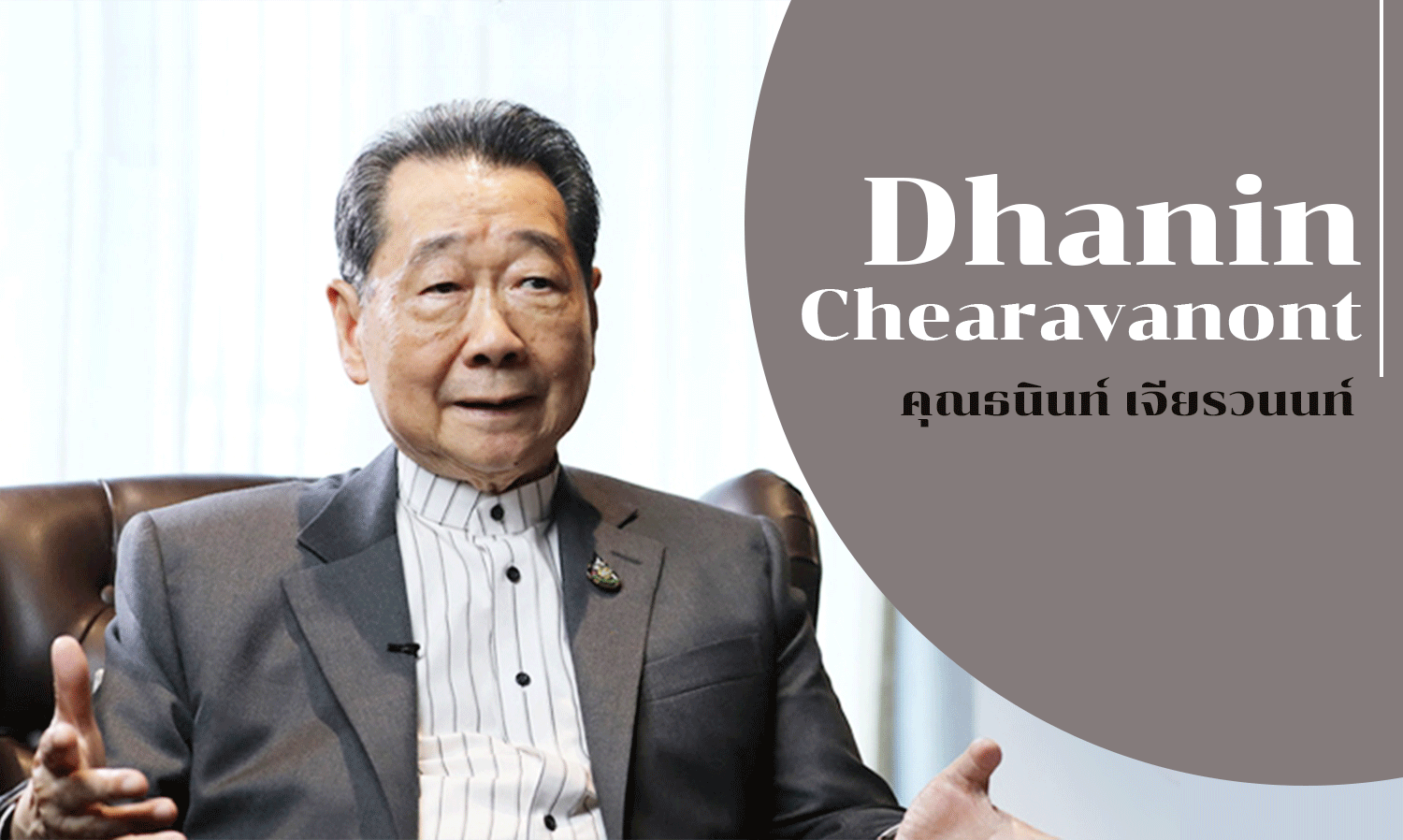
In a conversation lasting over three hours with the media, “Dhanin Chearavanont,” Senior Chairman of Charoen Pokphand Group, at the age of 81, still appears energetic and passionate about thinking and envisioning the future, especially during the economic crisis caused by the COVID-19 lockdown. He emphasizes the need to be prepared to act immediately once the pandemic is over.
“Dhanin” stated that the lockdown has caused economic damage of over 560 billion baht per month, or more than 18.67 billion baht per day, with many unseen losses still unknown... He expressed that the government should issue 30-year bonds to help people avoid unemployment and support good companies by at least covering 70% of employee salaries. He believes that in this COVID crisis, no one is at fault, but for the nation, if companies go bankrupt and people lose their jobs, it becomes an opportunity for the government to serve the public.
The country's credit rating remains strong, ranking among the top in the world. He questioned why Thailand invests in U.S. bonds with a 0.2% interest rate instead of issuing bonds to attract money from around the world to lend to companies at low long-term interest rates, preventing them from collapsing.
“What’s wrong with the government having a 30-year debt? The interest is low. If it can help the public regain purchasing power, the government can still collect taxes. Don’t let factories close, lay off workers, and let machinery rust. It takes time to recover,” he emphasized.
He compared it to building a house, which takes years to complete, but tearing it down takes only a moment, like blowing up a building.
“If I were in the government, I would invest heavily in job creation, issuing 30-year bonds to borrow money from around the world, not just domestically. With our good credit, we should attract global funds to fill our economy, rather than relying solely on local resources.”
When asked how much should be borrowed to be sufficient...
“If we need to borrow, we could borrow 3 trillion baht. Our public debt is still not high, less than 60% of GDP. Currently, it’s 42% of GDP. If we borrow up to 100% of GDP... so what? Other countries have had public debts at 100% of GDP for a long time. But we are not squandering money. The government borrows to maintain purchasing power and spending, allowing businesses to survive, produce, and sell. The government should help promote products. Where have we sold in the past? Can we penetrate markets during COVID? Trade ambassadors must be active during this crisis.”
He reiterated that the government should borrow money, stating, “It’s still not too late to act now.”
“Dhanin” believes that the easing of lockdown should be gradual, expressing confidence that Thailand is different from Japan and Korea (where outbreaks have returned) because the Thai lifestyle differs from Japan's. Japan has small homes and enjoys social gatherings, while Thailand has spacious homes and does not emphasize gatherings, plus the hot climate.
“I am an optimist. In dark times, we must act to bring light, not wait for light to act. It’s too slow. I think we are close to the light now, while other countries are not. I’m not boasting; we have proven effective preventive measures during the lockdown.”
“I believe everything in this world carries risks at all times. Sometimes, one may seem strong and able to run, but still suffer a heart attack. Crises can arise daily, but we must act despite the risks. We must focus on how to prevent them and take care of ourselves.”
Tourism Targeting Billionaires Fleeing
Amid the crisis, “Dhanin” sees opportunities for Thailand. If actions are taken sooner, the economy can recover faster. He believes that the tourism sector can rebound quickly by promoting the idea that Thailand has an excellent healthcare system capable of controlling the pandemic and treating COVID-19 patients effectively. Despite being at risk with over 30 million tourists, primarily from China, Thailand has managed to keep infection rates low and deaths minimal, demonstrating the quality of its medical personnel.
Even during the lockdown, there were moments when citizens could return home, leading to many crossing provinces. At that time, “Dhanin” thought the government might have made a mistake, fearing a severe outbreak. However, after monitoring for two weeks, the situation was not severe. Fortunately, community health volunteers reached the public, providing information, knowledge, and effective prevention.
Given these strengths, “Dhanin” believes Thailand should ring the bell to inform the world that it has skilled doctors and a robust healthcare system ready to care for them.
“The government must communicate to the world that we have excellent doctors and that, instead of having high COVID cases, we have low cases and deaths.”
“Dhanin” stated that this is the time to aggressively promote tourism, inviting billionaires who are confined at home and feeling uncomfortable to travel. If someone can communicate effectively to assure them that traveling is safe, they shouldn’t wait for a vaccine. The government must communicate this to the world; we must work together to advertise Thailand.
“Once we provide the information, we have tour companies, right? Many tour companies exist at various levels. We should connect with five-star tour companies, five-star hotels, and five-star hospitals to invite Chinese billionaires (20% of wealthy Chinese amount to over 280 million) and billionaires from America and Europe, especially older individuals, to escape to Thailand—not from danger, but to travel. Before coming, they must undergo blood tests for analysis. We can’t let just anyone in. If they are COVID-free, they can stay in Thailand. We have doctors and equipment ready. Planes can arrive in Thailand, landing at places prepared to receive tourists. Once they arrive, they must quarantine together for 14 days in hotels they trust, ensuring everyone’s safety. Staff must not return home; it must be a safe zone, and plans should be made for safe excursions. If they feel secure, they will return to travel again.”
The government must support and adjust regulations to allow the private sector to operate. The government should facilitate, not shut down, and must act now, not wait for everything to calm down. The Prime Minister must lead decisively.
“Doing this isn’t about overstepping; there’s no need for lengthy procedures. The Prime Minister must lead. In a crisis, we must act as if in a crisis. In normal times, we must act normally, but we must also expedite system improvements.”
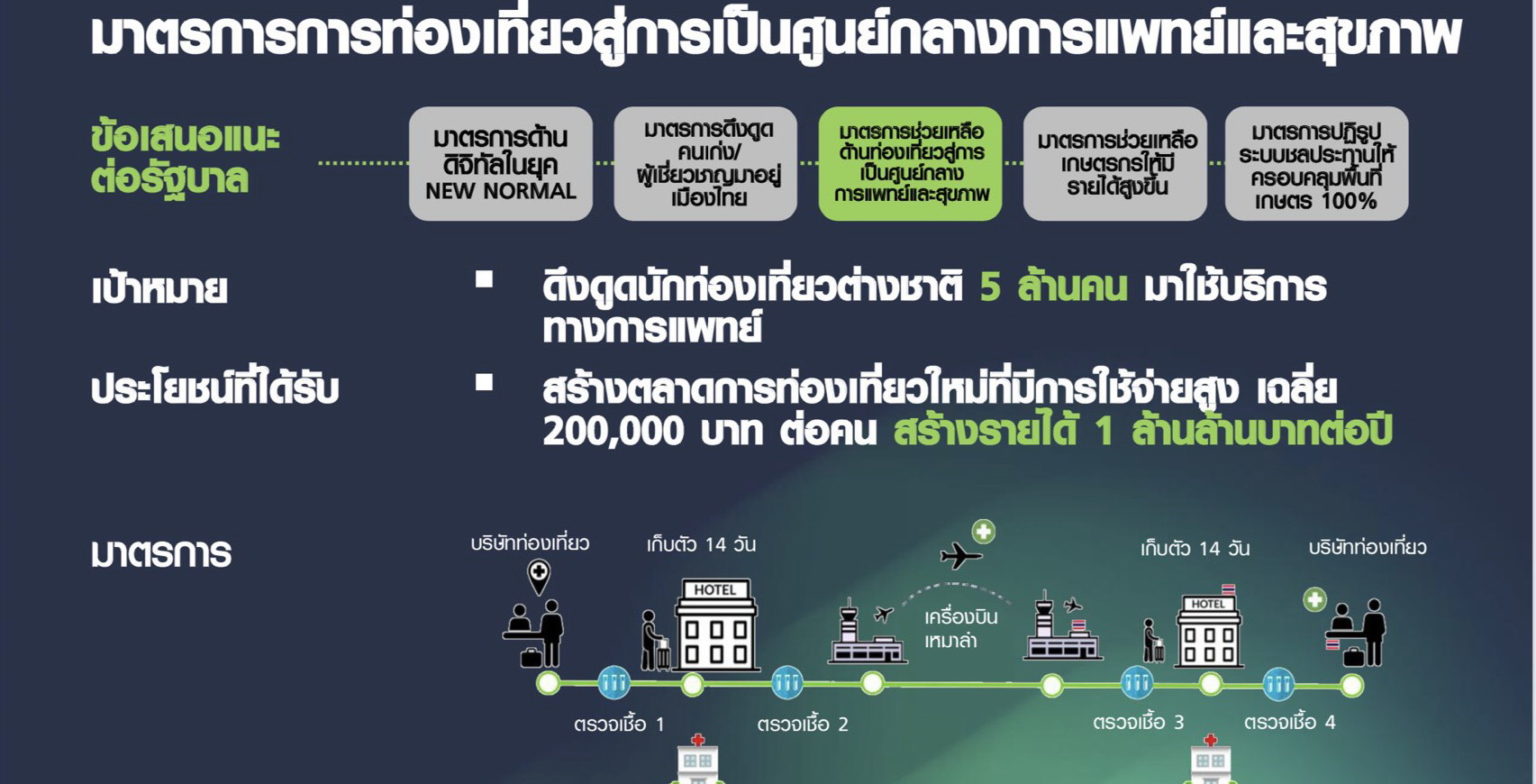
“Dhanin” believes that after the crisis, once a vaccine is available, tourism will boom. With the new way of working from home or anywhere, this change will undoubtedly lead to a tourism boom.
“I am confident that tourism will be massive. I take my family traveling, combining work and leisure. I can work globally while spending quality time with my family.”
Therefore, Thailand must act now because others cannot. We can do it; don’t wait for the vaccine.
Hiring Global Talent to Become the “Global Economic Hub”
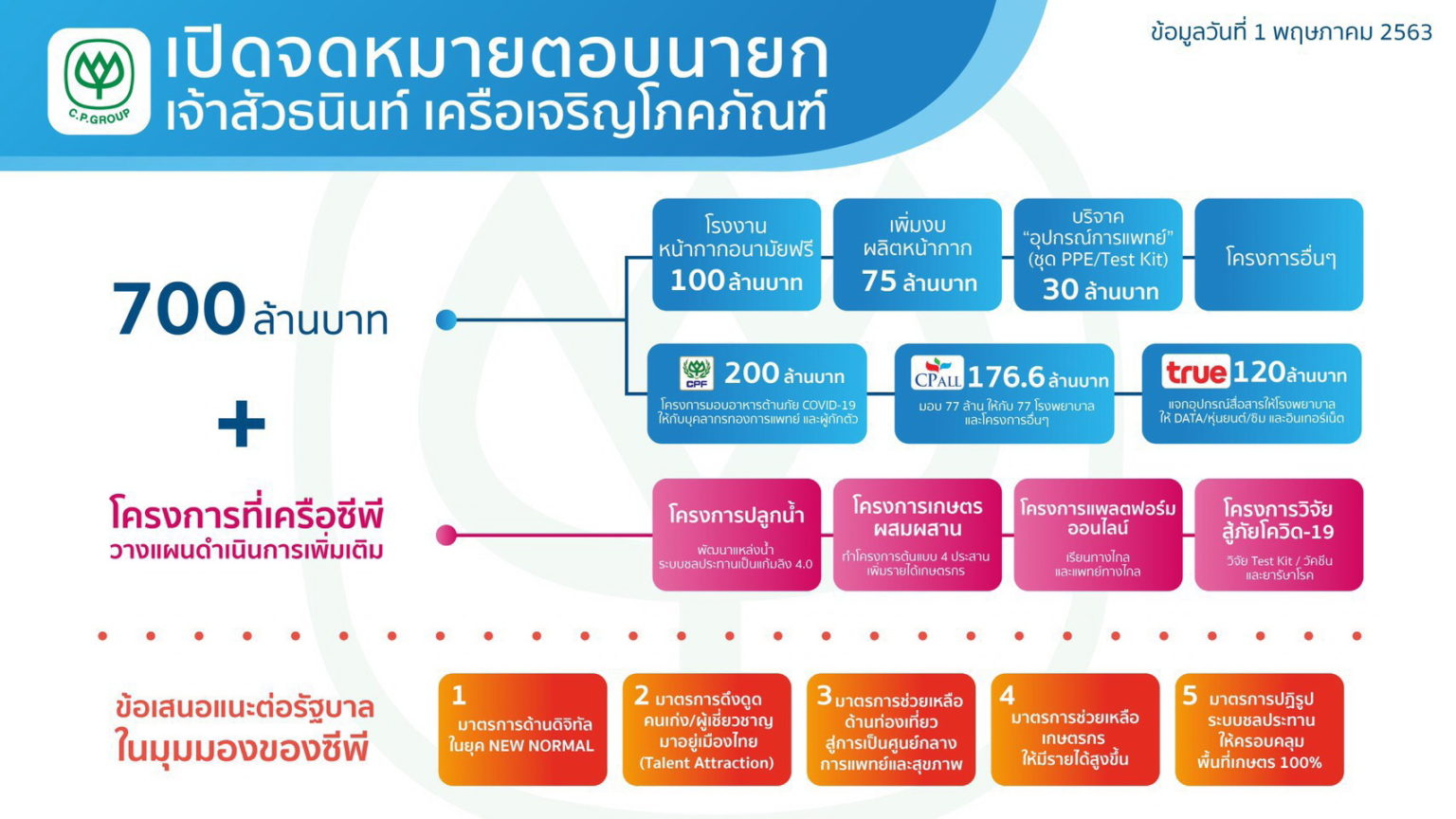
In a letter responding to the Prime Minister, “Dhanin” proposed pushing Thailand to become an economic hub. However, to achieve this, Thailand must attract “talented individuals” to reside in the country. He suggests bringing in about 5 million skilled individuals to help create new businesses, enhancing the skills of Thai people simultaneously. This approach allows for multiple benefits from one action, as these talented individuals will contribute to the economy, pay taxes, and help improve the skills of Thai citizens.
Once they arrive, they will seek good schools for their children, ensuring health safety, and will also improve real estate conditions.
“Dhanin” emphasizes that we must prioritize the country’s economic benefits. Since we are lagging, we must develop ourselves by bringing in skilled individuals. They are not here to take jobs; thinking that way is incorrect because these individuals will fill roles that Thai people cannot yet perform.
“CP has survived as a family business. I hold a significant share, but there are various funds as shareholders, and I employ professionals. My descendants are not involved; they only focus on people and money. Anyone capable can rise to become the chairman. That’s how CP has expanded globally. If we limit ourselves to only our people, we cannot expand globally.”
“Dhanin” also pointed out future employment trends, stating that ordinary employees in CP will no longer exist; they will be replaced by automation. However, what cannot be replaced are employees who go out to find markets. Everyone must be a warrior, but having automation doesn’t mean everyone can do it. We need brilliant software developers who understand the work to write software that truly understands and adapts to changes. It cannot just be anyone writing it because it will lack spirit and intelligence. Software will need constant updates as the world and business evolve.
Thus, if Thailand is to become a global economic hub, we need skilled individuals to work here. When skilled individuals work in Thailand, businesspeople and investors will surely follow because they will have support. However, our laws must be conducive to attract these talents, such as allowing them to become Thai citizens without the need to report every three months, enabling them to own real estate while ensuring they cannot take it back home.
He further stated, “Selfish individuals may oppose the idea of foreigners taking their jobs. This is not about taking jobs because we don’t have those jobs. If anyone should oppose, it should be me because the skilled individuals coming in will compete with my business. But we must be open-minded. If we cannot compete, we must be willing to sacrifice. It’s selfish to prevent others from competing. Some may say, ‘Well, you, Dhanin, are skilled.’ In reality, there are people more skilled than me. If we think we are skilled, we won’t be. If we think we are not skilled, we will always be skilled.”
More importantly, “Dhanin” believes that humans must have opportunities. No matter how skilled one is, without opportunities to demonstrate or experience work, they will not excel. I have been a businessman since the beginning; I know how to provide opportunities. If there are no opportunities, no matter how skilled one is, they will not succeed.
“Dhanin” emphasizes the need to bring in global experts who have already succeeded. In the era of King Rama V, we hired the British to establish our military system and brought in Chinese to assist in trade. Why can’t we use the world’s talented individuals today? We should bring in those who have succeeded to teach us.
He also shared his work philosophy: “Why do I say I am happy for just one day? Because tomorrow there will be someone more skilled than me. How can I be happy every day? Everyone faces crises every day, so we must prepare for exams every day.”
“Surface Oil” and the Integrated Agriculture 4.0 Project
“Dhanin” views Thailand as having abundant “surface oil”, a national treasure. Surface oil can be harvested and replanted year-round, while underground oil takes thousands of years to extract. Surface oil refers to food that sustains humans; it’s about survival. “Dhanin” believes there must be changes to help farmers increase their income. How can agricultural products be priced correctly so that farmers can become wealthy? It’s not about selling at extremely low prices, which only leads to poverty. Why are farmers in other countries wealthy? We must learn from them.
He reflected on his thinking: “I produce animal feed. I buy soybeans and corn at high prices, but people don’t believe me. They think I’m speaking for my own benefit. If I were selfish, CP wouldn’t be this big. If the collective does better, I do better. If the collective fails, I suffer more than others... Don’t misunderstand; we help so that the collective survives, ultimately helping myself too, directly or indirectly. Everyone benefits.”
“If I propose buying agricultural products cheaply, I benefit. I buy low and sell high, which is easy. But if I buy high and sell high, it’s difficult, and I incur losses. If I lack skill, I could suffer significant losses.”
He shared his thoughts, saying, “People will say, ‘You, Dhanin, are skilled.’ What skill do I have? I’m just like you; I think before I act. I understand. Why don’t you come learn how I do it? Help me out. I’m willing, but whether they can do it or not is another matter. Some can do better, and some cannot.”
“Dhanin” promotes the Taiwan agricultural model, where the government sets rice prices, ensuring they do not buy below a certain price, storing it for two years to produce animal feed. They study which areas can produce excess crops every year and determine which areas should stop planting and what to plant instead. The government doesn’t lose money; it gains revenue, and farmers become wealthier, creating small businesses. It’s not about competing to sell the world’s best rice while farmers become poorer. We must control supply and assist them in deciding what to plant. While they transition to other crops, we must support them until the harvest. Once successful, they become wealthier, and the government collects more taxes, increasing state value and creating jobs.
As for “Dhanin’s” recommendations for national recovery in his letter to the Prime Minister, he mentioned “surface oil” under the “Integrated Agriculture 4.0 Project,” proposing a pilot project based on the “3 Benefits, 4 Collaborations” concept that CP has successfully implemented. He stated that he would select 2-3 provinces in Thailand to serve as models to elevate farmers’ incomes sustainably.
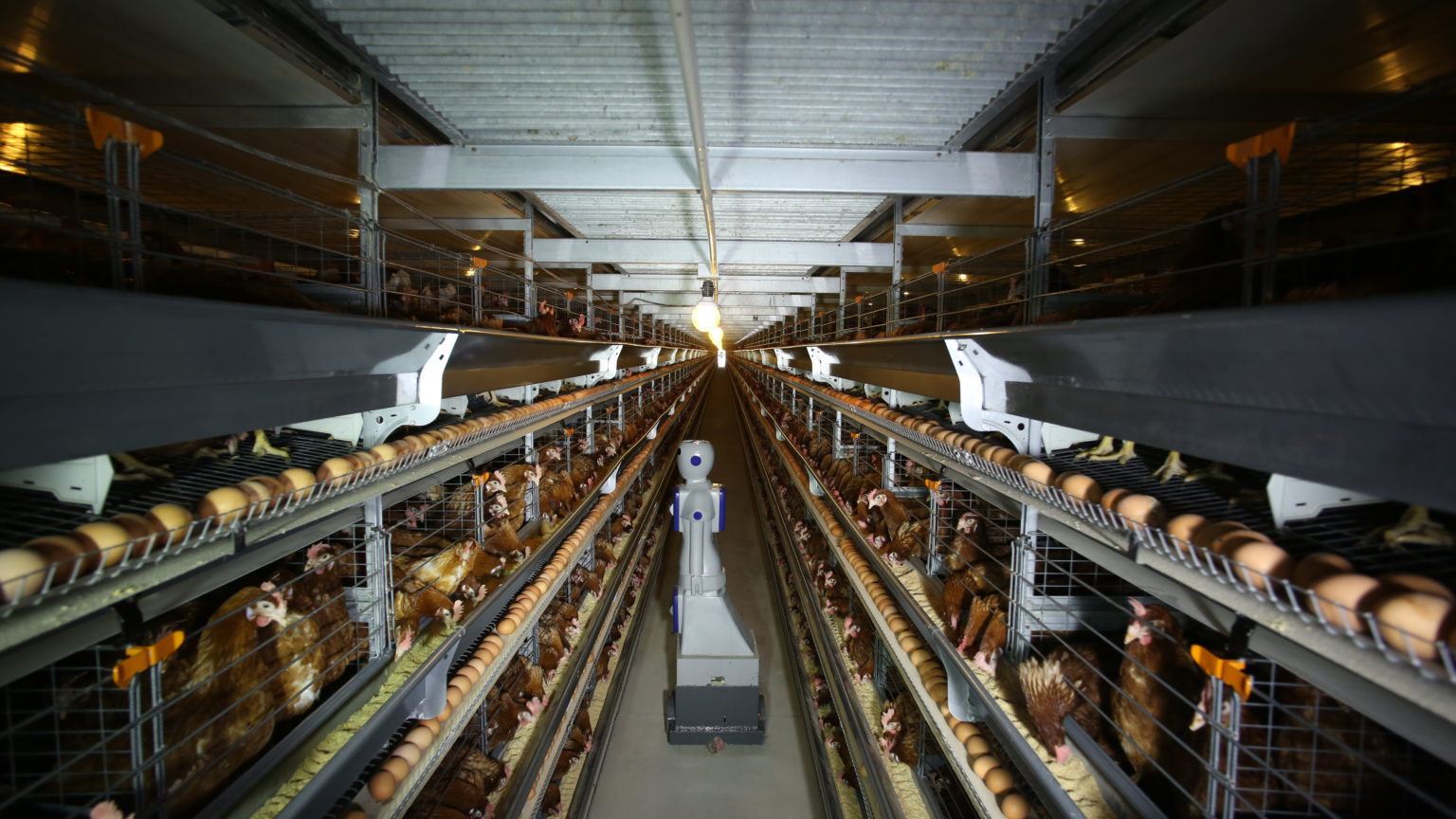
The 3 Benefits, 4 Collaborations model has been successfully implemented by CP, including the Nong Wa agriculture project in Phanom Sarakham, Chachoengsao province, and the Pinggu project in Beijing, which involves a complete egg-laying chicken project of 3 million birds, a meat chicken project of 100 million birds per year, and a pig project of 1 million pigs per year, along with modern agriculture in Zhejiang province, developing 8,000 rai of land for integrated modern agriculture near urban areas, encompassing both crops and livestock. This model involves a four-party collaboration: government, private sector, financial institutions, and farmers to support modern agricultural development, yielding three benefits: benefits for the country, the people, and organizations.
“My approach is that farmers must be owners. Farmers hold shares and are on their land as a collective area, while CP bears the risks. We find loans on behalf of farmers, similar to the Pinggu project in China, which operates on over 50,000 rai.”
“In the entire area designated for pilot projects in Thailand, we will determine how many rai of corn and soybeans to plant to match the capacity of a pig farm with 300,000 pigs. This area will have a pig slaughterhouse, processing plant, and we will lease from farmers. Losses will be borne by CP, while farmers hold shares. They will have time to tend to gardens, grow safe fruits and vegetables, and we will gather, pack, and transport them for sale to CP factories and fresh markets, employing the children of farmers.”
What farmers gain is income from rent, which must increase every year, along with other benefits exceeding minimum wage. We have clear figures; they previously earned a certain amount, and we should provide them 2-3 times more. We guarantee income, and after 15 years, the assets will belong to them. I will demonstrate this to everyone. Anyone (other private sectors) who sees the opportunity can follow my model. If anyone can bear the risks, they can proceed, with the governor and the Ministry of Agriculture as witnesses.
This concept is designed to address the high risks faced by Thai farmers, which include 1. Capital, 2. Natural disasters, and 3. Uncertain agricultural product prices. They face high risks but low profits, along with issues related to farmland and poor water management. Therefore, serious water management can significantly help farmers and provide options for high-value crops that require substantial water. This will give villagers more diverse choices, allowing for integrated agriculture and expansion into livestock and tourism.
“Dhanin” is committed to making this project a school for farmers to observe and learn from. The model area must be sustainable, scalable, and incorporate technology, participation, and income distribution to strengthen the grassroots economy, ensuring food security and safety for Thailand in the long term.
“Planting Water” for Sustainability
While “water” is a primary concern in agriculture, Thailand receives abundant rainfall annually, experiencing both floods and droughts. Yet, 60% of the water flows into the sea, with significant amounts seeping underground, ultimately also flowing into the sea. If water is managed properly, it can greatly assist farmers and allow for the cultivation of high-value crops that require substantial water. This will provide villagers with more diverse options, enabling integrated agriculture and expansion into livestock and tourism.
“Dhanin” discussed past water management issues, stating that when attempting to build dams and reservoirs, people accused him of harming the environment, claiming that 30,000 trees were lost, which they replanted with hundreds of thousands. If a reservoir is necessary, the correct method is to plant three trees for every one cut down, ensuring that resources do not decay and rewarding those who plant trees.
He posed the question, “If forests had owners, who would steal them? Today, no one owns them, and the government cannot manage them effectively.”
Thus, the concept of “planting water” has been proposed to the government, with tangible pilot projects already surveyed. These will soon be implemented, focusing on areas prone to recurrent flooding, which are typically retention areas. From our data, we know where flooding occurs annually, covering hundreds of thousands of rai.
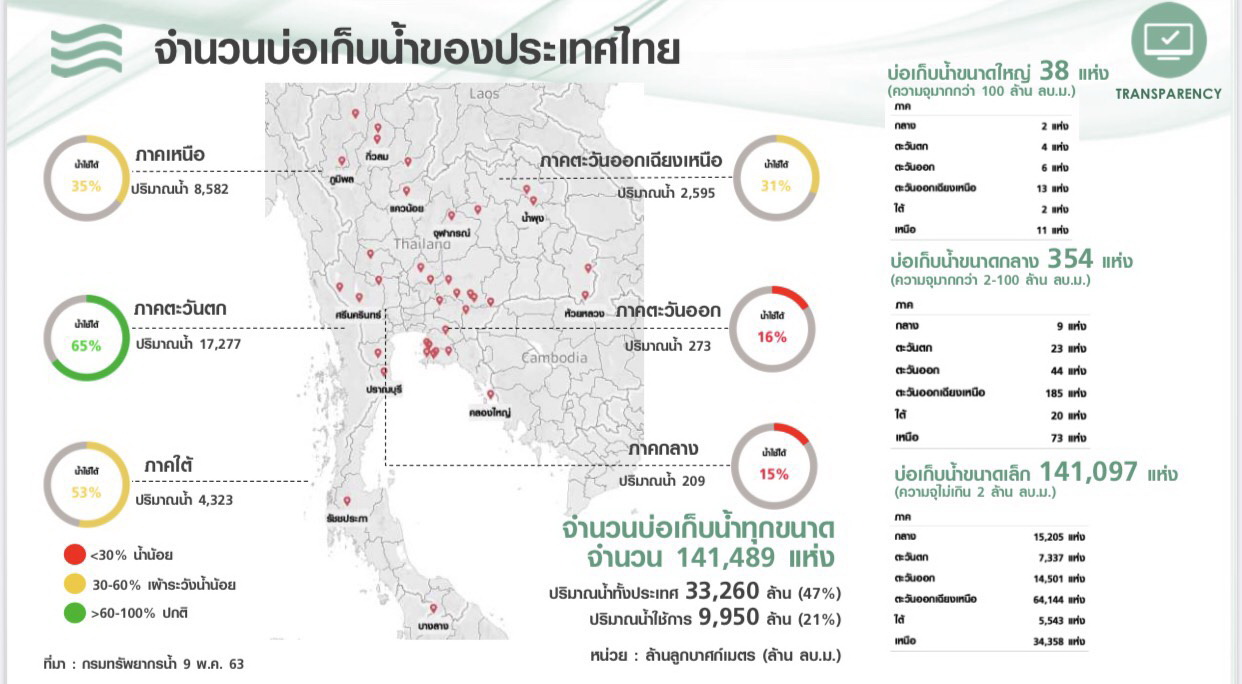
“The water planting initiative will serve as a model similar to the 4.0 agriculture project that CP will undertake. We will lease land long-term from farmers, guaranteeing income based on land prices plus a premium. Once we gather the land and store water, we will sell the water. The income generated will be used to pay farmers as rent. The reclaimed land will become tourist attractions designed according to each area’s landscape. The agriculture practiced will not be traditional; we must bring in skilled individuals to manage farms, possibly in a cooperative model. What to plant must be discussed collectively, focusing on zoning and high-value crops, which may not include rice or corn. If there is water, there is an opportunity to plant other crops, such as durian or coconuts. The ponds used for agriculture may also be opened for fish farming, generating income for local communities. This is a sustainable model, with CP serving as a prototype in about 3-4 locations. We are researching various regions to identify water sources nationwide, aiming to create a 4.0 retention area using technology to ensure sustainability.”
Is CP the Villain in Thai Society?
The discussion revealed “Dhanin’s” ideas and working methods, but society still questions whether CP exploits Thai society.
“Dhanin” responded, “Actually, you should listen for yourselves. Is it true? Yes, initially, I had a contract of less than one page with farmers. Later, new lawyers came in and added clauses, claiming CP was at a disadvantage. Are we going to exploit farmers? Are you going to imprison them? You should blame yourselves.”
When I started raising 10,000 chickens, the contract was simple: your land, no need to mortgage it to me, but deposit it in the bank to avoid debt until your debt is cleared. Because they don’t need to invest a single baht, I find loans for them and guarantee the bank for them. After five years, they get their land back, and what they do with it is their business.
With a short contract, if they breach it, can we sue and seize their land? Ask yourself... who would dare live in their village? In projects that faced issues, I said the structures were made of steel with zinc roofs. We conceded losses in the area. We retreated; what could we sue for? Later, our legal team kept adding clauses. Prime Minister Anand Panyarachun warned me, and I was unhappy with him. Where did I exploit? He told me to review my contracts; I treated farmers like slaves, with no rights. I was shocked to see how we had written it, exploiting everything. I couldn’t even understand it, let alone have farmers read it, so I changed everything.
I asked the legal team if we had ever seized anyone’s land. No. If not, then why write it into the contract? Just to tarnish our reputation? If you seize their land, who will you sell it to? Why write clauses that exploit? I was unhappy and changed everything. I even fired some lawyers.
Sometimes, our managers exploited Supachai Teekasuk, regarding shrimp. I told them to back off; he is a local owner and politician. If you exploit him, he will think I am exploiting him. How can I be skilled if I exploit? If I do, it tarnishes the company’s reputation. Even if a manager performs well, if they exploit, if you are truly skilled, you must not exploit. You must excel in positive ways, not enrich yourself at others’ expense.
However, there are always those who exploit, and humans will never be satisfied. Today, they get this much, but tomorrow they want more. If we interview them, they will say, ‘Well, if I could get a better price, that would be great.’ No one says they are satisfied. That’s how the world progresses. If everyone were satisfied, the world wouldn’t advance.
There must be people who want to prosper more, who want to advance further. If you want to increase prices, sometimes they are dissatisfied because we can only buy at this price. They are not satisfied, which is normal in society. It’s impossible to make everyone happy.
...Is there anyone who wants to contract with CP? Everyone. Whenever we contract, banks rush to lend. But we must limit it because we can only sell so much. We can only promote as much as we can; if we promote too much, I incur losses, and ultimately they cannot survive. We must promote only as much as we have a market for.
Currently, farmers engaged in contract farming with CP number around 5,000, many of whom have been with CP for 20-30 years, earning good incomes. However, when news about contract farming arises, many claim it belongs to others but assert it’s CP’s. In the past, CP implemented a coding system on farms to identify which are ours and which are not. A global example is providing insurance for farmers in case of disasters.
All of this is what “Dhanin” wants the world to know and what he wants the government to implement to revive Thailand in the wake of the COVID-19 crisis...
SOURCE: www.thaipublica.org