Singha Estate Campaigns for Proper Disposal of Infectious Waste to Reduce Infection Spread and Waste Crisis Amid COVID-19
The COVID-19 pandemic has not only impacted human health but has also led to a significant global waste crisis. Many may not realize that used face masks have become infectious waste, raising concerns about the massive increase in waste and the potential for disease transmission due to improper disposal.
Mr. Narit Chayaklin, CEO of Singha Estate Public Company Limited, stated, "We believe this is a time when businesses and the public must continuously adapt to the current situation. The impacts of the COVID-19 virus are multifaceted, particularly concerning waste issues. Singha Estate, as a company that prioritizes and campaigns for waste management, is concerned about the impending waste crisis. We want to be part of the effort to encourage behavioral changes to reduce the risk of future infectious waste crises."
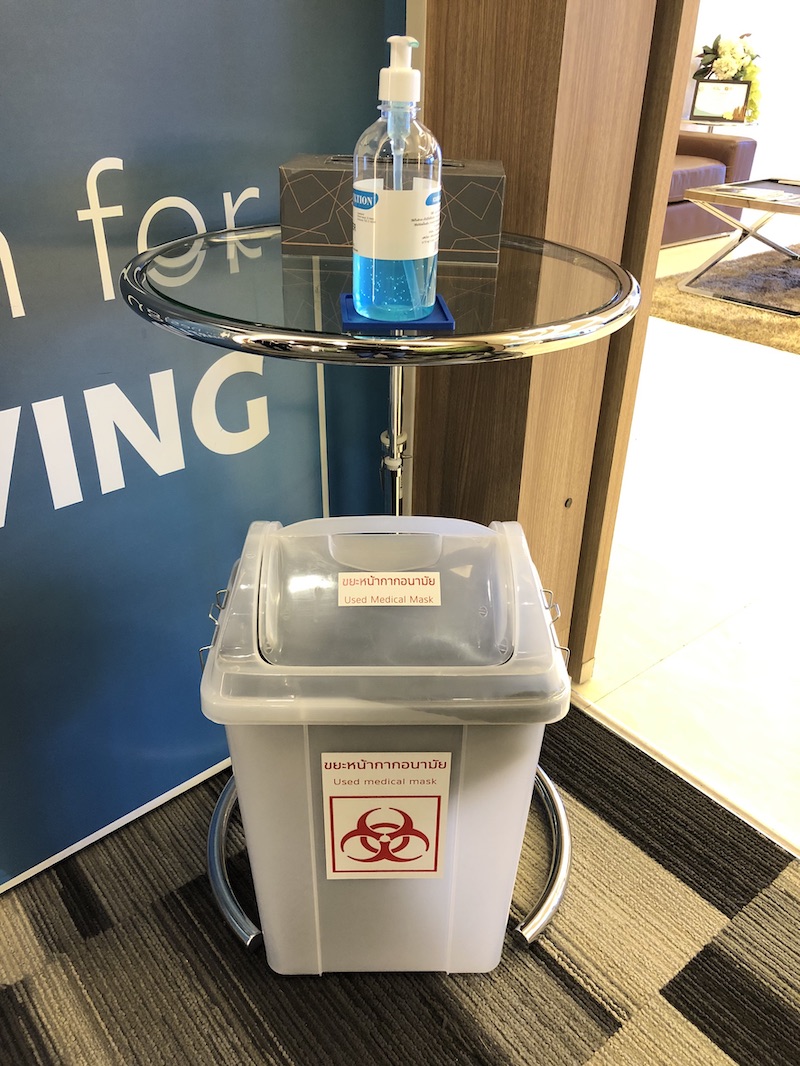
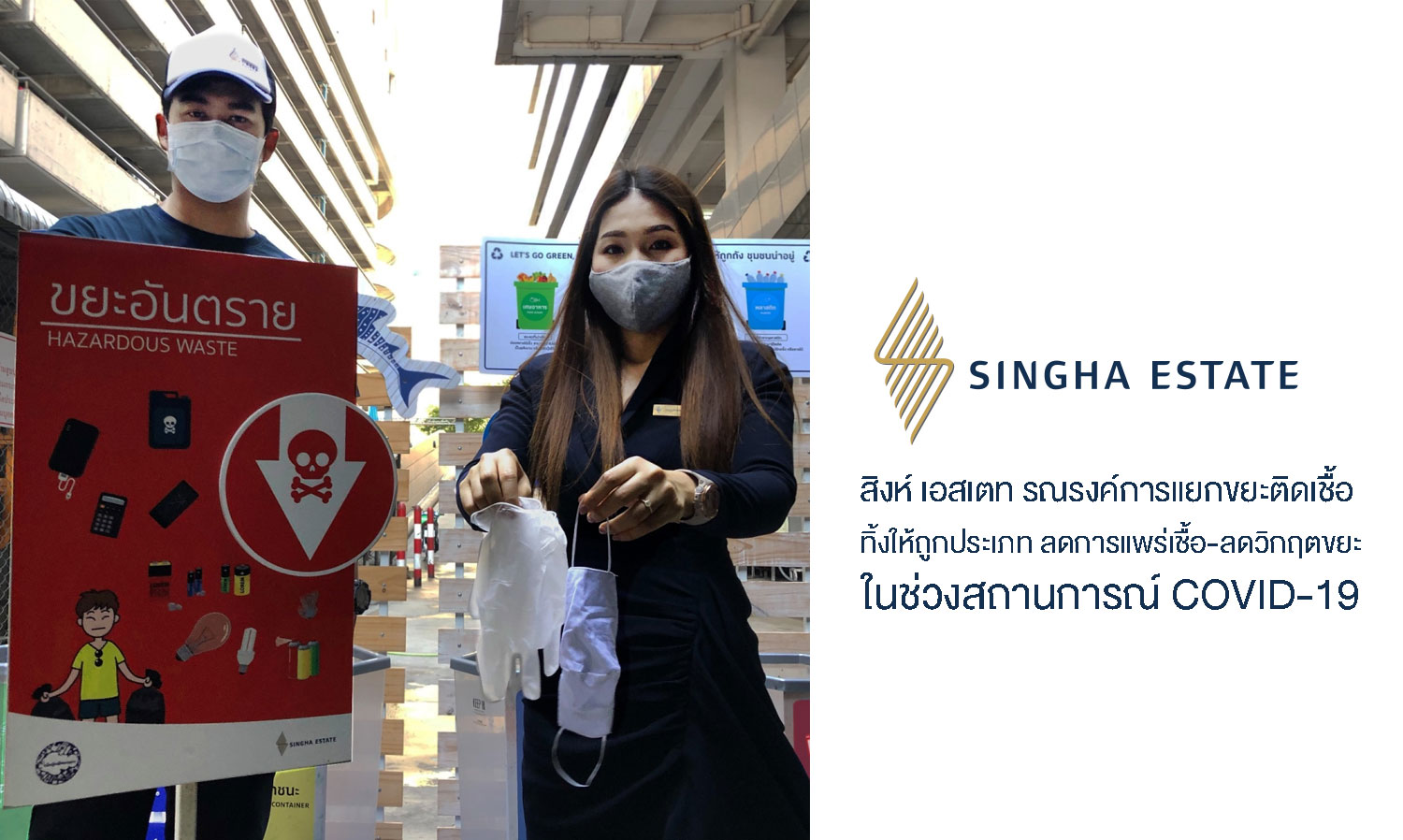
Proper Disposal of Infectious Waste for Ourselves and the Planet In times of a pandemic, infectious waste must be disposed of carefully to prevent the spread of disease. Items like disposable surgical masks and tissues fall into the high-risk infectious waste category. Therefore, masks should be folded with the contaminated side inside and disposed of in designated infectious waste bins. The waste bags should be transparent to clearly show the contents, and opaque or black bags should be clearly labeled as infectious waste to ensure the safety of waste collection personnel. If not disposed of correctly, these items can pose dangers to others and may escape into the environment, ultimately ending up in the ocean and threatening nature.
Use Responsibly, Dispose Consciously Beyond infectious waste, our daily lives can generate significant amounts of waste. Thus, the most important thing is to reduce new waste creation by choosing products that will become waste as minimally as possible. If disposal is necessary, it should be done correctly to facilitate proper waste management processes. Additionally, some waste types can be recycled, which helps reduce the amount of waste needing disposal.
Dr. Thon Thamrongnawasawat, a marine expert, remarked, "We can see that the current situation has led to a surge in disposable waste, some of which is unavoidable due to the pandemic. This includes plastic waste, general waste, and infectious waste. If we neglect proper waste management, it could lead to numerous consequences, including the spread of the virus and waste entering natural environments like rivers and oceans, causing further impacts. Therefore, we must always be aware that this world is in our hands. If we carelessly discard waste without considering its final destination, the repercussions will ultimately return to humanity."
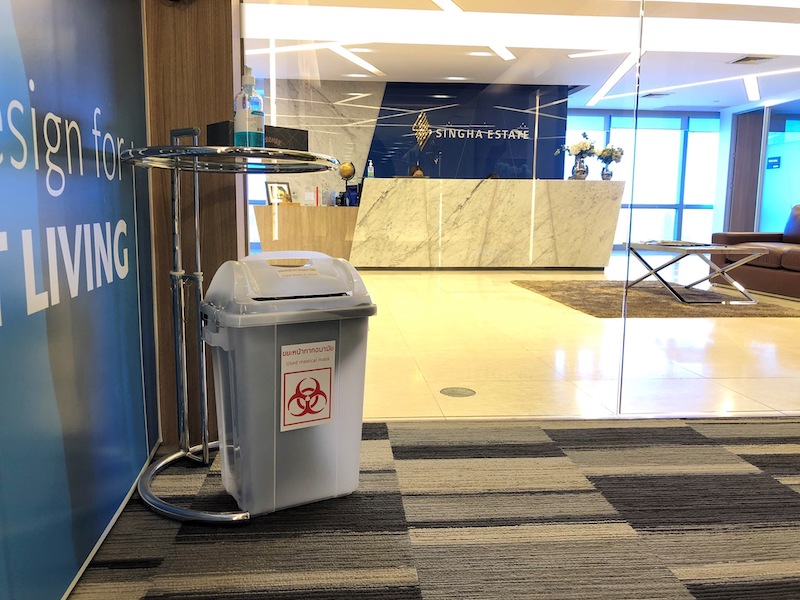
"Currently, Singha Estate has initiated the establishment of hazardous waste bins for disposing of face masks at the entrances of every floor of our headquarters, the Sun Towers. We also plan to set up hazardous waste bins at all company office buildings in the future. Additionally, we are training housekeeping staff on how to separate waste bags and clearly mark infectious waste before handing them over to the Bangkok waste collection authorities for proper disposal," Mr. Narit concluded.