Finance Ministry Prepares to Study TFF Fund During Budget 63 Until May
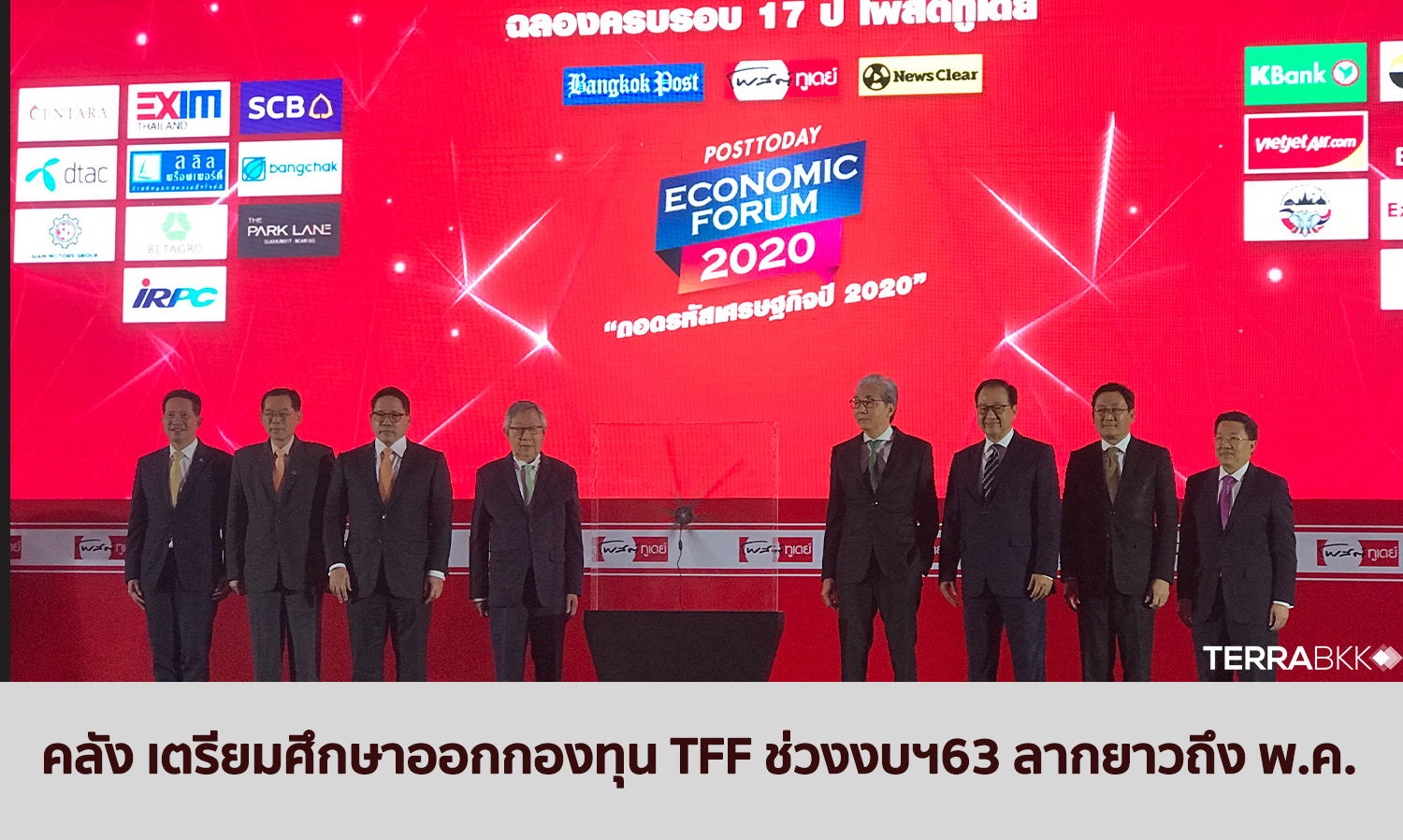
The government is preparing to inject funds into the system, with the Ministry of Finance studying the establishment of the TFF fund to drive infrastructure during the period when the 2020 budget is not yet usable.
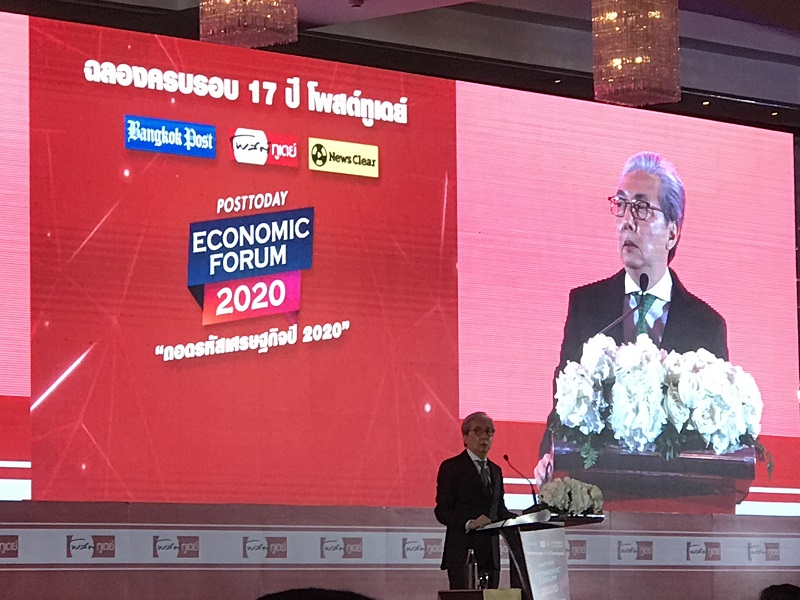
Deputy Prime Minister Somkid Jatusripitak stated in a speech at the “Post Today Economic Forum 2020” that Thailand is currently facing multiple storms, causing the export-dependent economy to slow down. Although the economic growth rate for last year and this year is positive, there is a high possibility that it will expand below expectations. The main reasons for the slowdown in the Thai economy include ongoing political issues, the trade war between the U.S. and China, the strengthening of the Thai baht, and most recently, the coronavirus outbreak, which was an unforeseen event. The government is not remaining idle; the Ministry of Finance has recently proposed measures to the Cabinet to stimulate domestic tourism to encourage Thai people to travel within the country. Additionally, the Economic Cabinet has agreed in principle to increase the tax deduction for investments in new machinery by 2.5 times to encourage more private sector investment.
The government's current actions aim to keep the Thai economy moving forward, prevent it from falling into recession, and create economic balance both domestically and internationally. It is acknowledged that the 2020 budget will be another issue that may delay the budget's release until May, which poses a heavy burden on the Ministry of Finance as there are only 4-5 months left in this fiscal year. Therefore, plans are being prepared to push forward projects that require budget allocation within one year by raising funds through the TFF infrastructure fund to sell investment units to the public, as well as attracting private sector investment in infrastructure or issuing bonds to the public with interest rates higher than the market. If the Ministry of Finance issues bonds at an interest rate of 3%, it is expected to attract interest without issues. When the Monetary Policy Committee announces a rate cut, banks must also reduce loan interest rates to promote domestic investment during this period.
Even if the budget is not fully utilized, it is not desirable to set a target for GDP under these circumstances. If GDP grows by more than 2-3%, it would be considered good. Countries like Cambodia, Vietnam, or Indonesia have high GDP growth because they are expanding like Thailand did 10-20 years ago. However, what Thailand needs now are industries with innovation and high technology. Once the EEC area is clearly defined, it will attract targeted industrial investments. Therefore, Thailand must push for infrastructure development to build investor confidence and accommodate industry expansion. Furthermore, once the EEC is established, Thailand must not remain stagnant. As the EEC creates new industries, it must expedite the bidding for 5G to transition the manufacturing industry, requiring investments in both 5G and 4G systems.
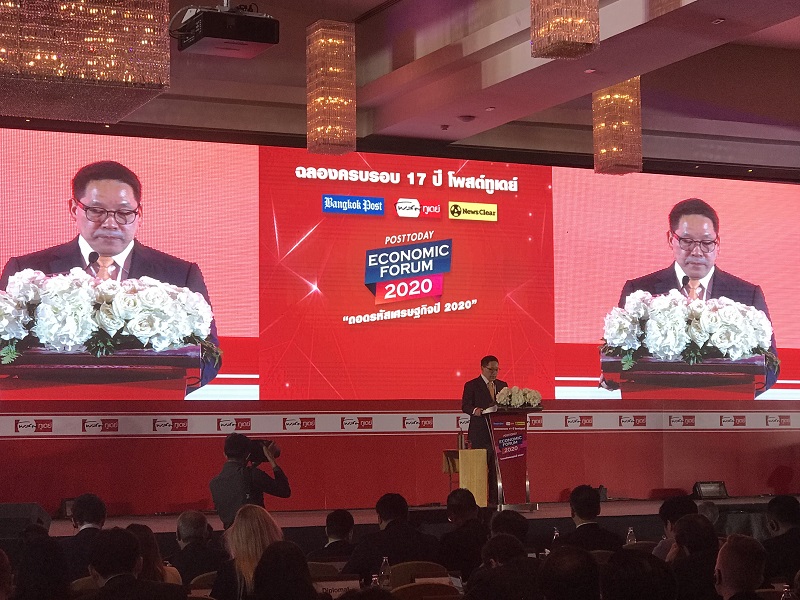
Minister of Finance Uttama Savanayana acknowledged that the Thai economy is facing multiple storms. Although the 2020 budget expenditures are delayed, the Ministry of Finance is preparing to ensure new investments as quickly as possible. This current situation presents an opportunity in a crisis for businesses to expand investments and upgrade machinery because they can deduct 2.5 times the expenses for tax purposes. If seminars are organized, the expenses can be deducted at 2 times, while hotels and resorts can deduct 1.5 times for investments in improving accommodation facilities.
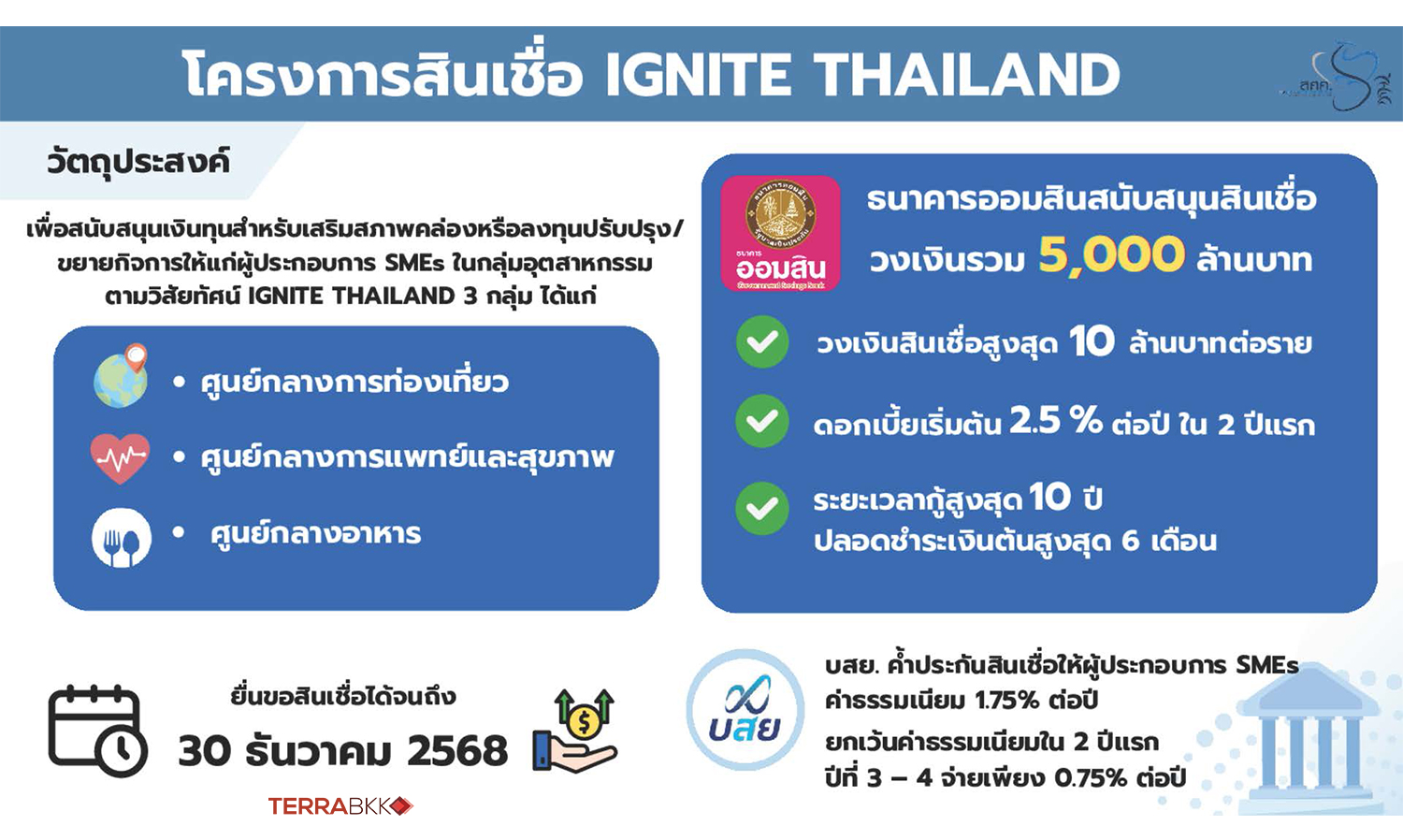
Meanwhile, state banks have launched special loan packages to help mitigate the impacts of the coronavirus outbreak. The Ministry of Finance and the Bank of Thailand are working together to manage the economy, while the Stock Exchange and the SEC must work closely to drive new initiatives by increasing support from the outset, adjusting perspectives, and promoting startups with accessible loans.
Regarding Phase 4 of the “Chim Shop Chai” program, relevant agencies are currently summarizing the details by February to present to the Cabinet before the Songkran festival in April 2020 to help stimulate the domestic economy. It is confirmed that the “Chim Shop Chai” program will focus solely on stimulating the domestic economy, including the Thai tourism sector affected by external factors. As for the establishment of the infrastructure mutual fund, it is currently under consideration for investment support, and initial discussions with relevant agencies have already taken place. The Ministry of Finance will expedite the conclusion as soon as possible.
As for the 2020 budget bill, we must wait for the Constitutional Court's ruling on February 7. If the 2020 budget is still delayed or cannot be released, the government can still utilize legal channels, such as laws related to the management of public debt by the Public Debt Management Office (PDMO), which allows borrowing for new project investments or issuing savings bonds to raise funds as another option.