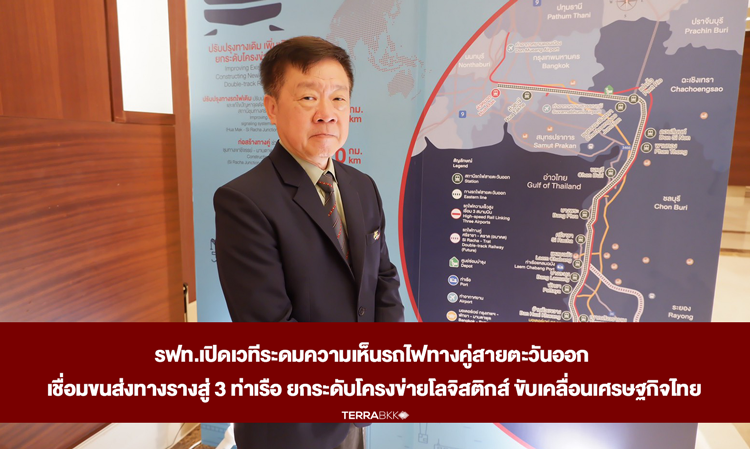
SRT Opens Forum for Feedback on Eastern Double Track Railway, Connecting Rail Transport to 3 Ports to Enhance Logistics Network and Drive Thailand's Economy
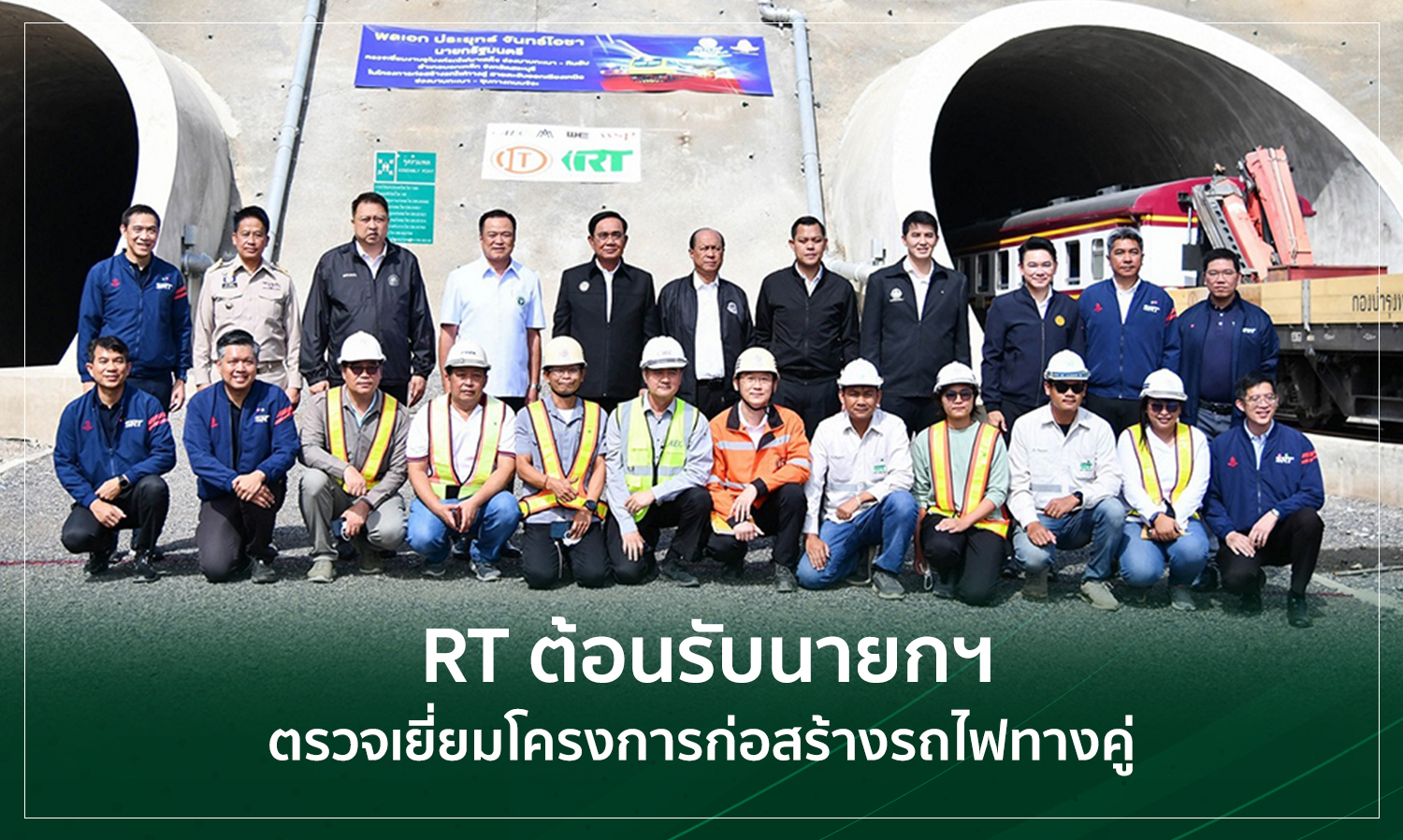
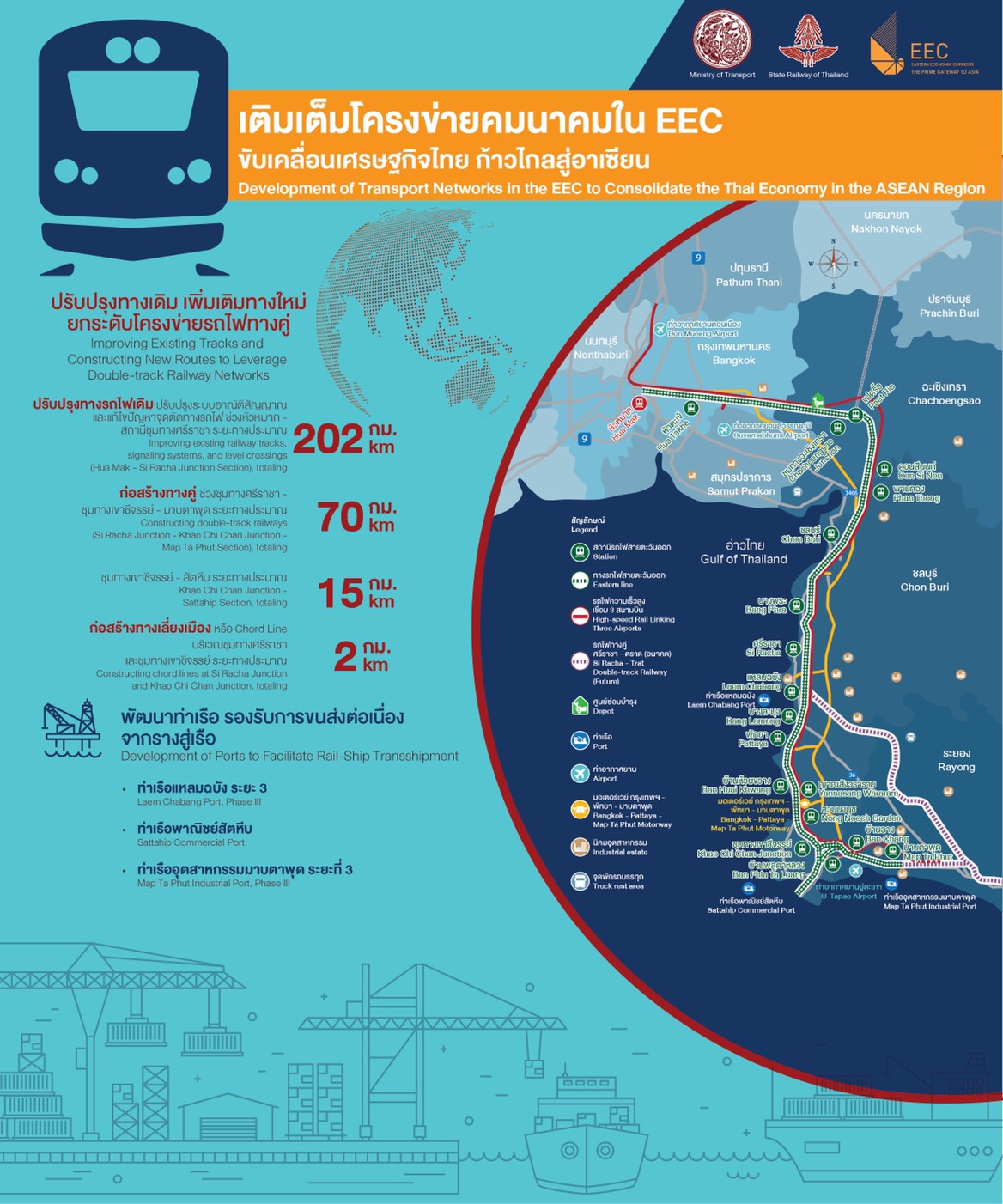
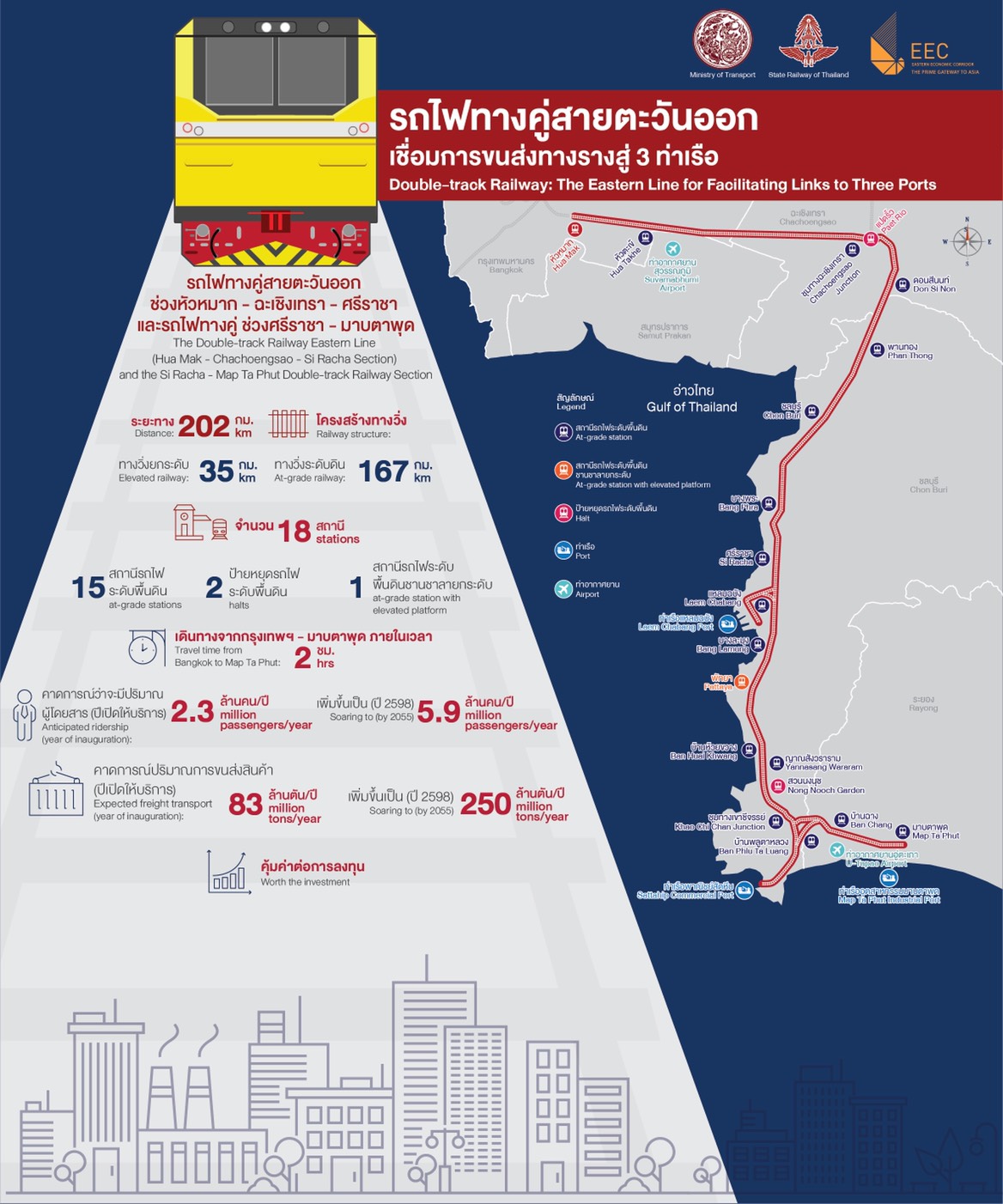
Mr. Somkiat Triamjangarun, the project manager, revealed that the Eastern double track railway project, covering the Hualamphong-Chachoengsao-Sriracha section and the Sriracha-Mab Ta Phut section, spans a total of 202 kilometers with 18 stations across 4 provinces: Bangkok, Chachoengsao, Chonburi, and Rayong.
This project will connect the transportation network in the Eastern Economic Corridor (EEC), tourist attractions, and major industrial areas to 3 ports: Laem Chabang Port, Sattahip Commercial Port, and Mab Ta Phut Industrial Port, which will enhance the efficiency of transportation and distribution of goods to all ASEAN regions, reducing travel time from Bangkok to Mab Ta Phut to approximately 2 hours.
It is expected that there will be about 2.3 million passengers in the first year of operation, increasing to approximately 5.9 million passengers per year by 2598, with an estimated freight volume of 83 million tons in the first year and increasing to about 250 million tons per year by 2598.
The development of an efficient and seamlessly connected transportation system and infrastructure is a mechanism that enhances the potential of the EEC area, supporting travel and goods transport from across the country.
This will stimulate business investments, support tourism, generate income for the public, and contribute to the growth of the Thai economy, promoting Thailand as a logistics hub for the region and ASEAN.
However, the SRT emphasizes the importance of listening to public opinions at every stage of the project, as public participation is considered a key element in the project's implementation.
This ensures that the project proceeds appropriately and aligns with the lifestyles and needs of the people, ultimately benefiting the nation and the public.
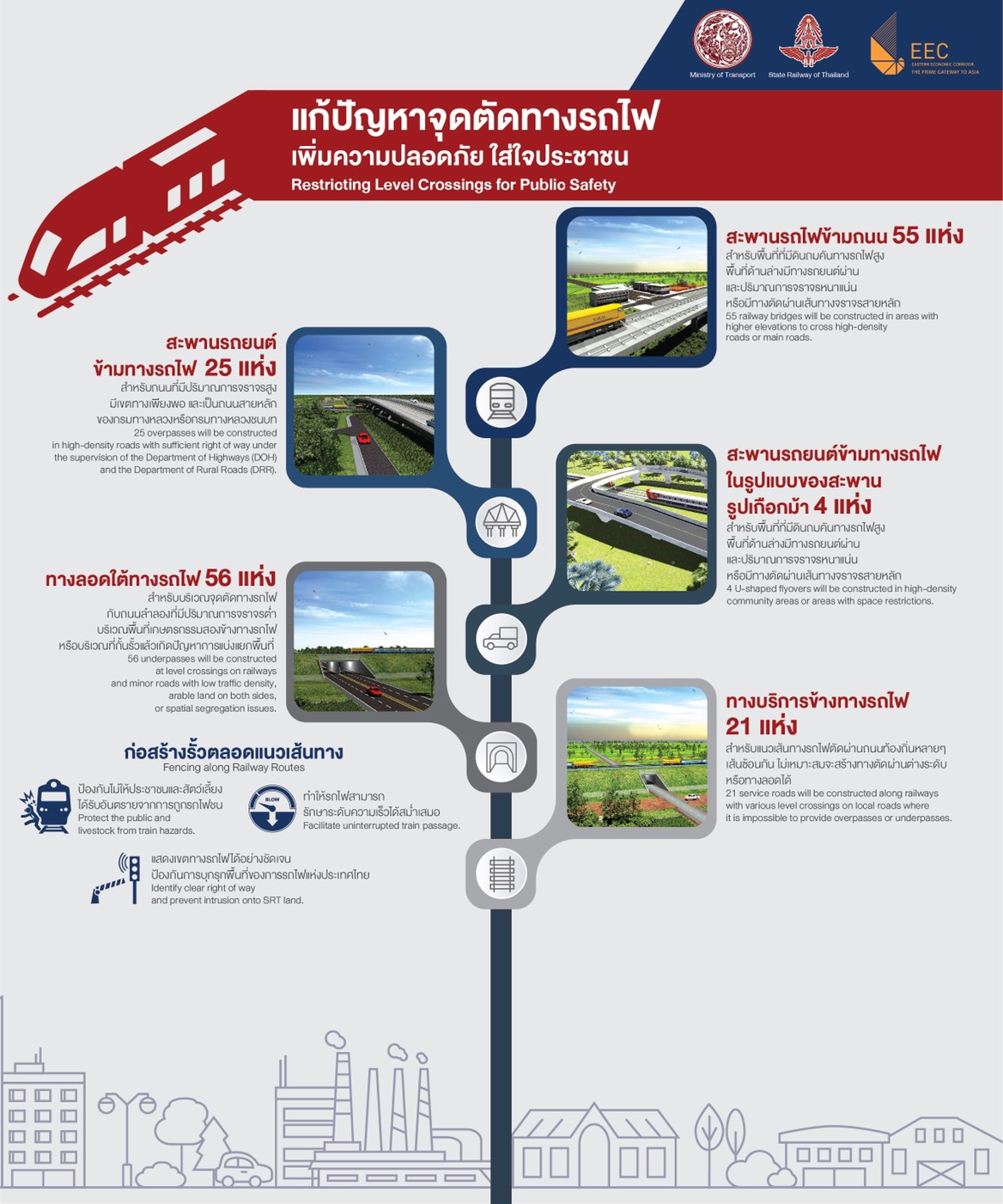
Additionally, the meeting presented solutions to issues arising from the project to minimize impacts on the daily lives and safety of the public in various areas of the project, such as addressing railway crossing issues by constructing bridges.
Measures include creating underpasses for safe travel and rail transport, reducing traffic impact, and constructing fences along the route to prevent accidents involving people and pets.
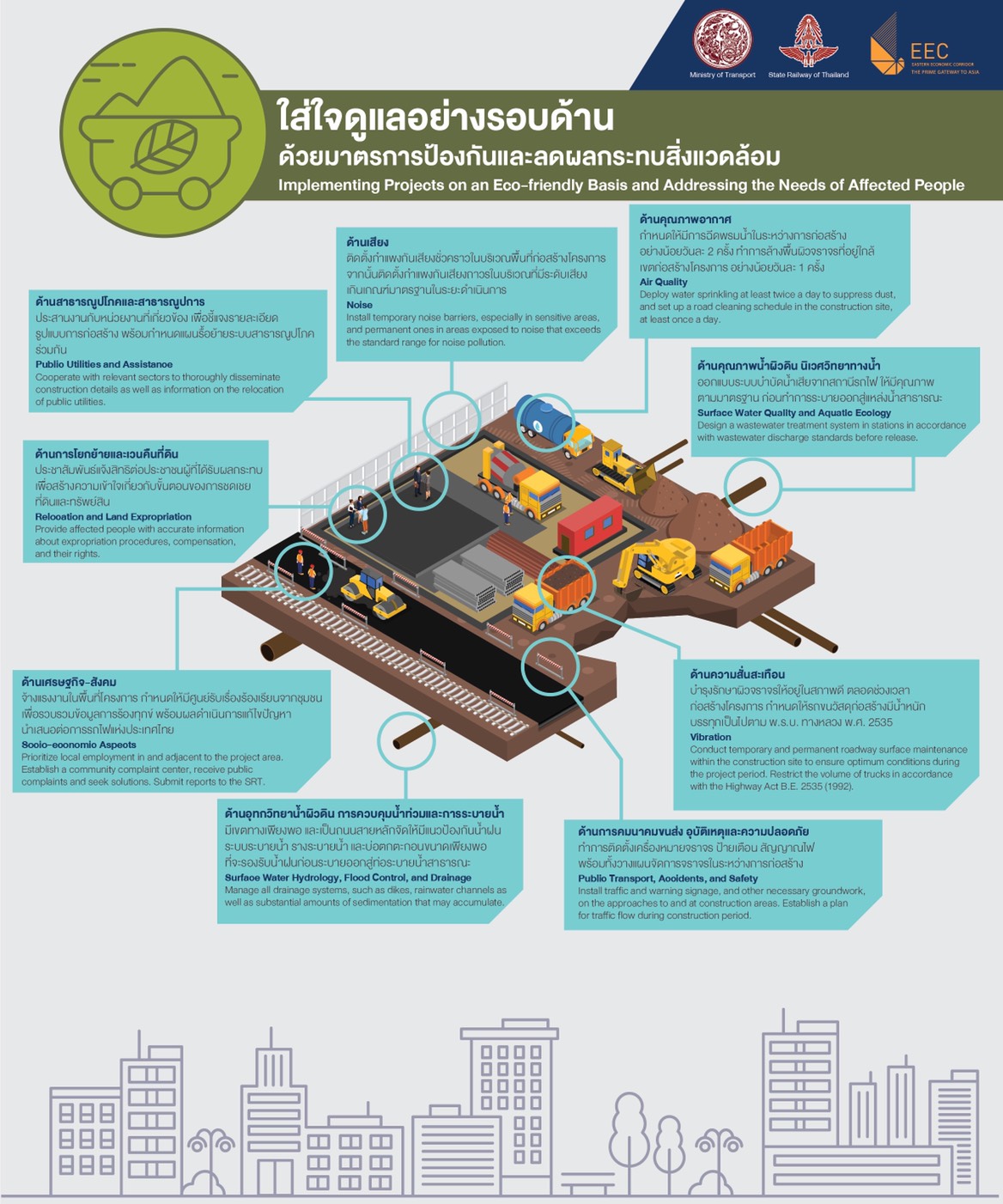
Environmental impact studies have also been conducted, with preventive measures established, such as flood control and drainage systems. For example, during the construction of railway bridges over rivers, nets will be installed to catch debris from falling into the water.
Rainwater protection barriers, drainage systems, and sedimentation ponds will be provided to manage rainwater before it is discharged into public drainage systems, along with water pumps to prevent flooding in the area.
Regarding air quality, measures will be implemented to check the condition of trucks and machinery used in construction to ensure they are in good working order, with regular dust control through water spraying at least twice a day.
For noise quality, the public living near the project route has been informed about construction activities, especially those that generate loud noise.
Additionally, both temporary and permanent sound barriers will be installed in construction areas, and a community complaint center will be established with staff available 24 hours a day to address issues promptly.
In terms of transportation, accidents, and safety, traffic management plans will be developed during construction, including the installation of traffic signs, warning lights, and notices from before the construction site to the site itself, with personnel available to assist in ensuring safety and convenience for travelers.
Those interested can follow the progress and details of the project at www.doubletracktomaptaphut.com