Vanchai Group Revamps Business Model to Launch 'Woodsmith' for Nationwide Retail Expansion
Vanchai Group Public Company Limited (VNG) is revamping its business model to establish 'Woodsmith', opening retail channels to introduce new products and expand the market for wood-based panels as a natural wood substitute. This year, they plan to launch 20 branches, expecting sales to exceed 300 million baht, with a target of reaching total sales of 9 billion baht in 2023. The company aims to adjust its sales portfolio from the current 80:20 ratio of domestic to international sales to a 50:50 ratio.
Additionally, the company is moving forward with the construction of biomass and solar rooftop power plants at three factories, following a strategy to reduce environmental impact and efficiently lower production costs. The new model is expected to create sustainable profits in the future and diversify risks to better handle global economic fluctuations caused by trade wars, with a revenue target of 20 billion baht for 2022.
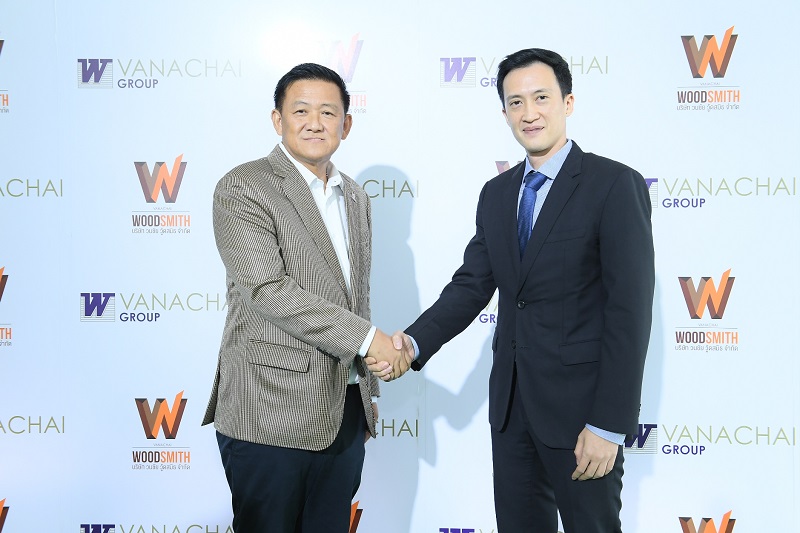
Mr. Watthana Charoenwattana, Managing Director of Vanchai Group Public Company Limited (VNG) stated that over the past 4-5 years, the company's performance has seen both record profits and significant losses, directly impacted by the volatility of global commodity markets. The global economy may face even more fluctuations in the future, necessitating a new business model to reduce dependence on global commodity markets while increasing domestic sales. The company plans to create new downstream markets (construction contractors and DIY consumers), retail markets, and markets for finished wood products. This model is expected to be completed by 2022, allowing Vanchai Group to generate consistent profits and sustainable growth, providing good returns for shareholders in the future.
For 2022, the revenue target is set at 20 billion baht, as over 80% of Vanchai Group's sales come from exports. The trade war between China and the U.S. has impacted global trade, including the appreciation of the Thai baht against other currencies, leading to lower selling prices for their products. This situation has also caused China to slow down its wood industry production and reduce purchases of processed rubber wood from Thailand, resulting in sawmills in Thailand slowing down the production of rubber wood that has reached the end of its tapping life, significantly reducing the raw materials for producing wood-based panels.
Thus, the new business model will focus on increasing domestic sales to 50% from the previous 20%, with finished products expected to account for 50% of domestic sales. The company is currently developing a new subsidiary named 'Vanchai Woodsmith' to implement this model, which will enable the company to generate continuous and stable profits, unaffected by global economic fluctuations.
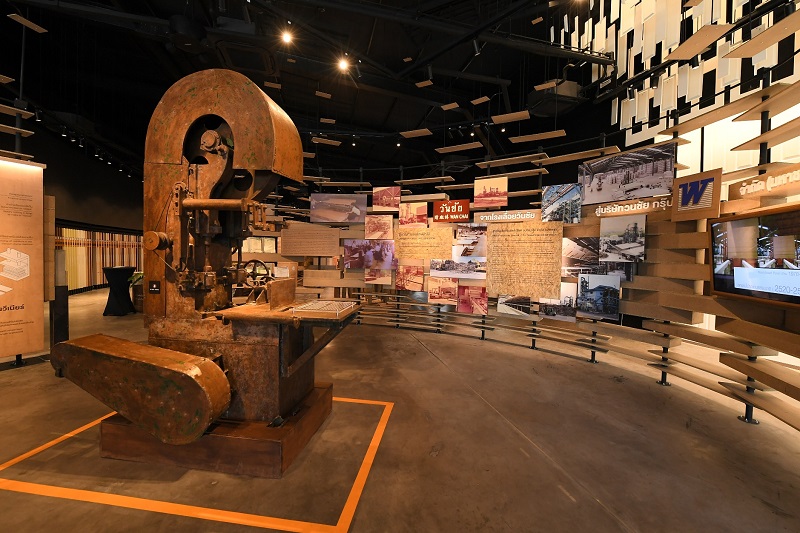
In Thailand, the downstream market and retail market for wood-based panels have not grown as they have in international markets. Therefore, the company is determined to develop the natural wood substitute panel market in the Thai construction business to be on par with international standards, as it is a construction material that effectively replaces real wood and is the most environmentally friendly compared to steel, cement, and plastic.
Moreover, Vanchai Group plans to enhance production efficiency and achieve sustainable growth through four main strategies:
- Comprehensive management of wood raw materials from both plantations and trees.
- Development of new products, including OSB panels and veneer sheets.
- Engagement in renewable energy businesses, including biomass power plants and solar roofs.
- Logistics management, where comprehensive management of rubber wood raw materials will significantly reduce wood costs, eliminating reliance on inconsistent wood scraps from sawmill industries. Currently, many rubber plantations that have surpassed their tapping age have not been felled. The company's use of wood will involve branches and twigs for producing MDF and OSB panels, while the central trunk will be peeled for veneer sheets. Scraps from veneer peeling will be used to make particle boards, and tree roots will be utilized as biomass fuel. Modern technology in Thailand allows for the use of rubber wood from both plantations and trees. The two new products will also have the highest selling prices in the wood-based panel category. The new OSB factory in Surat Thani has an investment value of 2.3 billion baht and is expected to be completed within this year.
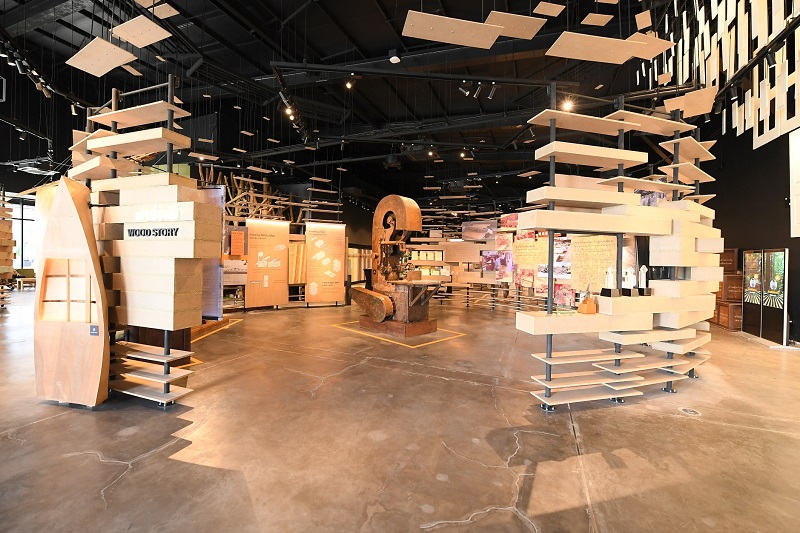
Currently, the company has begun constructing a biomass power plant in Surat Thani with a production capacity of 9.9 megawatts, using wood scraps left over from production and roots from felled rubber trees. They will also implement biomass power projects in Chonburi and Saraburi provinces. Additionally, they have started using solar rooftop energy at the Saraburi factory this year, with a production capacity of 3.5 megawatts, which will significantly reduce production costs. Projects for solar roofs at the Chonburi and Surat Thani factories are also planned. Furthermore, a new company, Vanchai Logistics, is being established to manage logistics in support of domestic sales growth, which will enhance efficiency in reaching and serving customers nationwide while also reducing costs.
Regarding Ms. Patra Sawat, Director of Vanchai Woodsmith Co., Ltd., a subsidiary of Vanchai Group, she stated that the company aims to develop the retail market and finished products, planning to open flagship stores in major cities and other branches, with standalone store designs and partnerships. They will start by collaborating with the Dynasty Group, a leader in the ceramic tile industry.
By 2023, the goal is to have 100 branches across Thailand, along with online sales, projecting sales to rise to 9 billion baht as branches expand. By the end of 2022, they expect to open 20 branches in collaboration with the Dynasty Group, anticipating sales of 300 million baht this year, and by 2024, they plan to open an additional 60 branches with projected sales of 4 billion baht.