What the World and the UK Will Lose if the EU Collapses in the Next 10-20 Years
The issue of the European Union or EU has already led to the resignation of two British Prime Ministers. The first was David Cameron, who stepped down in 2016 after a referendum in which 51.9% of the UK population, or just over 1.3 million people, voted to leave the EU. Most recently, on May 24, Theresa May announced her resignation after the withdrawal agreement negotiated with the EU for over two years failed to gain approval from the UK Parliament despite repeated proposals.
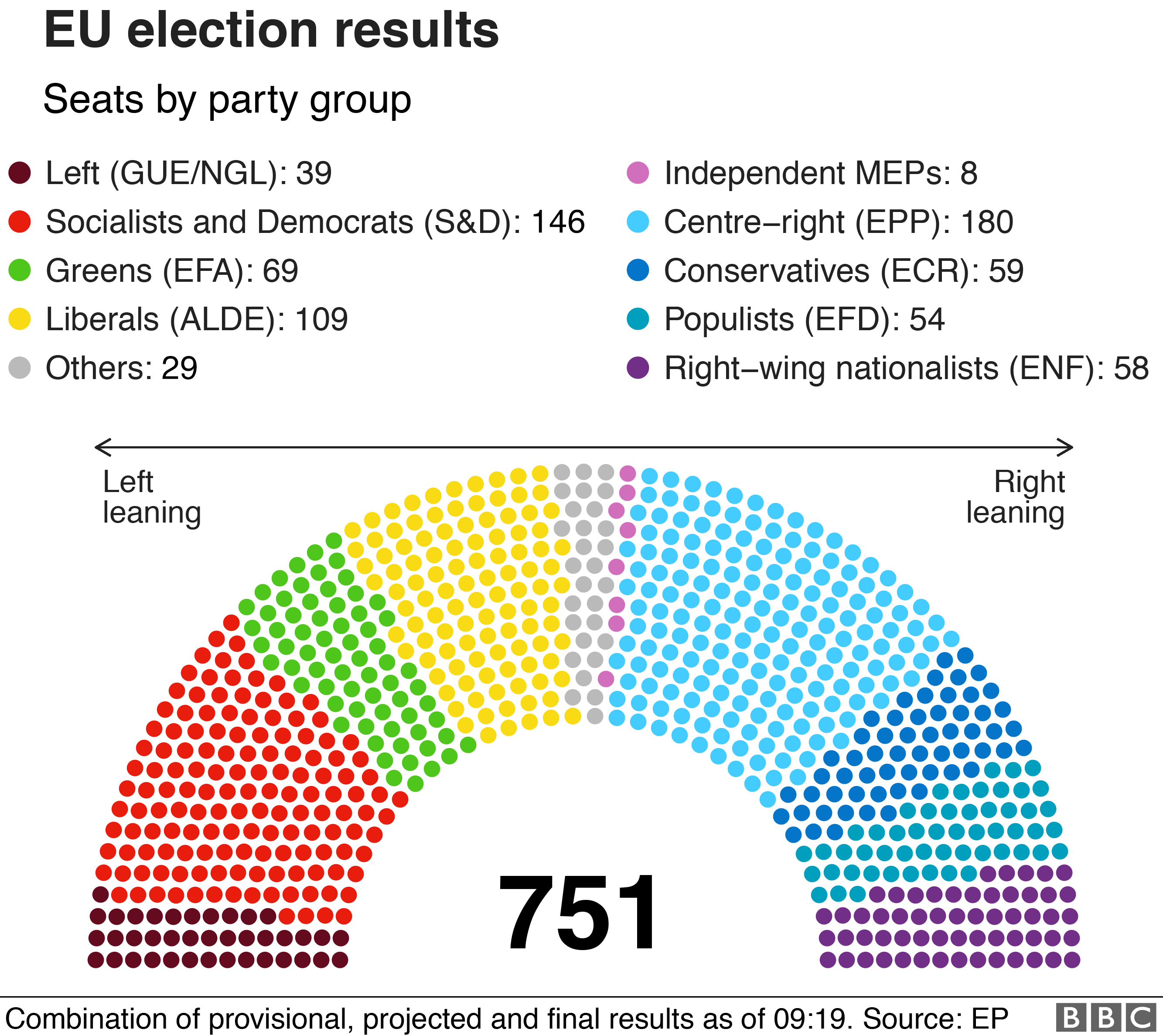
The results of the recent European Parliament elections showed a decline in support for mainstream parties, while support for Green and liberal parties that back the EU increased, alongside a rise in support for nationalist and populist parties opposing the EU. In the UK, the newly established Brexit Party won 29 out of 73 seats with 30.5% of the vote. However, since the UK is set to leave the EU, it remains unclear how this will conclude, making the European Parliament elections in the UK a measure of support for the Conservative and Labour parties.

Recently, The Guardian reported that a survey by the European Council on Foreign Relations found that over half of Europeans believe the EU will collapse within a generation. Despite unprecedented support for the EU currently, most people in Germany, France, Italy, the Netherlands, Austria, Slovakia, Romania, Greece, the Czech Republic, and Poland consider the disintegration of the EU a “realistic possibility” in the next 10-20 years.
The Crisis of EU Power
The EU is an international alliance of various nations in Europe, aiming to use what is known as “soft power” to shape the direction of European development. The union of 28 countries has made the EU an economic superpower with a population of over 500 million and the second-largest economy in the world, after the United States.
Thus, the EU is one of the largest and wealthiest markets in the world, accounting for one-fifth of the global economy. Its economic giant status is further enhanced by the highest living standards in the world and the most developed social welfare systems, becoming the “European welfare state model.”
Due to its size, economic strength, and advanced welfare systems, the EU has emerged as a significant force in the global economy and international politics. In 2012, the EU was awarded the Nobel Peace Prize for its contributions to “over six decades of progress in peace, reconciliation, democracy, and human rights in Europe.”
The book A Concise History of Modern Europe (2019) states that the growth of the EU occurred amid challenges and tensions between what is termed “expansion” and “deepening integration.” The expansion of EU membership to economically weaker countries in Europe lacking democratic political experience has made it difficult for the 28 EU members to achieve policy unity.
The EU's policy on free movement of labor across borders reached a breaking point when people from former Eastern European countries flooded into wealthier European nations seeking jobs. In 2006 alone, nearly 300,000 Poles moved to other EU countries. Although this labor migration contributed to economic growth in those countries, it also created conflicts with local populations and sparked anti-immigrant sentiments.
The global economic crisis of 2008 further complicated issues for the EU, particularly for less wealthy southern European countries like Italy, Spain, Portugal, and Greece. By 2010, Greece's debt exceeded EU regulations by four times. In 2012, the EU established a new organization, the European Stability Mechanism, to serve as a fund to assist EU members facing financial difficulties, but it came with conditions such as reducing state budgets and implementing other austerity measures. By 2014, Greece's immediate crisis had passed.
However, the recovery from the EU's economic crisis was followed by significant events that greatly impacted the survival of the EU: the wave of migration from the Middle East and the UK's withdrawal. Previously, the EU faced legal migration issues from Eastern Europe to Western Europe, but this time it was illegal migrants from outside, particularly from Arab countries and Africa. This issue peaked in 2015 and 2016 when over 1 million migrants attempted to cross borders into the EU each year, especially into Germany, which had an “open border” policy.
The weakening economy following the 2008 crisis led to anti-immigrant sentiments within the EU, as well as a rise in nationalism and anti-EU sentiments. Amid the crisis of the influx of migrants from outside, the EU also faced a new event when the UK voted in a June 2016 referendum to leave the EU, known as “Brexit”, a term derived from Britain and Exit.
According to the Lisbon Treaty, which serves as the EU's constitution, there is a two-year process for a member to withdraw from the union. The UK officially notified that it would begin this process on March 29, 2017. Subsequently, both sides negotiated the withdrawal terms, which would take effect on March 29, 2019. However, the UK's exit from the EU is not straightforward, as the UK has been a member since 1973, and the EU single market was established in 1992, allowing for the free movement of goods, services, capital, and labor among member countries. As of now, no one knows what will happen regarding issues affecting millions of people, including British citizens working in Europe and Europeans working in the UK.
What if the EU Did Not Exist?
The crown jewel of the EU is the single market, which allows for the free movement of goods, services, capital, and labor. The EU single market is the largest wealth market in the world. Even those wary of the EU acknowledge its benefits in this regard. Without the EU, Europe would be a fragmented market of 28 countries. While China and India may have larger populations, the EU, with over 500 million people, is a market where consumers have the highest disposable income in the world.
Consumers in Europe are the primary beneficiaries of the regulations regarding the EU single market. The EU consumer protection regulations have also become a model for other countries, such as in protecting passenger rights in air travel, which includes the right to information when flights are delayed, compensation in cases of overbooking, flight cancellations, and delays, among others.
The book Why Europe Matters for Britain (2016) states that it is difficult to predict what the world would lose without the EU. For instance, the time taken for countries to implement consumer protection measures would likely increase significantly. However, it is easier to predict what the UK would lose if it leaves the EU: it is clear that the UK will no longer be an investment destination for companies seeking to enter the EU single market.
Thanks to information from thaipublica.org