Intensive Pitching Training Accelerates Thai Deep Tech Startups Towards Success
The policy to create mechanisms for the development of Thai startups to grow internationally, especially within the ASEAN region, is crucial due to its population of 600 million. One of the most promising markets for startup expansion is Indonesia, which has a population of 250 million, along with the CLMV group (Cambodia, Laos, Myanmar, and Vietnam). These markets can drive rapid business growth by leveraging consumer demands and behaviors that are similar to those in Thailand, particularly in services and conveniences such as transportation, finance, e-commerce, entertainment, medical services, and agricultural technology to support the region's fundamental agricultural profession.
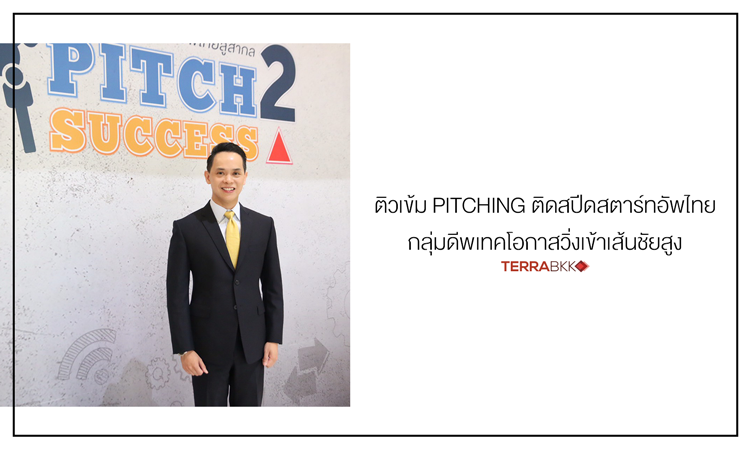
One of the challenges faced by Thai startups entering foreign markets is 'pitching,' a skill that many Thai entrepreneurs still lack. Pitching is a vital tool for attracting investors to participate and provide various forms of support for business operations. Common issues include strategic communication planning, presentation skills, question-and-answer dynamics between presenters and audiences, and creating necessary content for pitching. Therefore, the New Entrepreneurs Academy (NEA) has collaborated with the National Innovation Agency (NIA) to launch the 'Pitch2Success: Realizing Thai Startups' Dreams Globally' project to address these obstacles and provide knowledge on presenting startup ideas and business plans (pitching) internationally, enabling Thai entrepreneurs to more easily expand their businesses into the global market.
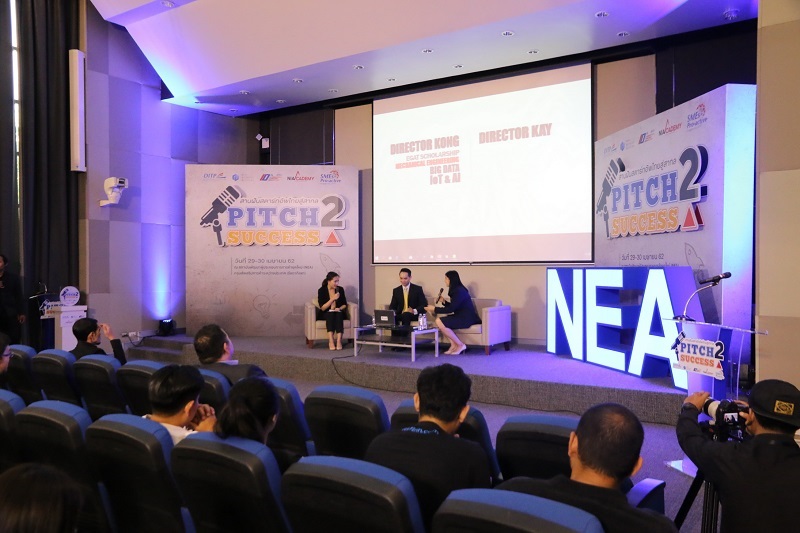
Mr. Wittyakorn Maneenetr, Deputy Director-General of the Department of International Trade Promotion, stated that activities to develop Thai startups for international growth include:
- Capacity development activities through training courses and consulting from the New Entrepreneurs Academy (NEA), which prepares entrepreneurs to operate in the digital trade context, including knowledge in business plan development, creating pitch decks, and techniques for attracting investors (pitching).
- Participation in fair events: The Business Development and Promotion Office (BDPO) will be the agency that supports and guides startups to the global stage, such as international fairs, where startups can apply for funding support of up to 200,000 baht per entity through the SME Pro-active program for startups.
Dr. Kritphaka Boonfuang, Deputy Director of the Innovation System at the National Innovation Agency (Public Organization) mentioned that the development of Thai startups has significantly increased each year. Currently, the NIA has nearly 2,000 startups participating in the Startup Thailand program. However, it must be acknowledged that there are still few Thai startups with international business models and global competitiveness, contrasting with corporate venture investors who have substantial capital and resources, making collaboration challenging. Therefore, it is essential to enhance the internationalization of Thai startups to meet global trade contexts and consumer demands while increasing their visibility.
For NIA's promotion efforts, the initial phase will invite foreign startups to invest and conduct business in Thailand, with NIA facilitating company establishment and operational space (landing pad), smart visas, and one-stop service centers at True Digital Park in the Punnawithi innovation district and Global Hub in Chiang Mai. This support is expected to help Thai startups understand international startup standards, technological innovations, and necessary business concepts, which can be significantly applied to their products and services.
The competitive startup market in ASEAN in 2019 is expected to be more intense than in previous years, particularly regarding investment and fundraising in established businesses, such as Grab and Gojek (known as Get in Indonesia). In Thailand, the focus is anticipated to be on Deep Technology sectors like AI, blockchain, big data, IoT, agriculture, food, tourism, medical technology, and smart city development, which hold competitive advantages and high growth potential. Conversely, the mobile application sector is becoming saturated, and the key to survival will be developing platforms that meet user needs while emphasizing speed and efficiency.