In-Depth Look at 'Fuel' for Electricity Generation: A Comprehensive Perspective
Electricity has become a crucial factor in the economic and social development of every country around the world. Therefore, managing electricity is a key policy for governments, as it directly impacts the 'well-being of the people.'
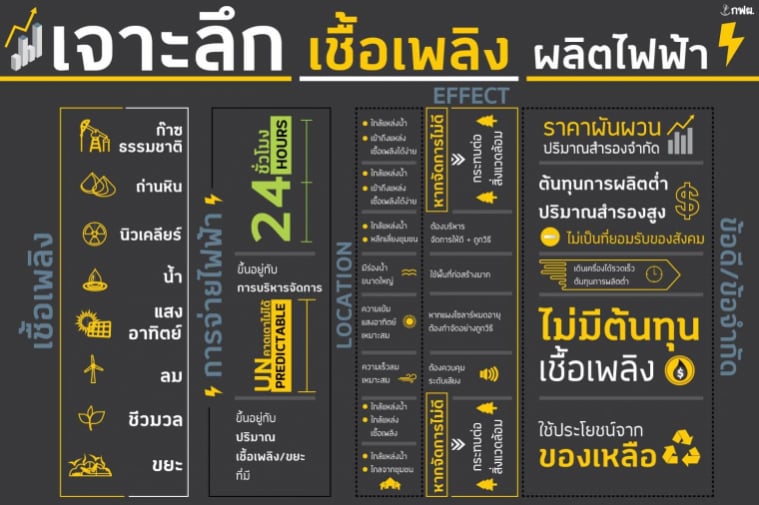
However, before we can use electricity as we do today, it is necessary to plan the use of "fuel" appropriately, according to the context of each country, considering factors such as the economic situation, geographical conditions, and electricity demand. The responsible agencies play a crucial role in formulating policies to ensure that citizens have sufficient, high-quality, and fairly priced electricity while also taking care of the environment. Therefore, it is essential to consider the advantages and limitations of each fuel source for electricity generation comprehensively.
Electricity System Security
It is undeniable that our lives are intertwined with electricity 24 hours a day. Therefore, electricity generation must continuously meet the demand efficiently. The choice of fuel for electricity generation must take into account economics, environmental impact, energy security, and technology.
Currently, 'natural gas, coal, and nuclear' (including biomass and waste, if available in sufficient quantities) have become the primary fuels chosen by many countries because they can operate power generation continuously for 24 hours.
Leading countries around the world consider the fuels used for electricity generation for security and competitiveness. For example, Germany is well-known for having a renewable energy capacity of up to 53.3% of its total generation capacity. However, a closer look reveals that the fuels playing a significant role in electricity generation are still natural gas, coal, nuclear, oil, and biomass, which account for 67.8% of production.
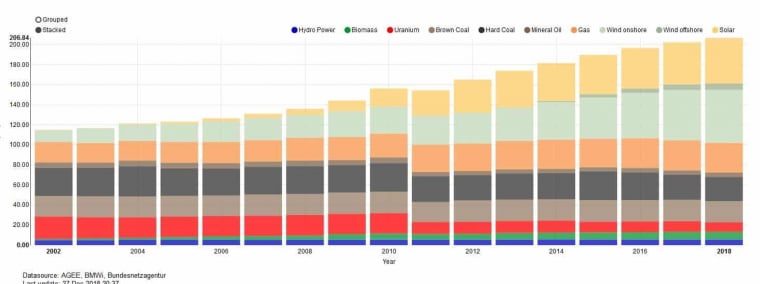
Installed capacity of Germany(https://www.energy-charts.de/power_inst.htm)
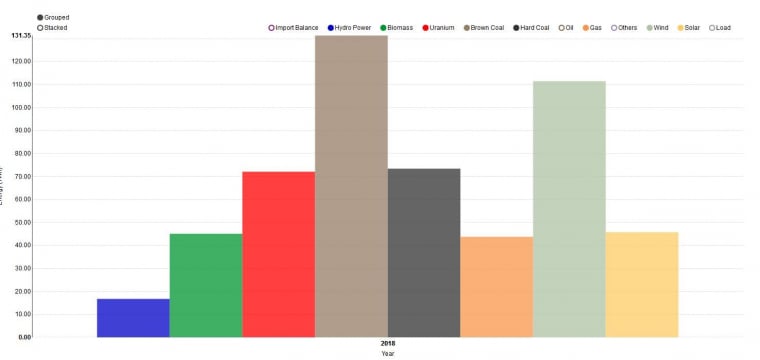
Fuels used for electricity generation in Germany in 2018
(https://www.energy-charts.de/energy.htm?source=all-sources&period=annual&year=2018)
At the same time, renewable energy sources such as solar and wind energy have become increasingly important in electricity generation due to lower costs and advanced technology, as well as their non-polluting nature during electricity production. However, their electricity generation capacity depends on unpredictable weather conditions, making them unsuitable as primary fuels unless paired with energy storage batteries to ensure system stability and continuous electricity supply. Nevertheless, the high cost of energy storage batteries, if implemented rapidly and in large quantities, could impact electricity prices.
Fuel and Power Plant Location Must Be Appropriate
When selecting fuel, it is essential to consider the location of each type of power plant from all dimensions. For instance, fuel transportation must be convenient and easily accessible to the power plant. It should be near large water sources for electricity production and cooling systems, and not far from the main electricity transmission systems or high-voltage substations that can accommodate the generated electricity, while also minimizing environmental and community impacts.
Additionally, each type of fuel has different factors to consider. For example, biomass, waste, and nuclear must be located far from populated areas, wind energy must be in areas with suitable wind speeds, solar energy requires adequate sunlight intensity, and coal and natural gas must be near water sources with convenient transportation access to fuel sources. These factors will help reduce community issues and enhance electricity production capacity.
Environmental Impact: A Matter of Concern
In an era where climate change is a significant global concern, the energy sector must establish policies and guidelines to reduce carbon dioxide (CO2) emissions. One approach is to shift towards renewable energy fuels and reduce reliance on fossil fuels.
However, while fossil fuels have a higher environmental impact than renewable energy, they are cheaper and provide stable electricity production. Currently, advanced electricity generation technologies have been developed that are highly efficient, using less fuel while providing high energy output, and simultaneously reducing environmental impacts with emissions below international standards. For instance, Japan's coal power plants utilize the Ultra Supercritical: USC technology, which is the most advanced commercial electricity generation technology in the world, resulting in very low emissions compared to other thermal power plants, allowing them to coexist harmoniously with communities and the environment.
At the same time, waste-to-energy fuels, while maximizing resource utilization, must also control odor issues that may disturb surrounding communities and manage environmental concerns. Similarly, solar panels, while not causing pollution during electricity generation, can lead to environmental contamination if improperly disposed of after their lifespan. Therefore, clear regulations and preventive measures should be established.
Consider Both Advantages and Limitations in the Context of the Country
Balancing fuel management in terms of economics, engineering, and environmental considerations within the context of the country is a significant and crucial challenge. It is essential for the country's development to align with economic growth, attract business investment, and ensure the well-being of citizens, both in terms of reasonable electricity prices and electricity production that does not adversely affect public health.
Thank you for the information from www.thaipost.net