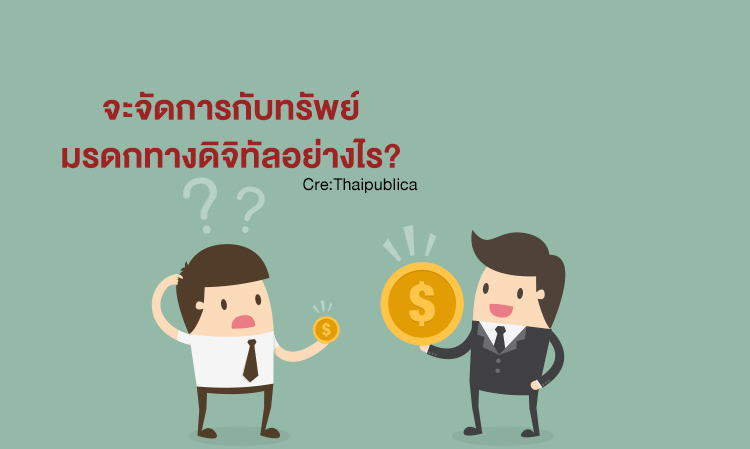
How to Manage Digital Inheritance?
A 15-year-old German girl tragically died in a subway accident in 2012. Her mother petitioned the Federal Constitutional Court (the highest court in the country) to access her daughter's Facebook account to determine whether her death was accidental or a suicide. The reason for going to court was that Facebook refused to grant her access, citing the deceased's right to privacy.
The court ruled that the contract her daughter had with Facebook is part of her inheritance, which passes to her heirs, namely her mother. Therefore, the mother has the right to fully access her daughter's account, including all posts and private messages.
This case exemplifies a legal issue in the modern era regarding intangible digital assets.
Nowadays, most people have online accounts. If we take a moment to count, we might realize we have far more accounts than we initially thought. These primarily include various social media accounts such as:
- Accounts that represent our activities, like Facebook
- Accounts for chatting with others online, like Line and WhatsApp
- Accounts for expressing opinions, like Twitter
- Accounts for sharing images, like Instagram
- Accounts for business networking, like LinkedIn
- Payment accounts, like PayPal
This doesn't even include accounts for online shopping, online gaming, membership accounts for accessing various websites, etc.
These digital inheritance assets store our data, including photos, personal information, comments about others, spending habits, etc. So, when we pass away, how do we manage these accounts?
From what I've found, there seems to be little discussion on this topic. There are some experts who suggest creating a “living will” (see the National Health Act B.E. 2550) or methods for managing assets before death through wills or declarations of intent, but these typically focus on tangible assets and rarely mention digital assets.
I happened to come across an article from Hall & Wilcox law firm in Australia, which discusses managing digital inheritance, particularly online accounts, in an interesting way. I thought it would be beneficial to share this as an idea for those looking to manage their digital assets for future inheritance.
Once we realize we have numerous digital assets, how do we manage them? First, we need to identify where these assets are located. Are they stored on our devices (like an iPad) or in the cloud? If they are on a device, it may be easier to track them down if something happens. However, if they are in the cloud, it could be more challenging, depending on the terms and conditions of the cloud service provider.
Various websites where we have accounts offer ways to manage them, such as:
Facebook allows users to decide in advance whether they want their accounts to remain active (memorialized) or to be permanently deleted. If the user wishes for the account to remain, it will be marked with “Remembering” next to the account owner's name. Photos and posts will still be visible, but the account cannot be altered unless the deceased had previously established a legacy contract. If the deceased did not make a choice and Facebook is informed of their passing, the standard policy is to memorialize the account.
Instagram can memorialize an account if someone who knew the deceased requests it by providing proof of death, such as an obituary or news article. However, the account can be removed by family members who can prove their relationship, such as local authority documentation along with the deceased's birth or death certificate.
LinkedIn only allows the account of the deceased to be closed and does not permit it to remain active. Once closed, the deceased's information is deleted from the system, and no one can access that information again.
Twitter also allows for account closure, working with individuals authorized to act on behalf of the estate (such as an estate manager) or family members of the deceased to close the account.
iCloud does not allow for the transfer of accounts or rights associated with an Apple ID, and the account will be suspended upon the owner's death. Once a death certificate is received, the account will be canceled, and its contents will be deleted.
PayPal states in its agreement that only the account owner can close the account unless the owner is deceased. In the case of death, PayPal's agreement specifies that the estate administrator must provide relevant documents to PayPal.
For other digital assets not mentioned, Australia does not have specific laws in place (similar to Thailand). Therefore, the following actions can be taken:
- If you are a lawyer writing a will for a client, you must inform them of the necessity to include digital assets in the will.
- The client should create a list of their accounts and digital assets and ensure that a trusted family member (one or more) is aware of it. However, this list should not include passwords for security reasons.
- In foreign legal systems, in addition to creating a will, a document called a letter of wishes can be created alongside the will. However, only the will has legal effect; the letter of wishes does not. Still, having a letter of wishes can help express intent and interpret the will.
- If the owner of those assets is not deceased but becomes incapacitated, most digital accounts do not address this situation. The person who will manage on their behalf, referred to as a “guardian,” must not forget to include the authority to manage digital assets and accounts.
- The will should specify digital assets and accounts, granting the estate manager or heirs the authority to manage these assets and accounts.
- If a will is created, it should be reviewed at least every three years, as changes may occur due to the rapidly evolving digital world.
This is the digital world; even though it is a virtual realm, it still requires management just like the real world.
Thank you for the information from thaipublica.org