LIV-24 Highlights New Challenges for Executives in the AI Era: When Speed Changes the Business Game
Ms. Niramon Direkmahamongkol, Managing Director of LIV-24 Co., Ltd., a leader in comprehensive Smart Tech solutions, shared her insights on the role of leaders and organizational direction in the AI era. She reflected that organizational adaptation today is not just about adopting technology but about "effectively utilizing AI for tangible business outcomes." Ms. Niramon stated that organizations do not need to invest in developing AI entirely on their own, as this requires significant resources, including budget, personnel, and time. Moreover, technology evolves rapidly, making it challenging to keep up. The appropriate strategy is to select existing solutions in the market and adapt them to fit the organization's context, starting with clearly defined objectives, identifying the organization's pain points, assessing the return on investment (ROI), and considering the benefits for all stakeholders.
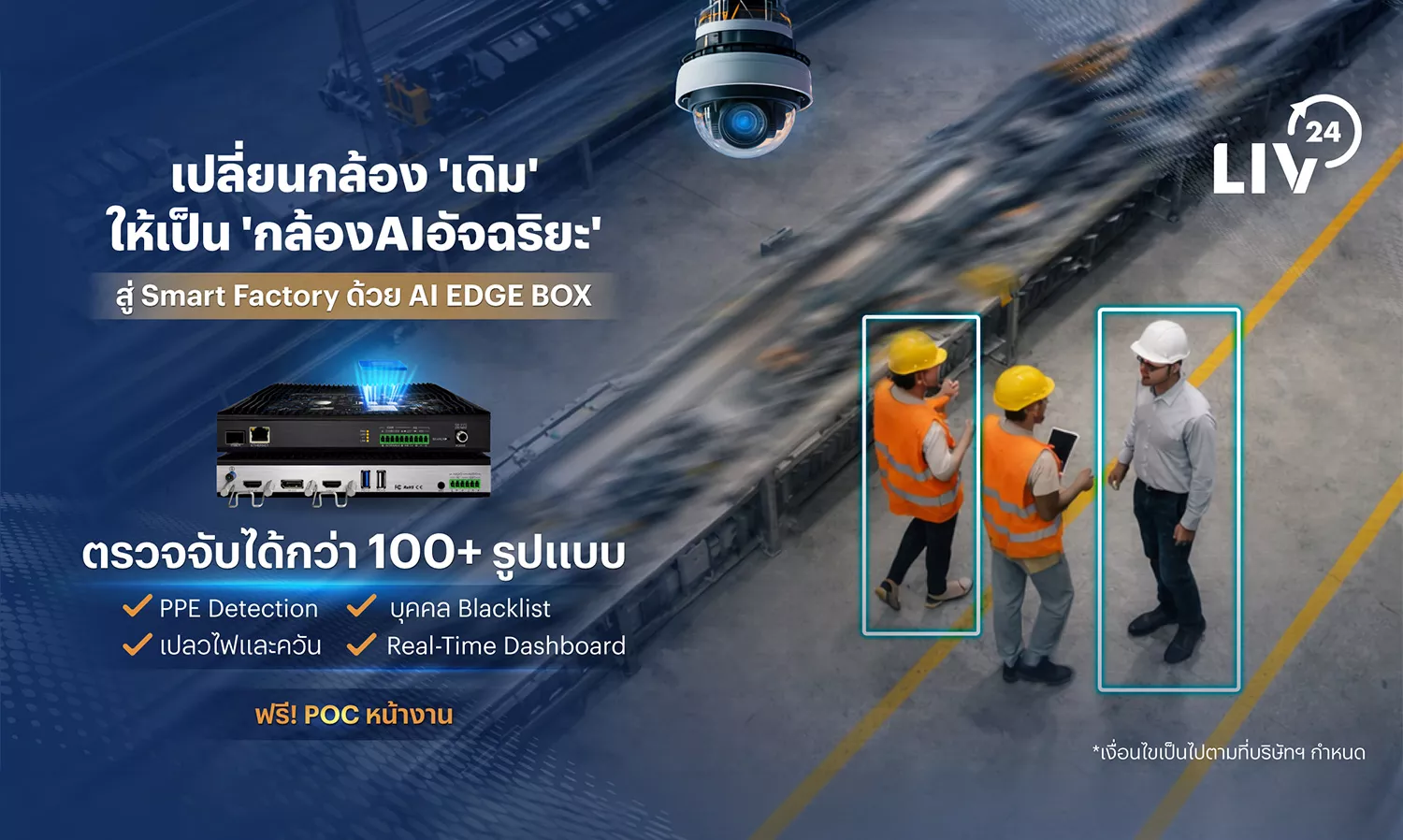
An example of applying AI and IoT in LIV-24's real estate business includes a proactive real-time security system based on the concept of 'preventing incidents before they occur.' Over the past six years, this system has detected over 500,000 anomalies and has been able to manage incidents before they escalate to threaten lives and property 100% of the time, with response times of no more than five minutes. Additionally, technology is used to manage building systems, such as air conditioning, to enhance energy efficiency and control long-term costs. Ms. Niramon also reflected that a significant limitation for organizations today is not technology but rather "organizational culture." Especially in complex organizations, creating experimental spaces to allow for learning and testing new technologies is crucial, alongside developing leaders with resilience and a growth mindset to adapt to ongoing changes.

Leaders in the AI Era: From Inspirational Figures to Precise Commanders
The role of leaders is undergoing a significant transformation, shifting from relying on communication to inspire and convey vision to large teams, to collaborating with AI, which requires clarity and precision in commands. The key skill today is the ability to "systematically command AI," which directly impacts the quality of outcomes since AI requires more specific instructions than abstract communication. It has been stated that "AI does not need inspiration but requires clear communication." Furthermore, executives today must work under significantly increased speed, necessitating analytical skills to filter and select AI that fits the business context. At the same time, the advent of AI is leading to flatter organizational structures, reducing hierarchies, and increasing operational agility. Executives must be able to see the overall business picture, understand the true challenges, and leverage AI to support decision-making, as decisions not based on data may be no different from guessing, especially in a context where data is readily accessible. Therefore, critical thinking skills are increasingly important, from questioning and selecting data to using that data for effective strategic planning and decision-making. Additionally, in a climate where businesses face uncertainties related to geopolitics and energy costs, utilizing AI and data for management, such as Fleet Management systems that integrate GPS like Google Maps with AI for vehicle management and logistics route planning, can help manage costs effectively.
"To enhance the efficiency of executives in the AI era, it is recommended to start by integrating AI tools into organizational tasks, such as Gemini for personal assistance, NotebookLM for summarizing and analyzing data, Claude Cowork for automating task management, and Gamma for creating presentations. These tools will help reduce operational workload and increase decision-making speed, allowing executives to focus on strategy and drive the organization more effectively," Ms. Niramon concluded.