5 Real Estate Giants Accelerate Welfare Initiatives Amid Rising Living Costs
In 2026, one of the most pressing pressures on the Thai business sector is not just fluctuating construction costs or interest rates, but rather the rising "cost of living" that quietly constricts the living space of workers. As basic expenses—ranging from food and transportation to housing—continue to rise, the consequences extend beyond financial burdens to include stress, insecurity, and decreased work efficiency. In this context, major Thai real estate developers such as Sansiri, AP Thailand, SC Asset, and Pruksa are reflecting a "shift in mindset" from viewing welfare as a cost to seeing it as a "strategic tool" that impacts the long-term survival of organizations.
Sansiri — Targeted Solutions for Immediate Results
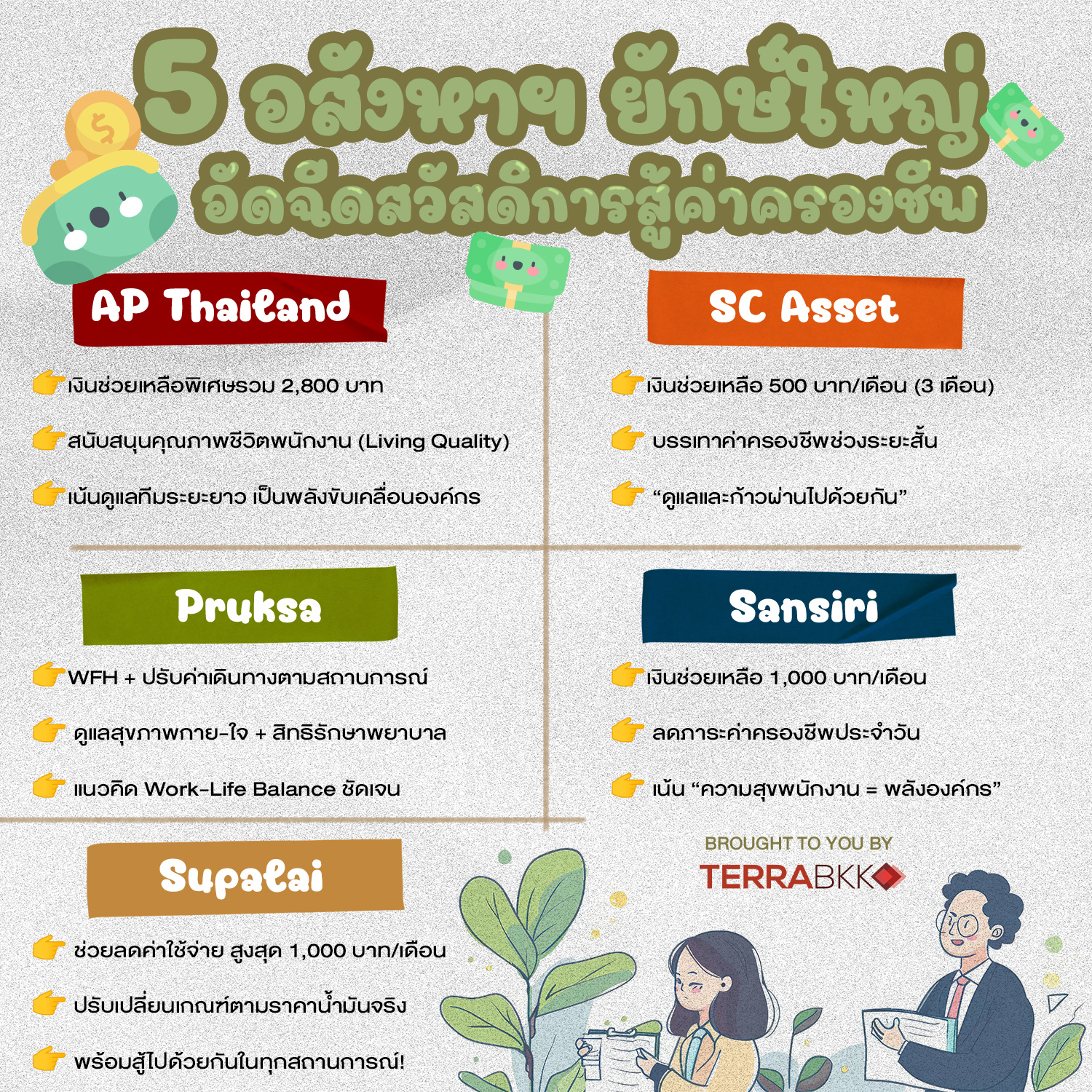
Sansiri adopts a simple yet powerful approach by providing a monthly assistance of 1,000 baht to help alleviate the cost of living that employees face daily. While this figure may not seem significant in terms of income structure, from an "organizational psychology" perspective, it clearly signals that the organization recognizes the pain of its employees and is ready to take immediate action. The idea that "employee happiness = organizational strength" is not just a slogan but is translated into tangible actions that quickly enhance engagement.
AP Thailand — Long-term Investment Through Living Quality
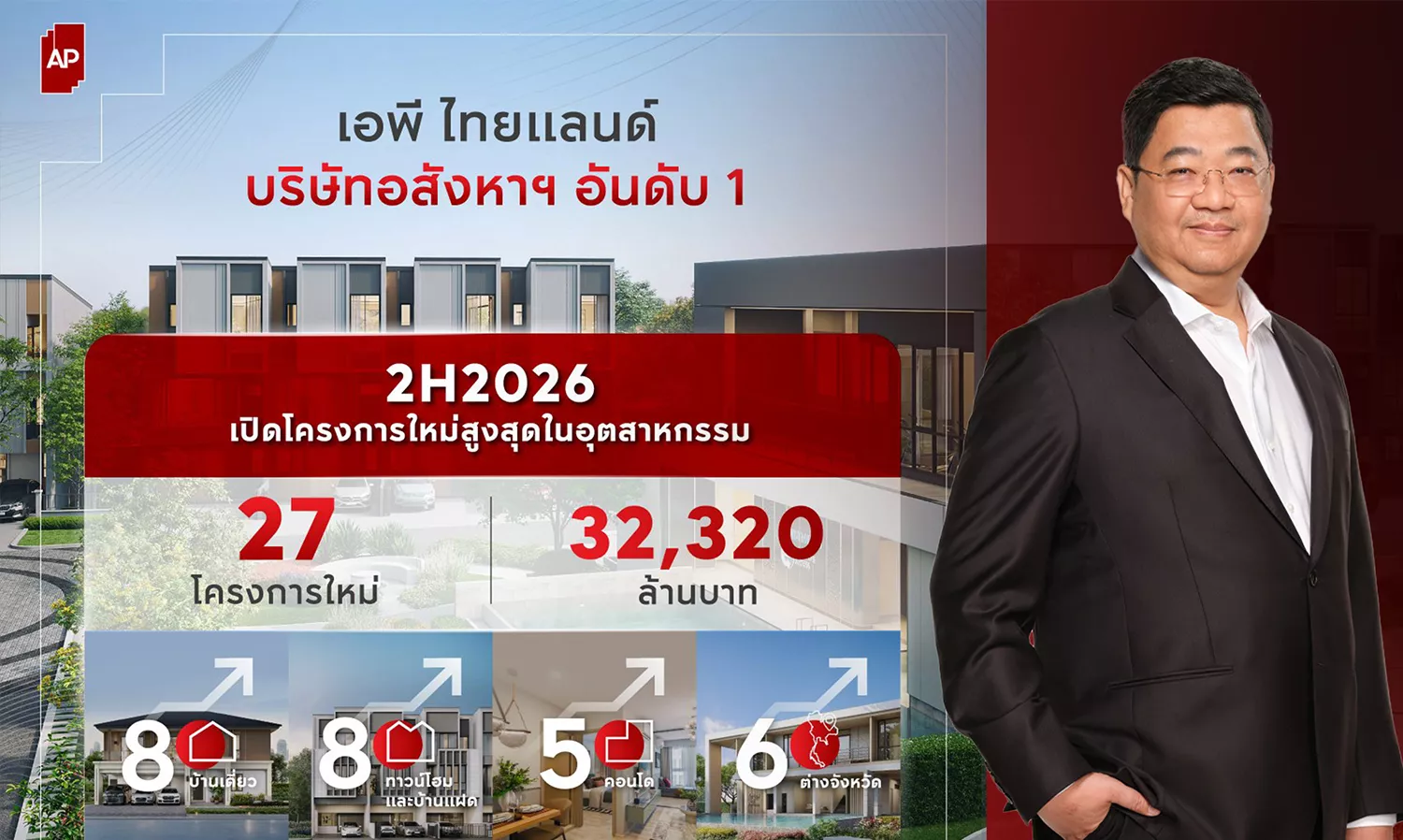
AP Thailand takes a different approach by offering a total special assistance of 2,800 baht while emphasizing the concept of "Living Quality" as the core of the organization. What AP is doing is not just short-term assistance but creating a "Framework for Quality of Life" that connects employees to customers. When employees experience an improved quality of life, their creativity, decision-making, and service quality also improve, ultimately reflecting back on the quality of products and the brand in the market. This is an investment that cannot be measured in the following month but accumulates as "cultural capital" in the long run.
SC Asset — Supporting During Crisis with Continuity
SC Asset adopts a clear timing strategy by providing monthly assistance of 500 baht for three months. Although this is a short-term measure, it is crucial for "stabilizing the situation," especially during a period of rapidly rising living costs. SC Asset's philosophy of "caring and moving forward together" reflects the organization's role as a "life partner" rather than just an employer. Interestingly, assistance provided at the right time often fosters a stronger bond than support given during normal times, as it addresses the "real needs" of employees.
Pruksa — Restructuring to Address Root Causes
In contrast to the other three companies, Pruksa chooses to tackle issues from a "structural" rather than a "financial" perspective. Implementing Work From Home policies, adjusting transportation allowances based on actual conditions, and enhancing health and wellness benefits are ways to reduce living costs across multiple dimensions. This approach goes beyond immediate problems and seeks to design a "work system" that aligns with the modern world. With Work-Life Balance elevated as a Core Strategy, the organization gains not only employee satisfaction but also long-term sustainability in work efficiency.
Supalai Stands by Every Employee
- Provides support through measures to reduce transportation costs by up to 1,000 baht/month
- Adjusts criteria based on actual fuel prices
- Ready to stand together in every situation!
Insight — When Welfare Becomes a Competitive Advantage The overall picture of these four companies clearly reflects that "welfare" is changing its role from being merely supplementary to becoming a "strategic tool" that affects productivity, retention, and employer branding. Organizations that can understand the real pain points of employees and design targeted solutions will create deeper and longer-lasting loyalty.
On another note, this is also a sign of a new form of competition in the real estate industry, where the competition is not just about "products" or "locations" but is shifting towards competing in the dimension of "people."
Ultimately, a strong organization is not built from the best projects but from "teams that are ready to walk together in the long run."