Lalin Property Focuses on Sustainable Growth, Outlines New Directions for Real Estate in 2026 with a Sales Target of 4.2 Billion Baht, Emphasizing Quality, Agility, and Innovation to Establish a Foundation for a National Property Company
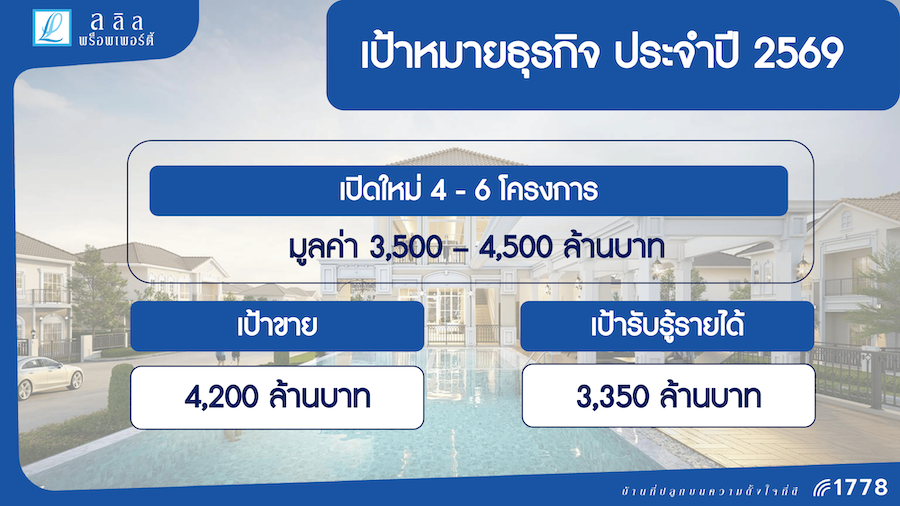
Lalin Property assesses that the global and Thai economies in 2026 will continue to grow amidst volatility from various factors. The company plans to operate in 2026 with strategies focused on quality, agility, and innovation, aiming for sustainable growth with a sales target of 4.2 billion baht. The plan includes launching 4 to 6 new projects valued at 3.5 to 4.5 billion baht, covering townhomes, innovative homes, and single-family houses priced between 2 to 12 million baht to meet the needs of genuine homebuyers. In the face of an economic slowdown, the company is adapting to navigate this period by: 1. Maintaining liquidity, 2. Controlling the debt-to-equity ratio to reduce risk, 3. Ensuring precision and good data in launching new projects, 4. Managing quality across products, management systems, and human resources while waiting for economic recovery, and 5. Elevating the organization according to ESG principles to lay a foundation for stable and sustainable growth, driving the organization towards becoming a leading real estate developer in the long term.
Mr. Chaiyan Chakarakul, CEO of Lalin Property Public Company Limited, or “LALIN”, a quality real estate project developer under the concept of “Homes Built on Good Intentions,” stated that the overall global economy in 2026 is expected to grow similarly to the previous year. According to the latest assessments from the International Monetary Fund (IMF) and the World Bank, global economic growth is projected to be around 2.6% to 3.3%. However, risks remain regarding geopolitical issues, international tensions, and trade barriers that need to be monitored in 2026.
For Thailand, economic growth in 2026 is expected to be lower than in 2025, with projections indicating growth below 2% due to structural issues, geopolitical tensions, and unclear U.S. tax measures impacting Thailand's export sector. Meanwhile, household purchasing power remains limited due to high household debt levels. Nevertheless, Thailand's economy has positive factors from the tourism sector, which is expected to improve from 2025, and private investment is likely to receive a boost from foreign investment following the acceleration of BOI investment promotion project approvals over the past 1-2 years. Additionally, circulating funds entering the economy during the election period and government stimulus measures will gradually emerge once a stable majority government is in place, improving the economic sector with a professional team.
The overall real estate market in 2025 contracted by over 17% due to reduced consumer purchasing power from high household debt and strict lending policies from commercial banks. Overall, for 2026, the market is expected to align with Thailand's economy, showing slight growth despite weak purchasing power, leading to a gradual recovery. A positive factor for the overall market is the reduced supply, as many developers have slowed project launches over the past 1-2 years, including reduced plans for new projects this year, which will help the market reach equilibrium and avoid oversupply. Competition will be among fewer operators, leaving only truly professional developers who focus on quality project development that meets consumer needs, as well as effective management in cost control and financial stability. Companies with lower debt-to-equity ratios will be more flexible in the current situation.
“Looking ahead, 2026 is still a challenging year for business operations. Therefore, our business will be based on a foundation of stable and sustainable growth in the long term. Business expansion must be precise in suitable locations and existing areas where products have sold out, as well as maintaining and expanding market share in certain locations. The company emphasizes developing projects that meet genuine housing needs, designing products that align with purchasing power in each area while managing costs and financial risks carefully. We maintain a debt-to-equity ratio significantly lower than the industry average and have set aside sufficient credit lines with several partner commercial banks, ensuring we are not reliant on a single source of funding, thus avoiding issues with funding sources for business expansion or debt repayment,” Mr. Chaiyan added.
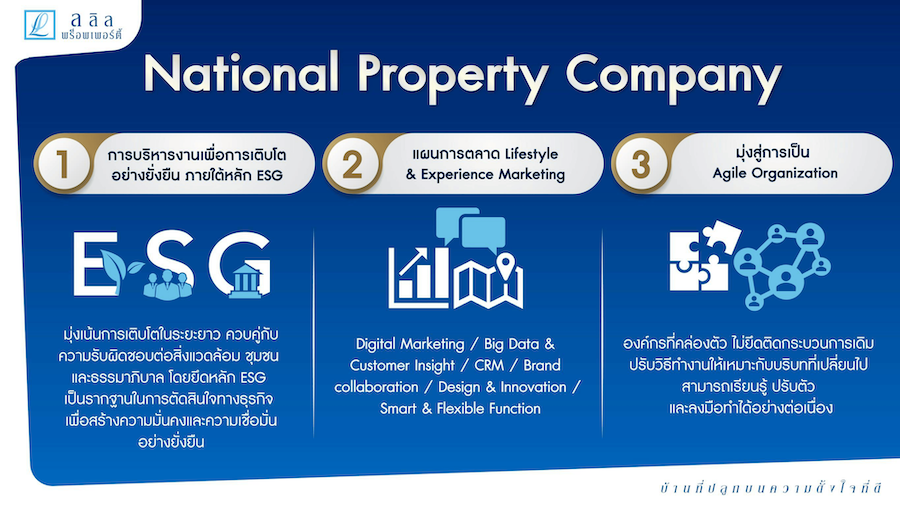
Mr. Churachart Chakarakul, Managing Director of Lalin Property Public Company Limited, stated, “The overall real estate market in recent times has shown structural changes in housing demand. Consumers are increasingly prioritizing quality, price appropriateness, and long-term value, prompting operators to adjust strategies to align with changing market decision-making behaviors. Under this overall picture, Lalin Property has set its business framework for 2026 under the concept of “Year of Competitive Survival with Quality, Lean and Innovation for Resilience & Sustainable Growth,” focusing on strengthening the organization through efficient management, appropriate cost control, and innovation in both products and processes to support intense competition and market changes. The company aims to become a National Property Company by emphasizing three main axes: managing for sustainable growth according to ESG principles, researching to access customer insights, and ensuring precision in launching new projects. Additionally, we will develop marketing strategies that reach all customer segments and lifestyles while enhancing living experiences and driving organizational agility through digital technology to adapt to future market changes.”
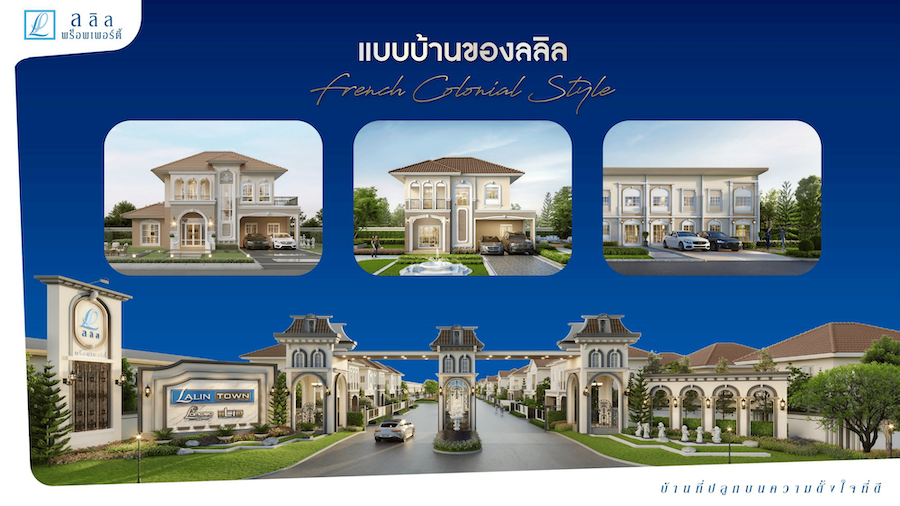
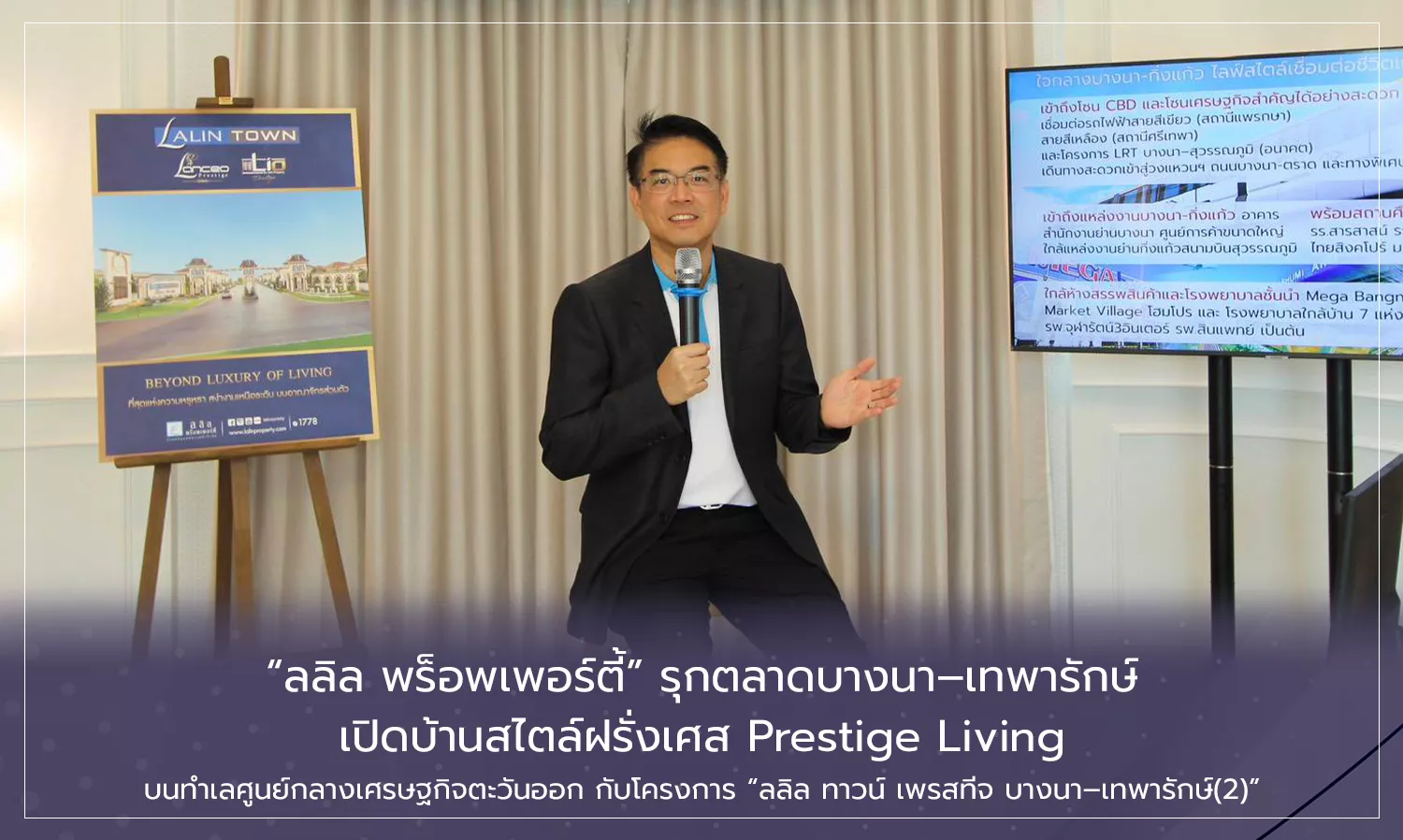
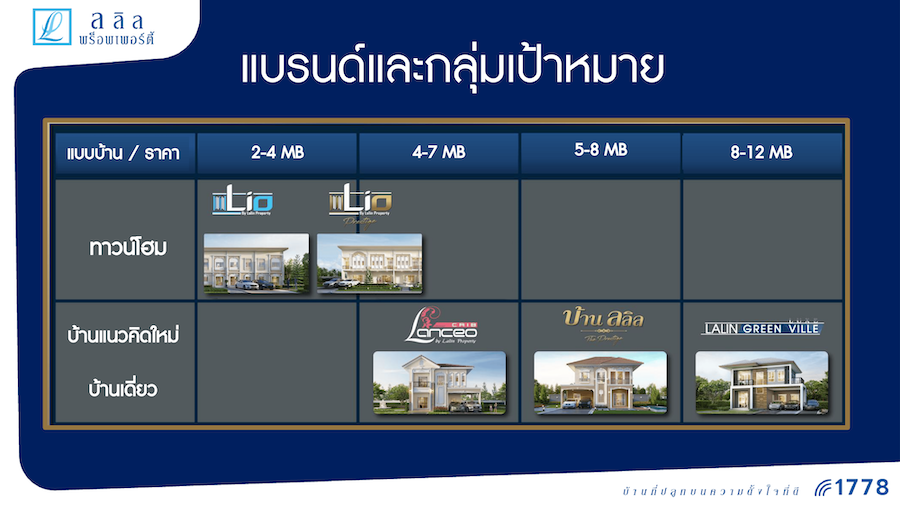
Regarding plans for new project development, Lalin Property continues to prioritize developing projects that meet the needs of genuine homebuyers, covering the townhome market, innovative homes (twin houses), and single-family houses priced around 2-12 million baht under the company’s main brands, including Lio, Lancy, Baan Lalin, and Lalin Greenville. The products are designed to align with functional needs, construction quality, and diverse living styles. Lalin Property has also successfully developed French Colonial-style houses, which have received continuous market acceptance due to their architectural uniqueness that blends classic elegance with practical usability. The company is among the first real estate developers to introduce this style to the mid to upper housing market, making the French Colonial house design a highlight that helps create brand recognition and reflects the quality and design image of projects in the eyes of consumers. For the plan to launch new projects in 2026, the company aims to develop approximately 4 to 6 residential projects with a total project value of around 3.5 to 4.5 billion baht, targeting sales of 4.2 billion baht and revenue recognition of 3.35 billion baht, focusing on distributing projects in high-potential locations that align with market demand trends in each area.
Mr. Churachart concluded, “Lalin Property views 2026 as a year where operators must focus on strengthening from within the organization in terms of product quality, operational efficiency, and strategic adaptability while maintaining liquidity. The company will continue to develop projects that meet genuine housing needs while carefully managing risks to lay a foundation for stable and sustainable growth in the long term.”
For inquiries and more information about Lalin Property, please visit www.lalinproperty.com.