What is Wellness Real Estate?
Wellness Real Estate
Trairat Jarutthasan
1. What is Wellness Real Estate?
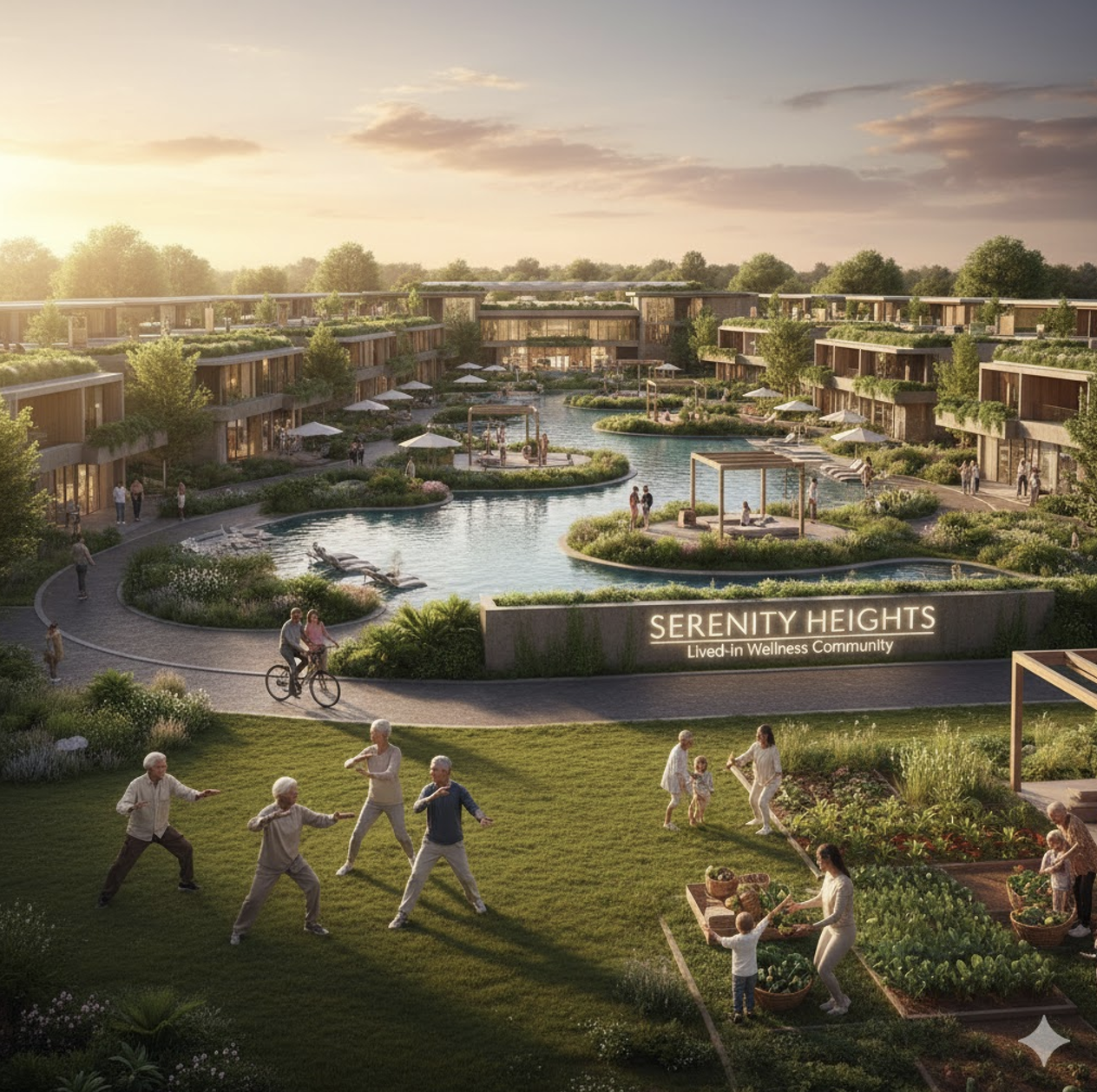
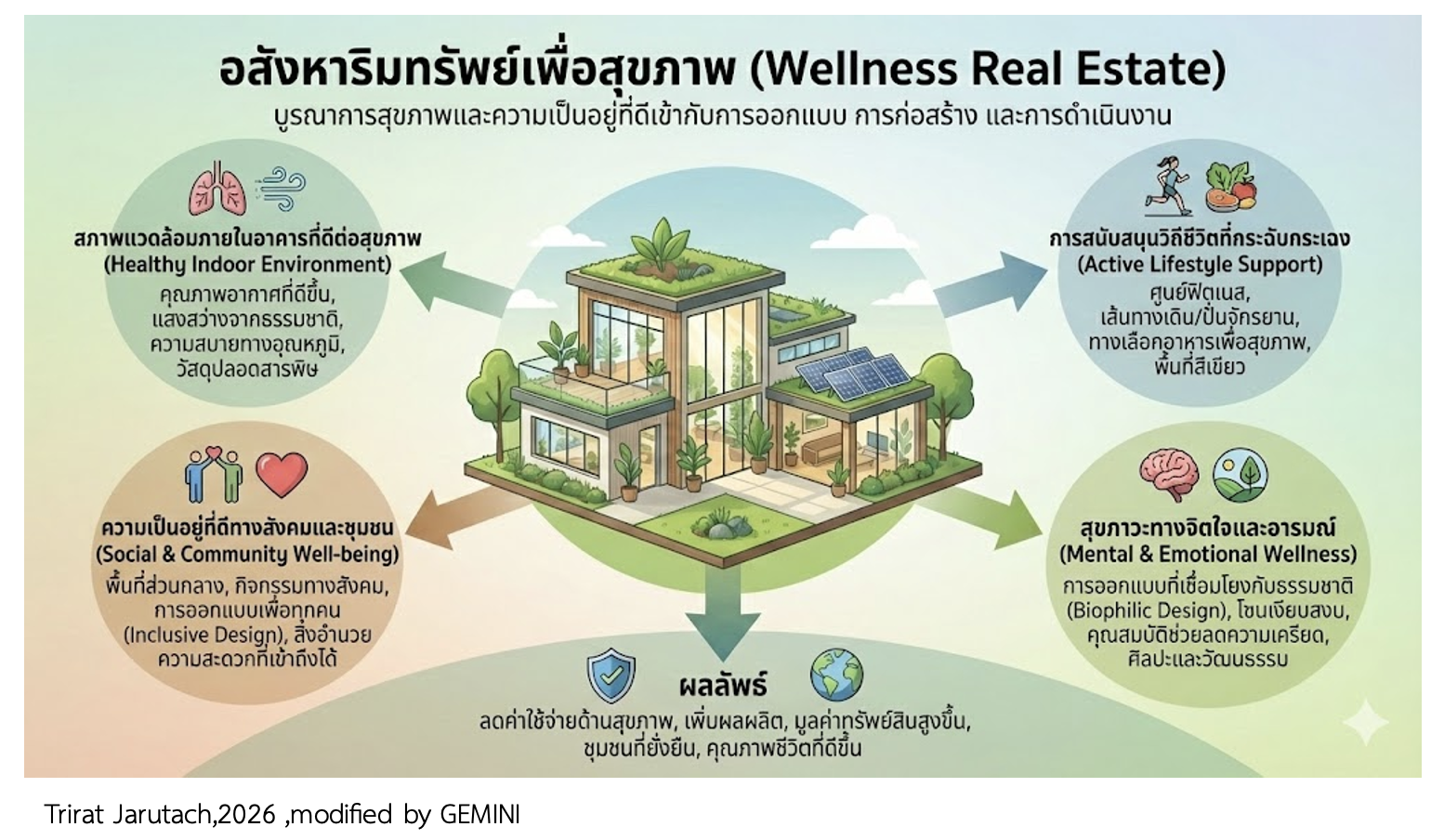
Wellness Real Estate refers to the development of real estate projects that do not solely focus on "housing" or "sustainability", but primarily aim to create an environment that promotes health (Healthy) and well-being of residents proactively.
Wellness Real Estate integrates architectural theory and health science, grounded in the concept of "health promotion", which focuses on studying factors that enhance well-being and managing stress rather than merely identifying the causes of diseases. It emphasizes the use of life resources, positive energy, and a holistic approach (body, mind, society) to help individuals maintain a quality life even in challenging circumstances.
The Global Wellness Institute (GWI) defines Wellness Real Estate as "an environment that is intentionally designed, constructed, and managed to support the holistic health of residents." This allows for premium pricing (10-25% higher than typical projects) due to its clear differentiation.
2. How do Wellness and Well-being differ?
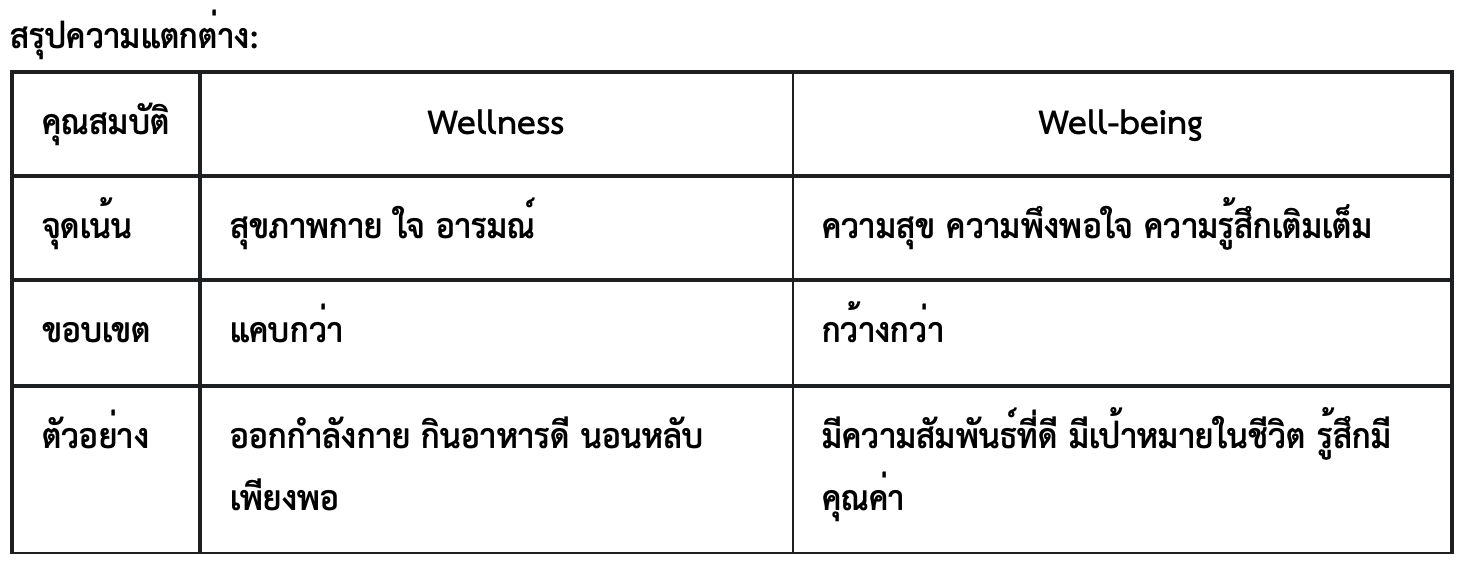
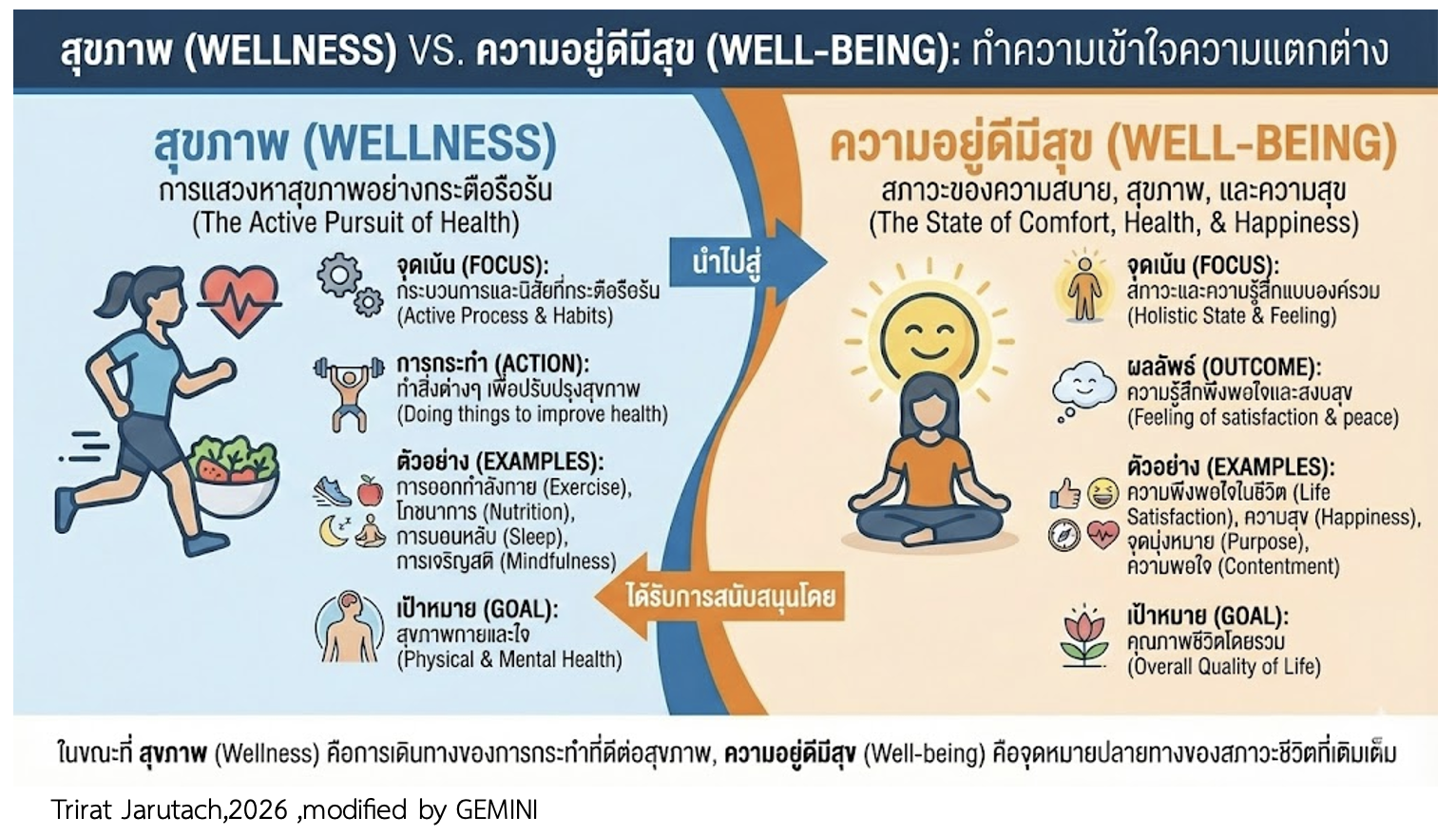
The terms "Wellness" and "Well-being" are often used interchangeably in various contexts, but they have slightly different meanings:
Wellness (Holistic Health):
- Focuses on maintaining a healthy and complete body, mind, and emotions.
- Related to disease prevention and long-term health promotion.
- Examples: Regular exercise, healthy eating, adequate rest, stress management.
Well-being (Quality of Life):
- Has a broader meaning than Wellness.
- Covers aspects of physical, mental, emotional, social, and spiritual health.
- Emphasizes happiness, life satisfaction, and a sense of fulfillment in all areas.
- Examples: Having good relationships, having life goals, feeling valued, engaging in enjoyable activities.
However, both terms are closely related:
- Good Wellness is a crucial foundation for achieving good Well-being.
- Good Well-being also positively impacts Wellness.
Simple Comparison:
- Wellness is like the foundation of a strong house.
- Well-being is like a beautiful, comfortable, and happy home.
3. How do wellness & Well-being relate to Universal Design?
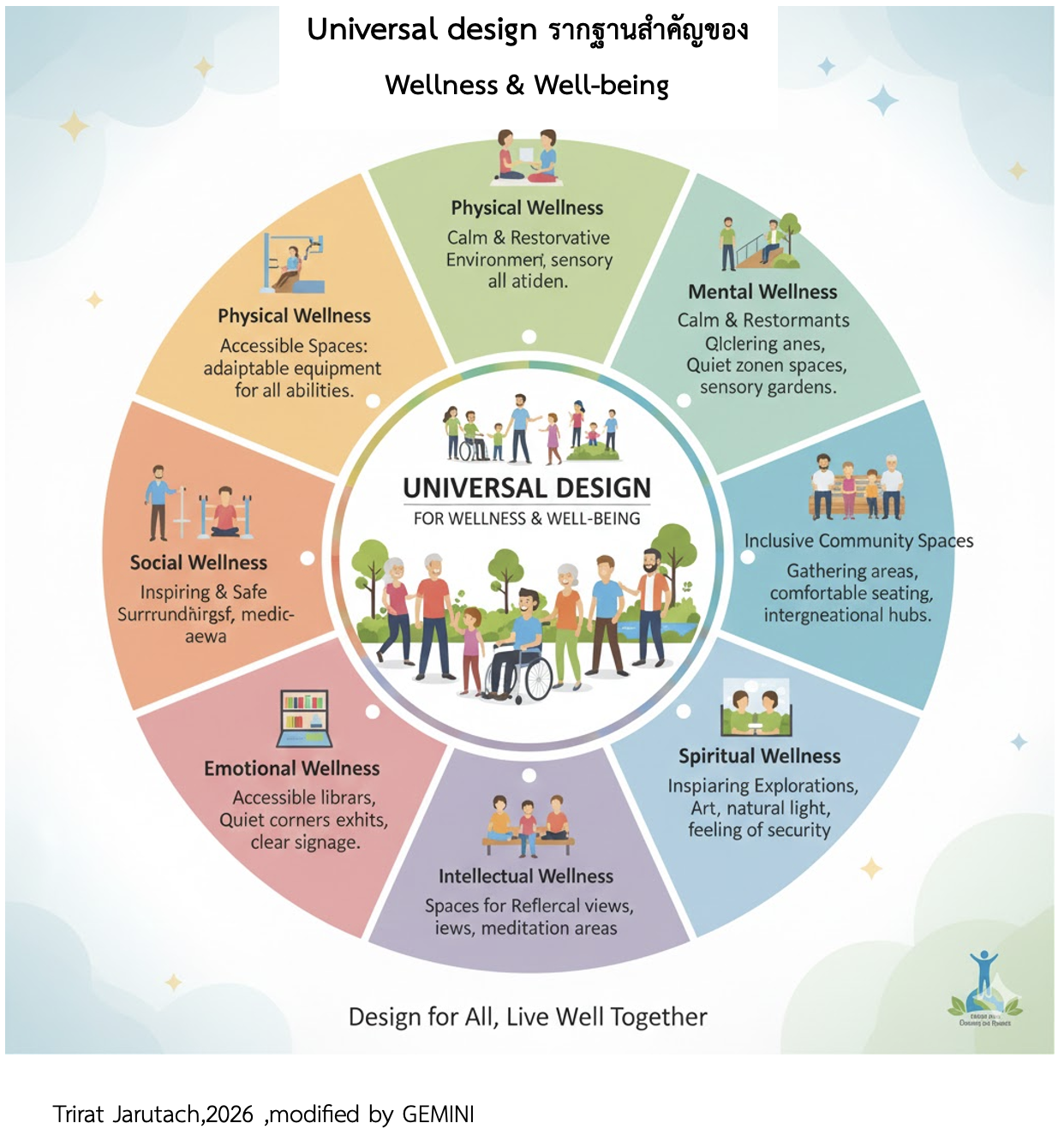
Universal Design (UD) is the most important "tool" or "physical foundation" for creating Wellness and Well-being that can truly benefit all groups of people, with relationships in three main dimensions as follows:
1. Promoting Social Well-being:
Principle: Universal Design emphasizes designing for everyone to use without discrimination (Inclusive Design).
Relationship: When spaces are barrier-free, people of all ages and physical conditions, whether children, the elderly, or people with disabilities, can live together.
Example from the project: Fujisawa SST: The design of "Garden Paths" as barrier-free walkways fosters intergenerational interaction, reducing social isolation, which is crucial for Social Well-being.
2. Creating Emotional/Mental Wellness:
Principle: UD supports the concept of "Aging-in-Place," allowing people to live in their original homes and communities throughout their lives.
Relationship: Future-ready designs (e.g., ramps, sliding doors, safe bathrooms) help reduce anxiety for the elderly and create a sense of security.
Example: The "Virtual Gated Town" in Fujisawa SST uses security technology instead of physical barriers, allowing residents to feel safe without feeling confined (Mental Ease) and easily access public spaces.
3. Supporting Physical Wellness:
Principle: An environment conducive to use (Supportive Environment).
Relationship: If a city is designed with UD (e.g., wide, smooth, well-lit sidewalks), it encourages all groups to engage in physical activities, not just the young.
Example: The "Smart Mobility" service in Fujisawa SST has parking and electric bike stations designed for easy access for the elderly and disabled, promoting their mobility and independence.
In Summary:
Wellness/Well-being is the "goal" (a happy, healthy, and energetic life).
Universal Design is the "method" (designing spaces) to ensure that goal is for "everyone", not just healthy young people.
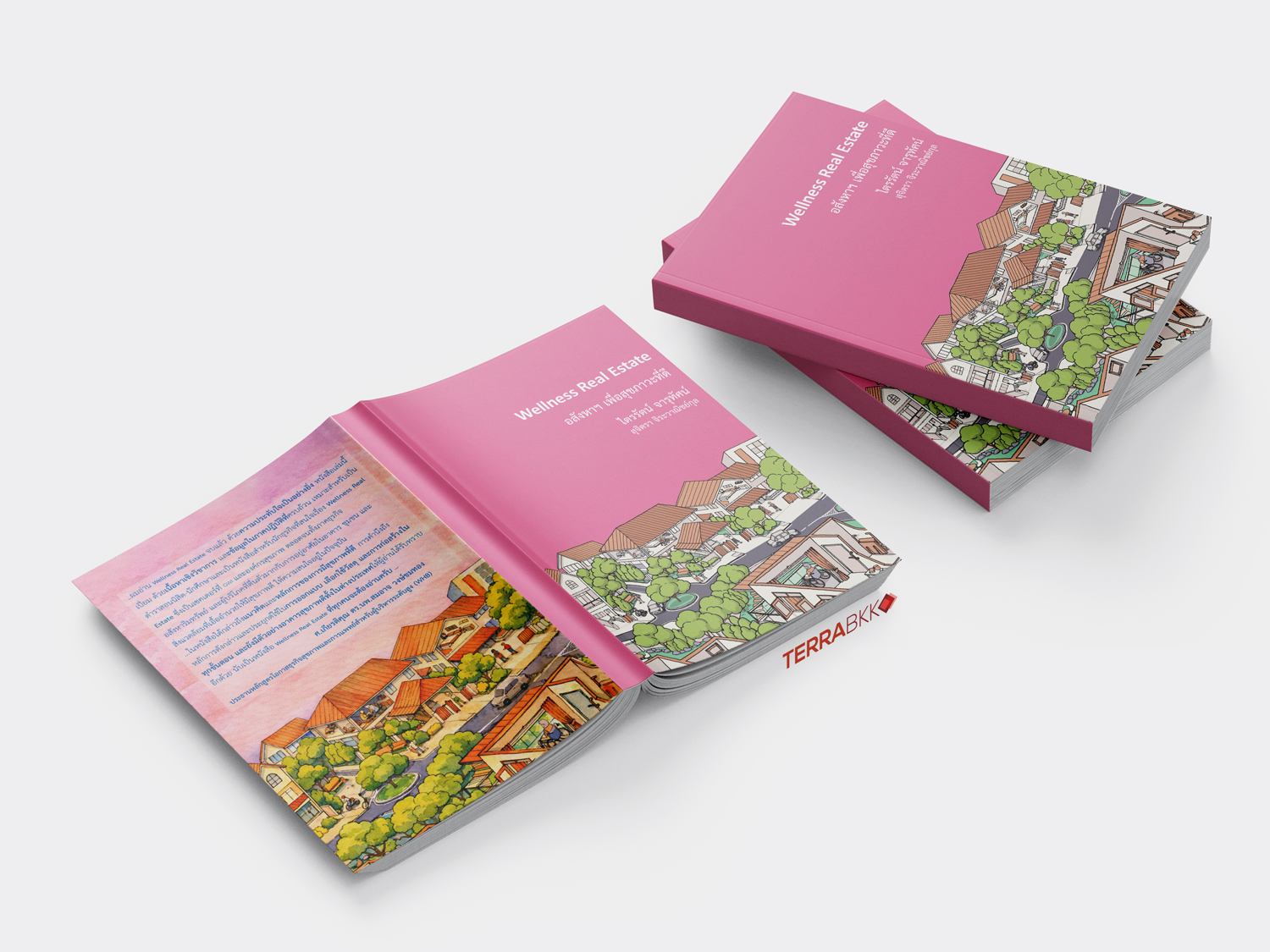
From the pocket book Wellness Real Estate: Real Estate for Good Well-being...
Interested in Pre-order? Contact us on Line: udguru