Cushman & Wakefield (Thailand) Forecasts 2026 Condo Market: New Launches Limited to 15,000 Units as Developers Focus on Stock Clearance
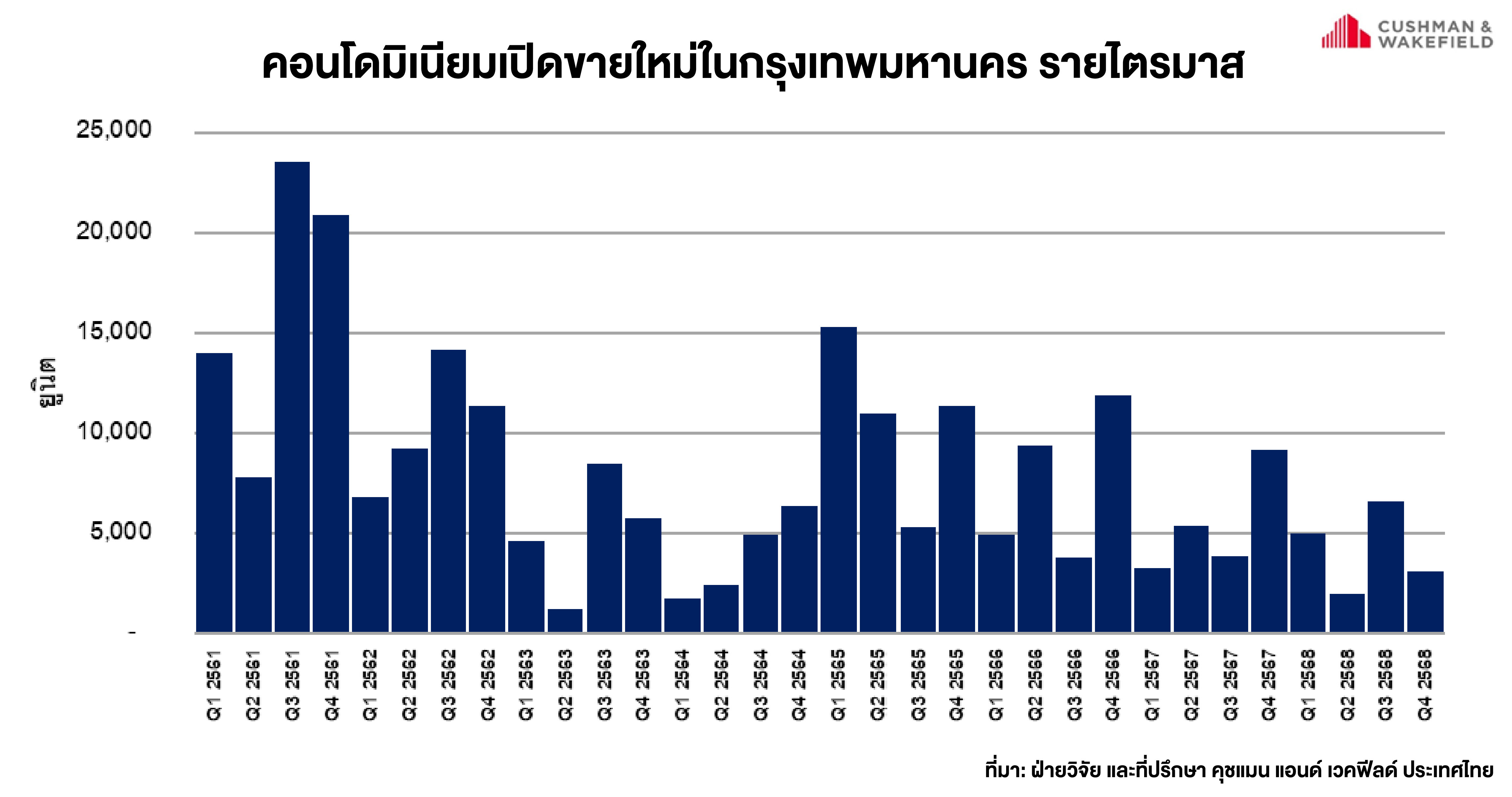
The condominium market in 2025 clearly saw a slowdown in new projects, with approximately 16,408 new units launched throughout the year. In the fourth quarter of 2025, around 3,100 new condominiums were introduced, marking a 56% decrease from the previous quarter (Q3/2025). This decline is attributed to the sluggish economic conditions in the country, compounded by the government's lack of clear economic stimulus measures last year, aside from a reduction in transfer fees and mortgage fees with financial institutions. Developers have consistently urged the government for support, only to face widespread flooding across Thailand, which shifted focus away from other issues. Following this, the parliament was dissolved, awaiting new elections in early 2026.
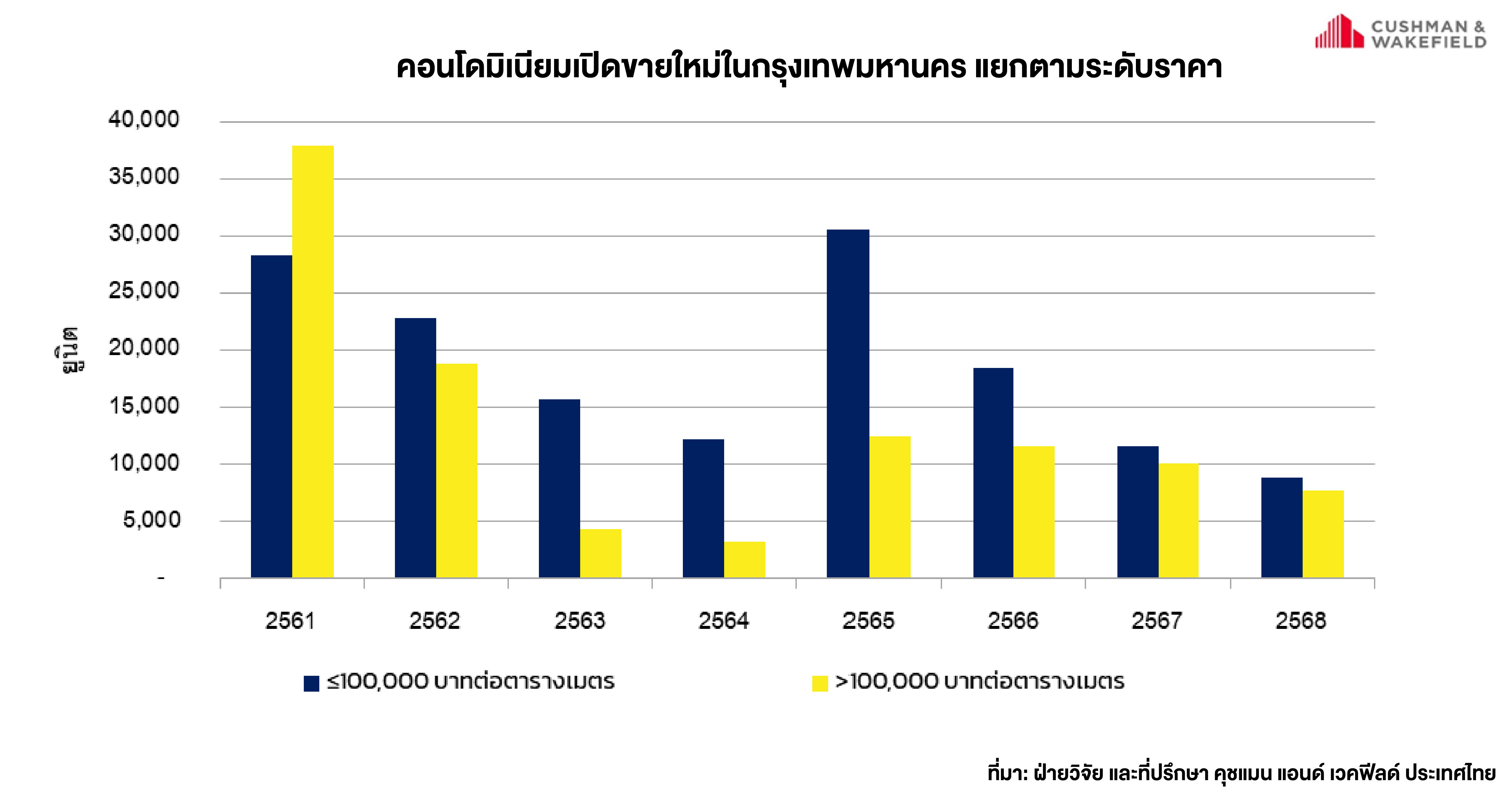
Mr. Surachet Kongcheep, Head of Research and Consulting at Cushman & Wakefield (Thailand) Co., Ltd. revealed that the new condominiums launched in 2025 had selling prices exceeding 100,000 THB per square meter, with several projects priced above 200,000 THB per square meter. Additionally, there are high-priced projects set to launch in 2026, with some promotional activities already starting in the last quarter of 2025. Developers have clearly opted to reduce the number of new condominium launches compared to the previous year due to decreased purchasing power. They are focusing more on closing sales of completed projects rather than launching new ones, which may involve price reductions or lower profit margins to maximize sales and transfer ownership by the end of 2025. Consequently, this has led to a decrease in revenue and profits for developers, although they are not operating at a loss; they are still profitable, albeit with reduced margins.
In 2026, it is likely that developers will prioritize stock clearance over serious new project launches, given the economic and political situation in Thailand and the regional conflict dynamics. The economic conditions in Thailand are not expected to improve dramatically, although the tourism sector may perform better than in 2025, with an increase in Chinese tourists returning to Thailand. The negative sentiment appears to be easing, and the conflict with Japan may lead to more Chinese tourists visiting Thailand, despite competition from Vietnam. The number of new project launches for both housing and condominiums may not differ significantly from 2025, although there may be an increase in projects priced above 100,000 THB per square meter. However, it is evident that developers continue to reduce the proportion of affordable condominiums or low-priced housing compared to previous periods.
The residential market over the past 2-3 years has seen a noticeable influx of foreign buyers, particularly from China, especially in the condominium sector. Developers have been selling directly to Chinese buyers or in bulk to agents for resale to Chinese clients, confirming the significance of this buyer group in Thailand's condominium market. The condominium market in 2026 may still rely heavily on foreign purchasing power, especially from Chinese buyers, as domestic purchasing power may not be sufficient to drive the market. Since 2023, the transfer of condominium ownership by foreigners in Thailand has remained relatively stable, with quarterly transfers ranging between 3,300 and 3,900 units.
New condominium launches in 2026 are expected to be limited, with forecasts suggesting no more than 15,000 new units. Developers will likely place greater emphasis on housing projects, targeting more specific customer segments. The size of these projects may not be large, focusing instead on quick sales. Additionally, condominium projects may continue to feature various price levels, but some developers may increasingly focus on units priced above 100,000 THB per square meter, with less emphasis on projects targeting middle-income buyers. If projects are priced lower, developers must be confident in achieving high sales volumes or closing sales effectively. Furthermore, developers will utilize available data for marketing and project development, avoiding the previous trend of launching projects in the same location simultaneously. There may also be fewer amenities in projects that require significant long-term maintenance costs.
Key factors to monitor in the housing market include household debt affecting housing loan applications and long-term spending by Thais, alongside the political situation post-election, which may take time to establish a government. It remains uncertain how the new government's policies will impact economic stimulation. Therefore, the economy is not expected to improve in 2026, which will influence housing purchase decisions. It could be a year with minimal growth in the housing market or only slight improvements compared to 2025. Some developers may not launch any new condominium projects at all. However, the direction in the first quarter of 2026 post-election will need to be observed, along with various other factors that may arise throughout the year.