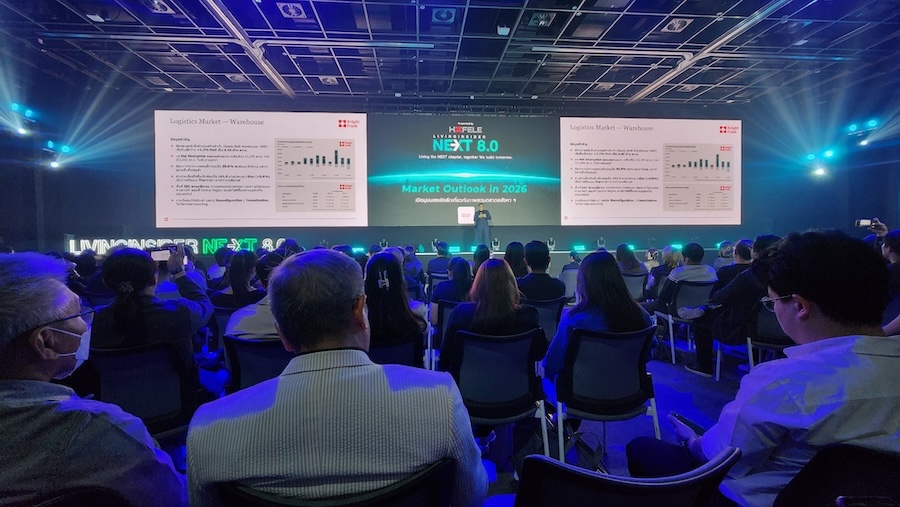
LivingInsider Next 8.0 "Living The NEXT chapter, together We build tomorrow"
The real estate market for 2024–2025 is quietly but significantly changing its rules. This game is no longer measured by the size of projects or land area, but rather by who understands the "nature of the customer" more deeply. Data from online platforms clearly indicates that today's consumers live differently. Some are willing to pay higher monthly fees for gym memberships than for their condo installments, yet they don't even consider committing to a home. The winning brands are not necessarily those that create the most beautiful products, but those that listen, interpret data, and transform it into life solutions that align with the real lifestyles of The New Y.

On the platform side, consumer behavior is clearly shifting. Thais are increasingly using TikTok as their primary platform, surpassing all traditional social media. Advertising solely on Facebook is no longer sufficient. The new marketing game revolves around short, quick content that is highly creative and designed specifically for TikTok from the outset, reducing content costs while achieving reach and engagement that aligns with the vertical media consumption habits of today's audience.
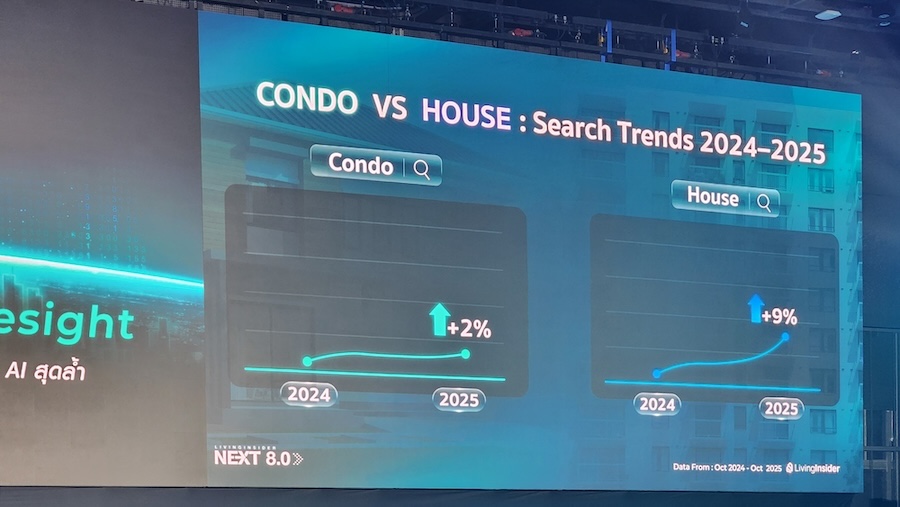
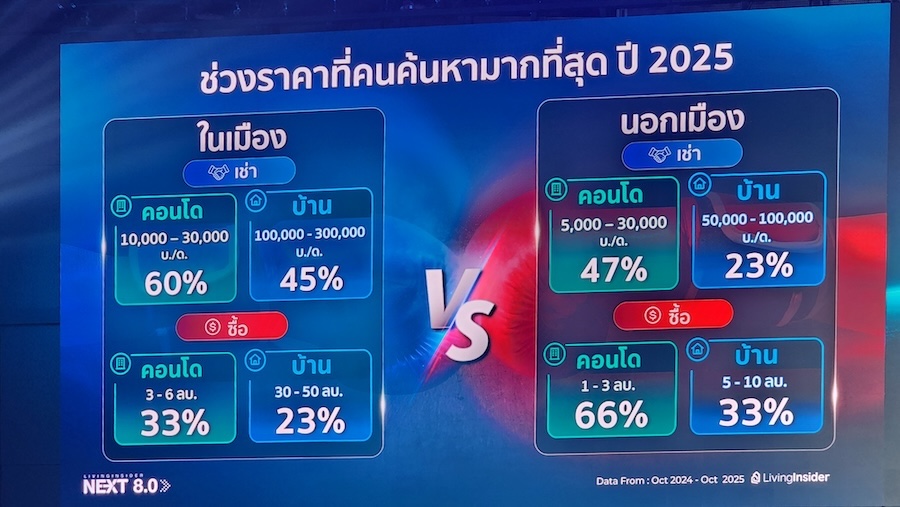
When zooming out to look at the big picture, the overall real estate market is expected to grow by only about 2 percent in 2024–2025. However, if we focus specifically on the "horizontal" segment, we see an average growth of around 9 percent, significantly outpacing the overall market. The main reason is the demographic structure, where fewer young people are being born, but there is a group of business owners and those who are well-adapted to the online economy with high incomes. This group is looking for mid to high-end single-family homes, prompting developers to clearly shift their focus to horizontal properties priced between 5–10 million baht, while starter townhomes remain in the 1–3 million baht range.
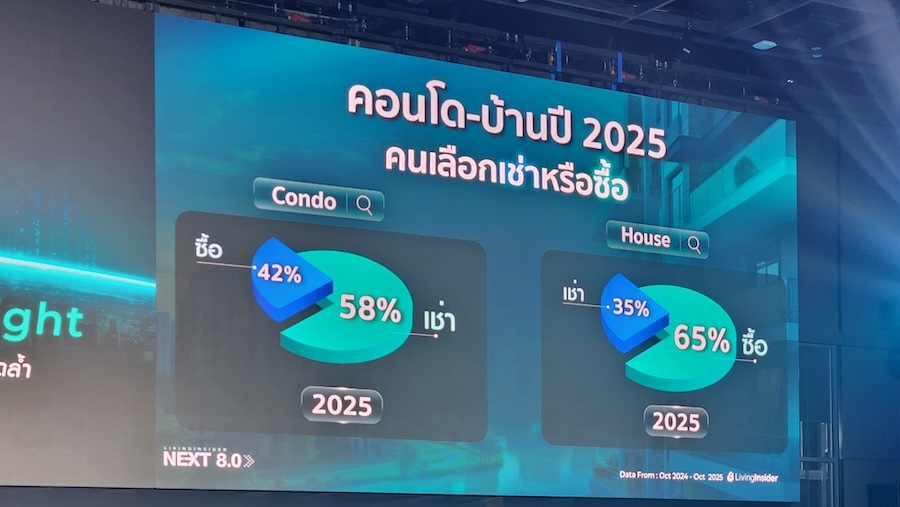
In the condo sector, the clearest picture is that the rental market is as strong as the purchase market. Searches for condos to rent account for about 58 percent, closely matching the 42 percent searching to buy. This reflects the renting-before-buying behavior of urban dwellers who want to be near the subway but face debt and borrowing constraints. Interestingly, one-bedroom units are the most searched at around 63 percent, followed by two-bedroom units at about 23 percent, while studios only account for approximately 9 percent. Despite being the cheapest, their small function and difficult space allocation lead to them being overlooked. All of this data is crucial for accurately planning unit mixes.
On the horizontal home side, the equation is clearly reversed. The majority still prefer to “buy” rather than rent, with searches for homes to buy at around 65 percent compared to about 35 percent for renting. Homes are still viewed as long-term assets and resources for families. Another important trend is the “second-hand homes” market, which offers more land and usable space than new homes in the same location but at prices 20–30 percent lower. In many provinces, new homes priced at 5–10 million baht and condos at 1–3 million baht are starting to push price ceilings, making second-hand homes a new battleground for both genuine buyers and investors.
When drilling down to specific locations, the search data on online platforms paints a clearer picture of the New Y of the city. The top five searched condo locations are Asoke–Phrom Phong–Thong Lor, On Nut–Phra Khanong–Udom Suk, Rama 9–Phetchaburi, Huai Khwang, and Sathorn–Narathiwat. Meanwhile, the top five horizontal home locations are Pattanakarn–Srinakarin–Bangkok Kritha, Bangna Km.7–Ramkhamhaeng 2–Mega Bangna, Ram Inthra–Watcharapol, Pathum Thani–Rangsit–Lam Luk Ka, and Lat Krabang–Suvarnabhumi. In provincial areas, Chonburi–Pattaya, Chiang Mai, Hua Hin, Phuket, and Samut Sakhon continue to stand out as hubs for both living and rental investment.
Behavioral search data also tells us that customers are not just looking for “housing” but for “life solutions” that clearly reflect their identities. Growing keywords include short-term rentals, pet-friendly options, homes in gated communities, or projects with rooftop facilities. The data indicates that listings accommodating short-term rentals have grown by about 9 percent, while searches have increased by around 14 percent. For pet-friendly options, there are over 8,800 listings available, up 30 percent, but searches have surged to over 2.9 million, an increase of about 19 percent, indicating that supply is clearly not keeping up with demand.
On the high-end market side, the data confirms that the expensive segment is not quiet, with about 40 percent of homes listed for sale priced over 20 million baht. Given the rising land and construction costs, this is no longer considered “out of this world.” Meanwhile, searches for condos priced over 10 million baht continue, particularly in the central Sukhumvit and Thong Lor–Ekkamai areas. The trend for rooftop facilities is also accelerating the market, with searches for projects featuring rooftop functions increasing by about 14–15 percent, as younger generations view communal spaces as both relaxation areas and social settings, as well as backdrops for their online identities.
Developer brands themselves are being elevated to the role of the first “confidence filter” in decision-making. Search data shows that there are about 10–12 major players dominating the search share for both rentals and purchases, including AP, Sansiri, Ananda, Pruksa, LPN, Origin, Noble, Supalai, Land and Houses, SC Asset, and other leading brands. Customers who have previously rented or lived with a brand they liked often start searching for new homes from the same brand name. This makes brand experience and after-sales service crucial data strengths that both developers and agents must benchmark and adapt into their strategies.
In the brokerage battlefield, data reveals the behavior of the top 20 players on the platform, who spend an average of about 1,000–2,000 credits per day. Over 60 percent of their listings are condos, with about 40 percent being horizontal homes, generating a minimum of 18 leads per day. Although rental listings only account for about 5 percent of the total, they generate many leads because the rental market is growing. AI tools like AI Search, which understand behavioral needs such as budget, proximity to the subway, pet-friendliness, or AI Assistants that analyze home styles from sample images, along with real-time vacancy status checks, have become secret weapons that enhance the accuracy of brokers' work and visibly reduce lost leads.
All of this was summarized at the LivingInsider Next 8.0 seminar under the theme "Living The NEXT chapter together We build tomorrow" with three key concepts: Challenge, Change, and Chance leading into 2026. The market volatility represents the Challenge, the arrival of digital and AI signifies Change, and the use of data to transform into viable Life Solutions represents the Chance. Brands and agents that will succeed in the New Y era are not necessarily those with the largest projects but those who are the best listeners, gather and utilize detailed data, and have a robust AI and CRM data infrastructure, guiding their teams to approach customers at the right time, in the right place, and in sync with the ever-changing city landscape.