When the Aging Society Arrives Sooner Than Planned—How Real Estate Developers Must Adapt
Thailand is transitioning into a fully-fledged aging society faster than anticipated. This shift not only disrupts the demographic structure but also impacts the way we think about "home" and "city" as a whole. Here’s an overview from a significant discussion featuring data analysts, entrepreneurs, and architects addressing these issues directly, along with in-depth adaptation strategies for real estate developers.
1) A New Challenge: An Aging Society That Wants More Than Just Grab Bars in the Bathroom
(Reference: Discussion paper “Adapting Housing Developers to the Aging Society” from Sathaporn Estate)
Modern seniors are not looking for homes that “slow down” but rather homes that “allow them to live life to the fullest.” Here are three major trends that are emerging:
1. Senior Living & Active Aging
– Demand for Wellness, Safety, Community
– Projects must offer additional services such as Care-on-demand, Wellness Clubs
– Spaces should be compact but require low maintenance and be as peaceful as possible.
2. Multi-Generation & Pet-Friendly
– Families are increasingly choosing homes that accommodate multiple generations.
– Senior living spaces must be a main feature of the home.
– Pet areas and courtyards are becoming new selling points.
3. Green & Wellness Housing
– Energy-efficient homes are the new standard.
– Solar roofs / Air filtration / Low VOC materials
– Buyers prioritize health over mere “functionality.”
All of this reflects that “the market for senior housing is not a niche market but is becoming the new standard for all housing.”
2) A New Portfolio Strategy for Developers: Survive Before You Thrive
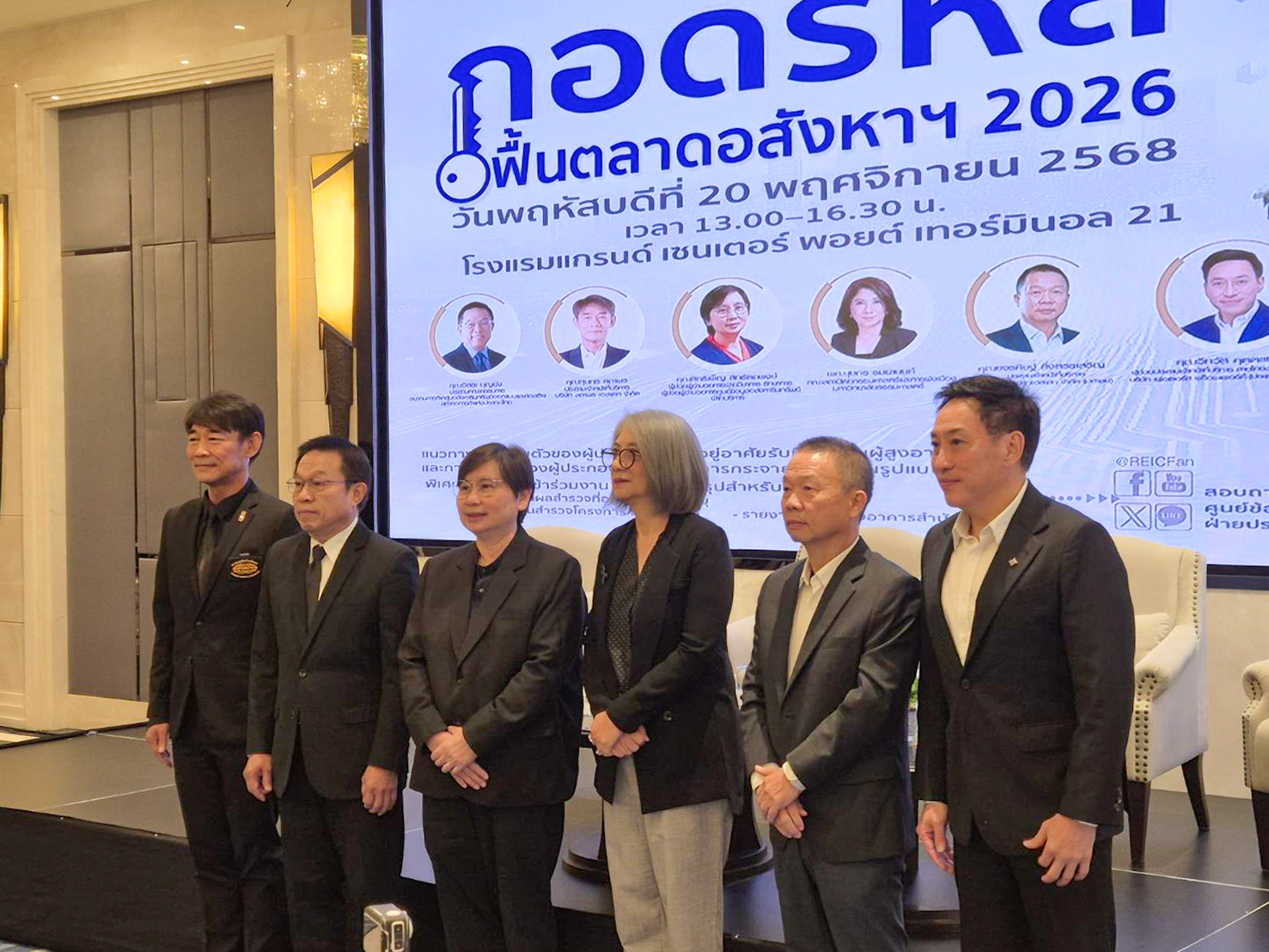
(Reference: PORTFOLIO MANAGEMENT from Sathaporn Estate)
The real estate market today is more fragile than it appears in reports, especially with Real Demand being rejected by banks at a staggering 90%. Therefore, projects must adjust their portfolios to be lighter and more agile.
Survival Strategies for 2026–2028
• Reduce Luxury Proportions and Increase Affordable Options
– Low-rise condos at 2–3 million THB
– Townhomes at 2–3 million THB
– Detached houses at 4–5 million THB.
• Increase Ready-to-Move Projects Instead of Pre-sales
To reduce credit risk and accelerate inventory turnover.
• Focus on Cash Flow Over Profit Per Unit
Especially with Rent-to-Own models that make it easier for seniors and new workers to access housing.
• Introduce New Services for Extra Income
– Property management
– After-sales services
– Renovation and decoration services
– Community management.
This model adjustment allows developers to have more stable income without relying solely on sales.
3) Insights from REIC: Mixed-use and Office Will Be the Core Structure of Cities
(Reference: Mixed-use Projects 2025 and Office Building Projects 2025 from REIC)
Mixed-use Becomes the Core of New Urban Structures
– Bangkok and its vicinity have 139 projects
– Total construction area of 20.6 million sq.m.
– Completed sale/rental space is as high as 81%.
Modern seniors are increasingly choosing to live in mixed-use developments because they seek
– Convenience
– Care systems
– Community
– Safety
– Connectivity to hospitals/health centers.
The Office Market: Offices Must Be “Eco-Friendly,” Not Just Aesthetically Pleasing
– LEED Gold/Nearly Zero Energy standards are the new norm.
– Demand is primarily leaning towards Grade A offices in new CBDs.
– Tenants are placing more importance on building health (Air Quality).
Both markets will play a crucial role in accommodating active aging in major cities.
4) When Real Estate Must Compete with Global Uncertainties
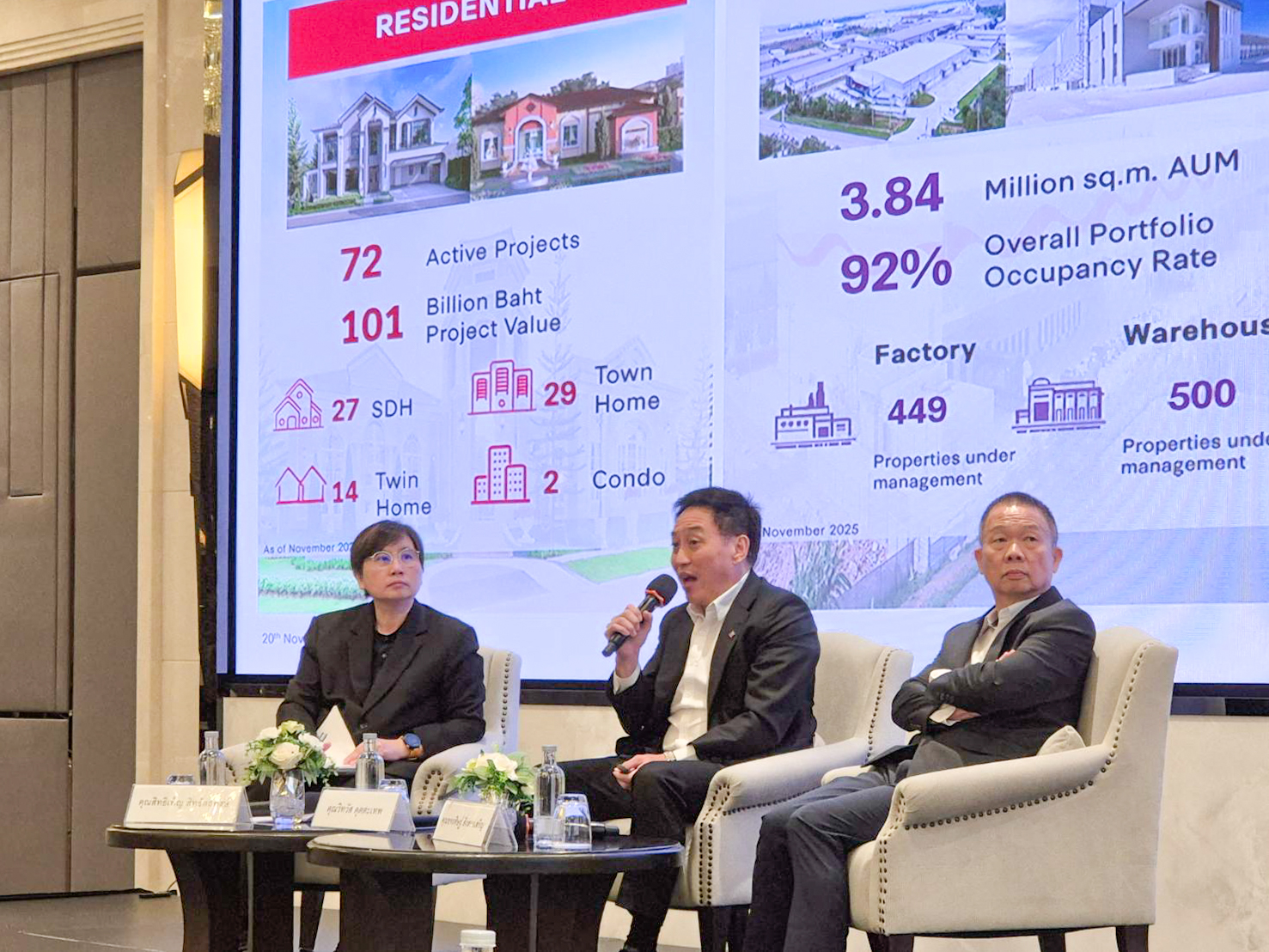
(Reference: Presentation by Frasers Property Thailand by Witthawat Kuttatep)
Frasers clearly states that “the competition in real estate is the fiercest it has been in years” due to four factors:
-
Geopolitics
-
U.S. tax measures
-
Oversupply–Declining Demand
-
Tourism slowdown
The “Thailand Property Clock” from Frasers indicates that
– Condos/Townhomes are currently in a slowdown phase.
– Hospitality/Logistics are beginning to enter a recovery phase.
– Factories/SDH are in the Rent/Prices Rising phase.
Developers must therefore diversify their risks across multiple businesses more than ever.
5) Examples of Developer Adaptation: Siamese Asset Towards the “Investor–Operator” Model
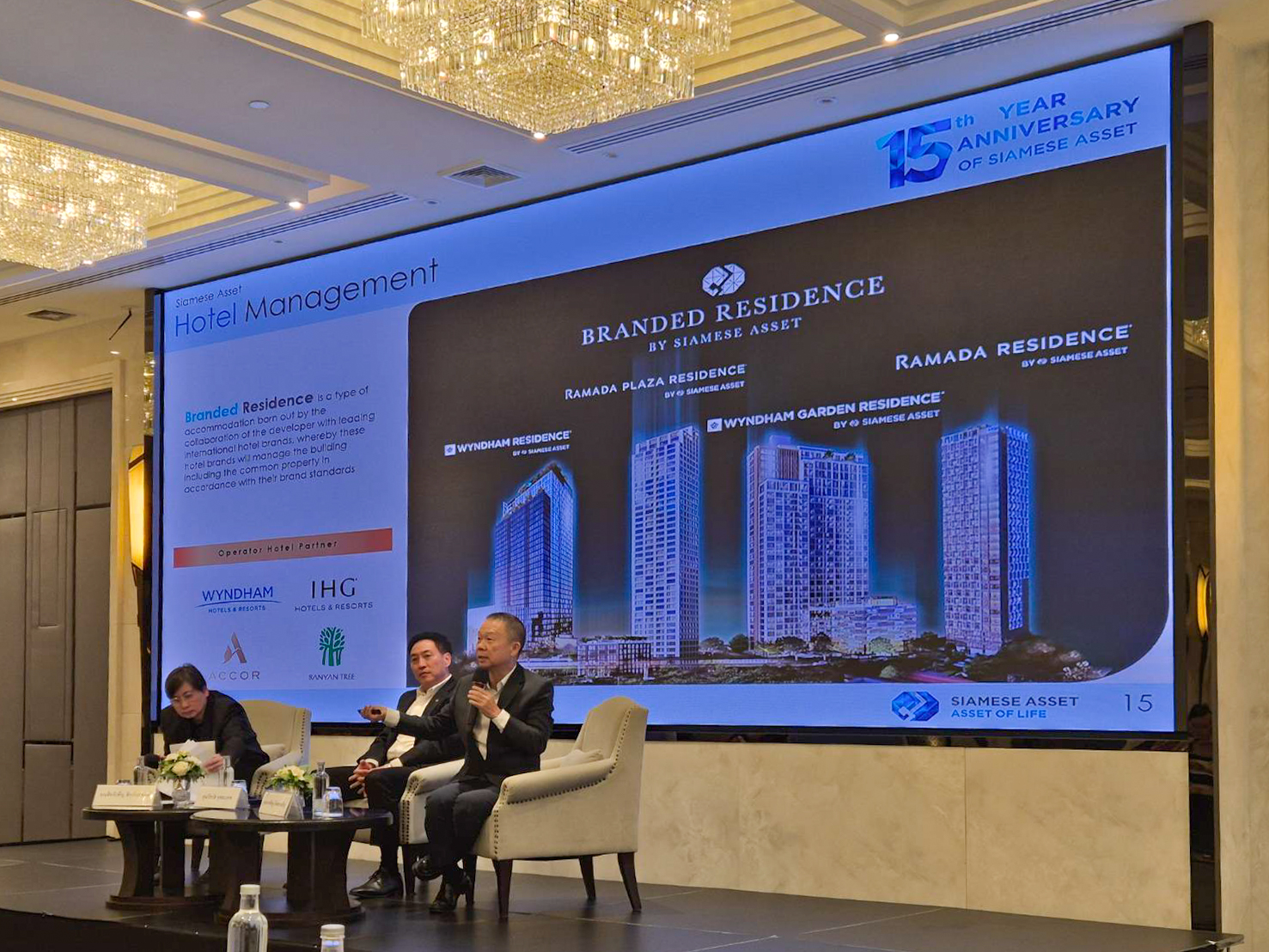
(Reference: Siamese Asset – Adaptation Strategies and Mixed-use from Khajornsit)
Siamese Asset provides a clear example:
“The development-and-sell model is no longer sufficient; developers must generate more recurring income.”
The game-changer is the shift from Developer → Investor–Operator
using three methods:
1. Integrating Branded Residence + Hotel Management
This helps extend income longevity and increase long-term yield.
2. Advancing Large Mixed-use Projects in Rama 9
The project includes
– Residential
– Hotels
– Retail spaces
– Co-living/Co-working
to cater to seniors seeking comprehensive services.
3. Developing a Hotel Portfolio of 954 Keys and Opening New Ones Until 2029
This represents recurring income that enhances the company’s stability.
This direction aligns with the world, as seniors are increasingly utilizing hospitality services over traditional housing.
An Aging Society Is Not a Crisis, But an Opportunity for Developers Who “See First, Adapt First”
Insights from all discussion panels agree that
– Senior housing is no longer a niche but a new standard.
– Developers must have more recurring income than before.
– Mixed-use is the way to make cities truly accommodating for aging populations.
– Finance and credit are the decisive factors for Real Demand.
– Homes must be wellness products, not just shelters.
The demographic structure has changed, and real estate development post-2026 must be based on “the real lifestyle of modern Thai seniors,” not the old models that have been used for decades.
Thank you for the information source: Real Estate Information Center
**** Disclaimer
The statistical data and any writings appearing in this report have been obtained from reliable sources or processed from reliable data. The Real Estate Information Center has verified them to a certain extent, but it cannot guarantee the accuracy or truthfulness and cannot be held responsible for any damages arising from the use of this information. Users should exercise discretion and verify as appropriate.