Singha Estate Charts a Path with Four Core Pillars for Balanced Business Growth, Aiming for Sustainable Value Amidst Economic Challenges
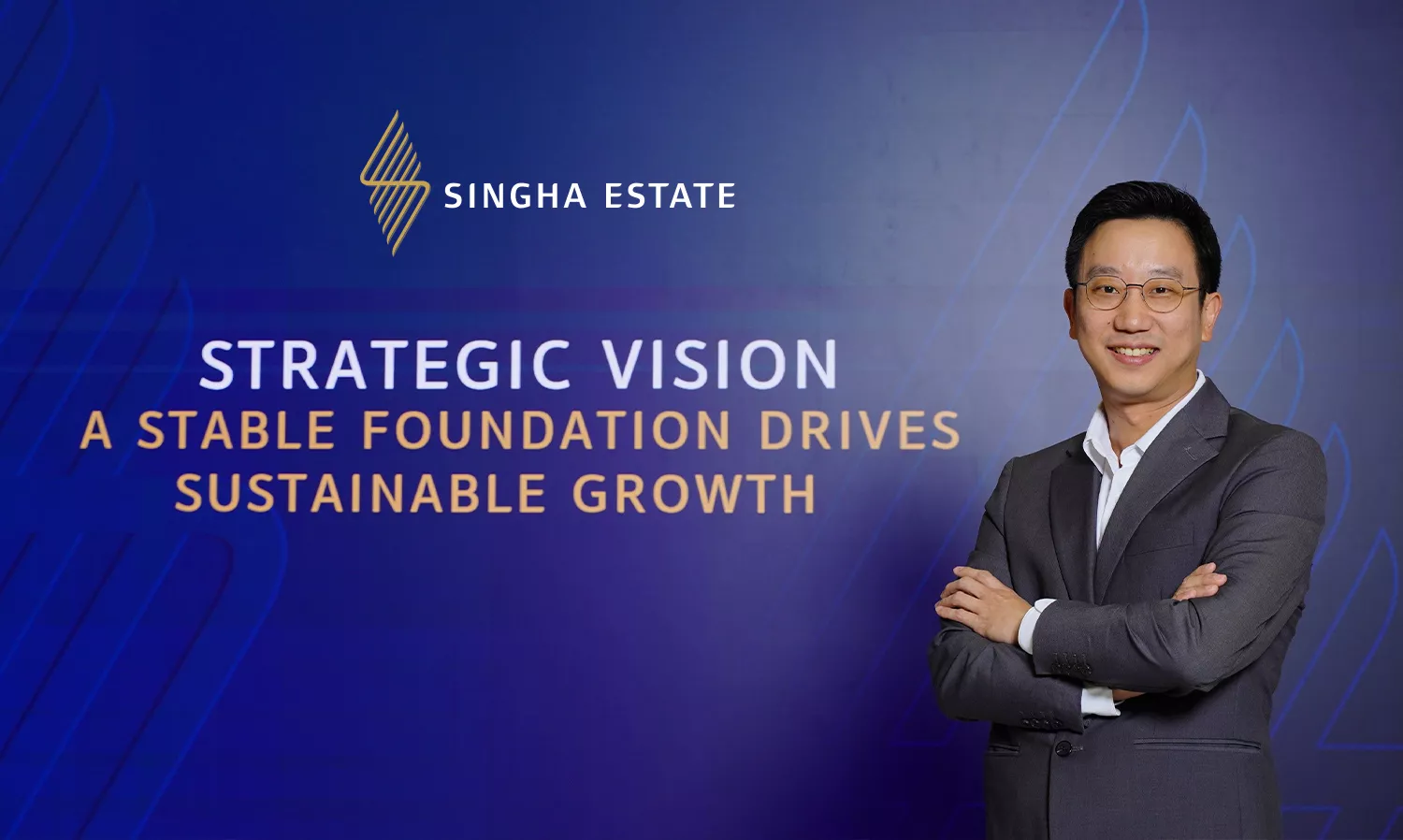
Singha Estate Public Company Limited (SET: S) is a global real estate developer and investor, covering hotel businesses, residential real estate, commercial real estate, as well as industrial estates and infrastructure. The company has announced its growth direction under the strategy of “A Stable Foundation Drives Sustainable Growth”, revealing the role and vision of Chai Rat Siwaprapan, the Chief Executive Officer, who is driving the organization with the mission of “Enriching (Your) Life” to create value in life.
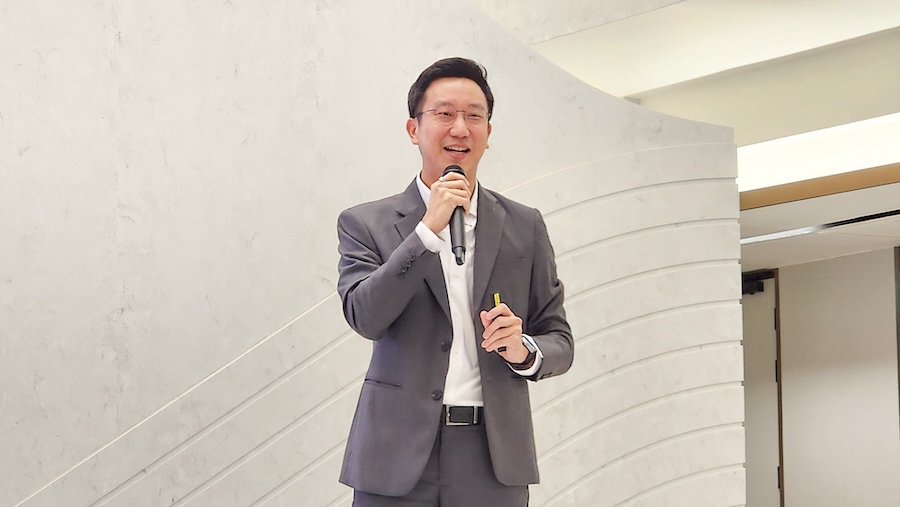
Chai Rat Siwaprapan, CEO of Singha Estate Public Company Limited, stated, “Over the past decade, Singha Estate has been committed to developing the organization towards growth in terms of revenue and asset expansion across four core businesses. Today, we are entering a new chapter in driving our business, focusing on establishing a foundation of business stability, strength in funding, and readiness of personnel to cope with rapid economic changes. Under the strategy of ‘A Stable Foundation Drives Sustainable Growth’, we have established ‘4S’ as the core pillars to drive the organization: Stability, Strength, Synergy, and Sincerity, to create balance in our business and commit to sustainable growth.”
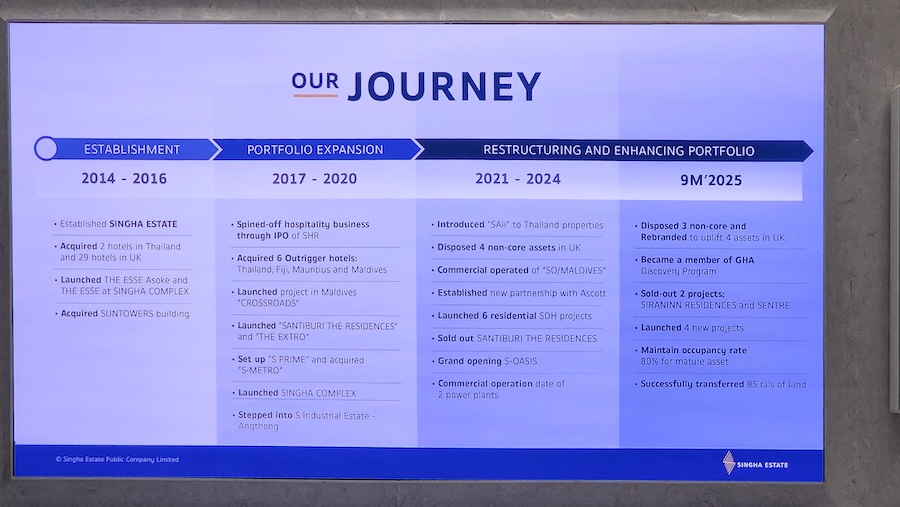
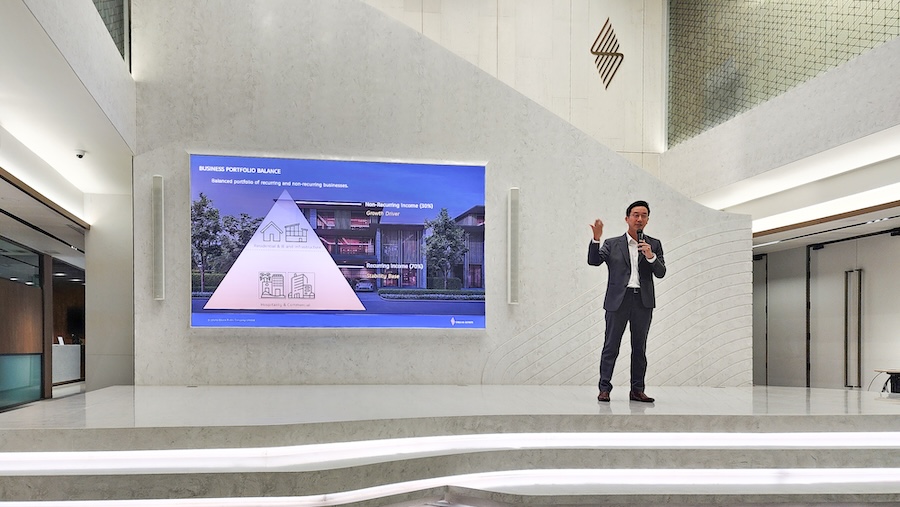
From Business Growth to Establishing a Stable Foundation through “4S” Stability – “Business Management Pillar” to Create a Stable and Balanced Business
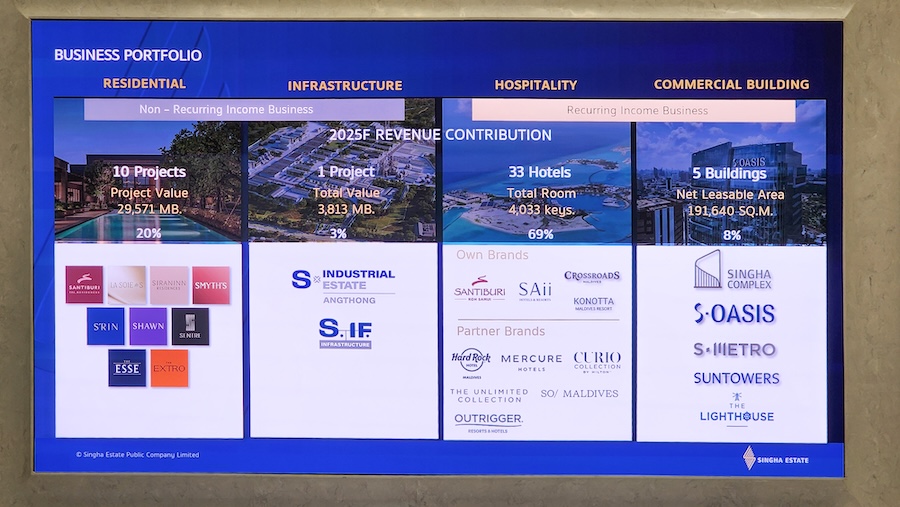
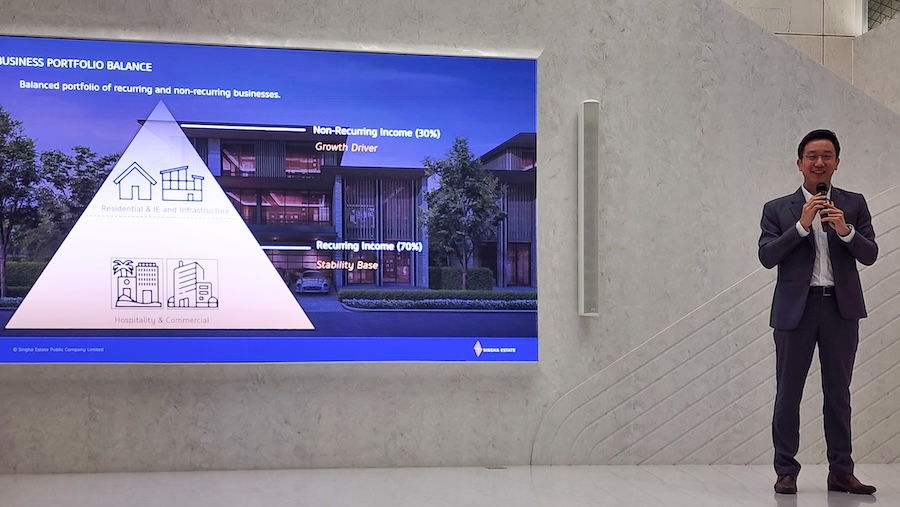
The company’s portfolio from four core businesses divides revenue into two types: recurring income from hotel and office businesses, and non-recurring income from residential and industrial estate businesses. Each type of income is suitable for different economic conditions. Therefore, the company emphasizes managing the balance of both income types, especially during the current challenging economic period. Managing a portfolio of recurring income businesses is a top priority to create a stable profit base, support overall performance, and this profit base serves as a crucial buffer for driving other businesses. At the same time, setting clear goals for each business also contributes to stable growth in the company’s performance and financial outlook.
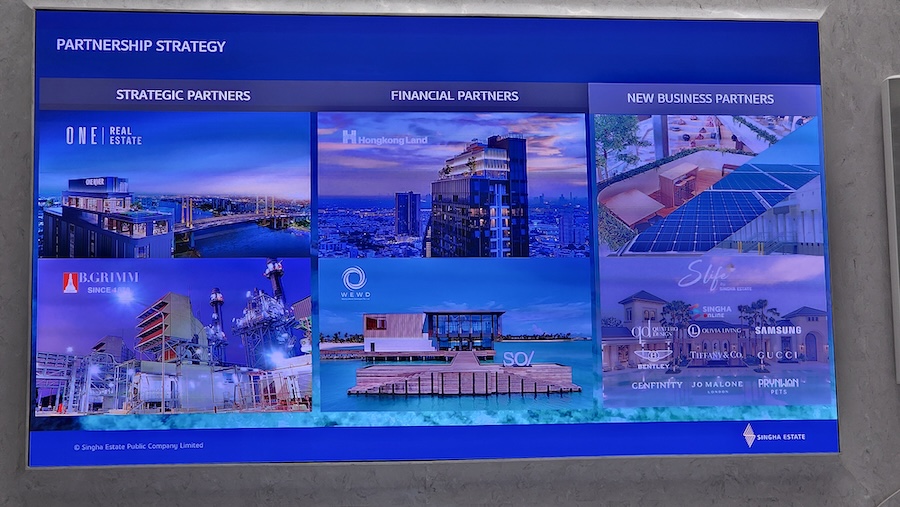
For non-recurring income businesses, the nature of investment has a shorter investment period and return. Therefore, projects to invest in should be flexible according to economic conditions and must identify opportunities even in challenging times. For example, the riverside condominium project “ONE RIVER Rama 3,” a luxury 33-story condominium developed by Singha Estate in collaboration with One Real Estate, currently has sales exceeding 90% despite the project’s launch being early this year, which is a challenging year for property developers with many new projects being launched. This is another example that reflects that business partnerships and seeking opportunities amidst challenging market conditions are key to growth in this type of business. Therefore, the growth direction of this business will focus on finding co-investors to leverage business growth from the specialized expertise of each party that can support each other financially, thereby enhancing strength and reducing mutual risks.
Strength – “Financial Management Pillar” to Build Strength
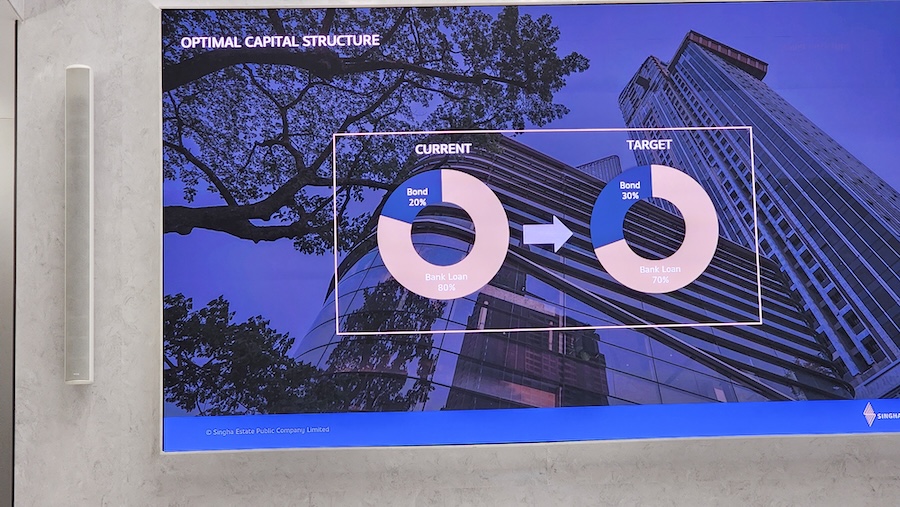
In the past year, the company has been able to raise funds from both bank loans and bond issuance, totaling over 10 billion baht per year, with a loan-to-bond ratio of 80:20. The key feature that has earned the company trust from both banks and bond investors is financial discipline and diverse relationship management with fund providers. In terms of bank loans, the company has a network of over 10 financial institutions that support it, based on confidence in the group’s potential, trust in the developed projects, and the ability to repay principal and interest, which the company has proven even during the most challenging times, such as the COVID-19 crisis. Similarly, in the bond market, although the company has only been issuing bonds for four years, it has already raised over 10 billion baht from the market due to the trust investors have in the company. The company focuses on systematically issuing bonds each year, considering three main factors:
- The amount issued must be appropriate to build credibility for repayment.
- The interest rate set must be suitable for the risk borne by the bondholders and appropriate for market conditions.
- Maintaining diverse distribution channels to reach both bank customers and securities companies.
Both funding channels from banks and bonds are suitable for different economic conditions. Maintaining a balance of funding through both channels is therefore key to building financial strength. Initially, the company aims for a loan-to-bond ratio of 70:30. Additionally, to strengthen financial discipline, even though each business unit does not have a direct role in raising funds, the management of each business unit has goals to maintain important financial ratios of their units, such as the debt-to-profit ratio, to ensure the overall company can maintain stability and aim for improved credit ratings in the future.
Synergy – “Human Resource Management Pillar” Welcoming Perspectives from the Younger Generation
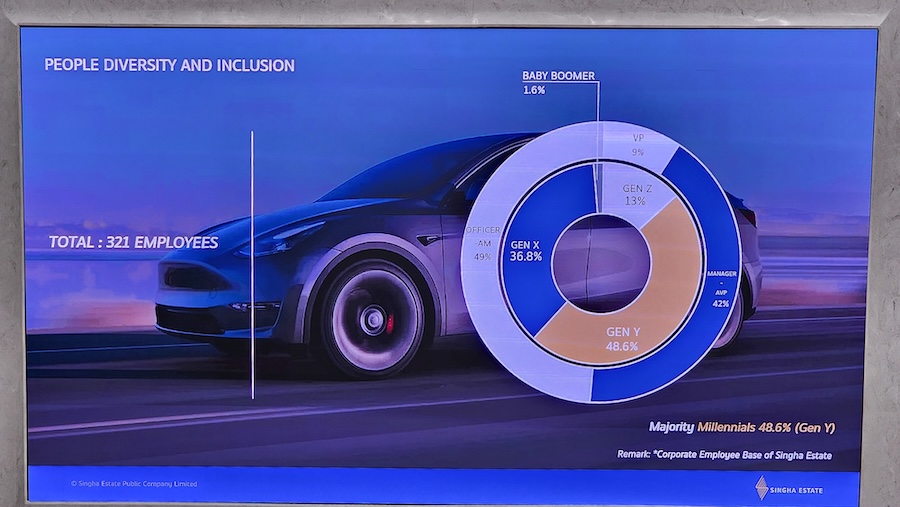
Looking at the workforce composition of Singha Estate, two interesting aspects emerge: when divided by age, over 60% of all employees belong to Generation Y and Z. When divided by position, nearly half of all employees are at the managerial level or higher, comparable to a cylinder shape where the organization has a similar number of leaders and workers. These two factors play a significant role in planning human resource management to align with establishing a stable business foundation: 1) How to involve employees from the new generation in planning, setting directions, and conducting the company’s business, and 2) How to transform the organizational structure into a pyramid shape, allowing experienced employees to grow into leadership roles while simultaneously bringing in younger generations to energize the workforce.
In today’s business environment, there are no fixed formulas for success. Experienced executives must adapt to current circumstances. Therefore, the experience of senior employees serves as the structure or backbone that holds the organization together, allowing them to see problems, risks, and preventive measures based on their extensive experience. Meanwhile, ideas from the younger generation are like the wheels, gears, technology, or various gadgets that are all selling points and factors for success in today’s increasingly diverse business landscape. For instance, in developing a residential project today, we do not focus on capturing a market worth 100 billion baht for everyone to love our products, but rather on whether we can design products that resonate with a target group of 40-50 people. Thus, ideas from the younger generation are crucial for reaching that target group. The company’s role is to create an environment that encourages this group to think, act, and express their opinions. Previous executives should start their answers by asking questions to open up space for diverse perspectives, leading to the most suitable business solutions.
Regarding the company’s organizational structure, addressing the working needs of the younger generation requires not only providing space for opinions but also considering career advancement as a crucial factor in deciding to stay with the organization. Therefore, adjusting the organizational structure to a pyramid shape means that if a management position becomes vacant, the replacement could be from the operational level to provide opportunities for younger employees to advance in their careers. This change may not yield immediate results but is necessary in the long term if we want to build a new generation of employees, who make up over 60% of the company, to be a key force in driving sustainable business growth.
Sincerity – “Sustainability Management Pillar” Genuine Commitment to the Environment and Society
Today, when discussing establishing a stable business foundation, the core of business planning alongside environmental and social preservation is undeniably essential. These factors play a significant role in the perspectives of stakeholders, such as customers, who increasingly prioritize these issues, as well as clearer legal requirements. Singha Estate emphasizes managing ESG by driving it alongside tangible business growth that can be realized, rather than focusing on activities solely for image-building. Because if activities are conducted merely for image creation, from a business perspective, we call it “expenses.” However, if it involves creating activities that promote business growth alongside environmental and social preservation, we refer to it as “building a solid foundation.”
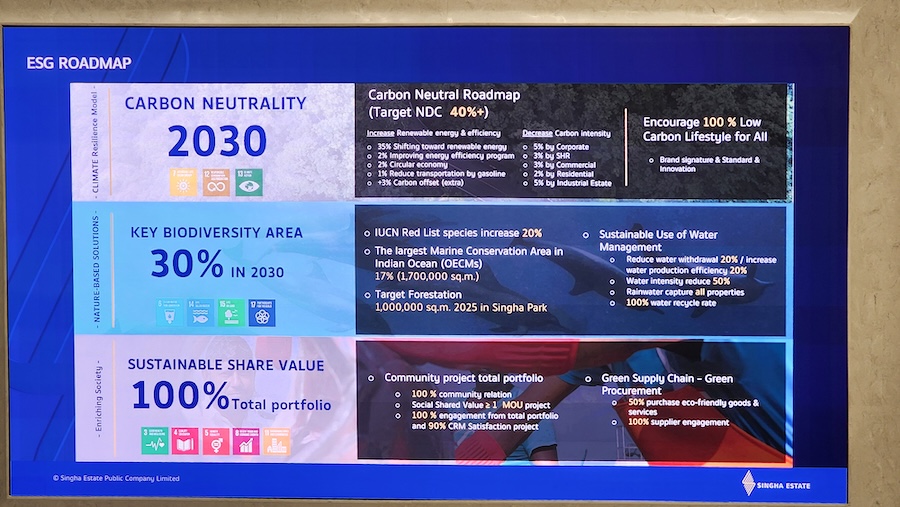
Singha Estate has developed a sustainable development plan encompassing environmental, social, and governance aspects, focusing on the outcomes of activities that align with business operations while also creating tangible benefits for communities, society, and the environment. This includes emphasizing the use of human resources to study those activities to understand the outcomes deeply, rather than just allocating budgets for one-off activities. For example, the marine conservation project at SAii Lagoon Maldives, Hard Rock Hotel Maldives, and SO/ Maldives in the CROSSROADS project in the Maldives, we have carefully planned to conserve marine life, such as sea turtles and dolphins, which we detected since the hotel construction in 2017. Currently, the area has a resident dolphin population that uses it as both a habitat and breeding ground. This dolphin habitat has also become a business benefit for guests staying at the company’s three hotels.
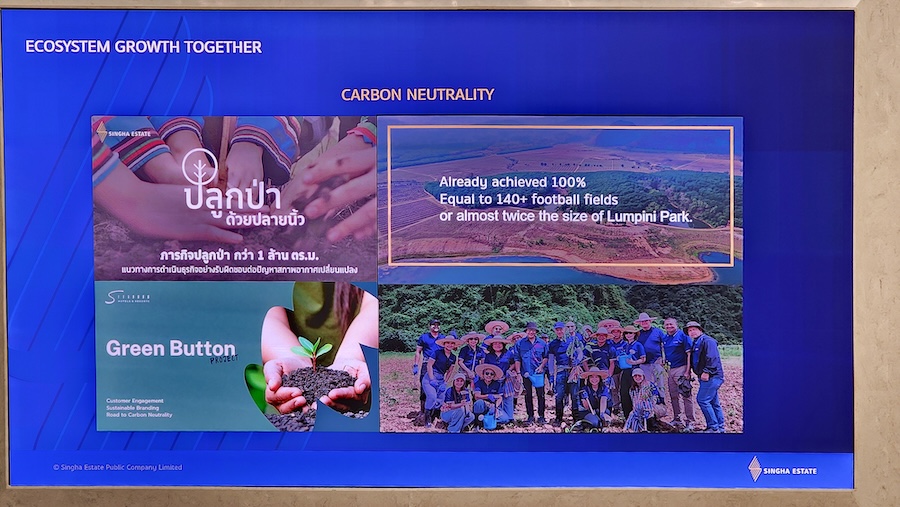
Another example is the “Planting Forest with a Finger” project, overseen by Singha Estate Group, to increase carbon absorption areas over more than 1,000,000 square meters or approximately 625 rai at Singha Park, Chiang Rai. If viewed as a general tree-planting activity, it would become a social activity or CSR. However, our tree planting focuses on using native species to increase the survival rate of planted trees, ensuring tangible environmental outcomes. Simultaneously, we connect activities to the business sector by initiating the “Green Button” project, which allows guests staying at the company’s “SAii Hotels & Resorts,” including SAii Laguna Phuket, SAii Phi Phi Island Village, SAii Koh Samui Villa, and SAii Lagoon Maldives, to participate in reducing environmental impact by pressing the Green Button in the application to choose not to change bed linens daily, significantly reducing water, energy, and chemical use from the laundry process. The savings from these resources will be used to support the “Planting Forest with a Finger” project, creating engagement for guests in experience-based tourism related to environmental conservation, in line with current tourism trends. This is empirical evidence that to make the sustainability management pillar function fully, activities must be created in alignment with business operations creatively, which may take time to conceptualize, but the resulting outcomes will lead to sustainable business growth, not a burden of expenses for the company.
“All of this represents the four core pillars that must be driven to create a solid foundation for business. The growth of the business is committed to balancing the portfolio, balancing funding sources, balancing personnel growth, and balancing society, communities, and the environment, which helps strengthen the company to withstand rapid changes from the current economic and social conditions. Ultimately, we all strive to find the balance of all four pillars so that Singha Estate can give back to all stakeholders of the company and truly ‘create value for your life’ according to our business philosophy,” Chai Rat concluded.