Sansiri Launches Comprehensive Specialty Coffee Learning Center as a Social Business Project to Stimulate Local Economy and Drive Towards a Sustainable Social Enterprise Model
- Three Private Sector and Civil Society Partners in Thailand led by Sansiri – Saenchai Farm - Beans Coffee Roaster have launched the social business project 'Comprehensive Specialty Coffee Learning Center' in Kalyanivadhana District, Chiang Mai.
- The aim is to create a ripple effect to elevate the local economy through a sustainable business model, hoping to promote a social enterprise centered around Thai specialty coffee while addressing environmental issues from forest fires, air pollution, and flooding to enhancing the local economy and creating a return to the homeland. This will establish a sustainable community development mechanism by generating self-income through business operations without solely relying on donations, while reinvesting profits back into the community.
- The operational goal for the next 5 years (2026–2030) is to become a hub for those interested in coffee, aiming to promote coffee knowledge as part of university curricula in the northern region.
"A Small Seed of Hope" to Create a Ripple Effect in the Local Economy
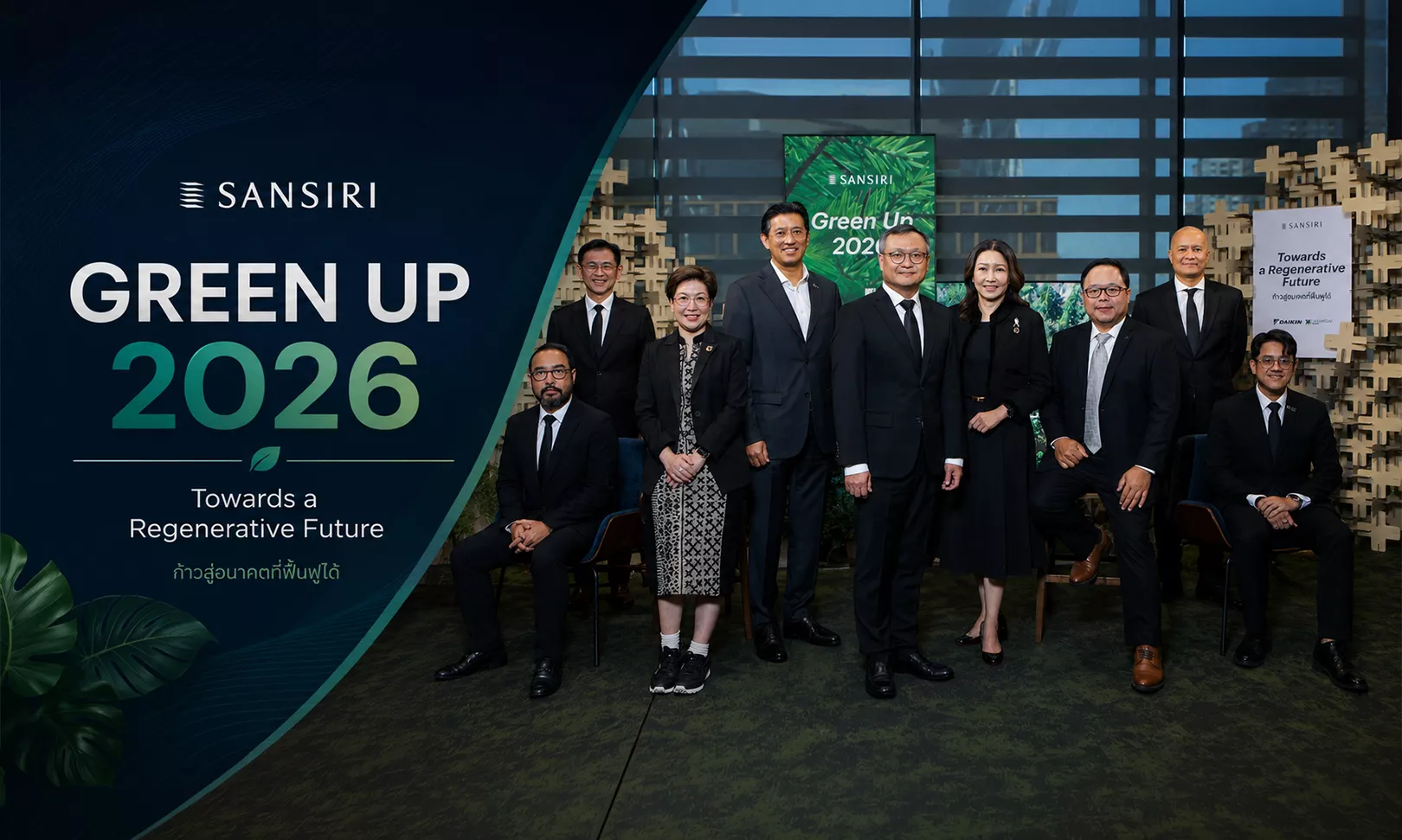
Samatcha Promsiripak, Chief of Staff at Sansiri Public Company Limited stated that one of the core focuses of Sansiri's ESG efforts for over 40 years is to care for four pillars: customers, employees, partners, and society, reinforcing the idea of creating a sustainable future every day to reduce inequality for a better society and stronger communities. Each project will be carried out continuously to achieve tangible results.
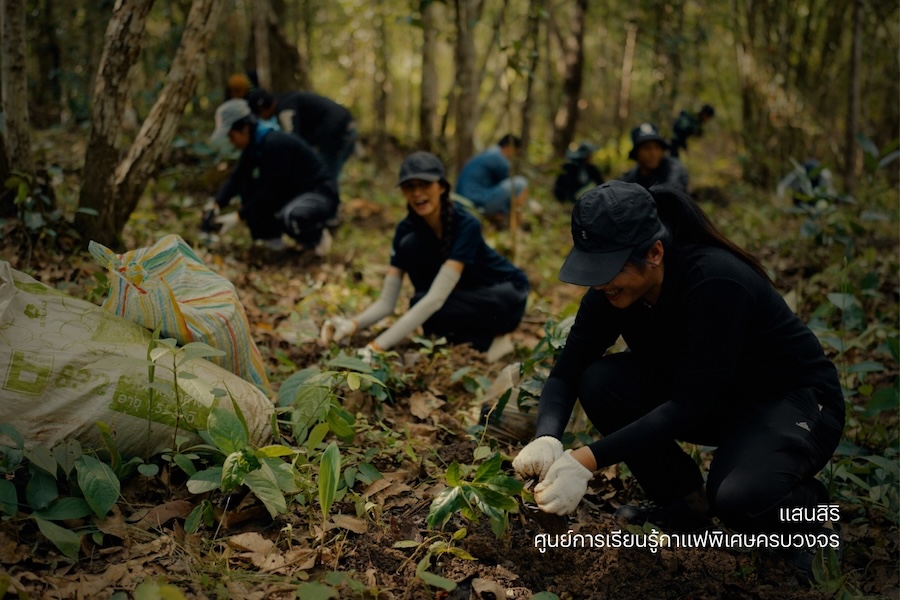
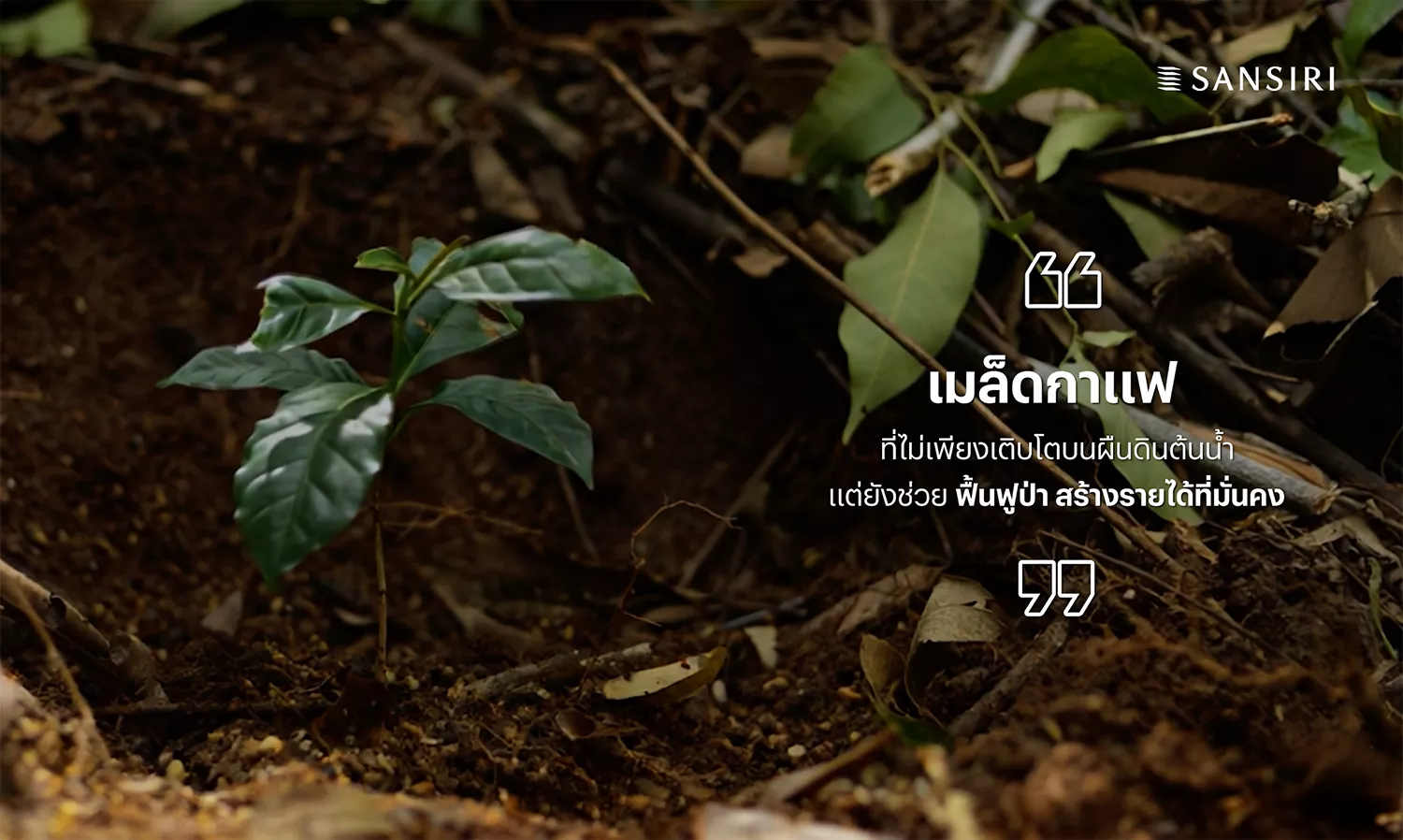
Regarding coffee and community, Sansiri has supported various social activities related to coffee and community development. We recognize the importance of supporting economic crops in the community that can create sustainable job opportunities with minimal environmental impact. The cultivation of high-quality coffee that can be grown in a sustainable agricultural system helps preserve forests, reduce slash-and-burn practices, and provides a sustainable income for farmers. We have continuously supported initiatives, such as in 2014 when Sansiri began supporting coffee from farmers in Doi Phahhee, Chiang Rai, to produce the “Sansiri Signature Blend Coffee” served in Sansiri Lounge and hotel chains, supporting local coffee experiences for tourists during the Chiang Mai Coffee Week 2024, and initiating the Future Harvest project to support 5,200 high-quality coffee seedlings to 15 farmers in Kalyanivadhana District, Chiang Mai, continuing for 2 years (2024-2025).
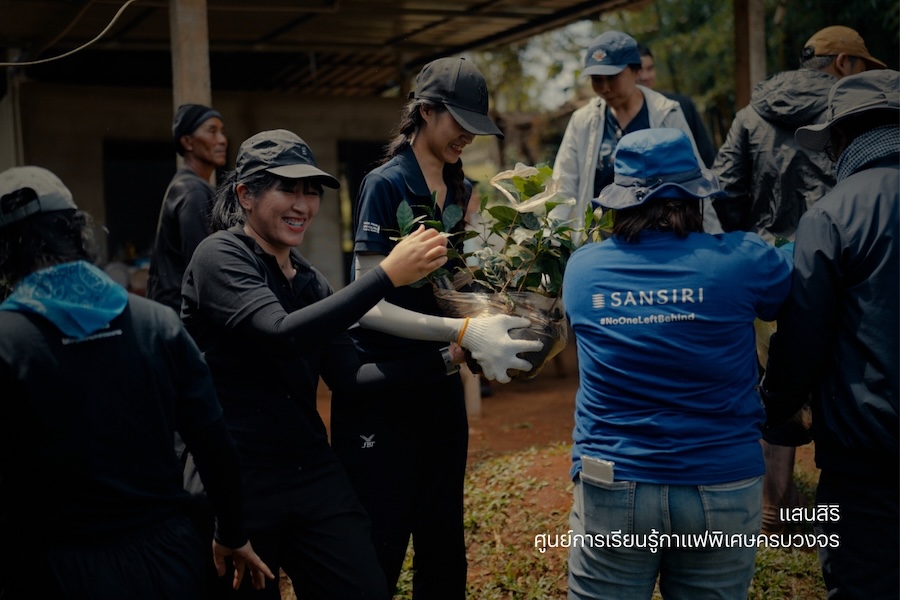
“Later, Sansiri had the opportunity to consult with the Stock Exchange of Thailand and received advice on promoting the registration of companies to develop a Social Enterprise to create tangible social outcomes. For instance, establishing a “non-profit social enterprise” to drive social activities or projects continuously, generating self-income from business operations to avoid solely relying on donations, and reinvesting all profits back into the community. This led to the establishment of the “Comprehensive Specialty Coffee Learning Center” as a way to connect farmers and all sectors involved in this industry to elevate the local economy together, hoping to serve as another example of creating mechanisms to help build.
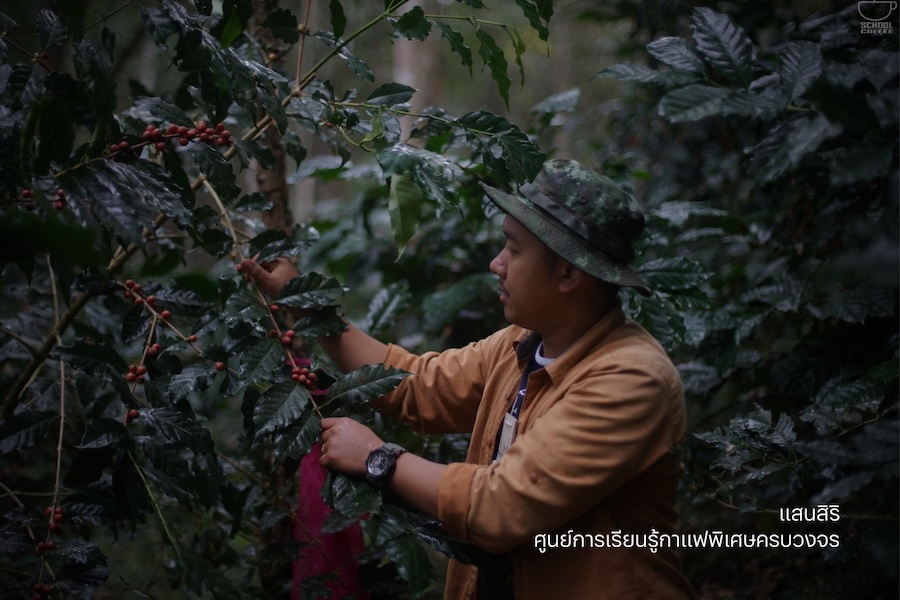
The sustainability of positive change in communities and society, both locally and nationally, is expected to drive serious efforts and self-growth, creating strong communities and serving as a model for the development of high-value economic crops in Thailand.”
Data shows that coffee cultivation has been a crucial part of forest conservation in the northern region for over three decades, producing clear results in addressing migration issues by creating stable jobs and income in communities, reducing deforestation through conservation-focused agricultural systems, and improving quality of life by increasing coffee value 3-5 times (from 70 baht to 210-350 baht/kg), creating a model for high-value economic crops.
The Comprehensive Specialty Coffee Learning Center Sparks the Thai Coffee Industry
Sansiri plans a social business that addresses this issue in collaboration with Saenchai Farm - Beans Coffee Roaster and advisors from the Specialty Coffee Association, aiming to launch the “Comprehensive Specialty Coffee Learning Center” along with a model coffee farm on over 16 rai in Kalyanivadhana District, Chiang Mai. This center will serve as a hub for all knowledge from “upstream to downstream” in one place, working closely with farmers to share knowledge for experimentation, development, and cultivation of specialty coffee varieties.

“Another supporting factor is that some locals will have the opportunity to work at this learning center, providing them with income and knowledge about coffee cultivation, harvesting, and processing, enhancing their own coffee farming practices and fostering group collaboration to improve coffee cultivation quality. Additionally, there is a goal to create a “pull factor back home” when specialty coffee has good prices and a stable market, leading to a community with sustainable and significantly higher income. The resulting economic stability will become a magnet attracting young people who had to leave home for work in other areas to be able to “return home” and continue agricultural careers with pride.”
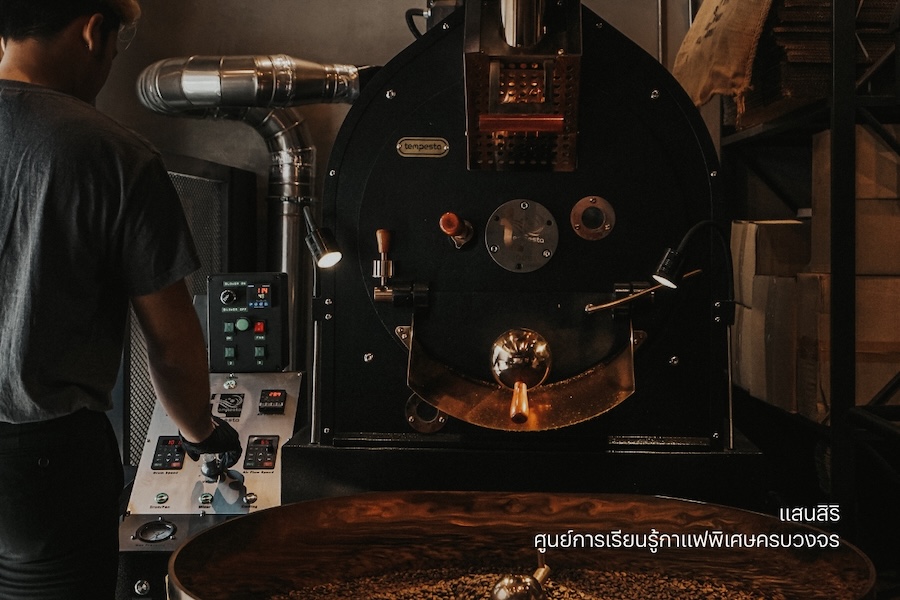
The learning center aims to achieve the goal of becoming a 'model center' or Sustainable Model within 5 years (2026–2030), with a knowledge transfer system covering cultivation, processing (through innovations like Biochar and strain testing), product creation with the community, establishing a fair central market system, and nurturing new entrepreneurs, while expanding and promoting coffee knowledge as part of university curricula in the northern region. This will create sustainability for the specialty coffee industry in the northern region and beyond, elevating Thai specialty coffee to international standards, sparking and serving as a model for high-value economic crops that can be adapted by other agricultural sectors, fostering sustainable growth from increased farmer income, the return of labor, and forest restoration, and advancing to Asian and global levels by using quality and sustainability as selling points.
Voices from the Ecosystem Towards a Strongly Growing Thai Specialty Coffee
Upstream: Knowledge and Quality Cultivation
Saenchai Jupeua, owner of Saen Chai Estate and model farmer in Kalyanivadhana District, revealed that “Thai coffee is not only improving technically but also in terms of culture, understanding, and mutual support. We see a strong community growing together, not one person ahead, but in a rhythm that supports each other. Coffee is also an environmentally friendly crop that helps protect soil quality, water sources, and surrounding ecosystems, especially in Kalyanivadhana District, Chiang Mai, recognized as the lungs of Asia. Coffee cultivation aligns with local culture and lifestyle, which encourages young people who study or work in cities to return home to their families. We believe that cultivating high-quality coffee using Eco Farming combines local wisdom with modern technology, employing a system of growing under tree shade in forests, as Arabica coffee requires shade from trees at high altitudes, helping to prevent deforestation. The establishment of this center is an investment in social and environmental value as it creates a model that can heal society and restore forests sustainably.
Midstream: Value Addition and Quality Control
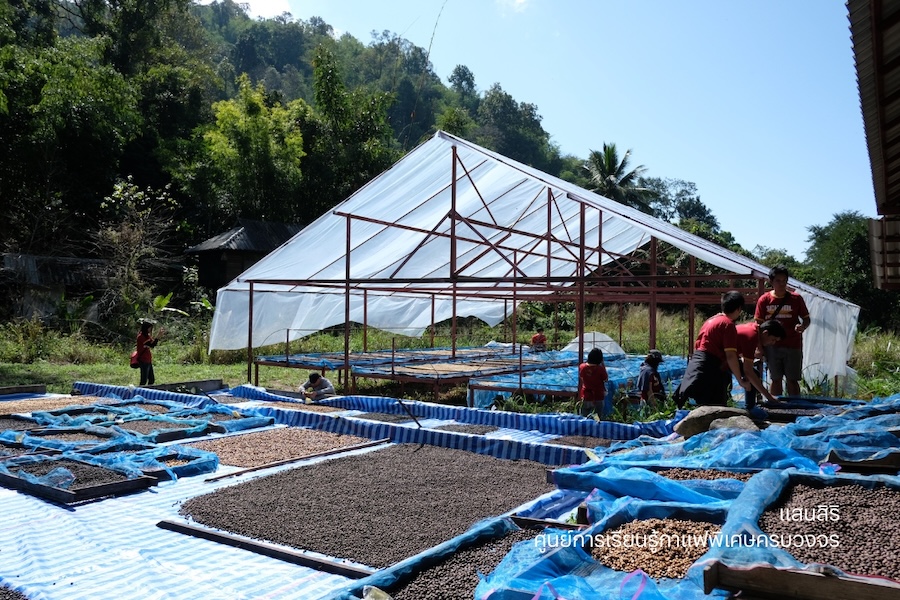
Borisak Apikantikul, advisor to the Comprehensive Specialty Coffee Learning Center project and expert from the Thai Specialty Coffee Association, stated that we want Thai farmers to understand the production methods and how to transition to specialty coffee, starting from seed selection, coffee drying, and waste management, which are crucial for turning ordinary coffee into Specialty with scores of 85+ and increasing prices by 3-5 times. Most Thai farmers still lack knowledge and tools for quality control. We are confident that this project will set a higher standard for our operations, allowing farmers and communities to increase their income and strengthen their professions.
Downstream: Creating Added Value
Akarin Siwapornpitak, one of the founders of Beans Coffee Roaster, revealed that personally, my family has a coffee farm and roasts coffee ourselves, until I joined friends to open Beans. We believe that good coffee is not just about taste but also about responsibility towards the environment and society. The global market recognizes the quality of Thai coffee, but we must work together to create a system that allows farmers to meet those standards. The quality process will lead to creating added value for agricultural products through quality enhancement and branding. Additionally, the center will also serve as a new agricultural tourism destination where visitors can learn about the coffee production process from start to finish in one place. “This collaboration is thus about creating sustainable careers throughout the supply chain, while also leveraging Thailand's advantage of having a complete production chain from the mountain tops to coffee shops that are widely growing across the country. We expect this Comprehensive Specialty Coffee Learning Center to be a Sustainable Model for developing and enhancing products that connect farmers with consumers fairly, serving as a hub for coffee varieties for study, experimentation, and distribution, and a link between the Thai coffee industry and the international market,” Samatcha concluded.