Fed Cuts Interest Rate by 0.25%, Maintains Cautious Stance, Expects Two More Adjustments This Year
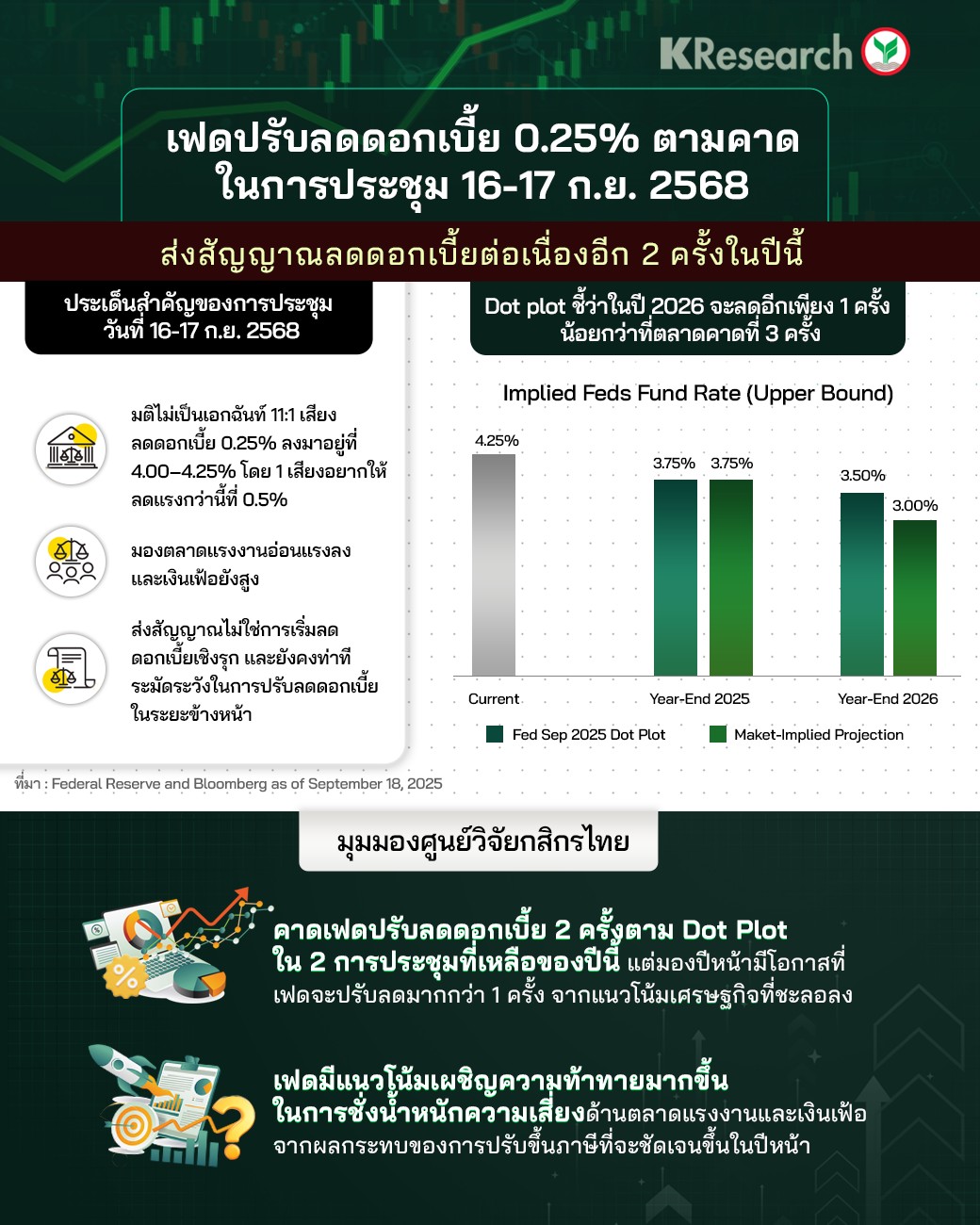
The Federal Open Market Committee (FOMC) meeting on September 16-17, 2023, decided to lower the policy interest rate by 0.25%, as the market had anticipated. This adjustment brings the federal funds rate to a range of 4.00-4.25%, marking the first easing of monetary policy in several months. The decision was not unanimous, with a vote of 11 to 1. The majority supported the 0.25% cut, while one member advocated for a more significant reduction of 0.5%, reflecting differing views on economic and inflation risks. The Fed clearly stated that this cut is not the beginning of an aggressive easing policy but a cautious measure, given that inflationary pressures remain and the labor market has not shown signs of severe downturn.
According to the latest Dot Plot signals, the Fed may reduce interest rates two more times during the remaining meetings of this year, potentially bringing the year-end rate down to 3.50-3.75%, a significant decrease from the current level of 4.25%. However, the financial markets have differing expectations, suggesting a possibility of more than three cuts, reflecting concerns over a clearer economic slowdown in the U.S. by the last quarter of this year. For 2024, the Dot Plot indicates that the Fed will only cut rates once more, resulting in an estimated year-end rate of around 3.00%, which is about 1.25% lower than the current rate but still higher than market expectations. Kasikorn Research Center estimates that the Fed is likely to face increasing challenges in balancing the dual risks of maintaining inflation stability above the 2% target and preventing a slowdown in the labor market and consumer spending.
Another significant pressure point is the impact of tax increases that will become more apparent next year, which could reduce household purchasing power and affect overall economic growth, increasing the incentive for the Fed to cut rates more than expected.
In the short term, the Fed's interest rate cut is likely to support stock markets and risk assets globally, but the movement of the U.S. dollar may become more volatile based on changing investor expectations regarding the number of rate cuts. In summary, the Fed has chosen a cautious path, reducing rates by 0.25% as expected and signaling two more cuts this year. Although the Dot Plot still predicts limited adjustments, economic pressures that may intensify next year could prompt the Fed to act more swiftly than anticipated.