Samui Real Estate Market Thrives: Condo and Villa Rentals Surge, Market Value Reaches 30.3 Billion Baht
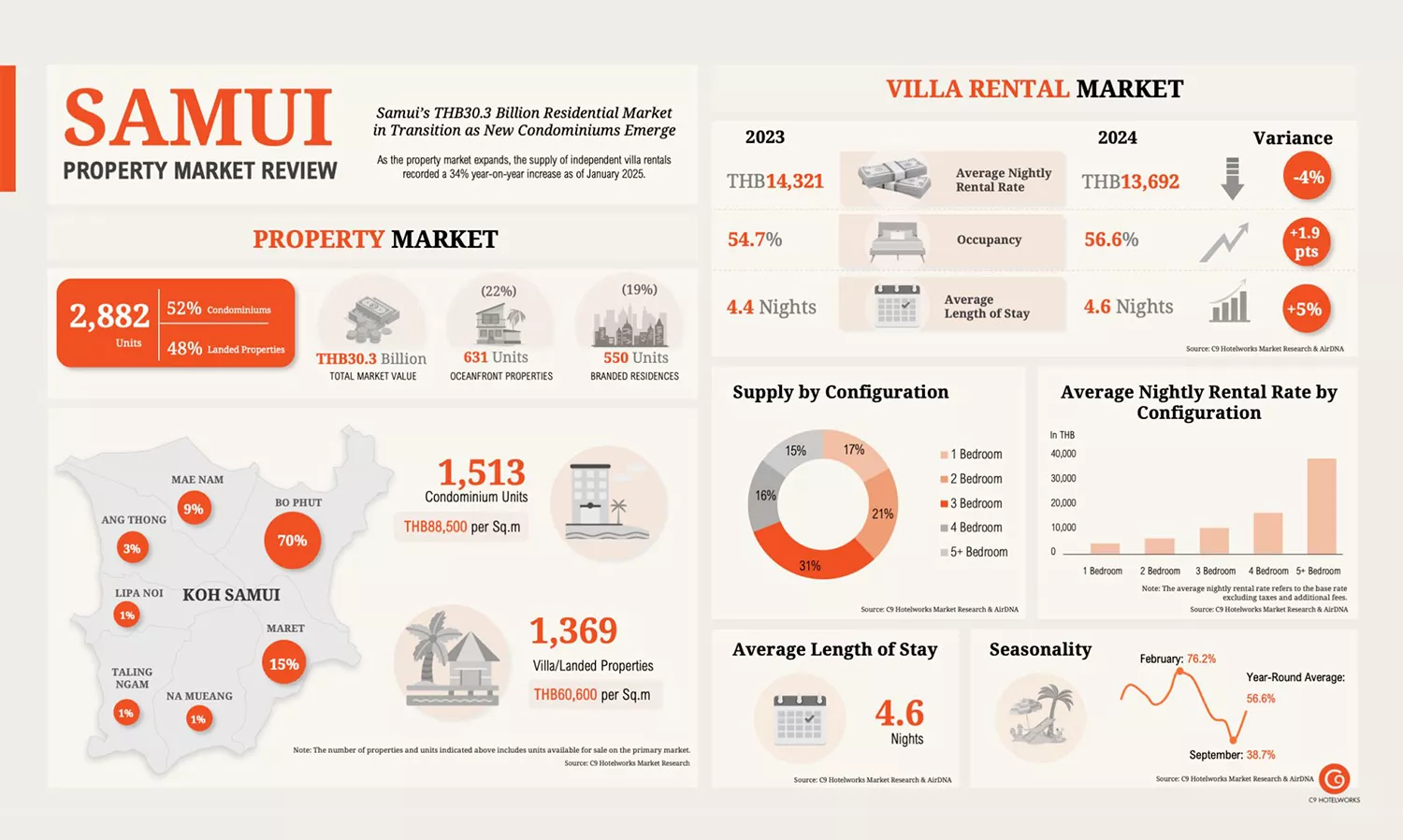
The residential real estate market on Koh Samui is undergoing a significant transformation, characterized by rapid growth, increased diversity in housing types, and intensified competition in the short-term rental market. According to the latest report, "Samui Property Market Update 2025" by C9 Hotelworks, the current market value of real estate on Koh Samui stands at 30.3 billion baht. The market is shifting from a primary focus on villa accommodations to higher-density residential projects such as condominiums, in response to changing investment trends and a continuous rise in interest from foreign investors.
Rapidly Increasing Supply is Shaping a New Market Direction
One of the key trends in the Koh Samui real estate market today is the growth of independently rented villas, which have increased by 34% compared to last year (data as of January 2025). This increase in housing supply has led to significant price competition, with the average nightly rental rate in the first quarter of 2025 dropping by 11% to 13,012 baht per night. However, despite the decrease in rental rates, occupancy levels have risen by 5.7 percentage points to 71.5%, reflecting sustained demand, particularly from tourists seeking luxury and privacy. "What sets Samui apart is the strong fundamentals of its hotel and real estate market," said Bill Barnett, Managing Director of C9 Hotelworks. "Compared to other destinations in Thailand where land prices are soaring, Samui still has relatively low land costs, allowing for the development of luxury villa projects at competitive prices, many of which also offer beautiful sea views."
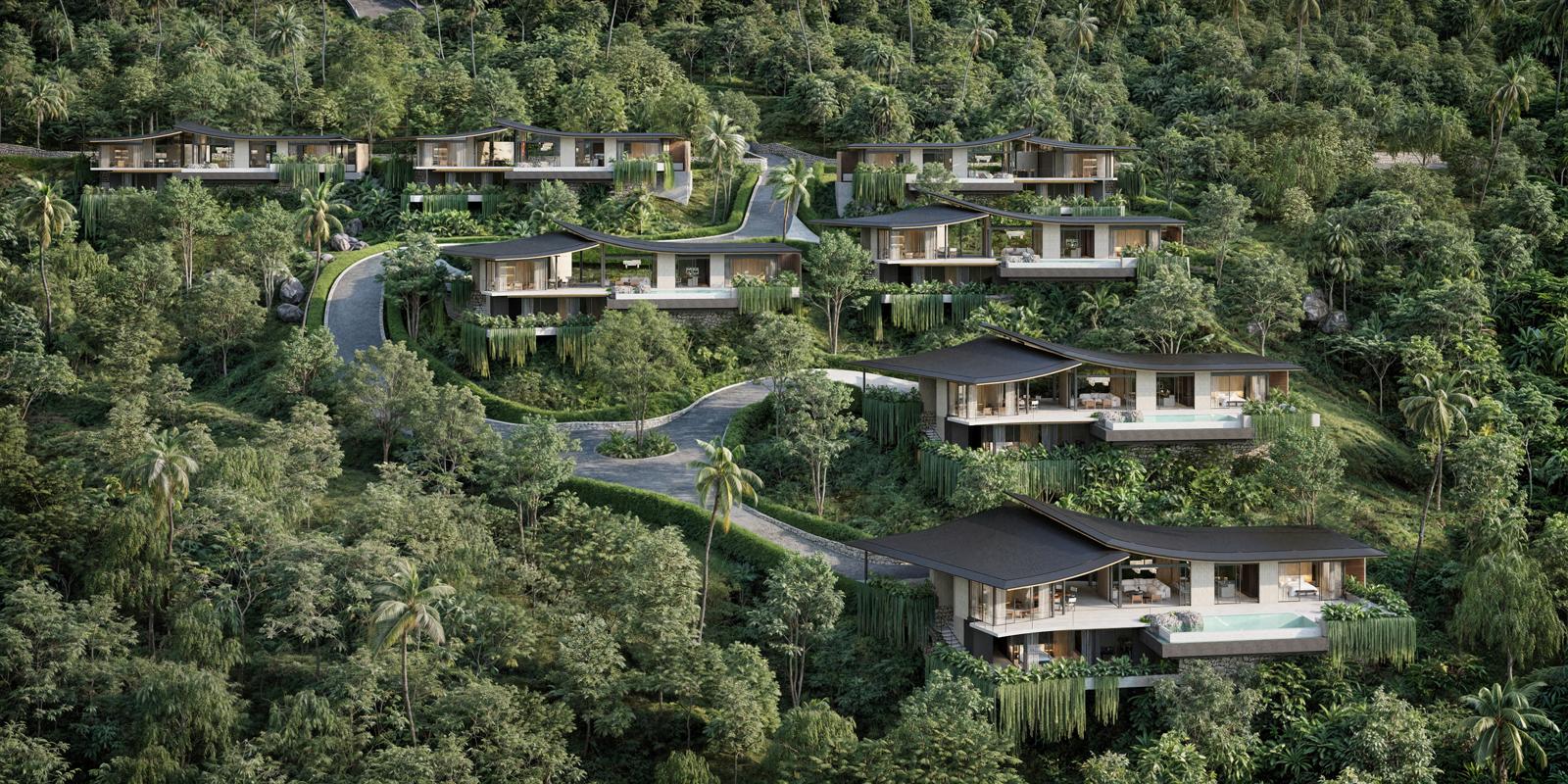
Meanwhile, residential development on Koh Samui is shifting towards larger, resort-style condominiums with higher density. Notable new projects include Anava Samui (564 units) and Wing Samui (533 units), reflecting the market's expansion from villa-style housing to options that cater to the lifestyles of modern buyers, including investors looking for more manageable and affordable housing.
Trends in the Housing Market and Directions of Various Locations in Samui
Currently, the main residential market on Koh Samui comprises a total of 2,882 units spread across 117 projects, with over 70% of the total supply located in Bophut, the island's central area, which includes Samui Airport and popular beaches like Chaweng. Other areas include Maenam (15%), Maret (9%), and Ang Thong (3%).
Condominiums account for 52% of the total housing supply on Koh Samui, reflecting the growing role of new real estate developments, while villas or residential homes still hold a significant 48% share of the market, although they are increasingly making way for the growth of condominium projects.
In terms of selling prices, condominiums have a median price of 88,500 baht per square meter, while landed residences average 60,600 baht per square meter. For one-bedroom condominiums (40–70 sq.m.), the median price is approximately 3.5 million baht, while two-bedroom units (80–110 sq.m.) have a median price of 7.2 million baht. Villas are significantly more expensive, with three-bedroom units (250–350 sq.m.) averaging 14.9 million baht.
Competition in the Villa Rental Market on Koh Samui
In 2025, the villa rental market on Koh Samui comprises a total of 3,055 properties, most of which are managed by third-party service providers. These villas are typically used in two ways: as private vacation homes and as income-generating rental properties. The market mainly consists of two- and three-bedroom villas, accounting for 21% and 31% respectively, while larger villas with four or more bedrooms make up 31% of the total supply, catering to large families and groups of travelers.
The villa rental market on Koh Samui exhibits clear seasonal fluctuations, with the lowest occupancy rate at 38.7% in September and peaking at 76.2% in February. The average length of stay is around 4–5 nights. Although the average nightly rental rate has decreased due to the increase in the number of villas on the market, demand from affluent tourists remains strong, particularly among those who prioritize privacy and unique experiences. Despite the average nightly rental rate dropping to 13,012 baht in the first quarter of 2025, occupancy rates have increased, indicating that strategies focusing on guest volume are proving effective among many operators. Balancing price and management efficiency has thus become a crucial factor driving the market, which is evolving towards greater professionalism.
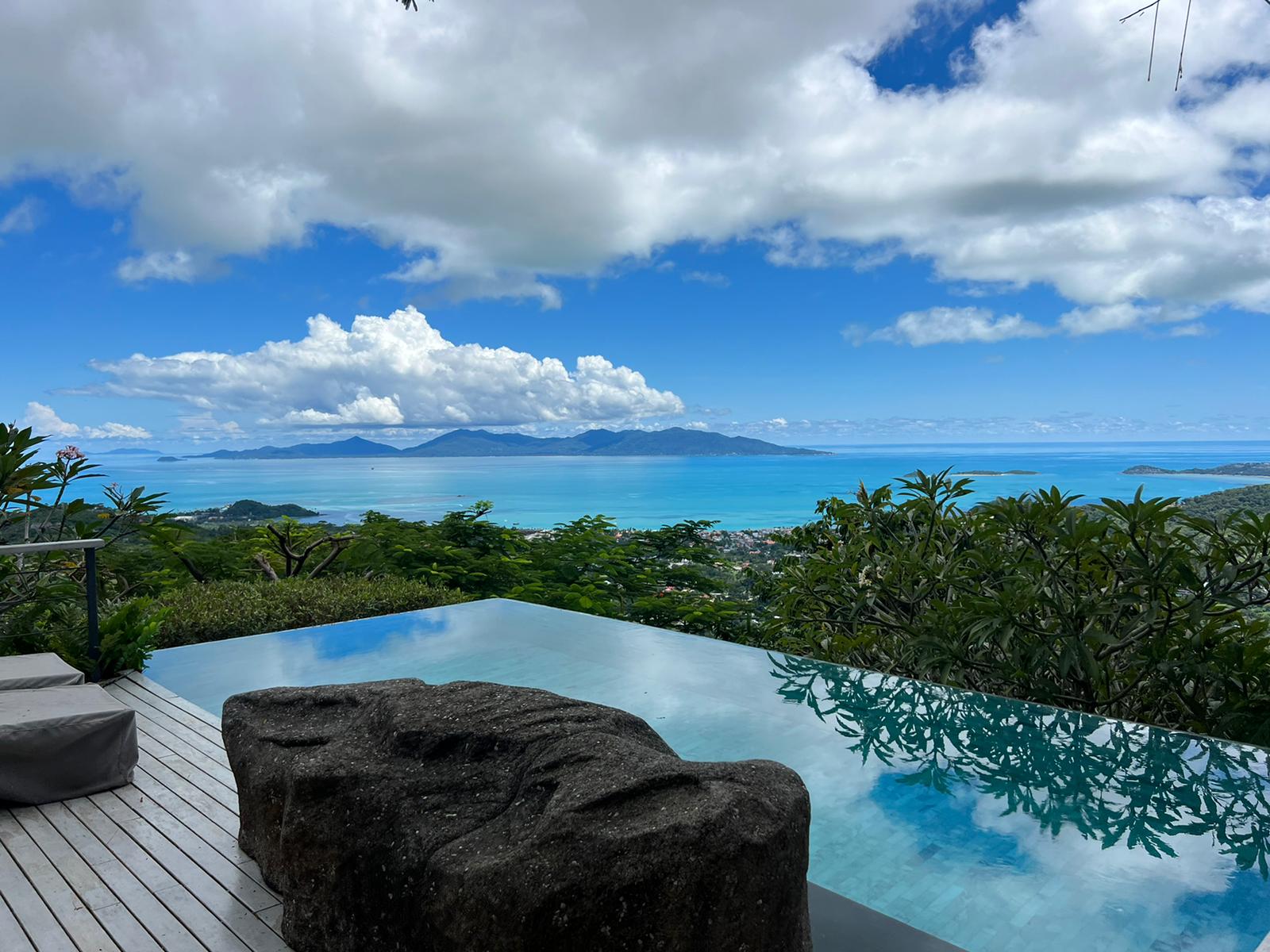
Bophut: Boutique Villas Meet Growing Demand
One of the most popular villa locations on Koh Samui is the Bophut area, where interest in boutique residential projects continues to rise. Developments in this area stand out for their beautiful modern designs, privacy, and proximity to popular tourist attractions like Fisherman’s Village. Luxury villas in Bophut also align with the health and contemporary tropical design lifestyle trends, reinforcing the area's role as a favored destination for buyers seeking quality of life and a unique lifestyle.
Market Value and Property Types
Geographically, the areas of Bophut, Maenam, and Maret together account for 85% of the market value of real estate on Koh Samui, clearly reflecting the attractiveness of these locations and their readiness for development. Beachfront properties total 631 units, while Branded Residences comprise 550 units, indicating a growing preference for premium assets that emphasize quality of life and unique branding.
In terms of selling prices, properties increase in value with unit size, with two-bedroom villas (150–250 sq.m.) priced around 12.2 million baht, while larger four-bedroom villas (400–500 sq.m.) may exceed 28.9 million baht. For condominiums, the key selling points remain value for money and amenities that cater to lifestyle needs, with many developers targeting both foreign investors and Thai city dwellers looking for vacation homes or investment properties.
Market Outlook and Considerations for Investors
The evolving real estate market on Koh Samui presents new opportunities for investors and developers. While the increase in the number of properties in both villas and condominiums puts pressure on market price levels, particularly in the short-term rental segment, factors such as rising demand, improved occupancy rates, and enhanced flight connectivity help mitigate some of this pressure.
The emergence of large condominium projects marks a significant shift in the housing market on Koh Samui, making the island more accessible to a wider range of investors and second-home buyers. This structural change, combined with Samui's image as a premium tourist destination, indicates that the real estate market is entering a new phase driven by volume and increased diversity.
Both developers and investors need to adjust their strategies to suit the highly competitive and ever-changing market landscape, where key factors for gaining a competitive edge include differentiation, location, and value-added services. With a clear and appropriate strategy, Koh Samui remains an attractive investment destination, both in terms of long-term property value appreciation and rental yield.
As the island's infrastructure and international connectivity continue to develop, the real estate sector is poised to remain a focal point for both buyers seeking homes and major investors looking to enter the tourism-driven real estate market in Southeast Asia.
The report "Samui Property Market Review 2025" by C9 Hotelworks can be downloaded at:
https://c9hotelworks.com/wp-content/uploads/2025/06/Samui-Property-Market-Update-June-2025.pdf